

Business
Rupee extends rally with gains of 20 paisa | The Express Tribune

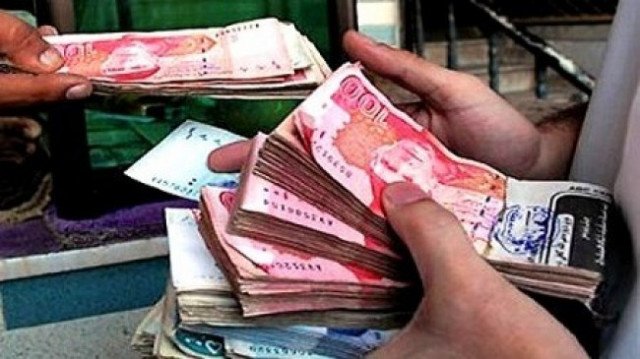
The Pakistani rupee extended its gains against the US dollar on Wednesday, rising 20 paisa, or 0.07%, in the inter-bank market. The currency closed at 282.22 compared to the previous day’s closing level of 282.42.
It was the rupee’s fifth consecutive day of appreciation, driven by improved market sentiment amid an ongoing crackdown on illegal currency dealers and smugglers. Last week, a court handed five-year prison terms to three illegal currency traders and fined Rs1 million each for engaging in unlawful foreign exchange operations.
In global trade, the US dollar slipped after soft US inflation data reinforced expectations of a Federal Reserve rate cut next month. Political developments in Washington, including President Donald Trump’s moves to tighten control over US institutions, also weighed on the greenback.
The dollar index hit a more than two-week low, making bullion cheaper for overseas buyers, while the yield on the benchmark 10-year Treasury note edged lower, according to Reuters.
Meanwhile, gold prices in Pakistan inched lower, diverging from the international trend, where the metal gained on a weaker US dollar and falling Treasury yields. Mild US inflation data reinforced expectations of a Federal Reserve rate cut in September, with markets also factoring in the possibility of further easing later this year.
In the local market, the price of gold per tola fell Rs200 to Rs358,100, according to the All Pakistan Sarafa Gems and Jewellers Association. The rate for 10 grams declined Rs171 to Rs307,013. On Tuesday, gold had dropped by Rs500 to Rs358,300 per tola.
Interactive Commodities Director Adnan Agar said global gold prices were moving within a narrow range, with Wednesday’s high at $3,370 per ounce and low at $3,342. “The market was trading at $3,355 and waiting for fresh triggers,” he noted.
Agar pointed to the upcoming geopolitical events, including a Russia-US-Ukraine summit this weekend, as potential drivers. “If the summit fails, gold prices are likely to rise. A breakthrough could push prices lower,” he said.
Agar added that markets were also looking ahead to the US Federal Reserve’s policy decision next month, where there was a strong likelihood of an interest rate cut, a move that could further influence gold’s direction.
Spot gold gained 0.4% to $3,357.59 per ounce by 12:10 pm ET (1610 GMT). US gold futures for December delivery rose 0.3% to $3,408.50.
“Gold is buoyant on heightened expectations of a September Fed rate cut, following benign inflation data and July’s weak non-farm payrolls,” said Nikos Tzabouras, senior market analyst at Tradu.com.









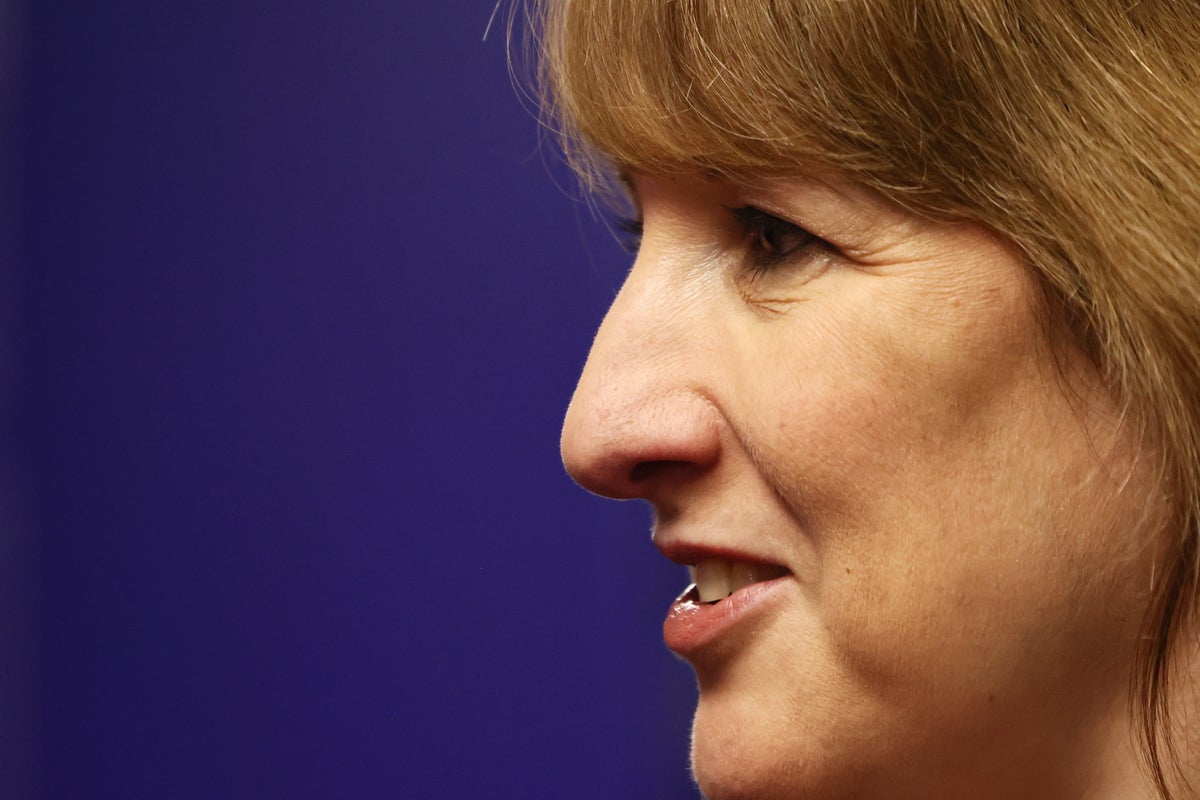
Rachel Reeves will reaffirm her commitment to “end” the windfall tax on North Sea oil and gas as she meets energy bosses.
The Chancellor is set to discuss the gas and oil prices sent soaring by the Middle East war in talks with firms including BP, TotalEnergies and Serica.
Ms Reeves came under pressure ahead of the Downing Street talks from Scottish First Minister John Swinney to axe the charge, which is officially known as the energy profits levy.
Introduced by the Tory government in the wake of the war in Ukraine – which sparked a sharp rise in energy prices – the charge was brought in to claw back some of these unexpected profits for the Treasury.
The Prime Minister’s spokesman told reporters: “The Chancellor will convene a meeting with industry leaders from oil and gas firms today… including BP, TotalEnergies and Serica.
“And they’ll discuss the ongoing volatility in the oil and gas prices due to the conflict in the Middle East.
“The Chancellor will make clear that she remains committed to end the energy profits levy and replace it with a more permanent and predictable regime.
“She’ll be reaffirming her commitment to support jobs and investment in the industry and look at ways to protect everyday people from the downstream impact of these costs.”
Earlier, Mr Swinney again insisted it was “utterly essential” that the UK Government scrapped the windfall tax, which he said was impacting upon investment in the North Sea and costing jobs.
He said the current “uncertainty over energy supplies” as a result of the conflict in the Middle East was now a “material consideration” for the scrapping of the charge – which is officially known as the energy profits levy.
Speaking during a visit to Inverness, Mr Swinney said he had hoped the Chancellor would use Tuesday’s spring statement to axe it.
When that did not happen, Holyrood’s Finance Secretary Shona Robison said Ms Reeves must use Wednesday’s meeting with North Sea industry leaders to “announce an end to this tax on Scotland’s energy”.
Mr Swinney meanwhile insisted: “Now that we have the conflict in the Middle East I think it is utterly essential that the energy profits levy is removed.
“I had hoped it would be removed yesterday in the spring statement. It hasn’t been but the Chancellor is meeting the industry today.
“And I hope that results in the removal of the energy profits levy.”
Mr Swinney, speaking to the Press Association, added: “I’ve been saying to the UK Government for some time that the energy profits levy should be removed because it is hampering investment in the North Sea oil and gas sector, which is resulting in a loss of employment at a much faster rate than we anticipated.”
With the conflict in the Middle East leading to “uncertainty over energy supplies in the period to come” the First Minister said that was now a “material consideration in whether the energy profits levy should be maintained”.
He insisted however: “I don’t think there is a case for it and it should be removed.”
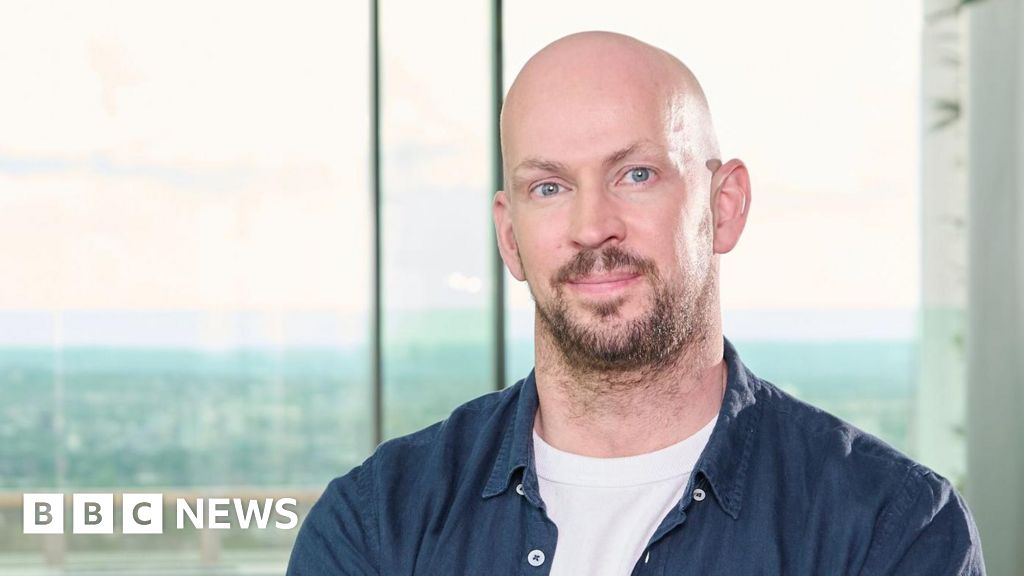
James Watt apologises to staff and investors after hundreds of jobs were lost with the sale of the brewer and pub chain.
Source link
Business
PMI watch: India’s services growth eases in February as demand softens, costs rise – The Times of India

India’s services sector growth eased marginally in February as new business expansion slowed to a 13-month low, reflecting softer demand conditions and a rise in inflation, according to a monthly survey released on Wednesday. The seasonally adjusted HSBC India Services PMI Business Activity Index edged down to 58.1 in February from 58.5 in January. In PMI terminology, readings above 50 denote expansion, while those below 50 indicate contraction. “India’s Services PMI registered 58.1 in February, largely unchanged from January’s 58.5, signalling another month of robust expansion in the sector.” “While new order growth slowed to a 13-month low amid rising competition, service providers saw a notable pick-up in international sales and responded with increased hiring to meet operational needs,” said Pranjul Bhandari, Chief India Economist at HSBC. According to respondents, some firms benefited from stronger client enquiries and targeted marketing efforts, which supported sales. However, others reported that an increasingly competitive landscape limited the pace of growth. External demand stood out during the month. Services companies recorded improved business from several overseas markets, including Canada, Germany, mainland China, Singapore, the UAE, the UK and the US. Overall, international sales rose at the quickest pace since last August. Cost pressures intensified for service providers in February. Operating expenses increased at the sharpest rate in two-and-a-half years, prompting firms to raise their selling prices at the fastest pace in six months. “Input and output price inflation accelerated, with firms passing higher expenses — particularly for food and labour — on to customers, yet business confidence climbed to its highest level in a year as companies looked to broaden their market presence,” Bhandari said. At the combined level, private sector activity strengthened further. Total business output across manufacturing and services expanded at the fastest rate in three months, supported by improved demand and higher new business inflows. The HSBC India Composite PMI Output Index climbed to 58.9 in February from 58.4 in January. “Overall, the composite PMI rose to 58.9, reflecting the fastest pace of private sector activity growth in three months, buoyed by strong momentum in manufacturing,” Bhandari said. Composite PMI figures represent weighted averages of manufacturing and services indicators, with the weights reflecting their respective shares in official GDP data. While the pace of new order growth at the composite level was broadly similar to that seen around the start of the year, hiring activity strengthened to its highest level since last October. Inflationary trends were also evident in the broader private sector, with both input costs and output charges rising at quicker rates. These increases reached nine-month and six-month highs, respectively.


The Colorful MacBook Neo Is Apple’s Cheapest Laptop Ever

Apple debuts $599 MacBook Neo to challenge Chromebooks, Windows PCs
Reeves to stress commitment to end windfall tax in talks with North Sea bosses

India Us Trade Deal: Fresh look at India-US trade deal? May be ‘rebalanced’ if circumstances change, says Piyush Goyal – The Times of India

Households set for lower energy bills amid price cap shake-up

What are Iran’s ballistic missile capabilities?

-
Business5 days ago
India Us Trade Deal: Fresh look at India-US trade deal? May be ‘rebalanced’ if circumstances change, says Piyush Goyal – The Times of India
-
Business1 week ago
Households set for lower energy bills amid price cap shake-up
-

 Politics6 days ago
US arrests ex-Air Force pilot for ‘training’ Chinese military
-
 Politics6 days ago
What are Iran’s ballistic missile capabilities?
-
 Business6 days ago
Attock Cement’s acquisition approved | The Express Tribune
-

 Fashion6 days ago
Policy easing drives Argentina’s garment import surge in 2025
-

 Sports1 week ago
Top 50 USMNT players of 2026, ranked by club form: USMNT Player Performance Index returns
-

 Sports6 days ago
Sri Lanka’s Shanaka says constant criticism has affected players’ mental health