

Politics
Russia’s Putin seeks to boost energy, defence exports with India visit

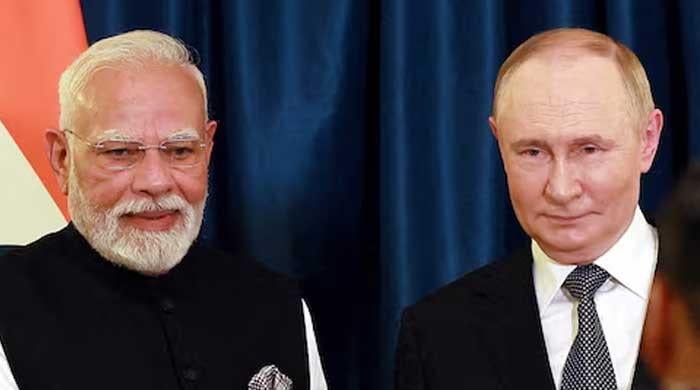
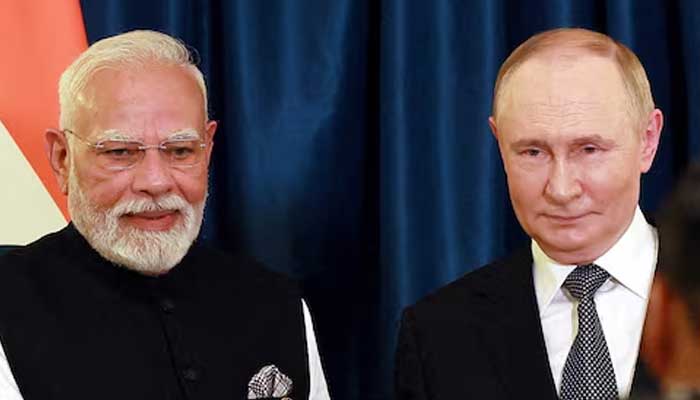
- President Putin visiting India after four years.
- India-Russia to expand partnership in nuclear energy.
- Moscow likely to seek help to get spares for its oil assets.
NEW DELHI: Russian President Vladimir Putin starts a two-day visit to India from Thursday, pitching for more sales of Russian oil, missile systems and fighter jets in a bid to restore energy and defence ties hit by US pressure on the South Asian nation.
Russia has supplied arms to India for decades, with New Delhi emerging as its top buyer of seaborne oil despite Western sanctions after Moscow launched its invasion of Ukraine in February 2022.
But India’s crude imports are set to hit a three-year low this month, after the tightening of sanctions on Russia that coincide with its growing purchases of US oil and gas.
On his first visit in four years to the Indian capital for a summit with Prime Minister Narendra Modi, Putin will be accompanied by his defence minister, Andrei Belousov, and a wide-ranging delegation from business and industry.
“Putin’s visit offers an opportunity for Delhi to reassert the strength of its special relationship with Moscow, despite recent developments, and make headway in new arms deals,” said Michael Kugelman of the Atlantic Council think tank.
“India-Russia summits are never solely optics-driven affairs, given the substance of the relationship,” added Kugelman, a senior South Asia fellow at the Washington-based body.
New initiatives were likely to be announced, he added, even if they mostly related to low-hanging fruit in ties, he said.
Possible US reaction
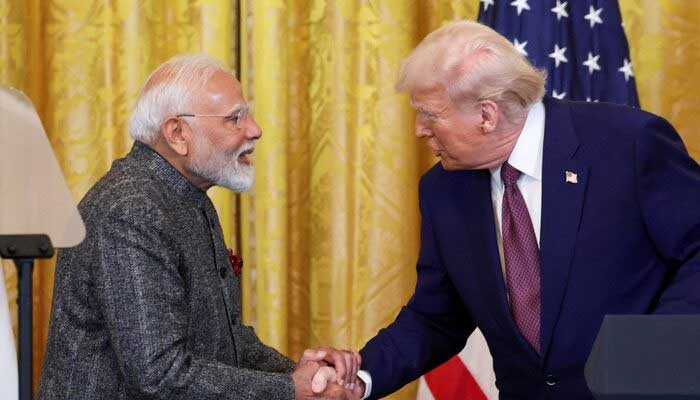
But Indian officials worry that any fresh energy and defence deals with Russia could trigger a reaction from US President Donald Trump, who doubled tariffs to 50% in August on Indian goods, as punishment for New Delhi’s purchases of Russian crude.
Ahead of Putin’s visit, officials of both sides held talks in areas from defence to shipping and agriculture. In August, they agreed to launch talks for a free trade deal between India and the Russian-led Eurasian Economic Union.
They are also in talks to expand their partnership in civilian nuclear energy, Indian analysts have said.
Putin’s delegation includes the chief executives of dominant Russian lender Sberbank and state arms exporter Rosoboronexport, as well as the heads of sanctioned oil firms Rosneft and GazpromNeft an industry source with direct knowledge of the matter said.
In the talks, Moscow is likely to seek India’s help to get spares and technical equipment for its oil assets, as sanctions have choked access to key suppliers, said the industry source and a separate Indian government source.
The spoke on condition of anonymity as the matter is a sensitive one.
India is likely to pitch for the restoration of a stake of 20% for state gas explorer ONGC Videsh Ltd in the Sakhalin-1 project in Russia’s far east, the government source added.
India a US trade deal by year end, as most of its refiners have stopped buying Russian oil, though widening discounts are now drawing in some state refiners.
Indian Oil Corp has placed orders from non-sanctioned Russian entities for December and January loading while Bharat Petroleum Corp is in advanced stages of placing an order, sources at the two companies said.
The sources sought anonymity as they were not authorised to speak to media.
Reliance in defence sector
Unlike crude, India does not plan to freeze defence ties with Moscow anytime soon as it requires continued support for the many Russian systems it operates, Defence Secretary Rajesh Kumar Singh said last week.
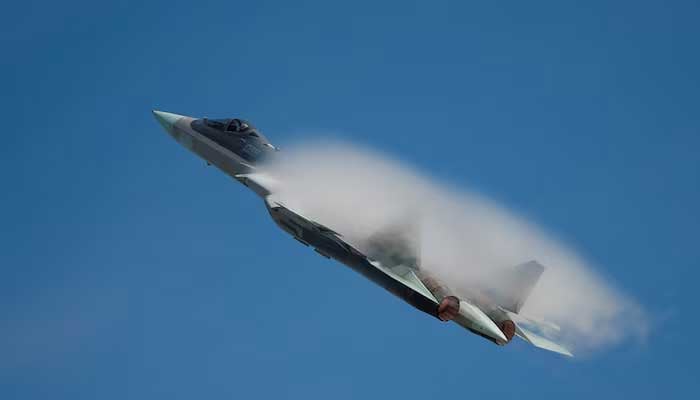
Russian Sukhoi-30 jets make up the majority of India’s 29 fighter squadrons and Moscow has also offered its most advanced fighter, the Su-57, which is likely to figure in this week’s talks, said two Indian officials familiar with the matter.
India has not yet made a decision on buying the jet, said the officials, who spoke on condition of anonymity.
But India is likely to discuss buying more units of the S-400 air defence system, Singh said last week. It now has three units, with delivery of two more pending under a 2018 deal.
Recent US-Russia talks to ending the Ukraine war, could help make it easier for Indian officials to engage with Moscow, said Harsh Pant, head of foreign policy studies at India’s Observer Research Foundation think tank.
But ties continue to appear strained, he said.
“A large part of the trading relationship was based on energy, which is now losing traction under the threat of sanctions from the United States,” he added.
“And at the end of the day, only defence remains, which continues to bind the two together.”
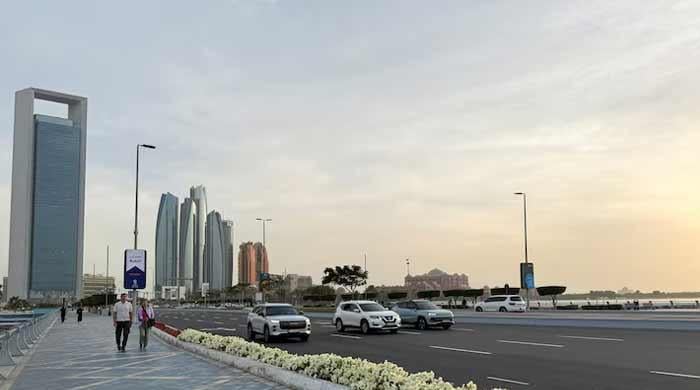
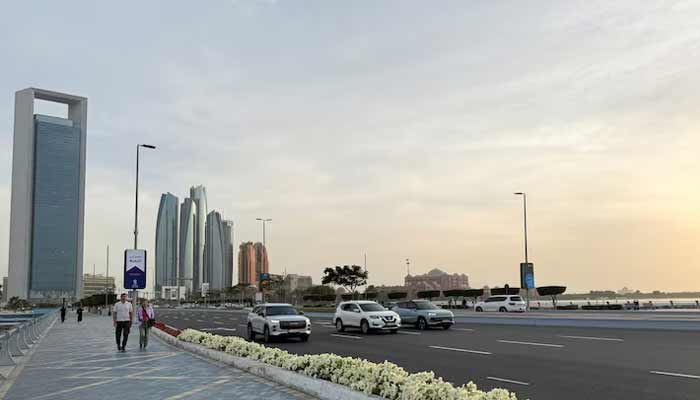
DUBAI: Dubai has announced the implementation of a new public safety law introducing stricter regulations for public spaces and events, with fines ranging from AED500 ($136) to AED1 million ($272,000), authorities said.
Under the legislation, repeat violations within one year could result in fines of up to AED2 million, officials added.
The new law, which takes effect across the emirate on June 1, sets out enhanced safety requirements for public venues and gatherings.
The rules were issued by Dubai’s Ruler, Vice President and Prime Minister of the UAE, Sheikh Mohammed bin Rashid Al Maktoum.
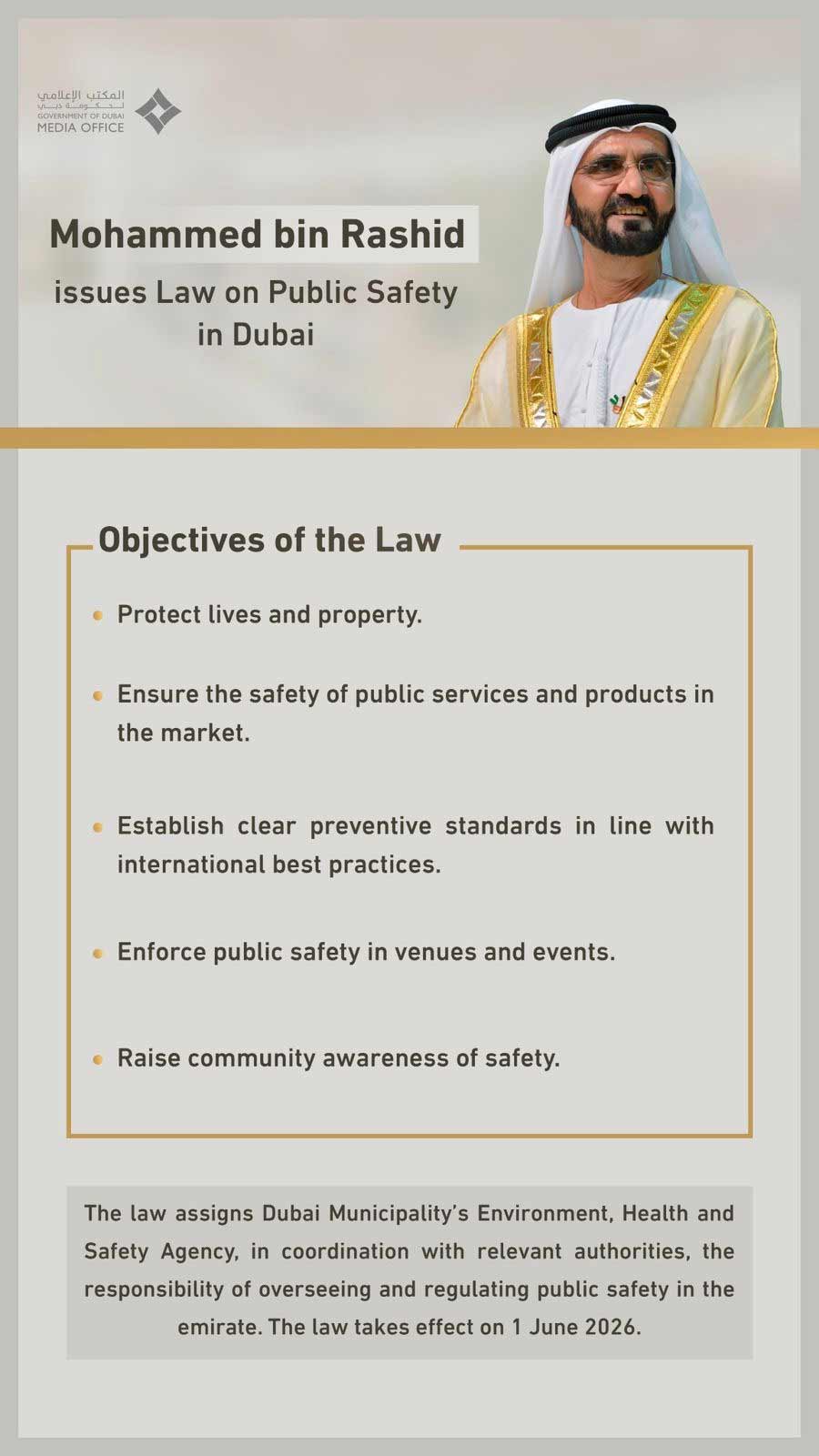
According to the regulations, public venues and events must ensure safe entry and exit routes, adequate lighting, and capacity limits to prevent overcrowding.
Event organisers will be required to provide firefighting equipment, emergency evacuation plans, first aid facilities, and trained security personnel.
Compliance with safety instructions at public venues has been made mandatory.
The law also requires adherence to designated swimming times at beaches and prohibits access to restricted areas.
Possession of explosives or fireworks without a permit is banned, as is the use and transport of hazardous or flammable materials.
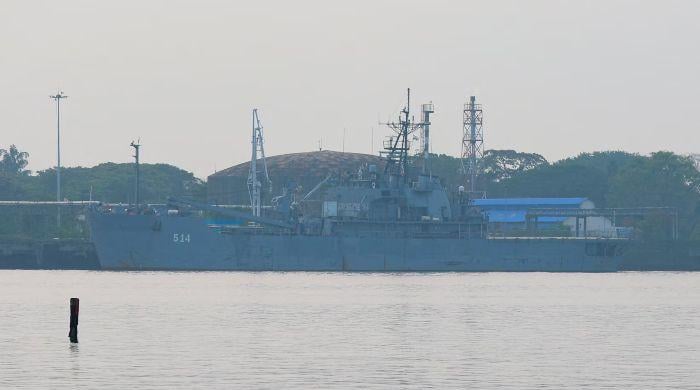
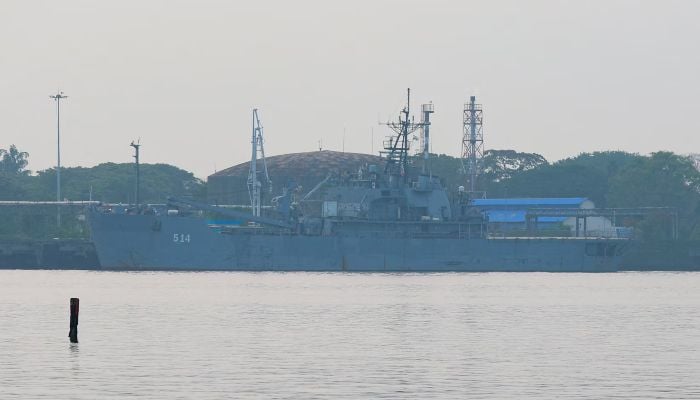
India has allowed an Iranian warship to dock as a humanitarian gesture, Foreign Minister Subrahmanyam Jaishankar said on Saturday, after the US sank another Iranian navy vessel off neighbouring Sri Lanka.
The Lavan docked at India’s southern port of Kochi on Wednesday, the same day the US submarine struck Iranian navy frigate Dena, after an urgent request from Tehran, an Indian government source told Reuters.
US President Donald Trump has said destroying the Iranian navy is one aim of the war he and Israel launched against the Islamic Republic a week ago.
The Lavan – an amphibious landing vessel, according to the US Naval Institute’s online news site – and two other ships “were coming in for a fleet review and then they got, in a way, caught on the wrong side of the events,” Jaishankar told the annual Raisina Dialogue event.
“I think we really approached it from the point of view of humanity, of other than whatever the legal issues were,” he said. “I think we did the right thing.”
At least 87 people were killed in the US attack on the Dena in Sri Lanka’s exclusive economic zone, 19 nautical miles off the coast, outside its maritime boundaries.
India received the docking request for the Lavan on February 28, the day the Iran war started, the source said late on Friday, adding that the request “was urgent as the vessel had developed technical issues”.
Its 183 crew members have been accommodated at naval facilities in Kochi, said the source, who asked not to be identified citing confidentiality.
The Dena was on its way back from a naval exercise organised by India, according to the drill’s website and Sri Lankan officials.
Sri Lankan authorities said on Friday that they were escorting the Iranian naval ship Booshehr to a harbour on the eastern coast and moving most of its crew to a navy camp near Colombo.
- Shah’s popularity driven by social media and youth connection.
- RSP party’s manifesto promises job creation and economic growth.
- Final results covering 165 seats decided by direct vote expected within days.
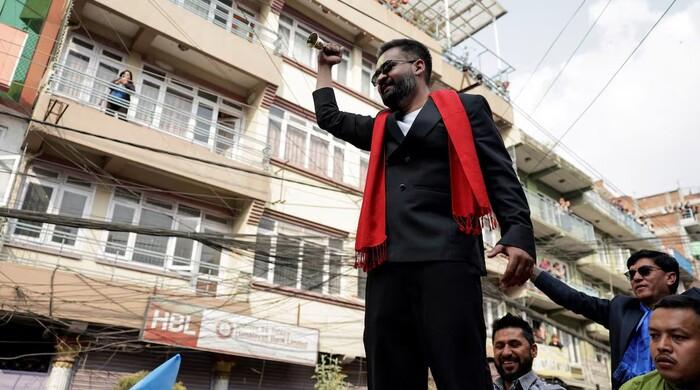
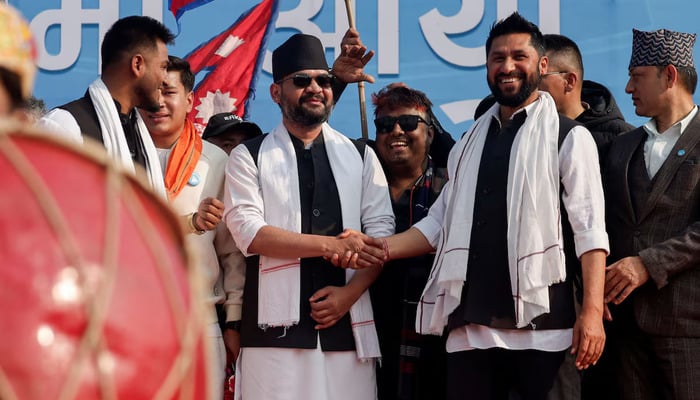
After Nepal’s historic youth-led uprising last September killed 77 people and forced then-Prime Minister KP Sharma Oli to resign, a 35-year-old rapper-turned-politician posted a typically terse message to millions of followers on social media.
“Dear Gen Z, the resignation of your killer has come,” Balendra Shah — popularly known only as Balen — wrote. “Now your generation will have to lead the country. Be prepared.”
Five months on, the musician who cut his political teeth in 2022 when he became the mayor of the capital Kathmandu, is poised to become Nepal’s next prime minister following the country’s first election since the September uprising.
Shah’s Rastriya Swatantra Party (RSP) was leading in around 100 seats, far ahead of its main rivals, early counting trends from the election commission showed on Friday.
Final results, covering 165 seats decided by direct vote and 110 through proportional representation, are expected within days.
The Nepali Congress, currently in second place, has already conceded defeat, and analysts said the RSP’s dominant showing means it will likely form the next government.
“Balen Shah is so popular that now buses coming to Kathmandu have stickers on them saying, ‘Headed to Balen’s city'”, said Bipin Adhikari, a constitutional law expert who teaches at Kathmandu University.
If Shah is able to take power, it would cap a dramatic rise for a man who entered the public spotlight with rap music critical of the establishment and parleyed his popularity to ascend to high political office.
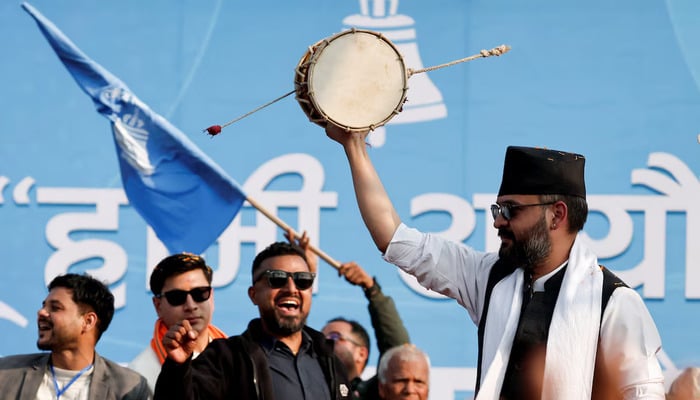
It would also potentially reshape the politics of Nepal, a small Himalayan nation wedged between China and India, that has long been dominated by a handful of established parties.
‘Not a cakewalk’
Some of Shah’s nationwide appeal is driven by the work he has done as the mayor of Kathmandu, where he focused on improving the urban infrastructure, such as waste management, and ensuring the delivery of services like healthcare.
He has also faced criticism, including from Human Rights Watch, for allegedly using police to seize the properties of street vendors and landless people.
Shah — who resigned as mayor in January to contest the general election — did not respond to requests for an interview and questions from Reuters sent via email.
Unlike much of Nepal’s political elite comprising veterans from older generations, Shah has made it a habit to largely shun the mainstream press.
Instead, it is his prolific social media presence, with over 3.5 million followers on platforms like Facebook, that enables him to connect directly with young Nepalis.
“What makes Balen special is that he stays connected with the youth through his short messages on social media, but it would not be a cakewalk for him after becoming prime minister,” said independent political analyst Puranjan Acharya.
‘Let me speak’
Born to a father who practiced traditional Ayurvedic medicine and a homemaker mother, Shah showed an early inclination towards poetry that evolved into a love of rap music, influenced by American artists including Tupac Shakur and Curtis “50 Cent” Jackson, according to an aide.
After securing an undergraduate degree in civil engineering in Nepal, Shah went on to study for a master’s degree in structural engineering in southern India — by which time he had already emerged as a rap star in his home country.
His songs, often taking on Nepal’s ruling class, struck a chord with many in a country where about 20% of the 30 million population live in grinding poverty.
Released in 2019, one of Shah’s best-known songs, “Balidan” — or sacrifice in the Nepali language — has over 12 million views on YouTube.
Its lyrics read:
“Let me speak, sir, it is not a crime,
Let me open the mind, I am not a curse to the palace,
My mind is not bad, it is not afraid to speak the truth.”
‘Wood attacked by termites’
Last December, Shah joined the RSP, led by former TV host-turned-politician Rabi Lamichhane, as its prime ministerial candidate.
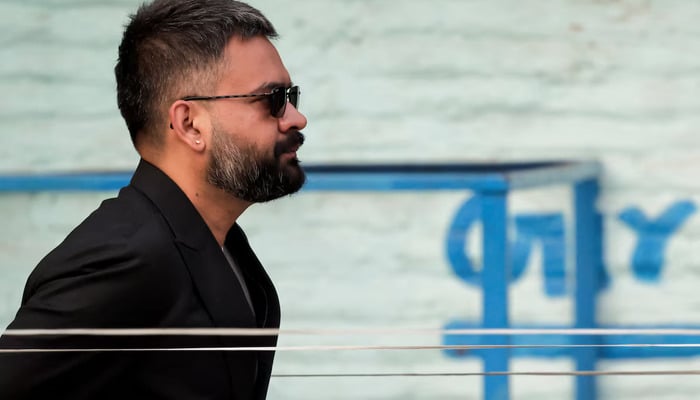
In its manifesto, Shah’s RSP has vowed to create 1.2 million jobs and reduce forced migration, in an effort to tap into frustration over unemployment and low wages that have pushed millions of Nepalis to search for work overseas.
The party has also pledged to raise Nepal’s per capita income from $1,447 to $3,000, more than double the nation’s economy to $100 billion GDP and provide safety nets such as healthcare insurance for the entire population — all within five years.
At the national level, analysts foresee that if he is elected, much of Shah’s success will depend on the talent he surrounds himself with to overhaul a moribund administrative system, riven by corruption.
“It needs a team, experts and support,” Acharya said, “Under the existing state apparatus, he can’t perform and he will be finished like wood attacked by termites.”

Go Digit General Insurance gets GST demand notice of Rs 170 cr – The Times of India

Saturday Sessions: Cory Wong performs "Roses Fade"

What makes Cameron Boozer unstoppable in his pursuit of championships

Attock Cement’s acquisition approved | The Express Tribune

Policy easing drives Argentina’s garment import surge in 2025

India Us Trade Deal: Fresh look at India-US trade deal? May be ‘rebalanced’ if circumstances change, says Piyush Goyal – The Times of India

-
Business1 week ago
Attock Cement’s acquisition approved | The Express Tribune
-
 Fashion1 week ago
Policy easing drives Argentina’s garment import surge in 2025
-
Business1 week ago
India Us Trade Deal: Fresh look at India-US trade deal? May be ‘rebalanced’ if circumstances change, says Piyush Goyal – The Times of India
-

 Sports1 week ago
LPGA legend shares her feelings about US women’s Olympic wins: ‘Gets me really emotional’
-

 Entertainment1 week ago
Bobby J. Brown, “The Wire” and “Law & Order: SUV” actor, dies of smoke inhalation after reported fire
-
 Fashion1 week ago
South Korea’s Misto Holdings completes planned leadership transition
-

 Fashion1 week ago
Texwin Spinning showcasing premium cotton yarn range at VIATT 2026
-

 Entertainment1 week ago
Pakistan’s semi-final qualification scenario after England defeat New Zealand