

Fashion
Saint Laurent retains top spot as hottest brand in Q4 2025 Lyst Index


Ralph Lauren emerged as one of the strongest performers of the quarter, climbing five positions with a 24 per cent QoQ increase in demand. Its renewed focus on core lifestyle codes has found strong cultural traction, amplified by seasonal social media trends such as the ‘Ralph Lauren Christmas’ aesthetic. Burberry and Gucci also rose five places each, while Stone Island moved up four spots, supported by a 62 per cent surge in searches, highlighting how brands reaffirming heritage and design discipline are outperforming peers still in transition.
Saint Laurent has topped the Lyst Index in Q3 2025 as limited movement among leading brands highlighted a preference for consistency over disruption.
Ralph Lauren, COS, Burberry, Gucci and Stone Island gained momentum by reinforcing heritage and core identities.
Product demand shifted towards modern classics and functional staples, with quarter-zip knits, outerwear and accessories leading trends.
Brands gaining momentum are those reinforcing established identities rather than chasing bold reinvention. H&M group’s COS retained its third-place ranking while recording a notable 60 per cent QoQ rise in demand on Lyst. Its clean aesthetic, focus on materials and dependable design have continued to resonate globally. The debut of Massimo Dutti at number 16 further underlines growing demand for accessible, design-led brands positioned between everyday wear and fashion credibility.
Conversely, brands that slipped down the Index appear to be those without a clearly articulated or fully re-established creative direction. Lyst noted that this reflects consumer caution rather than rejection, as shoppers adopt a wait-and-see approach during periods of strategic recalibration.
Product trends this quarter leaned heavily towards modern classics and functional staples, signalling a shift away from overt Quiet Luxury towards more robust, utilitarian aesthetics. Categories such as outerwear, knitwear and practical accessories saw strong traction, reflecting a consumer focus on longevity and versatility.
The Polo Ralph Lauren cable-knit quarter-zip sweater emerged as the hottest product of Q4 2025, with searches for quarter-zips rising 132 per cent globally over the past three months. Its renewed popularity was reinforced by appearances in recent luxury runway debuts, placing the classic style firmly back in the spotlight. Lyst noted that the quarter-zip trend reflects a broader maturation in menswear, as younger consumers gravitate towards smarter, work-ready silhouettes.
Outerwear specialist Barbour also saw demand surge 147 per cent in Q4, supported by a series of high-profile collaborations. Meanwhile, Arc’teryx’s Bird Head toque became the world’s hottest headwear item, recording a dramatic 1,058 per cent spike in searches, driven largely by Gen Z and Gen Alpha shoppers.
Among fast-rising brands, Tokyo-based A.Presse recorded a 191 per cent increase in searches, while heritage shirtmaker Charvet saw demand climb 128 per cent following its visibility in Matthieu Blazy’s debut collection at Chanel. According to Lyst, the current Index reflects a broader industry recalibration, where shoppers increasingly favour brands with clear cultural codes, strong product identities and confidence in who they are, rather than those chasing what comes next.
Fibre2Fashion News Desk (SG)











According to the informal agreement, there will be a new handling fee for each item entering the EU from non-EU countries and sent directly to EU consumers, to cover the extra cost of handling an ever-increasing number of individual parcels.
This will be paid by the same entity responsible for paying other customs charges for the same parcel, to avoid shifting the cost to consumers.
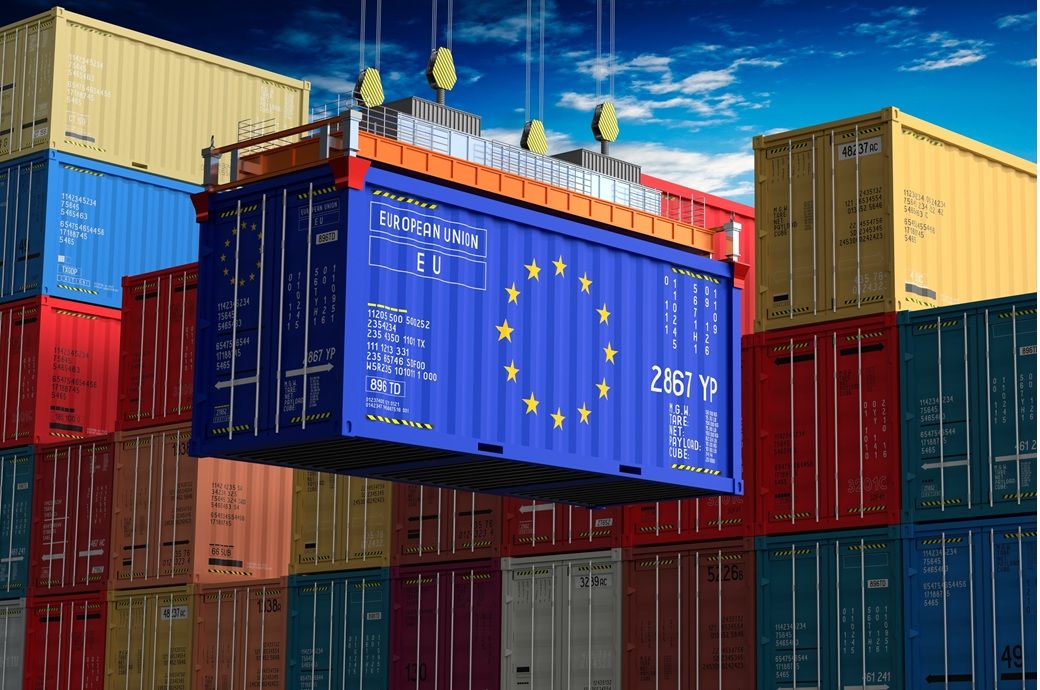
The European Parliament and European Council have reached a deal on a major reform of the EU Customs Code to address problems relating to e-commerce, safety of goods and efficiency.
A new handling fee will be charged for each item entering the EU from non-EU nations and sent directly to EU consumers.
The European Commission will establish the level of the fee and reassess it every two years.
The European Commission will establish the level of the fee and reassess it every two years. Member states will start collecting it as soon as the necessary information technology (IT) system becomes operational, and in any case no later than November 1, this year.
Under the new rules, sellers and platforms that facilitate distance sales of goods from non-EU countries directly to EU customers will be treated as importers. This will oblige them to provide customs authorities with all the necessary data, pay or guarantee any charges, and make sure that the goods comply with EU laws, an official release said.
These companies must be established in the EU or be represented by an EU-based entity having either authorised economic operator (AEO) or trusted trader status. This should prevent the use of shell companies.
To incentivise bulk shipments that are easier for customs authorities to check, non-EU country sellers and platforms are encouraged to operate warehouses in the EU. Their intra-EU client shipments would benefit from a lower handling fee, provided their goods were imported in collective packaging and large enough quantities to make customs checks more efficient.
Companies that repeatedly ignore EU rules could be punished with a fine of at least 1 per cent (and up to 6 per cent) of the total value of goods imported into the EU in the previous 12 months.
Additionally, customs authorities may suspend, revoke, or annul their trusted trader or AEO status and flag them as high-risk operators.
Import-export companies that follow the rules and agree to cooperate transparently with the customs authorities may benefit from a simplified ‘trust and check’ regime. This would initially require them to go through thorough vetting and grant customs authorities access to their electronic systems.
In exchange, their shipments would be checked less frequently and they would have more flexibility regarding the payment of duties and fees.
The current AEO qualification will remain in place to keep customs status accessible to smaller economic operators.
The reform also establishes a new customs data hub to be managed by the new EU Customs Authority (EUCA). It will be available for optional use by 2031 and mandatory by 2034.
The data hub will replace at least 111 software systems currently used by customs.
The provisional agreement needs to be officially approved by Parliament in plenary as well as by the EU Council, before it will become law.
Fibre2Fashion News Desk (DS)
This was driven by an 8.36-per cent YoY decline in import volume and a 7.76-per cent YoY decrease in average unit prices.
The EU’s apparel imports fell by 15.48 per cent YoY in January to €7.03 billion, according to Eurostat.
Bangladesh’s apparel exports to the EU fell to €1.43 billion in January—a 25.25-per cent drop in value.
China remained the top exporter of apparel to the EU (€2.22 billion), but still saw a 6.9-per cent decline YoY in value.
India, Pakistan, Vietnam and Cambodia also remained in negative territory.
Bangladesh’s apparel exports to the bloc fell to €1.43 billion in January—a sharp 25.25-per cent drop in value. It saw a 17.49-per cent YoY decrease in the quantity of goods shipped, coupled with a 9.41 per cent drop in the unit price per kilogram.
China remained the top exporter of apparel to the EU (€2.22 billion), but still saw a 6.9-per cent decline YoY in value. Its unit prices dropped by 8.01 per cent YoY, while its export volume grew a bit by 1.21 per cent YoY.
Turkey faced a severe hit with a 29.12-per cent YoY decrease in apparel export value to the EU in the month, totaling €619.98 million.
Other countries like India, Pakistan, Vietnam and Cambodia remained in negative territory, reflecting a broad-based slowdown in the European fashion retail market.
Fibre2Fashion News Desk (DS)
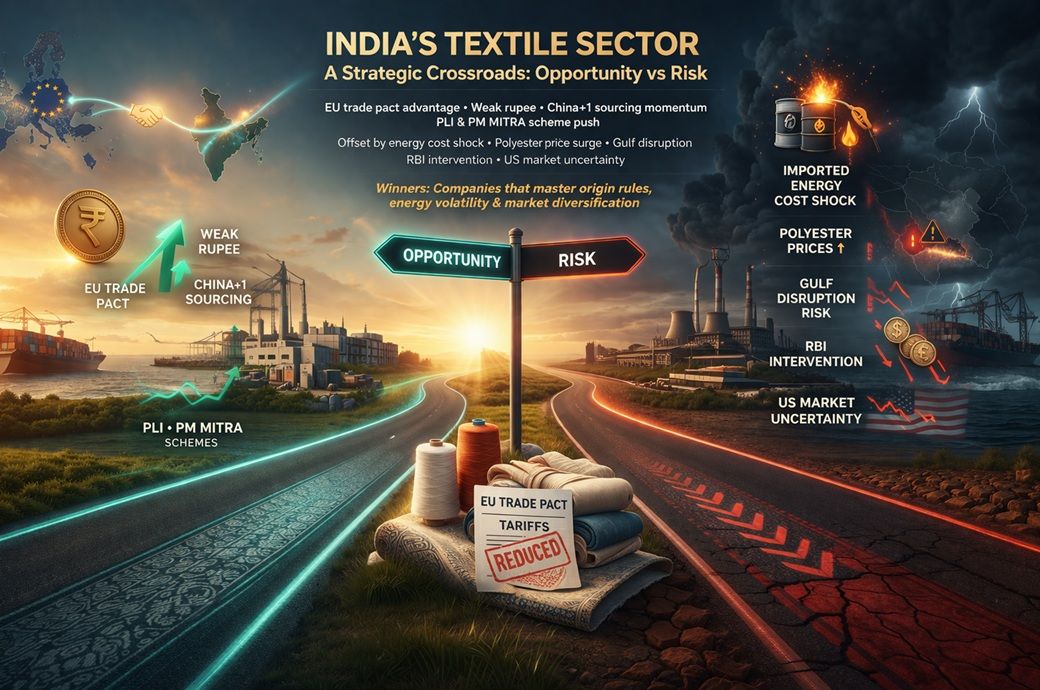
India’s textile outlook is turning structurally complex.
The EU pact targets ~99.5 per cent trade coverage with phased duty relief, while rupee weakness supports exports.
However, crude volatility, >80 per cent import energy dependence, polyester cost inflation and US market softness (≈28 per cent share) are fragmenting performance, reinforcing a shift towards cotton-led, EU-focused exporters.
Source link


USA 2-5 Belgium (Mar 28, 2026) Final Score – ESPN

The unlikely rise of Iowa’s Ben McCollum, Bennett Stirtz: Division II to Elite Eight

Anti-Trump protests launch on ‘No Kings’ day in US

-
 Business1 week ago
Flipkart group CFO to leave co amid IPO plans – The Times of India
-

 Sports1 week ago
Rating Adidas’ 2026 World Cup away shirts: Argentina, Spain, Mexico and more
-

 Fashion1 week ago
China’s textile & apparel exports surge 17% to $50 bn in Jan-Feb 2026
-

 Sports1 week ago
American Conference Commissioner Tim Pernetti thanks Trump for Army-Navy game executive order
-
Tech1 week ago
The Corsair 4000D RS PC Case Keeps Your System Cool
-

 Tech1 week ago
Gamers Hate Nvidia’s DLSS 5. Developers Aren’t Crazy About It, Either
-
 Business4 days ago
Property Play: Home flippers see smallest profits since the Great Recession, real estate data firm says
-
 Business1 week ago
‘Marriage penalty’ in Washington state’s new millionaire tax stirs debate