

Fashion
Santiago Cucci on IKKS: ‘It’s time for us to refocus on our flagship brand’

Published
December 14, 2025
In October, this was not necessarily the frontrunner in the race to take over the IKKS Group. The French premium ready-to-wear specialist, owner of the eponymous brand as well as One Step and I.Code, attracted around a dozen bidders after being placed in receivership at the start of autumn, including the respective owners of The Kooples, Pimkie, Morgan and Caroll.
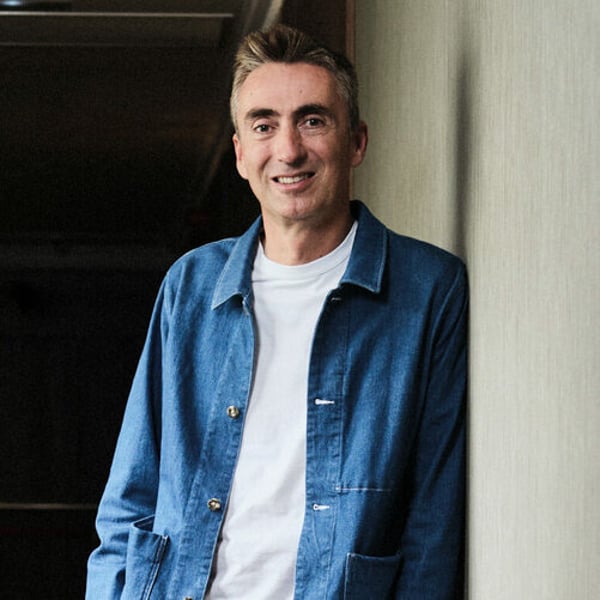
But in the home stretch, the duo of Michaël Benabou, co-founder of VeePee (then called Vente Privée) and head of the investment company Financière Saint James, and Santiago Cucci, a specialist in premium ready-to-wear and former head of the Levi’s and Dockers brands, who for a time supported the leadership of Dutch label G-Star, strengthened their bid. The entrepreneur, a sports enthusiast who knows the case well, having taken over as chairman of the HoldIKKS holding company last year, knows that competitions are decided right up to the last minute. Despite the loss of almost half the workforce, their offer, which safeguards 546 jobs and includes 119 directly operated stores, won the backing of the group’s works council (CSE) and was formally approved by the Paris Court for Economic Activities.
A few hours after the decision was made official, Cucci outlined his roadmap for IKKS to FashionNetwork.com.
FashionNetwork.com: What was your reaction to the announcement of the court’s decision?
Santiago Cucci: We’re delighted to be taking over this iconic brand. I think it’s a brand that touches the hearts of the French. We all have a history with IKKS, whether from our younger years or through our children, often tied to festive moments. This means there’s a whole generation entering adulthood already very familiar with the brand and feeling positively towards it. That’s the capital we’re taking on today. And this affinity extends well beyond end consumers: of the 118 affiliates we contacted, 116 said yes.
FNW: Because beyond the 119 directly operated stores, you had to convince partners to come on board…
SC: Whether with affiliates, suppliers we had to renegotiate with, or across the entire value chain through to consumers, I believe the whole ecosystem still holds the brand in very high regard. Our job now is to make the brand desirable, using digital tools that deliver a strong and seamless customer experience.
FNW: You’re keeping 546 jobs, many of them in stores. What are the next steps, particularly on the social front?
SC: As we’re taking over the company, on Monday I’ll be in Saint-Macaire to meet the employees who are part of the project. We’ll be putting together a new management team across most functions over the next few weeks. I would like to thank the management team, who have done their utmost to steer the company through difficult conditions in recent years. In our takeover plan, we have committed to investing 700,000 euros to acquire the brand’s assets and inventories, and 700,000 euros to contribute to the PSE. Matters concerning those who are leaving will be handled by the court-appointed liquidator. However, we intend to rehire a few people to help secure the path forward over the coming months.
FNW: In your plan, a number of activities were to be discontinued. Where are you going to focus your efforts?
SC: We’re refocusing on IKKS’s adult business. We’re putting the junior business on hold. Even though that’s the brand’s roots, in France the leading player in the junior market is the second-hand segment. We have to accept that reality. But those consumers who were juniors are now adults and already have a relationship with the brand. At the same time, the group had been managing I.Code and One Step. It’s time to refocus on the flagship and discontinue the two brands and childrenswear. It’s important to note that the junior segment accounts for 82% of IKKS’s losses.

=
FNW: Does this mean that you think the adult part of IKKS, the core on which you’re refocusing, could be profitable fairly quickly?
SC: You’re right. As early as the first year—2026, which will be a transitional year—we have a profitable business model, with reinvestment back into the company.
FNW: Alongside the buyout, you announced a 16 million euro investment package. What are your investment priorities?
SC: We’ve budgeted almost 17 million euros to get the supply chain engine up and running again. It’s a real machine. We’re going to invest in boosting the brand’s desirability, and in IT infrastructure that is from another era, which we’ll upgrade in the first quarter. In my experience, I’ve always been quick to transform companies.
FNW: What will you bring over from your experience at Levi’s and Dockers? What do you think is essential to the successful evolution of a brand?
SC: We’re going to clarify the brand’s identity and values. We’ll enhance the customer experience, particularly by engaging more meaningfully with our community and relying a little less on promotions alone. To do this, we’ll invest in infrastructure and in our go-to-market. We’ll invest in production capabilities so we can be more flexible and hold inventory that matches market needs. We want to be less dependent on promotional periods.
FNW: Is the idea also to reduce the share of revenue coming from markdowns?
SC: You have to be clear about prices. You can’t set a price and then run permanent promotions afterwards. So we’re going to bring more clarity for consumers to the pricing structure, especially at the start of the season. By the way, the design team has done a great job, which is why we’re keeping them on. Now we’re going to make this offer more visible, with a pricing structure that has to be logical. Encouragingly, the results for this reworked adult offer are positive.
This article is an automatic translation.
Click here to read the original article.
Copyright © 2025 FashionNetwork.com All rights reserved.








The uncertainty has increased noticeably, with the ongoing conflict involving Iran weighing heavily on corporate confidence. The escalation has effectively stalled hopes of a near-term economic recovery, particularly as energy markets remain volatile, ifo said in a press release.
In the manufacturing sector, sentiment declined after showing improvement in recent months. The drop was driven largely by a significant deterioration in expectations, while firms also reported a less favourable view of their current business situation. Energy-intensive industries were particularly affected, underscoring the pressure from elevated input costs.
Germany’s business sentiment weakened in March, with the ifo business climate index falling to 86.4 from 88.4 amid rising uncertainty and the Iran conflict dampening recovery hopes.
Manufacturing saw a sharp drop in expectations, especially in energy-intensive sectors.
Trade sentiment also declined due to inflation concerns, although current conditions remained relatively stable across sectors.
The trade sector also registered a decline in sentiment, primarily due to a more pessimistic outlook. Concerns over rising inflation among German consumers have led to weaker expectations in both wholesale and retail segments, signalling subdued demand conditions ahead.
Despite the gloomier outlook, businesses in the trade sector reported a slightly improved assessment of their current situation. This suggests that while present activity remains relatively stable, confidence in future performance is deteriorating.
Fibre2Fashion News Desk (SG)
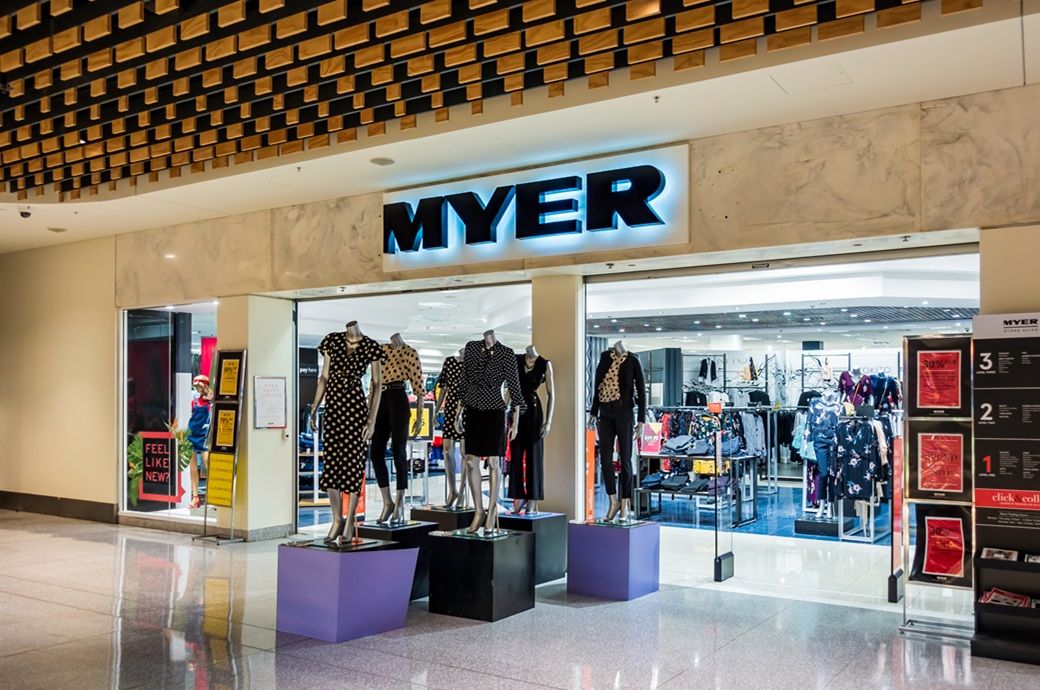
Operating gross profit surged 35.1 per cent to $886.0 million, while underlying earnings before interest and tax (EBIT) rose 10.5 per cent to $112.8 million. Underlying net profit after tax (NPAT) increased 21.7 per cent to $51.7 million, with statutory net profit after tax (NPAT) up 32.8 per cent to $40.3 million.
Myer has reported strong H1 FY26 results, with total sales rising 24.5 per cent to $2,279.5 million and NPAT up 21.7 per cent to $51.7 million.
Growth was supported by Apparel Brands integration and strategic investments.
Loyalty members reached 5.1 million.
Early H2 FY26 sales rose 1.7 per cent, though the company remains cautious amid macroeconomic pressures and weak discretionary demand.
The company maintained strong financial discipline, with cost of doing business at 27.9 per cent of total sales, within its FY26 target of around 29 per cent. Myer also reported a robust net cash position of $287 million, reflecting strong cash conversion and balance sheet flexibility, Myer said in a press release.
Myer’s ongoing transformation strategy continued to gain traction during the period, particularly through its customer engagement and brand expansion initiatives. The relaunched Myer one loyalty programme reached a record 5.1 million active members, supported by enhanced personalisation driven by AI-led data modelling.
The company also strengthened its product portfolio, introducing new exclusive brands and securing partnerships with global names such as Fenty Beauty, La Mer, Gap, and Topshop.
“Our H1 result reflects momentum across our business as we continue to implement the Myer Group Growth Strategy. Sales growth was achieved both in store and online, and our disciplined cost management allowed us to make targeted investments including in e-commerce, marketing, product, merchandise and supply chain to deliver on our plan,” said Olivia Wirth, executive chair at Myer.
“We achieved our biggest Black Friday on record for Myer Retail, and total sales for the group through the important trading months of December and January were in line with last year—a good outcome that demonstrates the resilience of the business,” added Wirth.
The integration of Myer Apparel Brands progressed steadily, with the company targeting at least $30 million in annualised synergies, alongside an additional $10 million from integrating sass & bide, Marcs, and David Lawrence.
Operationally, Myer continued to optimise its store network, closing 22 stores and opening 12 during the period, while advancing its omni-channel capabilities. The company is set to launch an expanded Myer Marketplace platform in May 2026.
Supply chain efficiency also improved, with 32 per cent of online orders fulfilled through third-party logistics and distribution centres, compared to 13 per cent a year earlier.
In the first seven weeks of the second half (H2), total sales grew 1.7 per cent YoY, with Myer Retail sales up 2.2 per cent, driven by strong performance in home and kids categories.
Despite the positive momentum, the company remains cautious amid macroeconomic uncertainty and pressure on discretionary spending.
“Given the current volatility in the wider macroeconomic environment and the ongoing pressures on discretionary spending, we are more focused than ever on delivering value for our customers,” added Wirth.
Fibre2Fashion News Desk (SG)


Transfer rumors, news: Could Foden leave Man City this summer?

Germany’s ifo index drops to 86.4 in March as uncertainty weighs on
Just Eat and Autotrader among five firms under investigation over online reviews

-
 Fashion1 week ago
Sales at US apparel, clothing accessories stores up 4% YoY in Jan 2026
-

 Entertainment1 week ago
Val Kilmer revived 1 year after death through AI
-
 Fashion1 week ago
US’ G-III Apparel’s FY26 sales fall 7% to $2.96 bn
-
 Business1 week ago
Brits cashing in jewellery as gold price hits record high
-

 Sports1 week ago
March Madness 2026 – How to watch in SA, start time, schedule, TV channel for NCAA championship basketball tournament
-

 Fashion6 days ago
China’s textile & apparel exports surge 17% to $50 bn in Jan-Feb 2026
-
 Business1 week ago
Video: The Effects of High Oil Prices
-
 Business6 days ago
Flipkart group CFO to leave co amid IPO plans – The Times of India