

Fashion
Santiago Cucci on IKKS: ‘It’s time for us to refocus on our flagship brand’

Published
December 14, 2025
In October, this was not necessarily the frontrunner in the race to take over the IKKS Group. The French premium ready-to-wear specialist, owner of the eponymous brand as well as One Step and I.Code, attracted around a dozen bidders after being placed in receivership at the start of autumn, including the respective owners of The Kooples, Pimkie, Morgan and Caroll.
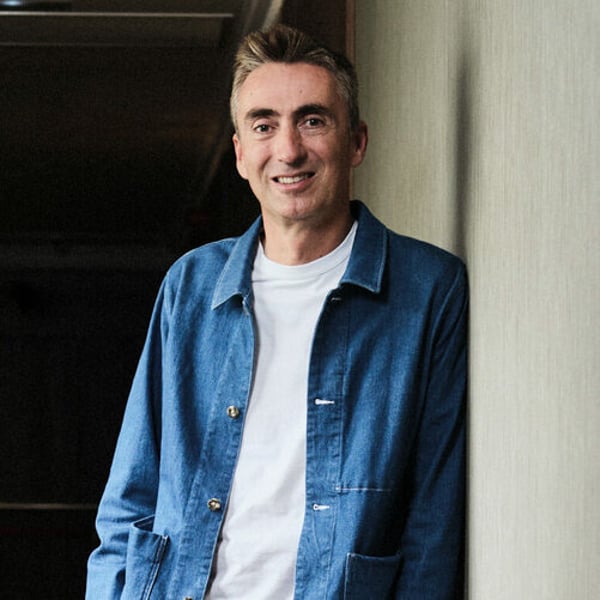
But in the home stretch, the duo of Michaël Benabou, co-founder of VeePee (then called Vente Privée) and head of the investment company Financière Saint James, and Santiago Cucci, a specialist in premium ready-to-wear and former head of the Levi’s and Dockers brands, who for a time supported the leadership of Dutch label G-Star, strengthened their bid. The entrepreneur, a sports enthusiast who knows the case well, having taken over as chairman of the HoldIKKS holding company last year, knows that competitions are decided right up to the last minute. Despite the loss of almost half the workforce, their offer, which safeguards 546 jobs and includes 119 directly operated stores, won the backing of the group’s works council (CSE) and was formally approved by the Paris Court for Economic Activities.
A few hours after the decision was made official, Cucci outlined his roadmap for IKKS to FashionNetwork.com.
FashionNetwork.com: What was your reaction to the announcement of the court’s decision?
Santiago Cucci: We’re delighted to be taking over this iconic brand. I think it’s a brand that touches the hearts of the French. We all have a history with IKKS, whether from our younger years or through our children, often tied to festive moments. This means there’s a whole generation entering adulthood already very familiar with the brand and feeling positively towards it. That’s the capital we’re taking on today. And this affinity extends well beyond end consumers: of the 118 affiliates we contacted, 116 said yes.
FNW: Because beyond the 119 directly operated stores, you had to convince partners to come on board…
SC: Whether with affiliates, suppliers we had to renegotiate with, or across the entire value chain through to consumers, I believe the whole ecosystem still holds the brand in very high regard. Our job now is to make the brand desirable, using digital tools that deliver a strong and seamless customer experience.
FNW: You’re keeping 546 jobs, many of them in stores. What are the next steps, particularly on the social front?
SC: As we’re taking over the company, on Monday I’ll be in Saint-Macaire to meet the employees who are part of the project. We’ll be putting together a new management team across most functions over the next few weeks. I would like to thank the management team, who have done their utmost to steer the company through difficult conditions in recent years. In our takeover plan, we have committed to investing 700,000 euros to acquire the brand’s assets and inventories, and 700,000 euros to contribute to the PSE. Matters concerning those who are leaving will be handled by the court-appointed liquidator. However, we intend to rehire a few people to help secure the path forward over the coming months.
FNW: In your plan, a number of activities were to be discontinued. Where are you going to focus your efforts?
SC: We’re refocusing on IKKS’s adult business. We’re putting the junior business on hold. Even though that’s the brand’s roots, in France the leading player in the junior market is the second-hand segment. We have to accept that reality. But those consumers who were juniors are now adults and already have a relationship with the brand. At the same time, the group had been managing I.Code and One Step. It’s time to refocus on the flagship and discontinue the two brands and childrenswear. It’s important to note that the junior segment accounts for 82% of IKKS’s losses.

=
FNW: Does this mean that you think the adult part of IKKS, the core on which you’re refocusing, could be profitable fairly quickly?
SC: You’re right. As early as the first year—2026, which will be a transitional year—we have a profitable business model, with reinvestment back into the company.
FNW: Alongside the buyout, you announced a 16 million euro investment package. What are your investment priorities?
SC: We’ve budgeted almost 17 million euros to get the supply chain engine up and running again. It’s a real machine. We’re going to invest in boosting the brand’s desirability, and in IT infrastructure that is from another era, which we’ll upgrade in the first quarter. In my experience, I’ve always been quick to transform companies.
FNW: What will you bring over from your experience at Levi’s and Dockers? What do you think is essential to the successful evolution of a brand?
SC: We’re going to clarify the brand’s identity and values. We’ll enhance the customer experience, particularly by engaging more meaningfully with our community and relying a little less on promotions alone. To do this, we’ll invest in infrastructure and in our go-to-market. We’ll invest in production capabilities so we can be more flexible and hold inventory that matches market needs. We want to be less dependent on promotional periods.
FNW: Is the idea also to reduce the share of revenue coming from markdowns?
SC: You have to be clear about prices. You can’t set a price and then run permanent promotions afterwards. So we’re going to bring more clarity for consumers to the pricing structure, especially at the start of the season. By the way, the design team has done a great job, which is why we’re keeping them on. Now we’re going to make this offer more visible, with a pricing structure that has to be logical. Encouragingly, the results for this reworked adult offer are positive.
This article is an automatic translation.
Click here to read the original article.
Copyright © 2025 FashionNetwork.com All rights reserved.








The increase was driven primarily by higher reinvested earnings and intra-company loans, indicating continued engagement by existing investors with Bangladesh.
Reinvested earnings rose by 318.25 per cent, from $103.79 million in 2024 to $434.10 million in 2025, while intra-company loans increased by 25.68 per cent, from $621.96 million to $781.68 million.
Bangladesh’s net FDI inflows increased by 39.36 per cent last year to $1,770.42 million compared with $1,270.39 million in 2024, the Bangladesh Bank said.
The increase was driven primarily by higher reinvested earnings and intra-company loans.
Reinvested earnings rose by 318.25 per cent, from $103.79 million in 2024 to $434.10 million in 2025, while intra-company loans rose by 25.68 per cent.
Equity capital remained broadly stable, rising by 1.84 per cent, from $544.64 million to $554.64 million in 2025, a release from Bangladesh Investment Development Authority said.
Greenfield project announcements declined by 16 per cent in 2025.
Fibre2Fashion News Desk (DS)
The company’s adjusted EBITDA, excluding Employee Stock Option Plan (ESOP) expenses, rose around 14 per cent YoY to ₹468 crore, while EBITDA margin improved by 20 basis points to around 9.3 per cent. Excluding the reciprocal tariff impact of around ₹36 crore and incremental losses of around ₹13 crore in Bihar and Guatemala, adjusted EBITDA margin stood at around 10.3 per cent.
Pallab Banerjee, managing director, Pearl Global Industries, said: “FY26 marked the company’s second consecutive year of double-digit growth and improved profitability. This performance further solidifies the position of Pearl Global’s diversified operating model and disciplined execution across geographies.”
Pearl Global Industries has reported its highest-ever FY26 revenue of ₹5,025 crore (~$523.93 million), up 11.5 per cent YoY, driven by volume growth and value-added products.
PAT rose 17 per cent to ₹270 crore (~$28.15 million), while Q4 revenue hit ₹1,314 crore (~$137 million).
The company shipped 78.1 million pieces.
Its net worth stands at ₹1,438 crore (~$149.93 million).
He said that geopolitical shifts and Gulf conflicts could lead to energy cost escalation, affecting raw material and logistics costs. However, the company remains prepared to manage these headwinds, supported by its diversified manufacturing base, strong order book, and broad market presence.
The profit after tax (PAT) increased 17 per cent YoY to ₹270 crore (~$28.15 million), the company said in a press release.
On a standalone basis, FY26 revenue stood at ₹1,081 crore, while adjusted EBITDA was ₹67 crore, with EBITDA margin improving by 60 basis points to 6.2 per cent, mainly due to cost restructuring. Standalone PAT rose to ₹69 crore from ₹55 crore in the previous year.
The company’s net worth stood at ₹1,438 crore (~$149.93 million) as of March 31, 2026, compared with ₹1,146 crore a year earlier.
“In FY26, Group delivered another year of resilient performance against a complex geopolitical backdrop. Group achieved, among others, two major milestones this year: revenue crossed INR 5,000 crore mark and installed capacity surpassed 100 million pieces per annum,” said Pulkit Seth, vice-chairman and non-executive director, PGIL.
Seth added that the global apparel industry faced tariff-related disruptions during FY26, with the company’s India operations impacted by tariffs and penal duties imposed by the US. However, he added that Pearl Global leveraged its diversified, multi-country manufacturing presence to mitigate these challenges and deliver double-digit growth.
For the fourth quarter (Q4) of FY26, PGIL posted its highest-ever quarterly revenue of ₹1,314 crore (~$137 million), up 6.9 per cent YoY. Adjusted EBITDA rose 13.7 per cent to ₹135 crore, with margin at 10.3 per cent, the highest EBITDA margin recorded by the company in any quarter. PAT for the quarter stood at ₹81 crore, up 24.6 per cent YoY, PGIL said in a press release.
Standalone revenue during the quarter stood at ₹304 crore, adjusted EBITDA at ₹24 crore, and PAT at ₹14 crore.
PGIL shipped its highest-ever volumes in Q4 FY26 and FY26, at 22 million pieces and 78.1 million pieces respectively. Its annual installed capacity crossed 100 million pieces, reaching around 101 million pieces.
The ongoing capex in Bangladesh is expected to be completed by the first half of FY27 and will add around 6-7 million pieces of capacity during the year.
Fibre2Fashion News Desk (SG)
PTA prices recorded notable declines across key Asian benchmarks, tracking crude oil weakness rooted in evolving geopolitical signals. The correction was broad-based, spanning China, Southeast Asia, and South Korea, while India**;s CIF price held steady reflecting the lag in import contract structures and limited spot availability in the domestic market on the day.
The *** per cent Polyester Yarn market witnessed a slightly negative trend during the assessed period, with mild price corrections observed across both yarn grades in the Asia Free on Board (FOB) China market. Prices for **s (*** per cent polyester yarn) declined from around $*.***/kg to nearly $*.***/kg, registering a decrease of approximately *.** per cent.


A Danish Couple’s Maverick African Research Finds Its Moment in RFK Jr.’s Vaccine Policy

Gartner: How AI will transform managed network services | Computer Weekly

Trump issues dire warning to Iran to accept peace deal

-

 Entertainment5 days ago
Conan O’Brien hat tricks as Oscar host
-

 Tech1 week ago
Could Contact-Tracing Apps Help With the Hantavirus? Not Really
-

 Tech1 week ago
I Tried the Best Captioning Smart Glasses, and Only One Leads the Pack
-

 Fashion5 days ago
Italy’s Zegna Group’s Q1 growth boosted by strong organic performance
-

 Sports1 week ago
Bobby Cox, legendary Atlanta Braves manager who led 1995 World Series champions, dead at 84
-

 Entertainment1 week ago
Martin Short: Facing tragedy with joy
-

 Entertainment1 week ago
Tom Brady gets back at Kevin Hart during Netflix roast
-

 Entertainment1 week ago
Martha Stewart: How to make an omelet