

Business
SBP maintains key policy rate at 11% – SUCH TV

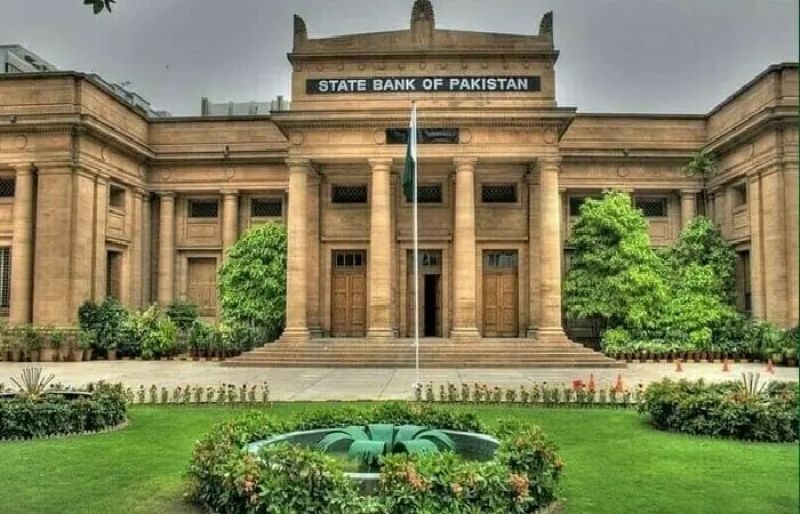
The State Bank of Pakistan’s Monetary Policy Committee (MPC) on Monday kept the policy rate unchanged at 11%, extending a pause in monetary easing for a fourth consecutive meeting.
The central bank had earlier reduced the policy rate by 1 percentage point to 11% on May 5, 2025.
Outlook improves but risks linger
The MPC noted that headline inflation rose to 5.6% in September from 3.0% in August, while core inflation remained at 7.3%. The Committee assessed that flood damage to the broader economy has been smaller than previously feared, with crop losses likely contained, minimal supply disruptions, and high-frequency indicators showing firmer momentum.
With the earlier reduction still transmitting through the economy, the MPC judged the real policy rate “adequately positive” to guide inflation toward the 5–7% medium-term target, even as risks persist from volatile global commodities, evolving tariff dynamics that could challenge exports, and potential domestic food-supply frictions.
Since the last meeting, several developments have shaped the outlook. The Pakistan Bureau of Statistics (PBS) revised the Fiscal Year 2025 (FY25) gross domestic product (GDP) growth to 3.0% from 2.7%. Initial estimates for major Kharif crops remained close to last year’s production despite floods. Notably, the State Bank of Pakistan (SBP) foreign exchange (FX) reserves continued to increase even after repayment of a $500 million Eurobond.
Pakistan reached a staff-level agreement with the International Monetary Fund (IMF) on reviews of the Extended Fund Facility (EFF) and the Resilience and Sustainability Facility (RSF).
Meanwhile, inflation expectations of consumers and businesses softened in the latest State Bank of Pakistan–Institute of Business Administration (SBP–IBA) sentiment surveys, while global commodity prices showed mixed trends and heightened oil volatility.
Reserves build as growth momentum forms
Recent high-frequency indicators point to sustained growth momentum, the statement noted. Major Kharif estimates turned out better than expected, corroborated by satellite imagery showing healthier vegetation. Improved input conditions and an expected post-flood yield uptick support better prospects for Rabi crops.
In industry, Large-Scale Manufacturing (LSM) expanded 4.4% year-on-year in July–August Fiscal Year 2026 (FY26), versus a marginal contraction a year earlier.
Stronger sales of automobiles, cement, fertilisers and petroleum, oil and lubricants (POL) products, alongside firmer private-sector credit and improved business sentiment, have lifted the industrial outlook, with spillovers expected into services. On current trends, real GDP growth is now assessed to be in the upper half of the previously projected 3.25%–4.25% range.
The current account (CA) recorded a $110 million surplus in September 2025, limiting the first quarter (Q1) of FY26 deficit to $594 million, broadly in line with expectations. Exports continued to grow moderately, while faster-rising imports widened the trade gap; workers’ remittances remained resilient.
Together with net financial inflows, this lifted SBP FX reserves to $14.5 billion as of October 17. Looking ahead, imports are likely to gain traction with activity, though flood-related import needs seem lower than earlier assumed, and the outlook for remittances has improved.
Overall, the current account deficit (CAD) is projected at 0–1% of GDP in FY26, with FX reserves expected to reach $15.5 billion by December 2025 and around $17.8 billion by June 2026, assuming planned official inflows.
In Q1-FY26, tax collection grew 12.5% year-on-year to Rs2.9 trillion, Rs198 billion below target. Higher SBP profit transfers and Petroleum Development Levy (PDL) receipts should bolster non-tax revenue, according to the statement.
Both the overall balance and the primary balance are likely to post surpluses for the quarter. The MPC expects post-flood rehabilitation to be financed within budgeted resources and reiterated the need for continued fiscal discipline to meet balance targets and secure long-term sustainability.
Broad money (M2) growth decelerated to 12.3% as of October 10, driven by a decline in the banking system’s net domestic assets, mainly due to sharply slower bank credit to non-bank financial institutions (NBFIs).
Net budgetary borrowing remained contained, creating space for the private sector: private-sector credit (PSC) growth rose to 17%, broad-based across working capital, fixed investment and consumer loans, with notable demand from textiles, telecommunications, chemicals, and wholesale/retail trade.
On the liability side, currency in circulation rose year-on-year while deposit growth decelerated, lifting the currency-to-deposit ratio (CDR) to 37.6% and keeping reserve money growth elevated.
The rise in headline inflation to 5.6% in September reflected flood-related food price increases, an uptick in energy prices, and sticky core inflation. Unlike past flood episodes, the food-price surge appears milder than feared, with the Sensitive Price Indicator (SPI) showing slower increases in wheat and allied products, sugar, and perishables.
The MPC nevertheless expects inflation to exceed the 5–7% band for a few months in the second half (H2) of FY26 before reverting to the target range in FY27. Key risks cited by the MPC include global commodity volatility, the timing and magnitude of future energy-price adjustments, and uncertainty around prices of wheat and perishable food items.




President Donald Trump raised hopes of an agreement between the US and Iran after days of escalation.
Source link
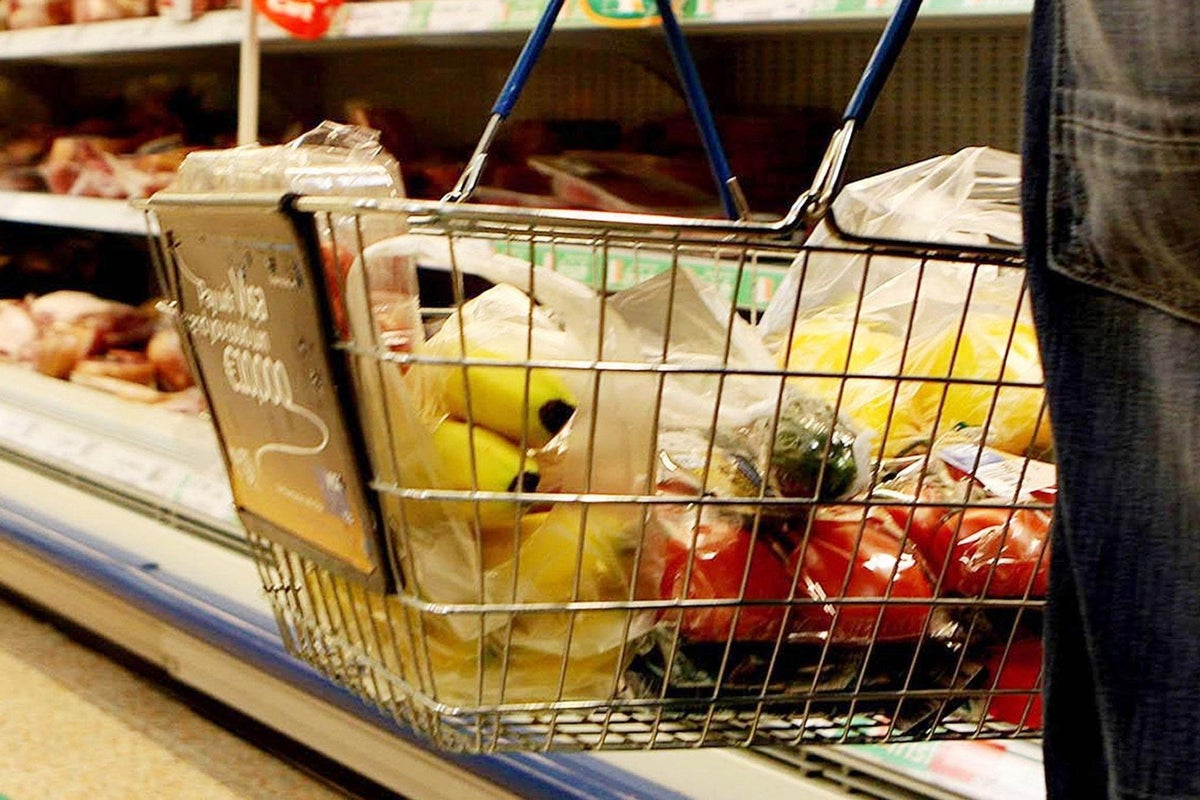
Retailers braced for the effects of the Middle East conflict have urged the Government to cut domestic costs to help them keep prices down for consumers.
The British Retail Consortium (BRC) said four in five people (80%) feared the Middle East conflict would push up food prices, and called on the Government to help by easing pressure on businesses from higher national insurance, packaging levies, new regulations, and business energy charges.
The BRC said retailers were already absorbing “significant” additional costs from the conflict including rising energy and shipping costs, with knock-on effects for fertiliser, manufacturing and logistics.
It warned those costs would inevitably filter through to the till over the coming months.
But it said the Middle East was only part of the picture, and retailers had absorbed £6.5 billion in extra employment costs from rising national insurance contributions and the national living wage, alongside a new packaging tax costing £1.6 billion.
Meanwhile, more regulatory “burdens” were imminent, including guaranteed hours provisions under the Employment Rights Act and the proposed reformulation of thousands of food lines under the new nutrient profiling model.
A survey for the BRC found 73% of people expect the Middle East conflict to raise the price of products other than food, while 81% are worried about rising energy bills, 76% about petrol and diesel, and 68% about tax increases.
Food retailers met Chancellor Rachel Reeves in early April and called for the removal of energy policy levies, network charges and system fees that now make up between 57% and 65% of a typical business electricity bill.
They also asked for the introduction of the updated nutrient profiling model for food and drink to be delayed, and for a review of the triple packaging levy, forecast to cost retailers more than £2 billion a year.
BRC chief executive Helen Dickinson said: “The Middle East conflict is driving up costs across the supply chain and families are right to be concerned.
“But not every pressure bearing down on retailers comes from the Gulf. Higher national insurance, packaging levies, new regulations, and business energy charges are all domestic policy decisions, made in Westminster, and they can be addressed there.
“Such action by government would help retailers to keep prices affordable for households.
“Other governments are already acting. Germany has reduced electricity costs for businesses by moving levies off bills and EU leaders are actively discussing similar responses to this crisis.
“The UK should be moving in the same direction, not treating global instability as cover for inaction on costs of its own making.
“Retailers are working hard to hold prices down, but they cannot do it alone.
“Every cost government chooses not to address is a cost that will find its way into someone’s shopping basket. That is a political choice, and it is one ministers still have time to change – but the window to act is closing.”

Campaigners are calling for the Government to ban the spraying of glyphosate on UK crops at harvest following studies linking it to cancer and other illnesses.
Glyphosate – commonly known for being the active ingredient in the product Roundup – is used by some farmers to tackle weeds, but it is also often sprayed on crops to dry them out at harvest time.
The Soil Association warned that this left residues in foods such as bread, breakfast cereal, and beer, with nearly half of crop samples tested in the UK across wheat, barley and oats containing the chemical.
Use of glyphosate as a pre-harvest drying agent was banned in the EU in 2023, and campaigners are calling on the UK Government to do the same.
Farmers Weekly reported in December that the renewal of glyphosate’s licence in Great Britain was entering a “critical stage”, with the Health and Safety Executive (HSE) set to launch a major public consultation ahead of a final approval decision later this year.
The consultation will allow farmers, industry, and farming organisations to comment on the extensive scientific dossier submitted by the Glyphosate Renewal Group (GRG), a coalition including Bayer, Syngenta, Nufarm and five other companies seeking renewal of the active ingredient.
Glyphosate remains approved for use in Great Britain until December 15, after ministers extended its authorisation to give regulators time to review new data.
Farmers Weekly said farming organisations were preparing to argue for continued access to glyphosate-based weedkillers – including as a pre-harvest desiccant – or moisture absorber – in cereals and oilseed rape, which they say is essential for food security, climate goals, and farm viability.
Glyphosate was labelled as a probable carcinogen by the World Health Organisation in 2015, and in March this year a group of international scientists gathered to review new science published over the last decade.
The expert statement issued after the Seattle Glyphosate Symposium stated that glyphosate and glyphosate-based herbicides (GBHs) harm human health and can cause cancer.
It added: “The evidence that glyphosate and GBHs harm human health at levels of current use is now so strong that no additional delays in regulation of glyphosate can be justified.”
In an open letter, the Soil Association, Nature Friendly Farming Network, Greenpeace, Riverford, The Wildlife Trusts and other environment and health groups have called for the Government to use the opportunity to end pre-harvest desiccation in the UK.
If implemented, this could prevent glyphosate from being sprayed annually on crops covering up to 780,000 hectares – an area five times the size of London – according to estimations by the Soil Association.
The charity has also launched a petition, and campaigners are calling for urgent support for farmers to ensure their businesses “can continue to thrive” while changing practices, alongside research into alternatives.
Soil Association campaigns co-ordinator Cathy Cliff said: “No-one wants a chemical linked to cancer in their sandwiches or breakfast cereal.
“The UK is already lagging behind Europe, which takes a much tougher stance on pesticides that pose a risk to human health.
“The Government must act to protect public health by stopping this toxic chemical from being sprayed on our food at harvest.
“Many farmers are already reducing their use of harmful pesticides, and the Government must work harder to support their efforts.
“Our Government must do the right thing and remove glyphosate from our foods, while supporting farmers to find alternatives that protect nature and public health.”
Dr May van Schalkwyk, from the Centre for Pesticide Suicide Prevention and Global Health Policy Unit at the University of Edinburgh, said: “There is a mounting body of independent evidence of the harm to people’s health and the environment from glyphosate-based pesticides.
“Government action is long overdue.”
Guy Singh-Watson, founder of organic vegetable box company Riverford, said: “Glyphosate use in our food system is poison in plain sight.
“Spraying crops with a chemical classified as ‘probably carcinogenic’, often just days before harvest, creates a direct route from field to plate that should concern us all.
“This is not only a public health issue, but also a farming one too.
“Many farmers are locked into using these chemicals by a system that leaves them with few commercially viable alternatives.
“The Government has a responsibility to ensure our food is produced without compromising the health of people or the planet.
“Banning glyphosate as a pre-harvest desiccant is a sensible first step, and farmers must be supported to make the transition away from chemical dependence.”
A Government spokesman said: “Like all pesticides, glyphosate is subject to strict regulation in Great Britain and are only approved for use if the evidence shows that they won’t harm human or animal health, and won’t have unacceptable effects on the environment.
“Our UK Pesticides National Action Plan supports moves by farmers, growers and other land managers to minimise the use of pesticides and increase integrated pest management – a holistic and sustainable approach to pest, weed and disease control.”


Italy’s inflation rises to 2.8% in April on energy spike
Oil prices ease as US pauses Project Freedom to seek Iran deal

Kadeem Hardison calls ‘Euphoria’ costar Zendaya ‘a boss’

-

 Tech1 week ago
A Brain Implant for Depression Is About to Be Tested in Humans
-

 Tech1 week ago
Almost 90% of women leave tech industry within 10 years | Computer Weekly
-

 Sports1 week ago
Pro wrestling star Steph De Lander reveals how colleague’s advice helped lead her to title triumph at ACW
-
 Business1 week ago
‘I had £20,000 stolen and had to fight a 13-month fraud reporting rule to get it back’
-

 Entertainment1 week ago
Norway joins Type 26 Frigate Programme to boost NATO naval power
-

 Tech1 week ago
Are tech leaders risking a cyber resourcing crisis? | Computer Weekly
-

 Entertainment1 week ago
Melania Trump says ABC should ‘take a stand’ on late-night host Kimmel
-
 Business6 days ago
PSX plunges over 4,800 points | The Express Tribune