

Business
SC permits Centre to review Rs 6,000cr additional dues on Vodafone-Idea – The Times of India


NEW DELHI: The Union govt on Monday convinced the Supreme Court to permit the department of telecom to review its demand of Rs 6,000 crore additional adjusted gross revenue demand for the FY 2016-17 on Vodafone-Idea. Chief Justice B R Gavai and Justice K Vinod Chandran was informed by solicitor general Tushar Mehta that since the previous round of litigation, in which Vodafone was ordered to pay the AGR dues, there had been a change of circumstance as the Centre has acquired a 49% stake in the company. Mehta said, “We do not want the company, in which the govt has a huge investment, to go bankrupt to make 20 crore people suffer. ‘Govt wants to prevent monopoly’ Govt wants more players in the mobile telecom sector to prevent monopoly,” said solicitor general Tushar Mehta. Vodafone through senior advocate Mukul Rohatgi had argued that the SC had frozen the AGR dues at Rs 58,254 crore as of 2016-17 and that the DoT cannot raise additional AGR dues in breach of the SC order. Govt had converted Rs 36,950 cr dues as its 49% equity in the telecom service provider.
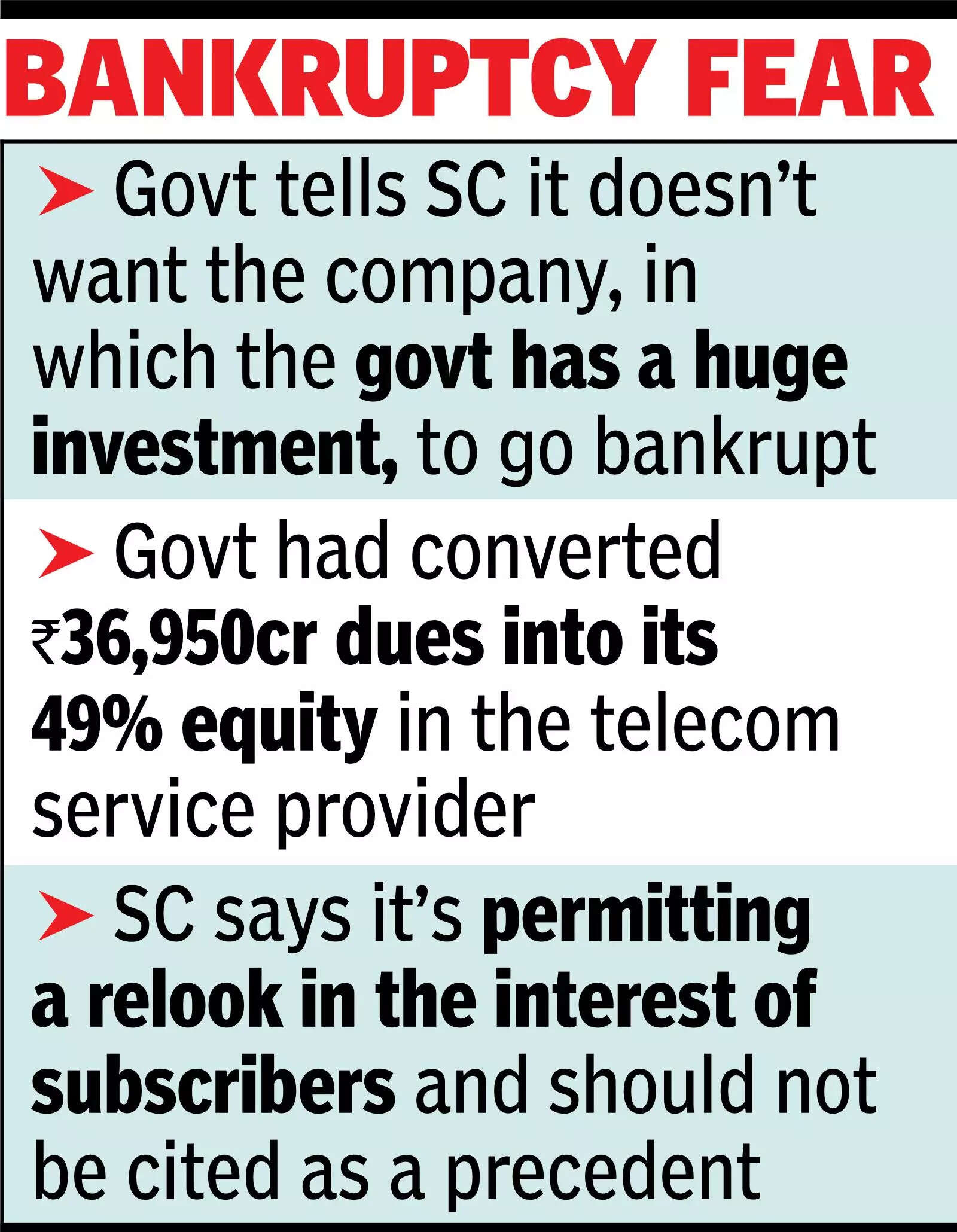
The bench noticed the element of public interest in the case and permitted the Centre to take a fresh view of the additional AGR demands, especially when the issue is purely in the policy domain and involves the interests of 20 crore people. “We see no reason why the Centre should be prevented from taking a relook at the additional AGR dues,” the bench said.







Interest rates are widely expected to remain at 3.75% as Bank of England policymakers prioritise curbing above-target inflation while also monitoring economic growth, according to expert analysis.
The Bank’s Monetary Policy Committee (MPC) is anticipated to leave borrowing costs unchanged when it announces its latest decision on Thursday, marking its first interest rate setting meeting of the year.
This follows a rate cut delivered before Christmas, which was the fourth such reduction.
At the time, Governor Andrew Bailey noted that the UK had “passed the recent peak in inflation and it has continued to fall”, enabling the MPC to ease borrowing costs. However, he cautioned that any further cuts would be a “closer call”.
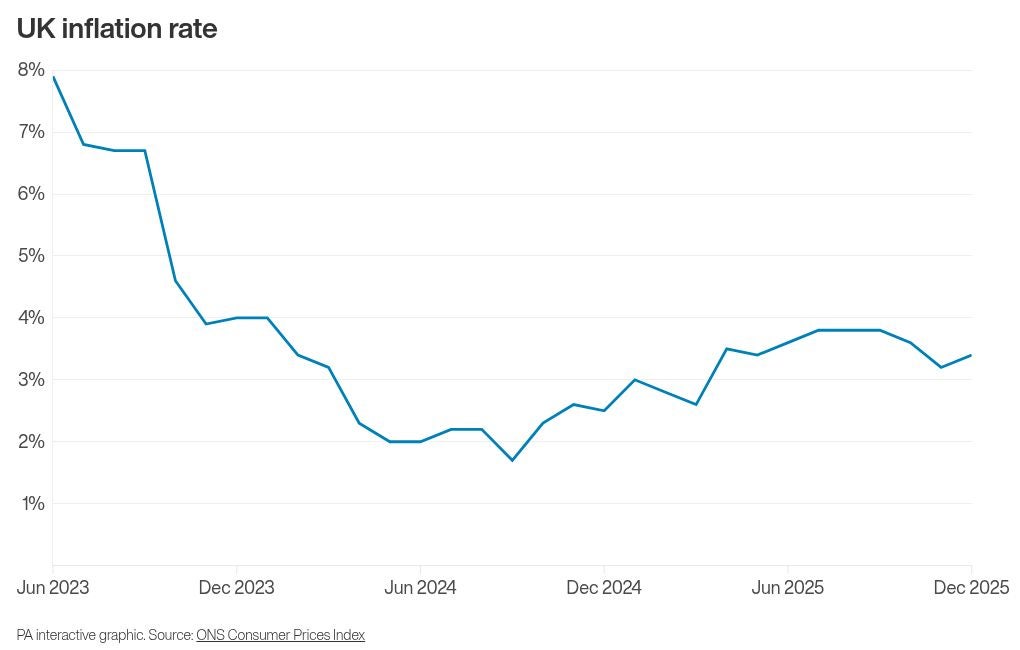
Since that decision, official data has revealed that inflation unexpectedly rebounded in December, rising for the first time in five months.
The Consumer Prices Index (CPI) inflation rate reached 3.4% for the month, an increase from 3.2% in November, with factors such as tobacco duties and airfares contributing to the upward pressure on prices.
Economists suggest this inflation uptick is likely to reinforce the MPC’s inclination to keep rates steady this month.
Philip Shaw, an analyst for Investec, stated: “The principal reason to hold off from easing again is that at 3.4% in December, inflation remains well above the 2% target.”
He added: “But with the stance of policy less restrictive than previously, there are greater risks that further easing is unwarranted.”
Shaw also highlighted other data points the MPC would consider, including gross domestic product (GDP), which saw a return to growth of 0.3% in November – a potentially encouraging sign for policymakers.
Matt Swannell, chief economic advisor to the EY ITEM Club, affirmed: “Keeping bank rate unchanged at 3.75% at next week’s meeting looks a near-certainty.”
He noted that while some MPC members who favoured a cut in December still have concerns about persistent wage growth and inflation, recent data has not been compelling enough to prompt back-to-back reductions.
Edward Allenby, senior economic advisor at Oxford Economics, forecasts the next rate cut to occur in April.
He explained: “The MPC will continue to face a delicate balancing act between supporting growth and preventing inflation from becoming entrenched, with forthcoming data on pay settlements likely to play a decisive role in shaping the next policy move.”
The Bank’s policymakers have consistently voiced concerns regarding the pace of wage increases in the UK, which can fuel overall inflation.
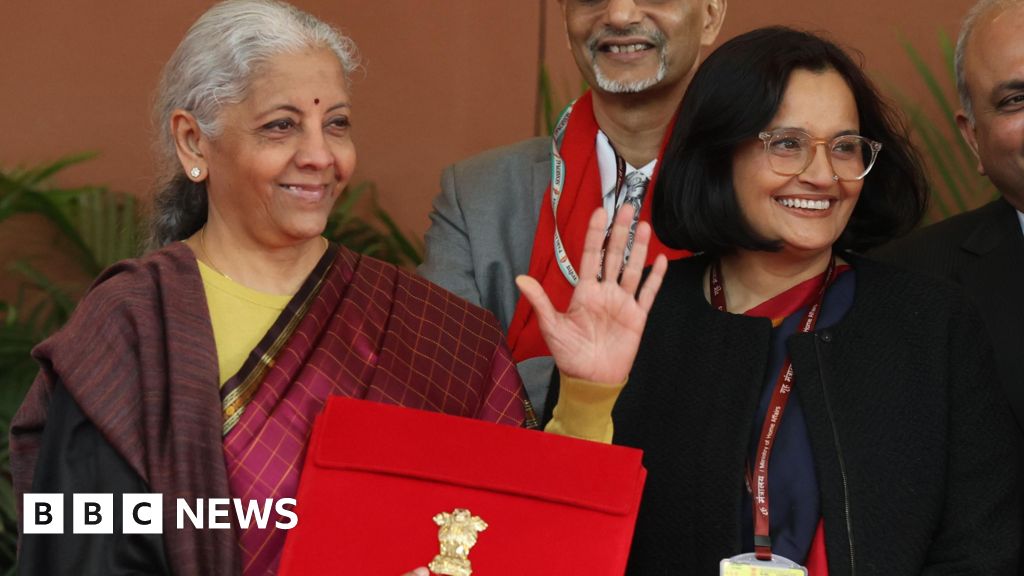
India’s budget focuses on infrastructure and defence spending and tax breaks for data-centre investments.
Source link
Business
New Income Tax Act 2025 to come into effect from April 1, key reliefs announced in Budget 2026

New Delhi: Finance Minister Nirmala Sitharaman on Sunday said that the Income Tax Act 2025 will come into effect from April 1, 2026, and the I-T forms have been redesigned such that ordinary citizens can comply without difficulty for ease of living.
The new measures include exemption on insurance interest awards, nil deduction certificates for small taxpayers, and extension of the ITR filing deadline for non-audit cases to August 31.
Individuals with ITR 1 and ITR 2 will continue to file I-T returns till July 31.
“In July 2024, I announced a comprehensive review of the Income Tax Act 1961. This was completed in record time, and the Income Tax Act 2025 will come into effect from April 1, 2026. The forms have been redesigned such that ordinary citizens can comply without difficulty, for) ease of living,” she said while presenting the Budget 2026-27
In a move that directly eases cash-flow pressure on individuals making overseas payments, the Union Budget announced lower tax collection at source across key categories.
“I propose to reduce the TCS rate on the sale of overseas tour programme packages from the current 5 per cent and 20 per cent to 2 per cent without any stipulation of amount. I propose to reduce the TCS rate for pursuing education and for medical purposes from 5 per cent to 2 per cent,” said Sitharaman.
She clarified withholding on services, adding that “supply of manpower services is proposed to be specifically brought within the ambit of payment contractors for the purpose of TDS to avoid ambiguity”.
“Thus, TDS on these services will be at the rate of either 1 per cent or 2 per cent only,” she mentioned during her Budget speech.
The Budget also proposes a tax holiday for foreign cloud companies using data centres in India till 2047.

The best- and worst-case trade scenarios for Giannis Antetokounmpo’s fantasy value

Netflix’s exciting February line up revealed

Netherlands’ goods exports to US fall 4.7% in Jan-Oct 2025

-

 Sports5 days ago
PSL 11: Local players’ category renewals unveiled ahead of auction
-

 Tech1 week ago
Strap One of Our Favorite Action Cameras to Your Helmet or a Floaty
-

 Sports1 week ago
Wanted Olympian-turned-fugitive Ryan Wedding in custody, sources say
-

 Entertainment1 week ago
Three dead after suicide blast targets peace committee leader’s home in DI Khan
-

 Tech1 week ago
This Mega Snowstorm Will Be a Test for the US Supply Chain
-

 Sports1 week ago
Storylines shaping the 2025-26 men’s college basketball season
-

 Fashion1 week ago
Spain’s apparel imports up 7.10% in Jan-Oct as sourcing realigns
-

 Entertainment1 week ago
UFC Head Dana White credits Trump for putting UFC ‘on the map’