

Business
SEBI Pushes Back Retail Algo Trading Framework, Sets Phased Rollout Till April 2026

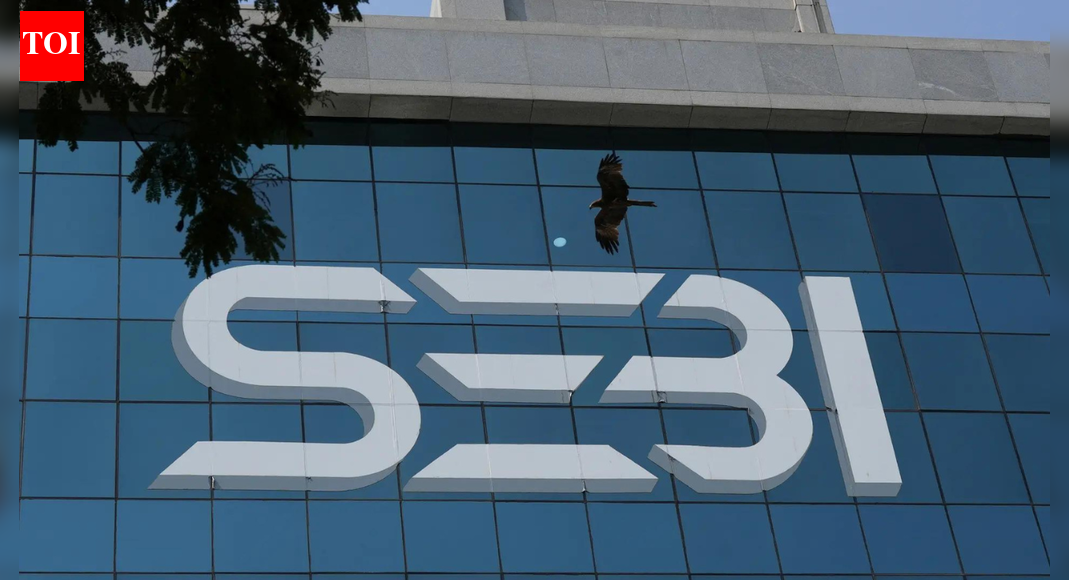
New Delhi: The Securities and Exchange Board of India (SEBI) on Tuesday once again extended the timeline for implementing its framework on “Safer participation of retail investors in algorithmic trading.”
The regulator said stock brokers will now get more time to comply with the new rules after many brokers and algo vendors requested additional time to make system-related changes.
The framework, which was earlier supposed to come into effect from August 1, 2025, was first postponed to October 1, 2025.
SEBI has now introduced a phased roadmap for implementation to ensure a smooth rollout.
As per the new schedule, brokers must apply for registration of at least one retail algo strategy through an API by October 31.
They will have to complete registration of retail algo products and some strategies by November 30 and participate in at least one full-fledged mock trading session by January 3, 2026.
Brokers who fail to meet these milestones will not be allowed to onboard new retail clients for API-based algo trading from January 5, 2026.
The entire framework, along with detailed operational standards, will become effective for all brokers from April 1, 2026.
Brokers who are not ready to go live by October 1, will also have to submit information about their existing clients as of September 30, to the exchanges.
SEBI said the guidelines aim to clearly define the rights and responsibilities of investors, brokers, algo providers, vendors, and market infrastructure institutions such as exchanges, depositories, and clearing corporations.
Under the rules, all algorithmic trading strategies will need to be registered with stock exchanges and assigned a unique identification.
This mechanism will help exchanges track algo orders placed through Direct APIs. Algo providers will also have to be empanelled with the exchange before registering their products, and the process will have to be done through a trading member before an algo ID is issued.



ChatGPT developer OpenAI has halted plans for a significant UK data centre project, citing high energy costs and regulatory challenges as barriers to investment.
The US technology giant had intended to establish its “Stargate” data centre initiative within a new artificial intelligence growth zone in the north-east of England.
The venture was slated for multiple sites, including Cobalt Park near Newcastle and Blyth.
However, OpenAI said the plans are now on hold, awaiting “the right conditions” to facilitate long-term infrastructure investment across the UK.
A spokesman for OpenAI said: “We see huge potential for the UK’s AI future. London is home to our largest international research hub, and we support the Government’s ambition to be an AI leader.
“AI compute is foundational to that goal – we continue to explore Stargate UK and will move forward when the right conditions such as regulation and the cost of energy enable long-term infrastructure investment.”
The reference to energy costs come at a time when prices are being pushed higher by the US and Israel’s war with Iran.
The International Monetary Fund (IMF) said in March that the UK was one of the nations particularly exposed to soaring wholesale costs because of its reliance on gas-fired power, as opposed to sources such as nuclear and renewable energy.
Data centres are powered by very large amounts of energy so are more likely to be exposed to volatile prices.
OpenAI added: “In the meantime, we are investing in talent and expanding our local presence, while also delivering on the commitments under our MOU (memorandum of understanding) with the Government to adopt frontier AI in UK public services.”
Its Stargate project aims to invest billions of dollars into AI infrastructure in the US, with funding from OpenAI, SoftBank, Oracle and MGX and partnering with tech giants including Nvidia and Microsoft.
Building it into the UK came as part of a landmark tech deal between Britain and the US, announced last September amid President Donald Trump’s second state visit.
The deal also included a 30 billion US dollar (£22.3 billion) pledge from Microsoft, the largest ever made by the company in the UK, to fund the expansion of Britain’s AI infrastructure.
Conservative MP and shadow science minister Ben Spencer said: “When global firms cite high energy costs and regulatory uncertainty as reasons to walk away, it tells you everything about the direction of travel.
“For too long, Labour have prioritised courting big tech headlines while neglecting our domestic start-ups, but also the fundamentals that actually attract investment at home.”

Importers are in line for tariff refunds. But whether everyone who paid the for the tariffs will get money back is a trickier question.
Source link

Somerset councillor Heather Shearer said: “One thing the Crisis Resilience Fund wants us to do is not just support people in crisis, it also wants us to work in our community, give more strength and support for the organisations who already support our families.”


UK, Bangladesh to reactivate trade, investment dialogue

Meta’s New AI Asked for My Raw Health Data—and Gave Me Terrible Advice

This Bayern are special and a force to be reckoned with in Germany and Europe

-
 Business1 week ago
Jaguar Land Rover sees sales recover after cyber attack
-
Uncategorized1 week ago
[CinePlex360] Please moderate: “Trump signals p
-

 Entertainment7 days ago
Joe Jonas shares candid glimpse into parenthood with Sophie Turner
-

 Tech7 days ago
Our Favorite iPad Is $50 Off
-

 Sports6 days ago
UConn Final Four run could trigger a $50M furniture giveaway for Massachusetts-based Jordan’s Furniture
-

 Entertainment7 days ago
Blake Lively reacts to harassment claims dismissal against Justin Baldoni
-
 Business7 days ago
Video: Why Is the Labor Market Stuck?
-

 Politics7 days ago
Iran can sustain Strait of Hormuz closure for years, will cut US military logistics: Official