Connect with us

Fashion

Section 301 tariffs to tackle China’s practices ineffective: US AAFA

Published

on

Section 301 tariffs to tackle China’s practices ineffective: US AAFA
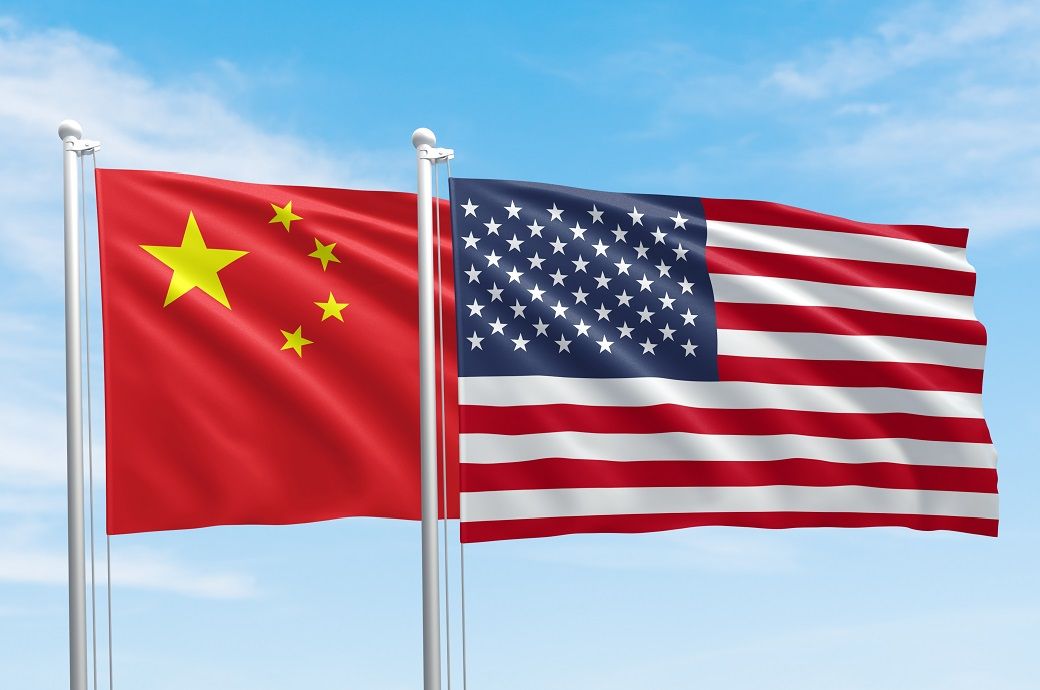


The American Apparel & Footwear Association (AAFA) recently said it does not believe the application of the Section 301 tariffs to remedy China’s ‘harmful’ trade practices and policies has been an effective tool.

In a letter to Philip Butler, chair of the Section 301 Committee of the Office of the US Trade Representative, Beth Hughes, AAFA vice president for trade and customs policy, said the association

US trade body AAFA recently said it does not believe the application of the Section 301 tariffs to remedy China’s ‘harmful’ trade practices and policies has been an effective tool.
It recommended the US administration to determine if any of the exclusions listed should qualify for permanent or more-longer term exclusion periods to give US companies more predictability.

strongly supports the extension of the current China 301 exclusions, which are set to expire on November 29 this year, and recommended the US administration to determine if any of the exclusions listed should qualify for permanent or more-longer term exclusion periods to give US companies more predictability.

Close to 97 per cent of apparel, footwear and related goods sold in the United States today

are imported. Yet the United States maintains high duties on these products—some of the highest levied on any product—adversely affecting US consumers who ultimately pay those duties in the form of higher prices, the letter noted.

“Although the average trade weighted tariff rate imposed on all products was approximately 2.35 per cent in 2024, the average trade weighted tariff rate in 2024 on knit apparel was 14.90 per cent, woven apparel 14.29 per cent, footwear 12.25 per cent, home textiles 8.70 per cent, and 13.85 per cent on travel goods.1 Moreover, the amount of tariffs collected on imports of US apparel, footwear, textiles, and travel goods in 2024 exceed $18.3 billion,” the letter said.

This burden falls disproportionately on products imported by the sector, even though many of these products are no longer made in commercial quantities in the United States, AAFA observed.

Fibre2Fashion News Desk (DS)


Source link

Continue Reading
Click to comment

Leave a Reply

Your email address will not be published. Required fields are marked *

Fashion

Santiago Cucci on IKKS: ‘It’s time for us to refocus on our flagship brand’

Published

on

Santiago Cucci on IKKS: ‘It’s time for us to refocus on our flagship brand’


Published


December 14, 2025

In October, this was not necessarily the frontrunner in the race to take over the IKKS Group. The French premium ready-to-wear specialist, owner of the eponymous brand as well as One Step and I.Code, attracted around a dozen bidders after being placed in receivership at the start of autumn, including the respective owners of The Kooples, Pimkie, Morgan and Caroll.

But in the home stretch, the duo of Michaël Benabou, co-founder of VeePee (then called Vente Privée) and head of the investment company Financière Saint James, and Santiago Cucci, a specialist in premium ready-to-wear and former head of the Levi’s and Dockers brands, who for a time supported the leadership of Dutch label G-Star, strengthened their bid. The entrepreneur, a sports enthusiast who knows the case well, having taken over as chairman of the HoldIKKS holding company last year, knows that competitions are decided right up to the last minute. Despite the loss of almost half the workforce, their offer, which safeguards 546 jobs and includes 119 directly operated stores, won the backing of the group’s works council (CSE) and was formally approved by the Paris Court for Economic Activities.

A few hours after the decision was made official, Cucci outlined his roadmap for IKKS to FashionNetwork.com.

Santiago Cucci headed Levi’s in the United States and set a new tone at Dockers – Archive Dockers

FashionNetwork.com: What was your reaction to the announcement of the court’s decision?

Santiago Cucci: We’re delighted to be taking over this iconic brand. I think it’s a brand that touches the hearts of the French. We all have a history with IKKS, whether from our younger years or through our children, often tied to festive moments. This means there’s a whole generation entering adulthood already very familiar with the brand and feeling positively towards it. That’s the capital we’re taking on today. And this affinity extends well beyond end consumers: of the 118 affiliates we contacted, 116 said yes.

FNW: Because beyond the 119 directly operated stores, you had to convince partners to come on board…

SC: Whether with affiliates, suppliers we had to renegotiate with, or across the entire value chain through to consumers, I believe the whole ecosystem still holds the brand in very high regard. Our job now is to make the brand desirable, using digital tools that deliver a strong and seamless customer experience.

FNW: You’re keeping 546 jobs, many of them in stores. What are the next steps, particularly on the social front?

SC: As we’re taking over the company, on Monday I’ll be in Saint-Macaire to meet the employees who are part of the project. We’ll be putting together a new management team across most functions over the next few weeks. I would like to thank the management team, who have done their utmost to steer the company through difficult conditions in recent years. In our takeover plan, we have committed to investing 700,000 euros to acquire the brand’s assets and inventories, and 700,000 euros to contribute to the PSE. Matters concerning those who are leaving will be handled by the court-appointed liquidator. However, we intend to rehire a few people to help secure the path forward over the coming months.

FNW: In your plan, a number of activities were to be discontinued. Where are you going to focus your efforts?

SC: We’re refocusing on IKKS’s adult business. We’re putting the junior business on hold. Even though that’s the brand’s roots, in France the leading player in the junior market is the second-hand segment. We have to accept that reality. But those consumers who were juniors are now adults and already have a relationship with the brand. At the same time, the group had been managing I.Code and One Step. It’s time to refocus on the flagship and discontinue the two brands and childrenswear. It’s important to note that the junior segment accounts for 82% of IKKS’s losses.

The IKKS Junior line will be put on hold
The IKKS Junior line will be put on hold – IKKS

=

FNW: Does this mean that you think the adult part of IKKS, the core on which you’re refocusing, could be profitable fairly quickly?

SC: You’re right. As early as the first year—2026, which will be a transitional year—we have a profitable business model, with reinvestment back into the company.

FNW: Alongside the buyout, you announced a 16 million euro investment package. What are your investment priorities?

SC: We’ve budgeted almost 17 million euros to get the supply chain engine up and running again. It’s a real machine. We’re going to invest in boosting the brand’s desirability, and in IT infrastructure that is from another era, which we’ll upgrade in the first quarter. In my experience, I’ve always been quick to transform companies.

FNW: What will you bring over from your experience at Levi’s and Dockers? What do you think is essential to the successful evolution of a brand?

SC: We’re going to clarify the brand’s identity and values. We’ll enhance the customer experience, particularly by engaging more meaningfully with our community and relying a little less on promotions alone. To do this, we’ll invest in infrastructure and in our go-to-market. We’ll invest in production capabilities so we can be more flexible and hold inventory that matches market needs. We want to be less dependent on promotional periods.

FNW: Is the idea also to reduce the share of revenue coming from markdowns?

SC: You have to be clear about prices. You can’t set a price and then run permanent promotions afterwards. So we’re going to bring more clarity for consumers to the pricing structure, especially at the start of the season. By the way, the design team has done a great job, which is why we’re keeping them on. Now we’re going to make this offer more visible, with a pricing structure that has to be logical. Encouragingly, the results for this reworked adult offer are positive.

This article is an automatic translation.
Click here to read the original article.

Copyright © 2025 FashionNetwork.com All rights reserved.


Source link

Continue Reading

Fashion

Daveed Baptiste wins 2025 Empowered Vision Award

Published

on

Daveed Baptiste wins 2025 Empowered Vision Award


Published


December 14, 2025

Designer Daveed Baptiste has been named the recipient of the 2025 Empowered Vision Award, presented by The Andréa W. and Kenneth C. Frazier Family Foundation in partnership with the Council of Fashion Designers of America (CFDA).

Daveed Baptiste wins 2025 Empowered Vision Award. – Daveed Baptiste

The announcement was made Thursday evening at a cocktail reception at the W Union Square in New York City, where artistic director and cultural advocate Edward Buchanan and supermodel Imaan Hammam revealed Baptiste as this year’s honouree. The event drew members of the fashion industry, media, and design community to celebrate the award’s mission of supporting and elevating Black designers.

“Daveed Baptiste ultimately distinguished themselves through clear, thoughtful storytelling and a disciplined, vulnerable approach to building and strengthening their tools to lead a business,” said Milton Dixon III, program director of the Empowered Vision Award. 

“We’re proud to support a designer whose work speaks to the future of fashion, and we’re excited to move forward with them over the next year of mentorship and continued investment.”

The Empowered Vision Award includes a $100,000 financial grant, along with a year-long mentorship program valued at an additional $100,000. The initiative is designed to provide emerging Black designers with critical funding, industry guidance, and strategic support to help scale their businesses and build a global presence

Copyright © 2025 FashionNetwork.com All rights reserved.


Source link

Continue Reading

Fashion

US textile imports steady as Cambodia, Bangladesh gain market share

Published

on

US textile imports steady as Cambodia, Bangladesh gain market share


China retained its position as the largest supplier with a **.** per cent market share, followed by Vietnam at **.** per cent. However, China’s share continued to slide month after month, reflecting a structural shift in sourcing. American buyers are increasingly diversifying towards Southeast and South Asia to reduce tariff exposure, mitigate geopolitical risk, counter rising production and labour costs, and build more resilient supply chains.

During January–September ****, apparel imports—the dominant product category—rose by *.** per cent to $**.*** billion, compared with $**.*** billion in the corresponding period of ****. In contrast, non-apparel imports fell by *.** per cent to $**.*** billion, as slower housing activity, cautious consumer spending, and order rationalisation by retailers softened demand for home textiles, industrial textiles, and made-ups.


Source link

Continue Reading

Trending