

Sports
Sen. Ted Cruz against idea of college athletes as employees


Sen. Ted Cruz said it is “absolutely critical” that any federal law related to college sports includes a provision that prevents athletes from being deemed employees of their school.
The Republican from Texas, who holds a key position in advancing NCAA legislation as chair of the Senate Commerce Committee, told ESPN in an interview Wednesday that Congress might run out of time to act if it can’t find a bipartisan solution in the coming months. During a yearslong effort to restore order to the college sports industry, Republicans and Democrats have remained largely divided on whether college athletes should have a future avenue for collective bargaining, which would require them to be employees.
“Clarifying that student athletes are not employees is absolutely critical,” Cruz told ESPN. “Without it, we will see enormous and irreparable damage to college sports.”
Cruz and NCAA leaders say many smaller schools would not be able to afford their teams if athletes had to be paid and receive benefits as employees. However, as lawsuits over player contracts and eligibility rules continue to mount, a growing number of frustrated coaches and athletic directors from major programs say they are open to collective bargaining as a solution.
“I’ve always been against this idea of players as employees, but quite frankly, that might be the only way to protect the collegiate model,” Clemson football coach Dabo Swinney, a longtime defender of amateurism, said at a news conference last week.
The NCAA and its members have spent millions of dollars in the past several years lobbying Congress for a bill that would grant the association an antitrust exemption, supersede state laws related to college sports and block attempts to gain employee status for athletes. Despite more than a dozen Capitol Hill hearings and a long list of proposals, no bill has reached a full vote in either chamber of Congress to date.
Senate Commerce Committee staff told ESPN that Cruz and a bipartisan group of senators have made significant progress on a new draft of a bill but are at an impasse on the employment issue. Cruz said Democrats and labor unions are concerned about setting a broader precedent for other industries by closing the door on college athlete employment, which has led to the stalemate.
“From a political perspective, you have labor union bosses that would love to see every college athlete deemed an employee made a member of a union and contributing union dues to elect Democrats,” Cruz said. “It’s terrible for college sports, but I get that there’s some partisan appeal to it.”
Sen. Maria Cantwell, the highest-ranking Democrat on the Commerce Committee, said in a statement to ESPN that she also sees “growing bipartisan interest” for Congress to act. She has proposed separate college sports legislation that doesn’t advocate for athletes to be employees but leaves the door open for employment or collective bargaining in the future. She told ESPN that the committee “should move the ball forward with a hearing on this [topic].”
The large and expanding gap between the top tier of college teams and the rest of the NCAA has made it difficult to find a fair solution for all parties.
Last September, the commissioners of four conferences that comprise many of the nation’s historically Black colleges and universities told members of Congress in a letter that making college athletes employees would “pose an existential threat” to their teams.
Most schools in those conferences spend between $10 million and $20 million annually on their entire athletic department — roughly 10% the size of athletic budgets at power conference schools. Their commissioners told Congress that a legal need to pay additional benefits to athletes “could lead to the elimination of intercollegiate athletics” at some schools.
Meanwhile, the pressing problems the NCAA says can be solved only via federal legislation — schools suing players over contract disputes, players suing the NCAA to extend their eligibility or to return to college from professional careers — are exclusively happening at the wealthier power-conference schools.
Congress could help by distinguishing between college athletes who should be considered school employees and those who shouldn’t, said employment attorney Scott Schneider, who works with athletic departments at small and large universities.
Schneider said that he does not see a clear legal path to collective bargaining but that schools could solve many of their most pressing problems by signing athletes to employment contracts instead of the name, image and likeness licensing deals currently used to pay players.
Schneider said treating all Division I athletes as a “monolith is absurd.” He said it’s clear that the relationship between an athlete and a small institution is “vastly different” from that between a star player and an SEC school, for example.
“The smaller university doesn’t have the same degree of day-to-day control over how the player spends their time,” Schneider said. He pointed to Colorado coach Deion Sanders’ recent announcement that he would fine players for missing practice or breaking other team rules as an example of employment-like control.
“There is a way to draw that line in legislation so you don’t have to draw it through years and years of litigation,” Schneider said.
When asked if creating a distinction between groups of college athletes is a viable compromise for Congress, Cruz told ESPN that he does not think “employment status is the answer to this problem.”
Employment and collective bargaining could give athletes benefits beyond negotiating for more money, such as health care, scholarship guarantees and a more significant voice in making rules. Senate Commerce Committee staffers said the proposal currently being negotiated includes all of those benefits in a way that “would exceed what [players] could get in collective bargaining.” One staffer said the hope is to provide more benefits to athletes without creating fundamental changes to the college sports system.
“The employment system is dramatically different than what a student-athlete is,” Cruz told ESPN. “A student-athlete is meant to be a student, to get a degree. And the entire world of employment regulation is designed for a totally different system.”
The NCAA is the defendant in one active federal lawsuit that claims all Division I athletes should be deemed employees of their schools. The plaintiffs, led by former Villanova football player Trey Johnson, and attorney Paul McDonald argue that athletes should be given the same rights as students who sell tickets or concessions at college sports games — treated as employees while still working toward their degrees.
The Johnson case has been awaiting its next hearing for more than a year. Many college sports leaders are concerned that if Congress members don’t decide on employment status in the near future, a federal judge will do it for them.
NEWYou can now listen to Fox News articles!
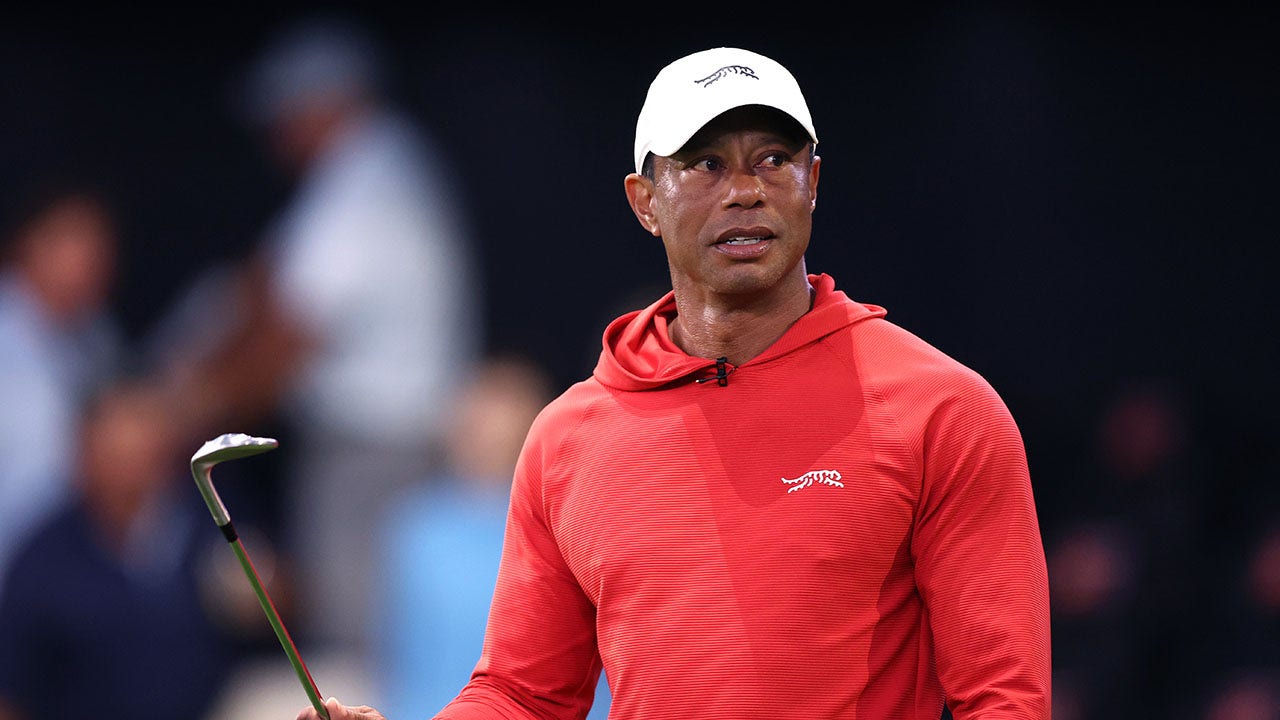
Tiger Woods was involved in a car crash in Florida on Friday, according to multiple reports.
The Martin County Sheriff’s Office told ESPN that the crash happened on Jupiter Island on Friday afternoon. Woods’ condition was not immediately known.
Woods competed in the TGL championship earlier this week with his girlfriend, Vanessa Trump, and her daughter, Kai, in the stands. It was his return to competitive golf after rupturing his Achilles last year, just ahead of the Masters.
Tiger Woods of Jupiter Links Golf Club looks on before the match against the Los Angeles Golf Club at SoFi Center on March 23, 2026, in Palm Beach Gardens, Florida. (Adam Glanzman/TGL/TGL Golf via Getty Images)
The 15-time major winner, five of which have come at Augusta, was noncommittal about playing at this year’s Masters. President Donald Trump said on “The Five” on Thursday that he would be at Augusta but not play.
Woods has had trouble behind the wheel in the past. In 2021, he got into a wreck that resulted in serious leg injuries that kept him off the golf course for months.
This is a breaking story. Check back for more updates.
Follow Fox News Digital’s sports coverage on X, and subscribe to the Fox News Sports Huddle newsletter.
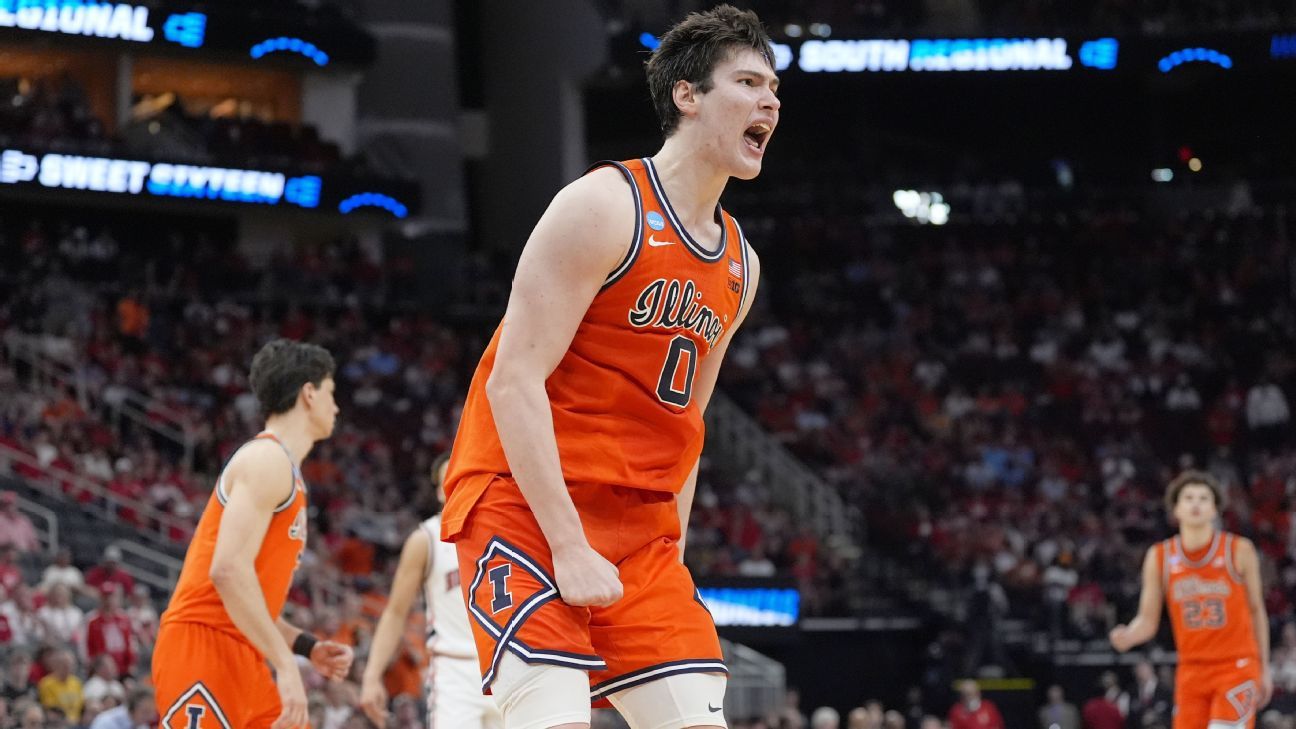
HOUSTON — David Mirkovic had 14 points and 10 rebounds, and third-seeded Illinois flexed its defensive muscles to eliminate last year’s national runner-up from the NCAA tournament, beating Houston 65-55 in the South Region semifinals on Thursday night.
Next up is a meeting Saturday with ninth-seeded Iowa to see which Big Ten team will advance to the Final Four. It will be the 11th Elite Eight appearance for Illinois (27-8) and its second in three seasons under Brad Underwood.
In the Sweet 16 for a seventh consecutive time, the second-seeded Cougars (30-7) were thrilled to be playing just over two miles from their campus. But their poor shooting gave Houston fans little to cheer about and delighted the orange-clad Illini faithful who made the long trip to Texas.
“At the beginning of the game Houston fans were a little louder, but as game was going, [our fans] started being louder in their city,” Mirkovic said. “So it’s just really important for us, I would say just like a wind to our back. They pushed us, and thanks for them.”
Star freshman point guard Kingston Flemings, who is expected to be an NBA lottery pick, had 11 points on 4-of-10 shooting. Milos Uzan made just 2 of 11 shots.
But they were far from the only Cougars who struggled offensively. The team shot just 34% in its lowest-scoring game of the season.
Underwood was asked about his team’s defensive performance.
“I think it’s a mental focus,” he said. “We’ve been very good at times defensively. It’s just sustaining it. We’ve got very capable defenders, we’ve got size and length, and we just got to make shots difficult.”
Illinois finished well under the 84.7 points a game it averaged entering Thursday. But its offense was still plenty powerful enough to send Houston back to its nearby campus. Keaton Wagler had 13 points and a team-high 12 rebounds for the Illini; he and Mirkovic became the first pair of freshman teammates to each have a double-double in the same NCAA tournament game since freshmen became fully eligible in 1972-73, according to ESPN Research.
“Coaches were telling us before the game: ‘It’s going to be a guard game to get rebounds. We need 10-plus out of the guards,'” he said. “So I took that challenge on. I went in there, tried to play as tough as I could, not let them get any second-chance rebounds. I went in there and tried to get every rebound I could.”
Andrej Stojakovic — with his dad, three-time NBA All-Star Peja Stojakovic, in the stands — also scored 13.
By the time the final seconds ticked off the clock, many Houston fans had cleared out and the Illinois supporters stood and cheered as their team celebrated.
“I was proud of our kids’ effort,” Houston coach Kelvin Sampson said. “We just didn’t play good enough.”
The Illini were up by one early in the second half when they broke it open with a 17-0 run for a 44-26 lead with about 12 minutes left. Jake Davis scored five points during the burst, including a 3-pointer, and Mirkovic and Ben Humrichous capped it with consecutive 3s.
The Cougars missed seven consecutive shots as Illinois built its lead. When Uzan finally ended Houston’s drought with a 3-pointer with 11:20 left, it had been almost seven minutes since the team had scored.
“We were getting stops and we were limiting them to one shot, and to tough shots as well,” Wagler said. “Making them shoot tough middies or contested at the rim, 3-pointers, all of that, and then we were going in and grabbing the rebound and offensively we were getting the shots that we wanted, we were knocking them down.”
Consecutive 3-pointers by Chase McCarty got Houston within nine with about six minutes left. But Wagler and Tomislav Ivisic made 3-pointers to fuel an 8-0 run that extended the lead to 58-41.
The Associated Press contributed to this report.
Sports
Trey Kaufman-Renn’s controversial tip-in gives Boilermakers spot in Elite Eight, ends Texas’ Cinderella story
NEWYou can now listen to Fox News articles!
The No. 11 Texas Longhorns’ Cinderella story in the NCAA Tournament came to a heartbreaking end on Thursday night, as Trey Kaufman-Renn’s tip with 0.7 seconds left on the clock gave No. 2 Purdue a 79-77 lead to advance to the Elite Eight.
It was a thriller to the end in this Sweet 16 matchup between a team that needed to play in the First Four to kick off the tournament, and one of the higher seeds in March Madness.
The Longhorns’ Dailyn Swain made a clutch and-one layup with 11 seconds left that allowed him the opportunity to tie the game at 77 apiece if he made his free throw. He nailed it with the pressure on, but the Boilermakers had 11 seconds to get up court and potentially win the game.
CLICK HERE FOR MORE SPORTS COVERAGE ON FOXNEWS.COM
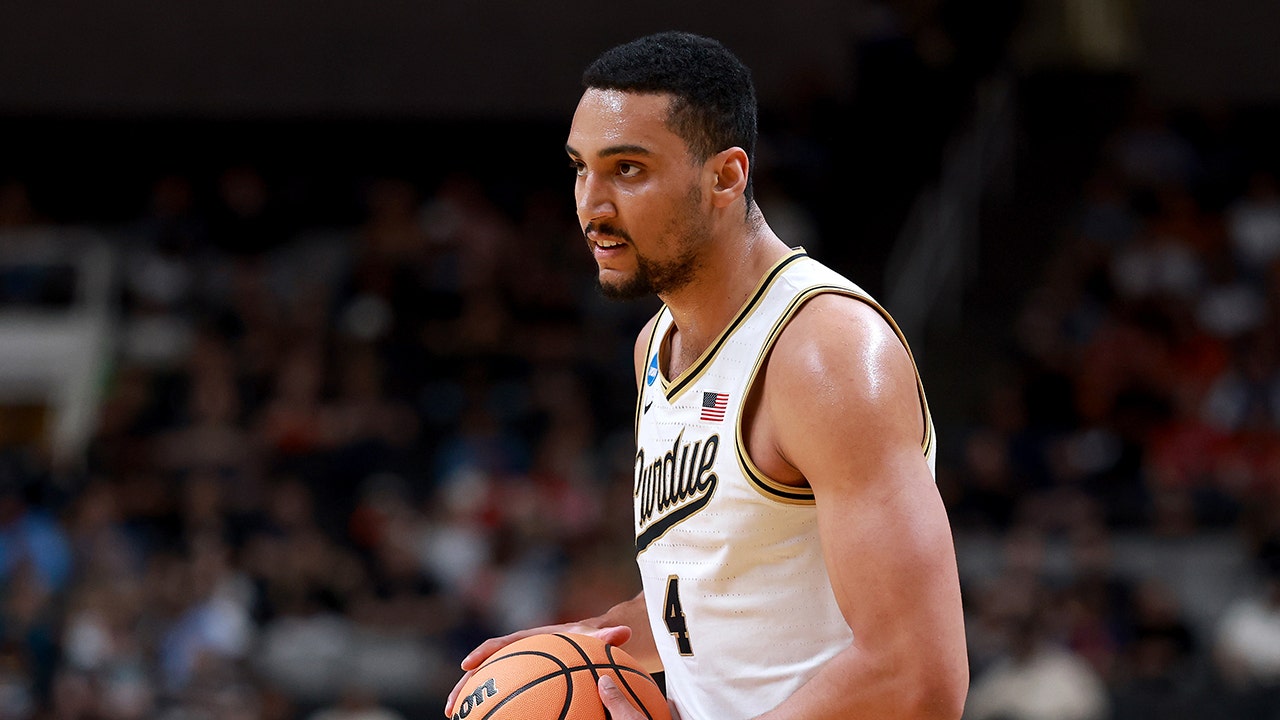
Trey Kaufman-Renn of the Purdue Boilermakers dribbles the ball against the Texas Longhorns during the first half in the Sweet Sixteen of the 2026 NCAA Men’s Basketball Tournament at SAP Center on March 26, 2026, in San Jose, California. (Ezra Shaw/Getty Images)
It was Braden Smith finding his way to the lane and putting up his own layup. However, the ball didn’t have the correct English off the glass, as it started to roll off the rim.
But Kaufman-Renn, who positioned himself underneath the basket, tipped home the game-winning bucket, giving himself 20 total points to help Purdue move on and keep their tournament dreams alive.
8TH-GRADER STANDS ALONE WITH LAST PERFECT WOMEN’S NCAA BASKETBALL BRACKET
There was some discourse on social media, though, as an overhead shot of Kaufman-Renn’s tip showed a potential foul, as he was hooking the arm of the Longhorns player jostling for the rebound.
Either way, no whistle blew, and the Boilermakers were celebrating, while the Longhorns couldn’t believe their season came to a close in that fashion.
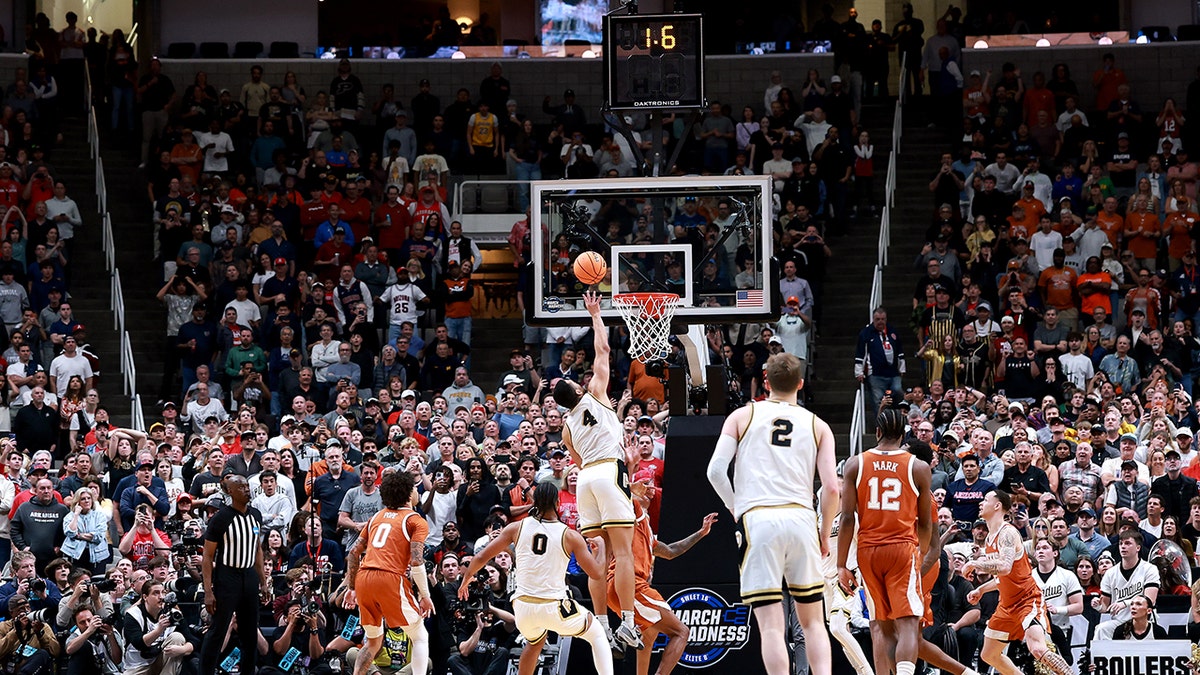
Trey Kaufman-Renn of the Purdue Boilermakers shoots the game-winning shot against the Texas Longhorns during the second half during the second half in the Sweet Sixteen of the 2026 NCAA Men’s Basketball Tournament at SAP Center on March 26, 2026, in San Jose, California. (Ezra Shaw/Getty Images)
This was a back-and-forth game throughout the 40 minutes on the court, as both teams traded the lead, especially in the second half. The largest lead any team had was Purdue at only seven points, while Texas’ lead never got higher than four.
But it’s because both teams were shooting well, with Texas making 52% of its shots (29-of-56), while Purdue poured in 48% (30-of-62).
Looking more into the box score, every Boilermakers starter had at least 10 points, while Fletcher Loyer (18), and Braden Smith (16) doing crucial work in the backcourt to help the winning cause.
Meanwhile, Texas’ Tramon Mark left it all out on the court, shooting 11-of-15 for 29 points, including 5-of-7 made from beyond the arc. Swain also just missed a double-double with nine rebounds, while tallying five assists.
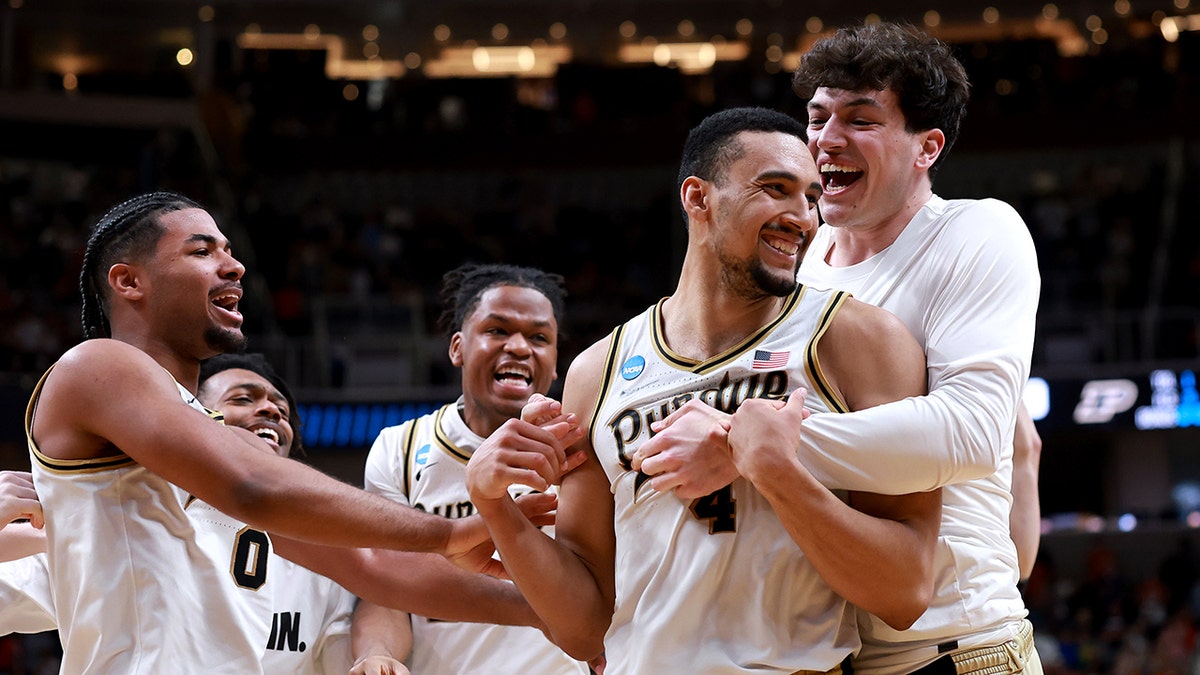
Trey Kaufman-Renn of the Purdue Boilermakers celebrates with teammates after making the game-winning shot against the Texas Longhorns during the second half in the Sweet Sixteen of the 2026 NCAA Men’s Basketball Tournament at SAP Center on March 26, 2026, in San Jose, California. (Ezra Shaw/Getty Images)
CLICK HERE TO GET THE FOX NEWS APP
Purdue now awaits the winner of Arkansas and Arizona to see who they must play to earn a spot in this year’s Final Four, which will be played at Lucas Oil Stadium in Indianapolis.
Follow Fox News Digital’s sports coverage on X and subscribe to the Fox News Sports Huddle newsletter.


Iranian Hackers Breached Kash Patel’s Email—but Not the FBI’s

Tiger Woods involved in rollover crash in Florida less than 2 weeks before Masters: reports

Backstreet Boys AJ McLean shows support to Britney Spears after DUI arrest

-
 Business7 days ago
Flipkart group CFO to leave co amid IPO plans – The Times of India
-

 Fashion7 days ago
China’s textile & apparel exports surge 17% to $50 bn in Jan-Feb 2026
-
 Business1 week ago
Video: The Effects of High Oil Prices
-

 Sports1 week ago
Rating Adidas’ 2026 World Cup away shirts: Argentina, Spain, Mexico and more
-

 Sports7 days ago
American Conference Commissioner Tim Pernetti thanks Trump for Army-Navy game executive order
-

 Fashion1 week ago
The hidden $1.62 war tax now embedded in every garment you source
-

 Tech1 week ago
‘Uncanny Valley’: Nvidia’s ‘Super Bowl of AI,’ Tesla Disappoints, and Meta’s VR Metaverse ‘Shutdown’
-
Tech1 week ago
The Corsair 4000D RS PC Case Keeps Your System Cool