

Tech
Police Digital Service future remains uncertain as ‘radical’ Home Office policing reform unveiled | Computer Weekly

Uncertainty about what the future holds for the Police Digital Service (PDS) continues, despite the UK government confirming the organisation is set to be absorbed into a new national policing body, as part of a wider reform of the policing sector.
The UK government published its long-awaited whitepaper, detailing its plans to reform the policing sector, on 26 January 2025, with its contents being described as the most “radical blueprint for reform” the sector has seen in 200 years.
The changes the whitepaper commits the government to delivering on “over this parliament and the next” include a “significant” reduction in the number of police forces in operation, informed by an independent review of the 43 forces in operation now across England and Wales.
Once this process is complete, the remaining local police provision will be “better supported by a much more coherent organisational structure regionally and nationally”, thanks in part to the creation of a “national tier of policing” dubbed the National Police Service (NPS), according to the whitepaper.
The overarching aim of these changes is to make the way the sector operates more lean and efficient, because having 43 separate forces “each providing back-office functions to local policing” is a waste of money, the whitepaper stated. “Fewer forces would provide more effective specialist services in areas like major crime and firearms, while also being better able to deal with surges in demand and major incidents.”
The document also acknowledged that there are “too many organisations overseeing different elements of policing, none of whom have the necessary powers to drive change”, which is where the NPS comes in.
“The NPS will bring together existing national bodies, including the National Police Chiefs’ Council (NPCC), the College of Policing, the National Crime Agency (NCA) and Counter Terrorism Policing (CTP), into a single organisation with a clear mandate and the powers to get things done,” the whitepaper confirmed.
Saving money
The NPS will also help in the delivery of “commercial efficiencies, improved productivity and new technology capabilities” by absorbing the work of PDS in the name of saving money, the whitepaper said.
“We have already mobilised an ambitious Police Efficiency and Collaboration Programme (PECP) to deliver better value for money in police procurement … [which] will drive the delivery of significant cashable efficiencies of around £350m by the end of this parliament,” it continued.
“The NPS will support its long-term sustainability through bringing together enabling services into this single body … [and] as part of this, Blue Light Commercial and the Police Digital Service will be rolled into the NPS.”
Speaking to Computer Weekly, Dale Peters, a public sector-focused senior research director at IT analyst TechMarketView, said the government’s decision to streamline the number of forces in operation across England and Wales, and centralise procurement processes within the policing sector, is the right one.
“The 43 forces model does not align with 21st century requirements, either from a technology perspective or to address the changing nature of crime,” he said. “The NPS should drive better value for money, deliver much-needed interoperability improvements and help alleviate competition for in-demand skills.”
That said, these changes will require careful management to ensure the individual, local policing needs within communities are not overlooked or ignored as a result of this change in strategy, added Peters.
“There is also an SME [small and medium-sized enterprises] risk,” he said. “As contracts consolidate nationally, smaller suppliers who may struggle to compete for large frameworks could be squeezed out. The NPS will need to design mechanisms to preserve competition and innovation, otherwise there is a risk the market consolidates too far. We do not need 43 solutions to the same problem, but we do not want more monopolistic positions either.”
What next for PDS?
The absorption of PDS into some form of national policing body has been repeatedly foreshadowed in the Home Office’s various communications about its plans to reform the policing sector, which it first went public with news of in November 2024.
At that time, the then home secretary, Yvette Cooper, confirmed the national policing body the government was plotting to create would have IT in its purview.
This statement prompted questions about what this development would mean for the future of the PDS, given it is responsible for the development and delivery of the National Policing Digital Strategy.
This strategy is focused on enabling forces through technology to tackle increasingly complex crimes and, in turn, improve public safety, which are all areas the whitepaper suggests the NPS will eventually be responsible for.
“The NPS will be empowered to set mandatory standards in areas such as professional practice, training, technology, data and workforce planning,” it said.
“Efficiencies will be realised by buying technology and equipment nationally, delivering savings that will be reinvested in the frontline, [and] NPS will provide a platform for developing new technologies and deploying them across the country. By bringing together … focused capabilities … into a new national police force, we will be better able to share technology, intelligence and people across the range of serious threats we face.”
Artificial intelligence
In terms of what these shared technologies are likely to be, the whitepaper confirmed that artificial intelligence (AI) will play a key role in helping officers “catch more criminals, speed up investigations, reduce the administrative burden on policing”.
This will be achieved through the establishment of a National Centre for AI In Policing – known as Police.AI, which will receive £115m in funding over the next three years.
“Through Police.AI we will create a public-facing registry of the AI being deployed by police forces and the steps they have taken to ensure the reliability of tools before being used for operations,” the whitepaper stated. “We will [also] create a platform for identifying, testing and then scaling AI technology, as well as enabling chief constables to deploy AI responsibly and in a way which builds and maintains public consent.”
Funding is also being allocated to support the deployment of 40 additional live facial recognition (LFR) vans in what the whitepaper termed “high crime areas” – as part of a clampdown on violent crime and sexual offences.
“In all cases, we will give the police the resources and expertise to deploy AI in an ethical, robust and responsible way, supported by a new regulatory framework with strong oversight and accountability,” the whitepaper added.
NPS and policing IT reforms
The creation of NPS should help address long-standing concerns that police forces across England and Wales are being hampered in their ability to fight crime due to technological limitations, but it’s not a “silver bullet”, cautioned Peters.
“Currently, decisions about technology adoption are fragmented across 43 forces, each with different systems, budgets and risk appetite,” he said. “The risk-averse culture in policing means good innovations often get stuck in one or two forces and struggle to scale.”
“Meanwhile, criminals are increasingly turning to technology as a way of opening new opportunities, and to enhance and expand their activities.
“Centralising resources under the NPS should help policing reduce the velocity gap and enable it to build more effective countermeasures to tech-enabled threats,” said Peters. “However, success will depend on its ability to address the cultural challenges in policing – not just the structural ones.”
Where the whitepaper lacks detail is on the specifics of how PDS will be absorbed into NPS, and how integrating it will help the government achieve its tech ambitions for the policing sector.
Will PDS’s status as a privately owned company, funded by the Home Office, remain intact once its integration with the NPS is completed, and – furthermore – how long is that process expected to take?
Computer Weekly contacted the Home Office for clarification on all of these points, but the department did not provide a direct response to these questions.
All that is known about when these changes might be introduced is that the creation of NPS will be subject to legislation, and Computer Weekly understands the government is keen to make the necessary legislative changes as soon as parliamentary time allows.
Computer Weekly is aware that PDS has been actively participating in the planning process for its integration into some form of national policing entity for some time.
In a statement to Computer Weekly, a PDS spokesperson said the government’s plans “align with its mission to deliver digital services that support policing and keep the public safe”, and that it is committed to ensuring a smooth transition of its responsibilities during its absorption into the NPS.
“We look forward to working closely with the Home Office and policing partners to ensure a smooth transition and to leverage technology in building a more transparent, efficient and community-focused policing model,” the spokesperson said.
Low morale and lack of clarity
Computer Weekly has previously reported on issues of low staff morale at PDS, linked in part to the uncertainty surrounding what will happen to the organisation in the wake of the Home Office’s policing reforms.
In its statement to Computer Weekly, the PDS spokesperson said the organisation is “committed to ensuring our stakeholders are informed and engaged through the transition” to becoming part of NPS. “Our commitment to continuity and innovation remains unwavering as we help shape the future of policing,” the spokesperson added.
The PDS has been rocked by scandal in recent years, following the news that two of its employees had been arrested in July 2024 on suspicion of bribery, fraud and misconduct in public office. In the wake of this, its then CEO – Ian Bell – departed the organisation.
The company has undergone a sizeable reshuffle of its senior leadership team since then, resulting in the appointment of various interim leaders, with Computer Weekly reporting in January 2026 that three of the firm’s senior executives, including a director, had recently left the organisation.
Computer Weekly also revealed that PDS is set to be the subject of at least two employment tribunals in 2026, with former staffers making claims of harassment, sexual discrimination and unfair constructive dismissal against the organisation.
That aside, TechMarketView’s Peters said that while the whitepaper provides “no detail” about what PDS will “look like on the other side” once it’s a part of NPS, it is likely its operations will be impacted.
“The Police Efficiency and Collaboration Programme is seeking to deliver savings of £354m by 2028–29, which will clearly have an impact on enabling services such as those provided by PDS,” he said. “This may mean significant restructuring with functions being absorbed and redistributed across the new structure, but to what extent depends on implementation decisions that have not been made public yet.”
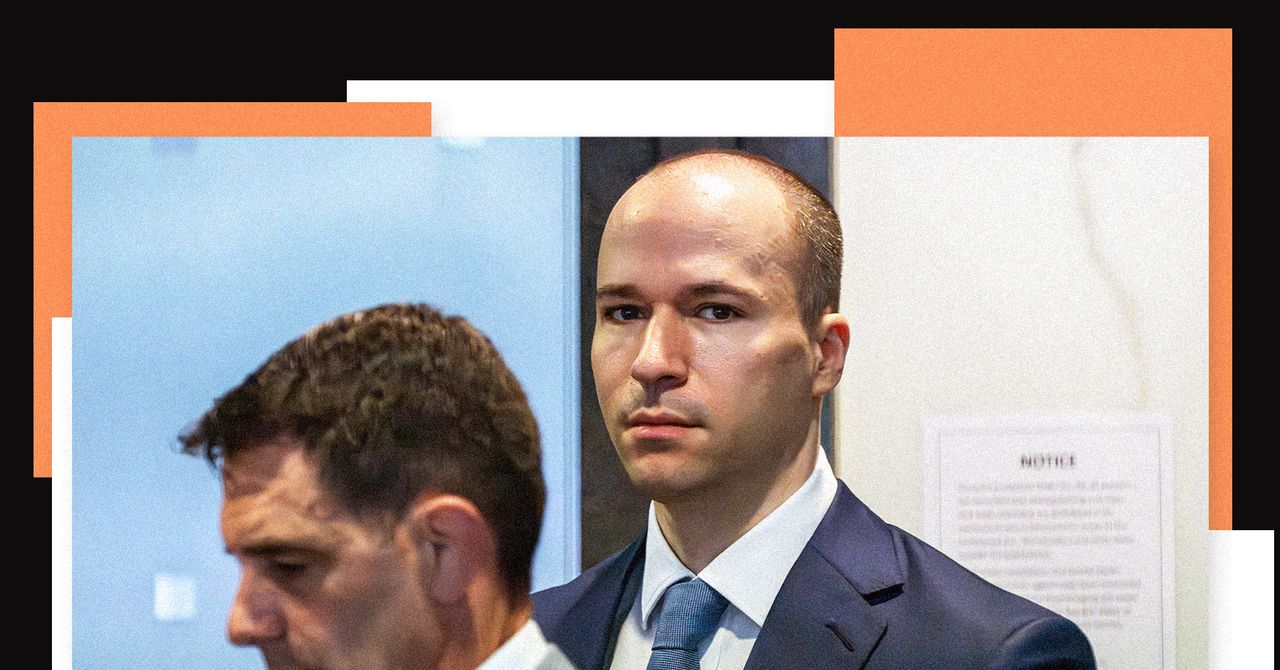
Two days before the Musk v. Altman trial began, Elon Musk asked OpenAI cofounder and president Greg Brockman about reaching a settlement. When Brockman suggested both sides drop their claims, Musk responded, “By the end of this week, you and Sam [Altman] will be the most hated men in America. If you insist, so be it.”
The message—which OpenAI’s lawyers made public on Sunday, and which Judge Yvonne Gonzalez Rogers subsequently refused to let the jury hear about—underscores what may be Musk’s larger goal in this trial. He appears to be trying to not only win over the jurors to potentially remove Brockman and CEO Sam Altman from power, but also stir up dirt on the two men and damage OpenAI’s public image.
As Brockman took the stand on Monday, Musk’s attorney Steven Molo quickly started questioning him about his compensation at OpenAI. Brockman revealed that his equity stake at OpenAI is currently worth more than $20 billion, and perhaps up to $30 billion. While Brockman initially promised to donate $100,000 to OpenAI when it was being set up, he said he ultimately never followed through.
Brockman has held a number of instrumental roles at OpenAI since he cofounded the company in 2015. In the startup’s early days, it operated out of his apartment in the Mission District of San Francisco. Today, he’s deeply involved with refocusing OpenAI on a few key products, such as Codex. In the past year, Brockman has also given millions to super PACs promoting AI and President Trump, and has previously said this increased political spending is related to OpenAI’s founding mission to create artificial general intelligence that benefits all of humanity.
In court on Monday, Molo tried to make the case that Brockman and Altman had essentially looted OpenAI’s original nonprofit, which Musk funded and helped create.
In its early days, OpenAI told investors and employees that its nonprofit mission took precedence over generating profit. Brockman testified that his financial interests are still, to this day, second to OpenAI’s nonprofit mission.
When OpenAI created its for-profit arm in 2019, which received assets from the nonprofit, Brockman testified that he was given a significant stake in the new entity. Early in OpenAI’s history, Brockman had referenced wanting to be a billionaire, writing in his personal journal, “Financially what will take me to $1B?”
On Monday, Molo pressed Brockman for several minutes about the vast wealth he had accumulated beyond his initial goal.
“Why not donate that $29 billion to the OpenAI nonprofit? Why didn’t you do that?” Molo asked. Brockman responded that he and others had poured “blood, sweat, and tears” into building OpenAI in the years since Musk left the company.
OpenAI’s foundation holds a stake of over $150 billion in the company, making it one of the richest nonprofits in history, Brockman said. That’s roughly five times Brockman’s ownership interest. Altogether, OpenAI employees hold about 25 percent of shares. The foundation has 27 percent. Brockman testified that OpenAI’s nonprofit had received less than $150 million from donors, implying Musk had been incidental to the company’s success and that the real drivers were those who stuck around to build out OpenAI.
Of course, Brockman’s stake in OpenAI could be worth much more than $30 billion if the company successfully goes public in the next two years. When asked whether OpenAI was exploring a potential IPO, Brockman said he believes so.
In 1985, the Innovative Design Fund placed an ad in Scientific American offering up to $10,000 to support clever prototypes for clothing, home decor, and textiles. William Freeman PhD ’92, then an electrical engineer at Polaroid and now an MIT professor, saw it and submitted a novel idea: a three-sided zipper. Instead of fastening pants, it’d be like a switch that seamlessly flips chairs, tents, and purses between soft and rigid states, making them easier to pack and put together.
Freeman’s blueprint was much like a regular zipper, except triangular. On each side, he nailed a belt to connect narrow wooden “teeth” together. A slider wrapping around the device could be moved up to fasten the three strips into place, straightening them into a triangular tube. His proposal was rejected, but Freeman patented his prototype and stored it in his garage in the hopes it might come in handy one day.
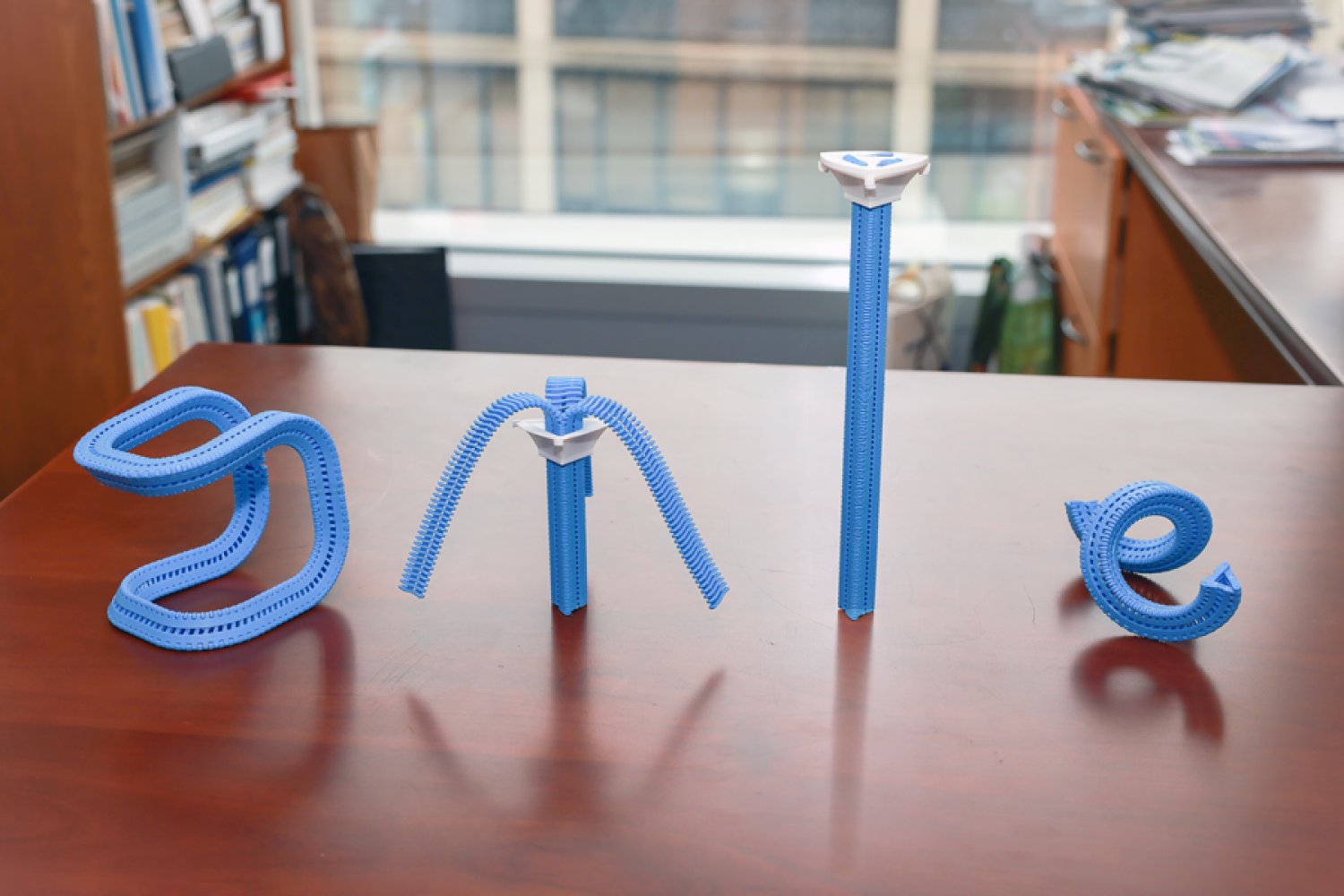
Nearly 40 years later, MIT Computer Science and Artificial Intelligence Laboratory (CSAIL) researchers wanted to revive the project to create items with “tunable stiffness.” Prior attempts to adjust that weren’t easily reversible or required manual assembly, so CSAIL built an automated design tool and adaptable fastener called the “Y-zipper.” The scientists’ software program helps users customize three-sided zippers, which it then builds on its own in a 3D printer using plastics. These devices can be attached or embedded into camping equipment, medical gear, robots, and art installations for more convenient assembly.
“A regular zipper is great for closing up flat objects, like a jacket, but Freeman ideated something more dynamic. Using current fabrication technology, his mechanism can transform more complex items,” says MIT postdoc and CSAIL researcher Jiaji Li, who is a lead author on an open-access paper presenting the project. “We’ve developed a process that builds objects you can rapidly shift from flexible to rigid, and you can be confident they’ll work in the real world.”
Why zippers?
Users can customize how the fasteners look when they’re zipped up in CSAIL’s software program; they can select the length of each strip, as well as the direction and angle at which they’ll bend. They can also choose from one of four motion “primitives” to select how the zipper will appear when it’s zipped up: straight, bent (similar to an arch), coiled (resembling a spring), or twisted (looks like screws).
The Y-zipper that results will appear to “shape-shift” in the real world. When unzipped, it can look like a squid with three sprawling tentacles, and when you close it up, it becomes a more compact structure (like a rod, for instance). This flexibility could be useful when you’re traveling — take pitching a tent, for example. The process can take up to six minutes to do alone, but with the Y-zipper’s help, it can be done in one minute and 20 seconds. You simply attach each arm to a side of the tent, supporting the structure from the top so that the zipper seemingly pops the canopy into place.
This seamless transition could also unlock more flexible wearables, often useful in medical scenarios. The team wrapped the Y-zipper around a wrist cast, so that a user could loosen it during the day, and zip it up at night to prevent further injuries. In turn, a seemingly stiff device can be made more comfortable, adjusting to a patient’s needs.
The system can also aid users in crafting technology that moves at the push of a button. One can attach a motor to the Y-zipper after fabrication to automate the zipping process, which helps build things like an adaptive robotic quadruped. The robot could potentially change the size of its legs, tightening up into taller limbs and unzipping when it needs to be lower to the ground. Eventually, such rapid adjustments could help the robot explore the uneven terrain of places like canyons or forests. Actuated Y-zippers can also build dynamic art installations — for example, the team created a long, winding flower that “bloomed” thanks to a static motor zipping up the device.
Mastering the material
While Li and his colleagues saw the creative potential of the Y-zipper, it wasn’t yet clear how durable it would be. Could they sustain daily use?
The team ran a series of stress tests to find out. First, they evaluated the strength and flexibility of polylactic acid (PLA) and thermoplastic polyurethane (TPU), two plastics commonly used in 3D printing. Using a machine that bent the Y-zippers down, they found that PLA could handle heavier loads, while TPU was more pliable.
In another experiment, CSAIL researchers used an actuator to continuously open and close the Y-zipper to see how long it’d take to snap. Some 18,000 cycles of zipping and unzipping later, they finally broke. Y-zipper’s secret to durability, according to 3D simulations: its elastic structure, which helps distribute the stress of heavy loads.
Despite these findings, Li envisions an even more durable three-sided zipper using stronger materials, like metal. They may also make the zippers bigger for larger-scale projects, but that’s not yet possible with their current 3D printing platform.
Jiaji also notes that some applications remain unexplored, like space exploration, wherein Y-zipper’s tentacles could be built into a spacecraft to grab nearby rock samples. Likewise, the zippers could be embedded into structures that can be assembled rapidly, helping relief workers quickly set up shelters or medical tents during natural disasters and rescues.
“Reimagining an everyday zipper to tackle 3D morphological transitions is a brilliant approach to dynamic assembly,” says Zhejiang University assistant professor Guanyun Wang, who wasn’t involved in the paper. “More importantly, it effectively bridges the gap between soft and rigid states, offering a highly scalable and innovative fabrication approach that will greatly benefit the future design of embodied intelligence.”
Li and Freeman wrote the paper with Tianjin University PhD student Xiang Chang and MIT CSAIL colleagues: PhD student Maxine Perroni-Scharf; undergraduate Dingning Cao; recent visiting researchers Mingming Li (Zhejiang University), Jeremy Mrzyglocki (Technical University of Munich), and Takumi Yamamoto (Keio University); and MIT Associate Professor Stefanie Mueller, who is a CSAIL principal investigator and senior author on the work. Their research was supported, in part, by a postdoctoral research fellowship from Zhejiang University and the MIT-GIST Program.
The researchers’ work was presented at the ACM’s Computer-Human Interaction (CHI) conference on Human Factors in Computing Systems in April.
The Department of Homeland Security tried to obtain a Canadian man’s location information, activity logs, and other identifying information from Google after he criticized the Trump administration online following the killings of Renee Good and Alex Pretti by federal immigration agents in Minneapolis early this year.
Lawyers for the man, who has not been named, are alarmed in part because they say that the man has not entered the United States in more than a decade. “I don’t know what the government knows about our client’s residence, but it’s clear that the government isn’t stopping to find out,” says Michael Perloff, a senior staff attorney at the American Civil Liberties Union of the District of Columbia who is representing the man in a lawsuit against Markwayne Mullin, the secretary of DHS, over the summons. The lawsuit alleges that DHS violated the customs law that gives the agency the power to request records from businesses and other parties.
Perloff argues that the government is using the fact that big tech companies are based in the US to request information it would not otherwise be able to get. “It’s using that geographic fact to get information that otherwise would be totally outside of its jurisdiction,” he says. “I mean, we’re talking about the physical movements of a person who lives in Canada.”
DHS and Google did not immediately respond to a request for comment.
The demand for the man’s location data was included in a request DHS issued to Google called a customs summons, which is supposed to be used to investigate issues related to importing goods and collecting customs duties.
“It says right in the statute, it’s for records and testimony about the correctness of an entry, the liability of a person for duties, taxes, and fees, you know, compliance with basic customs laws,” says Chris Duncan, a former assistant chief counsel for US Customs and Border Protection who now works as a private-practice attorney representing importers and exporters. “And that’s all it was ever envisioned to be used for.”
A customs summons is a type of administrative subpoena and is not reviewed by a judge or grand jury before being sent out. According to the complaint, Google alerted the man about the request on February 9, despite an ask included in the summons “not to disclose the existence of this summons for an indefinite period of time.”
Through his attorneys, the man told WIRED he initially mistook the notification for a joke or scam before realizing it was real.
The summons, which is included in the complaint, does not give a specific reason for why the man was under investigation beyond citing the Tariff Act of 1930. The man’s lawyers contend that he did not export or import anything from the United States between September 1, 2025, to February 4, 2026, the time frame the government requested information about.
Instead, the man’s lawyers allege, the summons was filed in response to the man’s online activities, including posts that he made condemning immigration enforcement agents after the killings of Good and Pretti in January.
The man tells WIRED that watching members of the Trump administration “smear these two souls as terrorists was absolutely disgusting and enraging. People were being asked to disbelieve our own eyes so that the men responsible for killing two good Americans would go free.”
The man says of his online activity, “I felt I needed to do something that would stand out and be seen by despairing Americans to show them they had support and that they were not alone.”


Dwayne Johnson shocks everyone with bold Met Gala outfit

Greg Brockman Defends $30B OpenAI Stake: ‘Blood, Sweat, and Tears’

Met Gala 2026 “Costume Art” red carpet pictures from New York City

-

 Tech1 week ago
A Brain Implant for Depression Is About to Be Tested in Humans
-
 Business1 week ago
Pakistan’s oil market is fuelling the crisis | The Express Tribune
-

 Tech1 week ago
Almost 90% of women leave tech industry within 10 years | Computer Weekly
-
 Business1 week ago
‘I had £20,000 stolen and had to fight a 13-month fraud reporting rule to get it back’
-

 Sports7 days ago
Pro wrestling star Steph De Lander reveals how colleague’s advice helped lead her to title triumph at ACW
-

 Entertainment1 week ago
Melania Trump says ABC should ‘take a stand’ on late-night host Kimmel
-

 Tech7 days ago
This Ambitious Laptop Doesn’t Leave Much Room for Your Hands
-

 Entertainment1 week ago
Norway joins Type 26 Frigate Programme to boost NATO naval power