

Business
Sensex Settles 76 Points Higher, Nifty Above 24,750; Tata Motors, M&M Jump 4% Each

Last Updated:
Stock Market Updates Today: Indian stock markets were trading higher at open today

Sensex Today
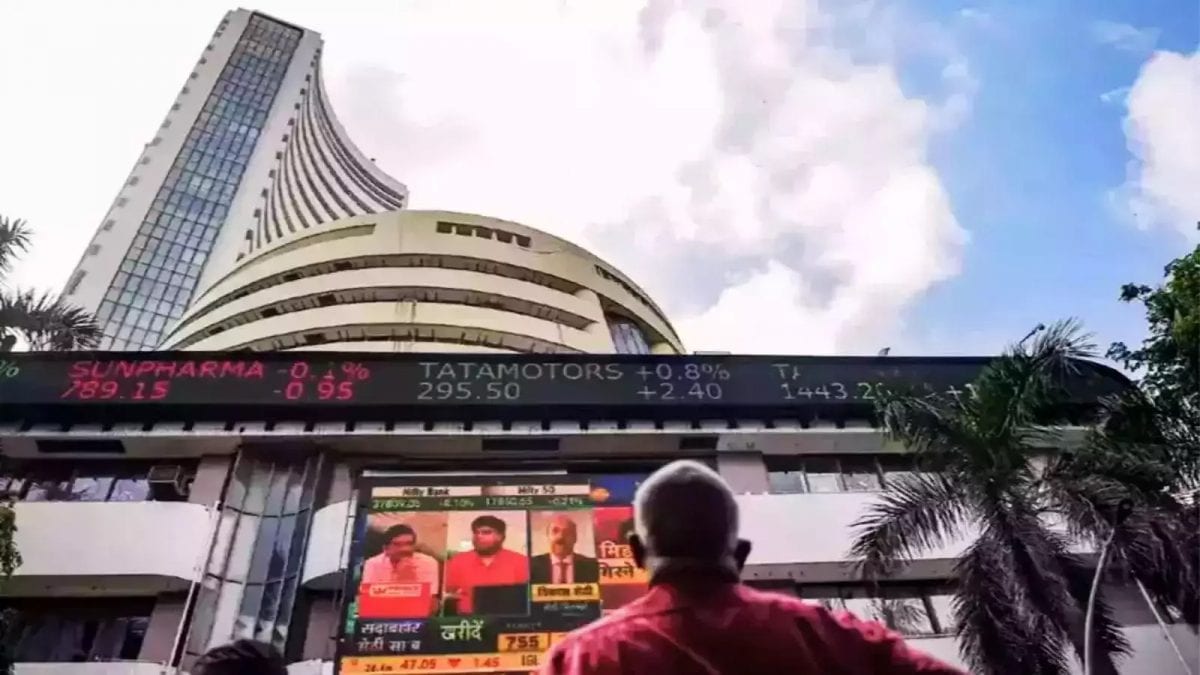
Sensex Today: Indian equity benchmarks pared most of their early gains but still closed in the green on Monday. The BSE Sensex, after touching an intra-day high of 81,171.38, ended at 80,787.30, up 76.54 points or 0.09%. The NSE Nifty50 settled at 24,773.15, higher by 32.15 points or 0.13%, after moving between 24,885.50 and 24,751.55 during the session.
In the broader market, the Nifty Midcap 100 and Nifty Smallcap 100 indices gained 0.50% and 0.16%, respectively.
Auto stocks were the clear outperformers, with the Nifty Auto index advancing 3.30%, led by Bharat Forge, Ashok Leyland, Motherson Sumi, and Tata Motors. In contrast, the Nifty IT index slipped 0.94%, with Persistent Systems, LTIMindtree, and Tech Mahindra among the key laggards.
The market breadth tilted positive, with 1,749 out of 3,144 stocks on the NSE ending higher, while 1,285 declined and 110 remained unchanged.
A total of 114 stocks hit their 52-week highs, while 50 stocks touched fresh 52-week lows during the session.
The combined market capitalisation of NSE-listed companies stood at $5.07 trillion at the close of trade.
Global Cues
Asian markets opened higher on Monday as investors awaited Japan’s final April–June GDP growth figures and China’s August trade data due later in the day. Market participants are also digesting the resignation of Japan’s Prime Minister Shigeru Ishiba announced over the weekend. At last check, Japan’s Nikkei 225 gained 1.7 percent, while South Korea’s KOSPI rose 0.21 percent.
On Wall Street, US equities ended lower on Friday, September 8, as a weaker-than-expected jobs report raised concerns about the pace of the economic recovery. The S&P 500 fell 0.32 percent, the Dow Jones Industrial Average declined 0.48 percent, while the Nasdaq Composite slipped 0.03 percent.

Aparna Deb is a Subeditor and writes for the business vertical of News18.com. She has a nose for news that matters. She is inquisitive and curious about things. Among other things, financial markets, economy, a…Read More
Aparna Deb is a Subeditor and writes for the business vertical of News18.com. She has a nose for news that matters. She is inquisitive and curious about things. Among other things, financial markets, economy, a… Read More
September 08, 2025, 08:41 IST
Read More



The former One Direction member-turned-solo artist appears on the Sunday Times list for the first time.
Source link
Last Updated:
Budget 2026: FM Nirmala Sitharaman gives a strong push to manufacturing, infrastructure and job creation, while proposing a simpler tax and customs system.


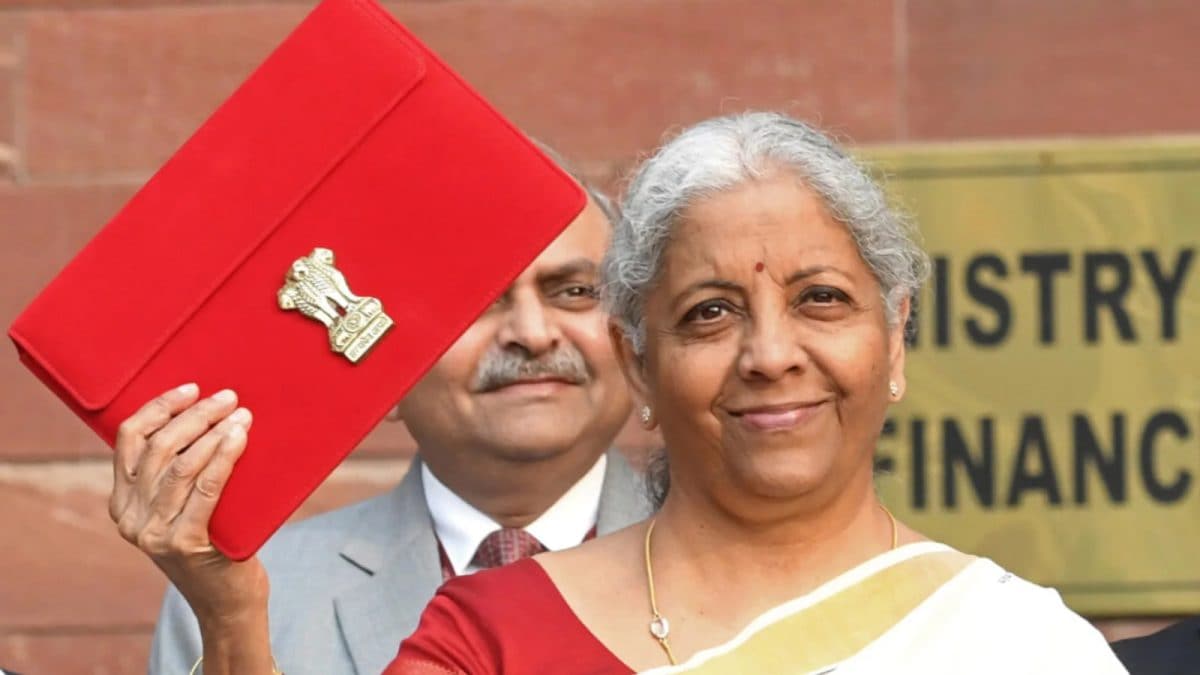
Finance Minister Nirmala Sitharaman presents the Union Budget 2026-27.
Budget 2026 Takeaways: Finance Minister Nirmala Sitharaman on Sunday presented the Union Budget 2026-27, giving a strong push to manufacturing, infrastructure and job creation, proposing a simpler tax and customs regime, and hailing the government’s modernisation drive as a “reforms express”.
The Budget 2026 is anchored around three ‘kartavyas’ — driving growth by enhancing productivity and competitiveness, building people’s capacity, and ensuring inclusive development under the vision of Sabka Saath, Sabka Vikaas.
In her ninth consecutive Budget in Parliament, Sitharaman laid out a multi-pronged strategy to sustain growth amid global uncertainty, including expanding domestic electronics and semiconductor capabilities, de-risking infrastructure projects, skilling India’s youth for emerging technologies, and easing compliance for taxpayers and importers.
Here are the key takeaways from Budget 2026 across manufacturing, infrastructure, skills, AI, taxation and customs duty.
Manufacturing Gets A Boost
Budget 2026 put a special emphasis on the manufacturing landscape in India. The outlay for electronics components manufacturing was raised sharply to Rs 40,000 crore, while new schemes for rare earth magnets, chemical parks, container manufacturing and capital goods seek to reduce import dependency, and strengthen domestic supply chains. Textiles got an integrated, employment-oriented package covering fibres, clusters, skilling and sustainability.
Infrastructure-Led Growth
Infrastructure got a boost with a higher capex allocation and initiatives like a risk guarantee fund to de-risk projects for private developers, new dedicated freight corridors and national waterways, dedicated REITs (real estate investment trusts) for recycling of significant real estate assets of central public sector enterprises (CPSEs), and a seaplane VGF (viability gap funding) scheme.
The Centre’s capital expenditure (capex) target has been increased to Rs 12.2 lakh crore for FY27, up from Rs 11.2 lakh crore earmarked for the current financial year. Moreover, maintaining the fiscal discipline, Sitharaman said the government expects the fiscal deficit to be at 4.3 per cent of the GDP in 2026-27, lower than 4.4 per cent projected for the current financial year.
Tier-II and Tier-III cities were placed at the centre of urban growth via City Economic Regions, backed by reform-linked funding.
“We shall continue to focus on developing infrastructure in cities with over 5 lakh population (Tier II and Tier III), which have expanded to become growth centres,” Sitharaman said in her Budget Speech.
Greater Emphasis On Skilling
The Budget placed renewed emphasis on the services economy as a jobs engine. A high-powered Education-to-Employment and Enterprise Committee will realign skilling with market needs, including the impact of emerging technologies.
Content creation and creative industries get a boost through AVGC labs in schools and colleges, support for animation, gaming and comics, and new institutional capacity for design and hospitality. Tourism-linked skilling, from guides to digital heritage documentation, signals a clear intent to convert culture and content into employment and exports.
“I propose to support the Indian Institute of Creative Technologies, Mumbai in setting up AVGC Content Creator Labs in 15,000 secondary schools and 500 colleges,” FM Sitharaman said. AVGC stands for animation, visual effects, gaming and comics.
AI & Semiconductors Push
Artificial intelligence (AI) was positioned as a cross-sector force multiplier rather than a standalone theme. The Budget provided a push to artificial intelligence (AI) by promoting adoption with governance, agriculture, education and skilling, including proposals for AI-enabled advisory tools for farmers and AI integration in education curricula.
On hardware, the semiconductor strategy expanded decisively under ISM 2.0 (India Semiconductor Mission 2.0), with focus on domestic equipment manufacturing, materials, research centres and workforce development, signalling a long-term commitment to building a resilient chip ecosystem in India.
Taxation, ITR, TDS, TCS
A major structural reform comes with the Income Tax Act, 2025, effective April 1, 2026, containing simpler rules and redesigned forms.
Budget 2026 provided compliance relief for individuals, including extended timelines for revising returns to March 31 from December 31 earlier, staggered ITR due dates, and easier filing of Form 15G/15H through depositories.
Individuals with ITR-1 and ITR-2 returns will continue to file till July 31, and non-audit business cases or trusts are proposed to be allowed time till August 31, according to the Budget Speech 2026-27.
“I propose to extend time available for revising returns from 31st December to up to 31st March with the payment of a nominal fee. I also propose to stagger the timeline for filing of tax returns. Individuals with ITR 1 and ITR 2 returns will continue to file till 31st July and non-audit business cases or trusts are proposed to be allowed time till 31st August,” Sitharaman said.
TDS (Tax deducted at source) rules were clarified for manpower services, while a rule-based system for lower or nil TDS certificates is proposed. TCS rates were cut to 2% for overseas tour packages, education and medical expenses under liberalised remittance scheme (LRS). Litigation is targeted through integrated assessment and penalty orders, lower pre-deposit requirements, and wider immunity provisions.
TDS on the sale of immovable property by a non-resident will be deducted and deposited through resident buyer’s PAN (Permanent Account Number)-based challan instead of requiring TAN (Tax Deduction and Collection Account Number), Sitharaman said.
Customs Duty Tweaks
Customs duty rationalisation continued with a clear focus on domestic manufacturing, energy transition and ease of living. Exemptions have been extended or introduced for capital goods used in lithium-ion batteries, critical minerals processing, nuclear power projects and aircraft manufacturing.
Personal imports will become cheaper with a reduction in duty on goods for personal use from 20% to 10%. Seventeen cancer drugs and additional rare-disease treatments were exempted from customs duty. Process reforms aimed at trust-based, tech-driven clearances, faster cargo movement and lower compliance costs, especially for exporters and MSMEs (micro, small, medium and enterprises).
STT On F&O Hiked
The Budget increased securities transaction tax (STT) on futures trading from 0.02% to 0.05% and on options trading from 0.10% to 0.15%, a move that upset the capital markets with the BSE Sensex crashing more than 2,300 points from the day’s high and the NSE Nifty dropping to 24,571.75.
Securities Transaction Tax (STT) is a direct tax imposed on the buying and selling of securities in India.
Commenting on the Budget, Prime Minister Narendra Modi said, “The Union Budget reflects the aspirations of 140 crore Indians. It strengthens the reform journey and charts a clear roadmap for Viksit Bharat.”
February 01, 2026, 14:43 IST
Read More

The firm’s move comes amid global scrutiny of the methods used by the US immigration enforcement agency.
Source link


Grading Mike LaFleur’s hire, eyeing what’s next for Cards

Trump hopeful of Iran deal after Tehran warns of regional war

ICC responds to Pakistan’s decision regarding T20 World Cup 2026

-

 Sports5 days ago
PSL 11: Local players’ category renewals unveiled ahead of auction
-

 Tech1 week ago
This Mega Snowstorm Will Be a Test for the US Supply Chain
-

 Entertainment5 days ago
Claire Danes reveals how she reacted to pregnancy at 44
-

 Fashion1 week ago
Spain’s apparel imports up 7.10% in Jan-Oct as sourcing realigns
-

 Tech1 week ago
ICE Asks Companies About ‘Ad Tech and Big Data’ Tools It Could Use in Investigations
-

 Sports5 days ago
College football’s top 100 games of the 2025 season
-

 Politics5 days ago
Trump vows to ‘de-escalate’ after Minneapolis shootings
-

 Fashion1 week ago
Australian wool prices climb again as exporters drive demand