

Fashion
Sep 2025 US logistics manager index falls to lowest since Mar

The rate of expansion was more pronounced later in September, reading in at 60.5 during the second half of September – which was up significantly from the reading of 55.9 early in the month. The drop can be largely attributed to slowdowns in the expansion of supply chain costs.
The US logistics manager’s index (LMI) for September was 57.4, down by 1.9 points from August’s 59.3.
This is the lowest reading for the overall index since March this year.
The slowdown in logistics expansion is due to a declining rate of growth across the majority of the sub-metrics, with transportation utilisation down by 4.7 points to 50, which indicates no movement.
The LMI score is a combination of eight unique components that make up the logistics industry: inventory levels and costs, warehousing capacity, utilisation and prices, and transportation capacity, utilisation and prices.
Taken together, the three cost/price metrics were down 11.9 points in September, reading in at 195.66. This is the slowest rate of cost expansion since March and the second lowest in 2025.
The slowdown in logistics expansion is due to a declining rate of growth across the majority of the sub-metrics, with transportation utilisation down by 4.7 points to 50, which indicates no movement.
This is the first time a reading this low has been seen for transportation utilisation in September, which is generally a busy season in the freight market.
The slight negative freight inversion that began in August continued in September, with transportation prices dipping by 1.9 points to 54.2, which is just below 55.1 of transportation capacity (minus 2.2 points).
While transportation prices are still expanding, this is the lowest rate of growth tracked for this metric since April 2024, which was the last month of the most recent freight recession.
Inventory costs were high at 79.2.
Researchers at Arizona State University, Colorado State University, Florida Atlantic University, Rutgers University and the University of Nevada, Reno, and in conjunction with the Council of Supply Chain Management Professionals (CSCMP) issued the LMI report.
This slowdown is reflective of uncertainty in the overall economy, an official release said.
Fibre2Fashion News Desk (DS)










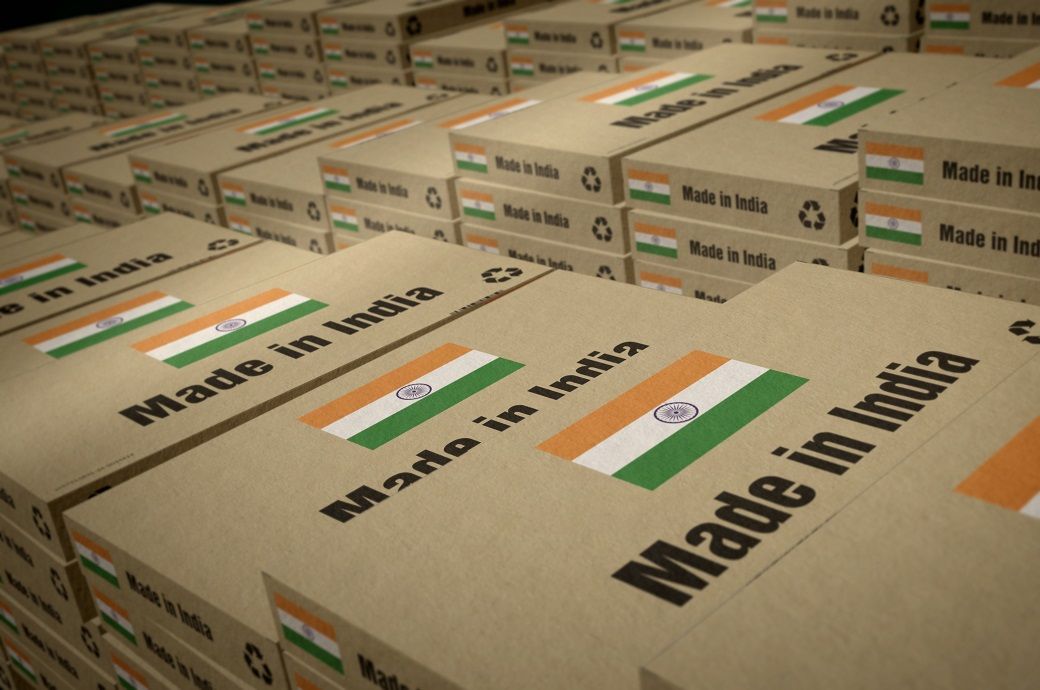
According to a notice issued by the Ministry of Commerce and Industry, the newly formed group will track global developments that may disrupt production networks, logistics flows, and trade corridors. The initiative comes at a time when escalating conflicts, shipping route uncertainties, and volatility in energy and freight markets are beginning to influence sourcing decisions across the textile value chain.
India’s move to form an inter-ministerial group signals a proactive approach to managing export risks amid rising geopolitical uncertainty.
By closely monitoring supply chains, logistics routes and critical imports, the government aims to ensure faster policy responses and protect export competitiveness, particularly for sectors like textiles that are highly exposed to trade disruptions.
The inter-ministerial group will conduct sector-wise assessments to identify export vulnerabilities and potential disruptions in the supply of critical raw materials. For the textile industry, this includes monitoring inputs such as petrochemical derivatives used in synthetic fibres, dyes, and chemicals, as well as machinery components that are often sourced through complex global supply networks.
The group will also serve as a co-ordination platform among different ministries and government departments, enabling faster policy responses if disruptions escalate. Engagement with industry stakeholders, including Export Promotion Councils and trade bodies, will form an important part of this process. Through these consultations, the government aims to gather real-time feedback from exporters on logistical challenges, input shortages, freight cost pressures, and order uncertainties emerging from geopolitical tensions.
Alongside the inter-ministerial mechanism, DGFT has established an internal coordination framework to enable real-time tracking of trade-related developments. This system is intended to strengthen inter-agency communication and ensure that emerging issues affecting exporters are identified and addressed quickly.
For India’s textile and apparel sector, one of the country’s largest export industries with extensive global supply chain linkages, the monitoring initiative is particularly significant. Disruptions in maritime routes, fluctuations in petrochemical feedstock availability, and shifts in sourcing strategies among global brands could all influence export competitiveness in the coming months.
By establishing both an inter-ministerial monitoring group and an internal co-ordination mechanism, the government aims to improve preparedness and policy responsiveness as geopolitical uncertainties continue to reshape global trade dynamics.
The move reflects a broader effort to safeguard export growth while maintaining stability in critical supply chains that support India’s manufacturing and textile industries.
Fibre2Fashion News Desk (KUL)
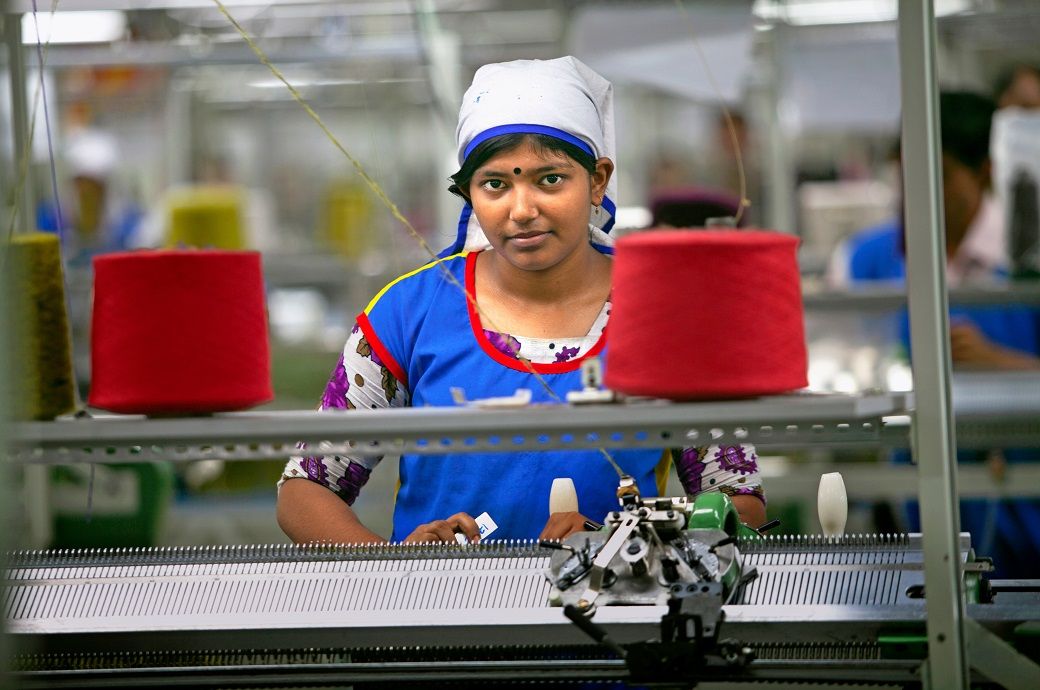
Due to falling exports, delayed purchase orders and liquidity crisis, production in many export-oriented units is getting affected. As a result, the ability to pay salaries and allowances to workers has reduced.
Bangladesh Bank recently issued a circular asking banks to introduce special loan facilities beyond the working capital loan limit to pay salaries of workers and employees for February in light of concerns in the export sector due to global and domestic economic pressures.
The loan amount cannot exceed the average salary and allowances component of the concerned enterprise in the last three months.
The loan amount cannot exceed the average salary and allowances component of the concerned enterprise in the last three months. The prevailing market-based interest rate will be applicable against the loan, while no additional interest, profit, fee or charge other than regular interest can be charged.
The loan must be repaid within a year with a grace period of three months, according to domestic media outlets. Industrial enterprises that export at least four-fifths of their total production will be considered export-oriented. The salary will go directly to the workers’ accounts, not through the company.
Fibre2Fashion News Desk (DS)
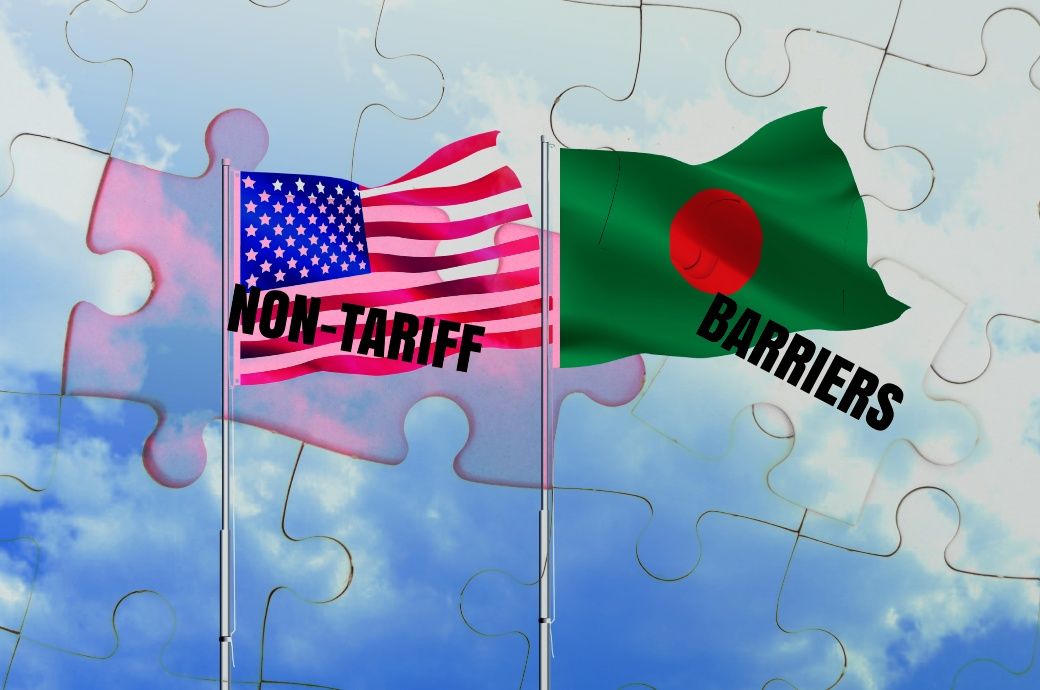
Addressing these issues would also facilitate Bangladesh’s greater access to US development assistance and financing programmes, he said after meeting US Assistant Secretary of State for South and Central Asian Affairs S Paul Kapur in Dhaka.
Cutting unnecessary complexities and eliminating selected non-tariff barriers could significantly boost US investment in Bangladesh and enhance the country’s appeal as a foreign investment destination, according to Commerce, Industry, and Textiles & Jute Minister Khandakar Abdul Muktadir.
Addressing these would also facilitate greater access to US development assistance and financing programmes, he said.
The meeting focused on strengthening bilateral trade ties, expanding investment into new sectors, improving digital infrastructure and deepening overall trade and investment cooperation.
Certain procedural and policy-related bottlenecks continue to affect the investment climate, the minister observed.
Fibre2Fashion News Desk (DS)


Prince William, Kate declare distance from Beatrice, Eugenie at royal event

President Pezeshkian’s gesture to neighbors immediately killed by Trump: Iran FM

Christian Bale makes shocking confession about Jacob Elordi’s ‘Frankenstein’

-

 Sports1 week ago
LPGA legend shares her feelings about US women’s Olympic wins: ‘Gets me really emotional’
-

 Entertainment1 week ago
Pakistan’s semi-final qualification scenario after England defeat New Zealand
-

 Fashion1 week ago
South Korea’s Misto Holdings completes planned leadership transition
-

 Entertainment1 week ago
Bobby J. Brown, “The Wire” and “Law & Order: SUV” actor, dies of smoke inhalation after reported fire
-
 Business1 week ago
Greggs to reveal trading amid pressure from cost of living and weight loss drugs
-
 Business1 week ago
CNBC To Merge TV And Digital News Operations, Nearly A Dozen Jobs To Be Cut: Report
-

 Entertainment1 week ago
What’s new in Pokémon? Every game, update, surprise from 30th anniversary event
-

 Fashion1 week ago
Italy’s Moncler FY25 revenue reaches $3.69 bn with resilient margins