

Politics
President Pezeshkian’s gesture to neighbors immediately killed by Trump: Iran FM

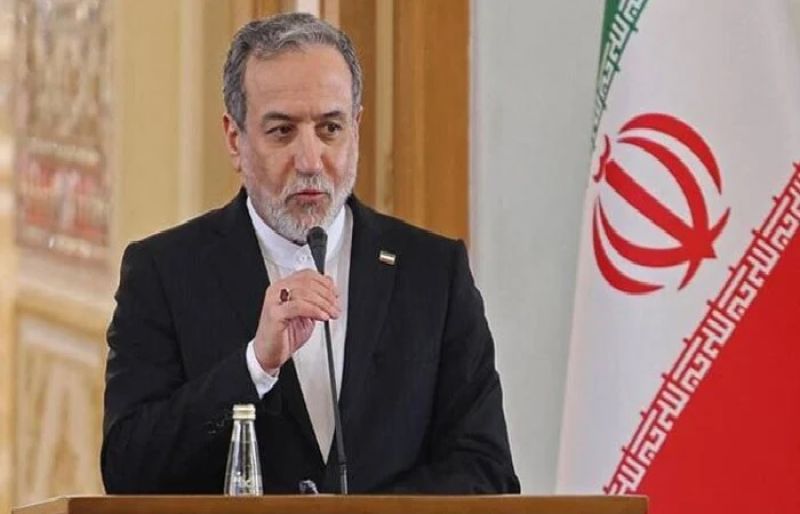

Iranian Foreign Minister Abbas Araghchi has blasted Washington’s reaction to President Masoud Pezeshkian’s extension of the hand of friendship to neighbors, saying that the gesture was almost immediately killed by US President Donald Trump.
“President Pezeshkian’s openness to de-escalation within our region — provided that our neighbors’ airspace, territory, and waters are not used to attack the Iranian People — was almost immediately killed by President Trump’s misinterpretation of our capabilities, determination and intent,” Araghchi wrote in a post published on his X account on Sunday.
He added that “If Mr. Trump seeks escalation, this is precisely what our Powerful Armed Forces have long been prepared for, and what he will get.”
Araghchi noted that responsibility for any intensification of Iran’s exercise of self-defense will lie squarely with the US administration.
The top Iranian diplomat highlighted that Trump’s week-long misadventure has already cost the US military $100 billion, in addition to the lives of young soldiers.
“When markets reopen, that cost will balloon, and directly be transferred to ordinary Americans at pumping stations,” he said.
Araghchi emphasized that Trump’s own National Intelligence Council, representing input from the 18 intelligence agencies of the US, determined that war on Iran is destined to fail.
The Iranian foreign minister went on to state that he had warned Trump’s envoys that war won’t improve Washington’s bargaining position, wondering whether such warnings were conveyed.
“The American People voted to end involvement in costly quagmires in the Middle East. Instead, they have ended up with an Administration that Netanyahu, after decades of failed attempts, finally managed to dupe into fighting Israel’s wars,” he said.
Araghchi finally described the ongoing US-Israeli aggression against Iran as “a war of choice pursued by a small cabal of ‘Israel Fighters,’ and ‘Israel First’ always means ‘America Last’.

- US says nuclear issues must be dealt with from the outset.
- Trump unhappy with delaying deal on Iran nuclear programme.
- Iran demands blockade be lifted before any negotiations begin.
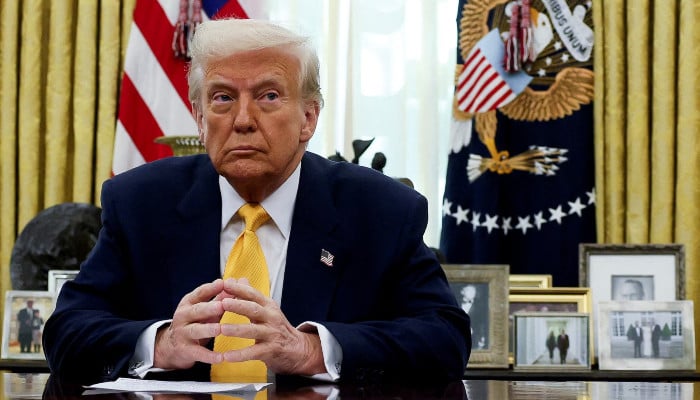
US President Donald Trump is unhappy with the latest Iranian proposal on resolving the two-month war, a US official said, dampening hopes for a resolution to the conflict that has disrupted energy supplies, fuelled inflation, and killed thousands.
Iran’s latest proposal would set aside discussion of Iran’s nuclear programme until the war is ended and disputes over shipping from the Gulf are resolved.
That is unlikely to satisfy the US, which says nuclear issues must be dealt with from the outset, and Trump was unhappy with Iran’s proposal for that reason, a US official briefed on the president’s Monday meeting with his advisers said, speaking on condition of anonymity.
White House spokeswoman Olivia Wales said the US “will not negotiate through the press” and has “been clear about our red lines” as the Trump administration looks to end the war against Iran it began in February alongside Israel.
A previous agreement in 2015 between Iran and multiple other countries including the US sharply curtailed Iran’s nuclear programme, which it has long maintained is for peaceful, civilian purposes. But that deal fell apart when Trump unilaterally withdrew from it in his first term in office.
Hopes of reviving peace efforts have receded since the US president scrapped a visit planned for last weekend by his special envoy Steve Witkoff and son-in-law Jared Kushner to Islamabad, where Iranian Foreign Minister Abbas Araqchi shuttled in and out twice during the weekend.
Araqchi also visited Oman and on Monday went to Russia, where he met President Vladimir Putin and received words of support from a longstanding ally.
Oil prices rise again
With the warring sides still seemingly far apart, oil prices resumed their upward march, extending gains in early Asia trade on Tuesday.
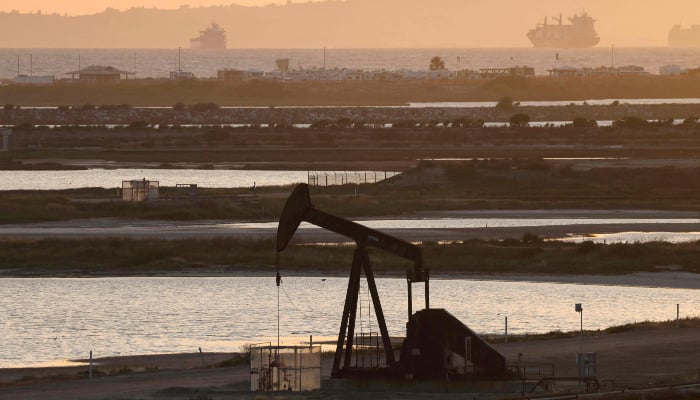
“For oil traders, it’s not the rhetoric that matters any more, but the actual physical flow of crude oil through the Strait of Hormuz, and right now, that flow remains constrained,” Fawad Razaqzada, market analyst at City Index and FOREX.com, said in a note.
At least six tankers loaded with Iranian oil have been forced back to Iran by the US blockade in recent days, ship-tracking data showed, underscoring the war’s impact on traffic.
Iran’s foreign ministry condemned US seizures of Iran-linked tankers as “outright legalisation of piracy and armed robbery on the high seas”, in a social media post.
Between 125 and 140 ships usually crossed in and out of the strait daily before the war, but only seven have done so in the past day, according to Kpler ship-tracking data and satellite analysis from SynMax, and none of them were carrying oil bound for the global market.
With his approval ratings falling, Trump faces domestic pressure to end a war for which he has given the US public shifting rationales.
Araqchi told reporters in Russia that Trump had requested negotiations because the US has not achieved any of its objectives.
Senior Iranian officials, speaking on condition of anonymity, told Reuters the proposal carried by Araqchi to Islamabad over the weekend envisioned talks in stages, with the nuclear issue to be set aside at the start.
A first step would require ending the US-Israeli war on Iran and providing guarantees that the US cannot start it up again. Then negotiators would resolve the US Navy’s blockade of Iran’s trade by sea and the fate of the Strait of Hormuz, which Iran aims to reopen under its control.
Only then would talks look at other issues, including the longstanding dispute over Iran’s nuclear programme, with Iran still seeking some kind of US acknowledgement of its right to enrich uranium.
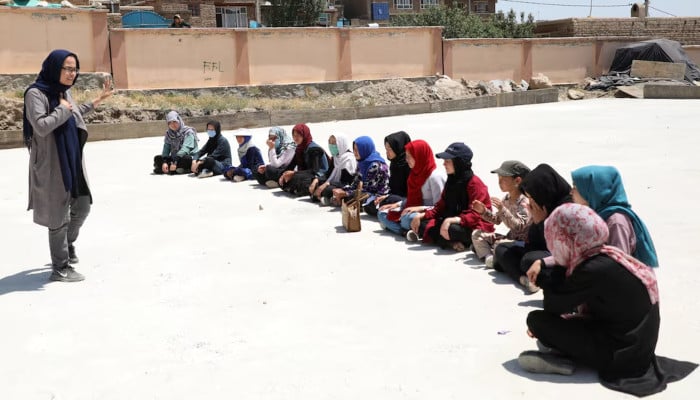
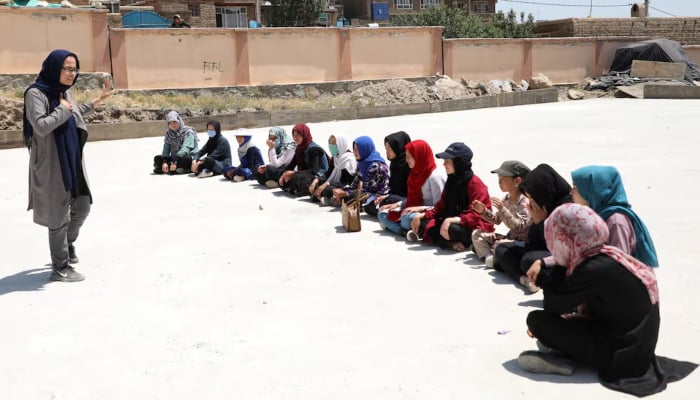
Afghanistan is at risk of losing more than 25,000 female teachers and health workers by 2030 if the Taliban-led country’s restrictions on girls’ education and women’s employment are not lifted, according to a new Unicef report released on Monday.
The Taliban has banned women from most public sector jobs and limited girls to receiving an education only until the age of 12.
These restrictions, according to the report, have already affected at least 1 million girls — a figure that is expected to double by 2030 if nothing changes. Unicef called on the Taliban to lift the ban that it imposed after returning to political power in 2021.
Unicef’s “The Cost of Inaction on Girls’ Education and Women’s Labour Force Participation in Afghanistan” report found a rapid decline in qualified women entering the teaching and healthcare sectors.
Up to 20,000 female teachers and 5,400 health workers could be lost by 2030, according to the report, which estimated that this figure is about 25% of Afghanistan’s 2021 workforce. As many as 9,600 health workers could be lost by 2035, it added.
“Afghanistan cannot afford to lose future teachers, nurses, doctors, midwives, and social workers, who sustain essential services,” Unicef Executive Director Catherine Russell said. “This will be the reality if girls continue to be excluded from education.”
Female healthcare workers are required to attend to female patients, and female teachers are preferred for girls in gender-disaggregated schools whenever possible, the report noted.
The growing decrease could have at least a AFN 5.3 billion ($84 million) annual economic impact on Afghanistan’s economy, according to Unicef, which added that this is the equivalent of about 0.5% of the country’s gross domestic product.
Afghanistan’s de facto authorities should safeguard skills training and allow women to participate in the labor market, Unicef said.
- Women-only carriage suffered the worst impact: official.
- President Prabowo Subianto visits victims in hospital.
- Announces to build flyover to reduce track congestion.
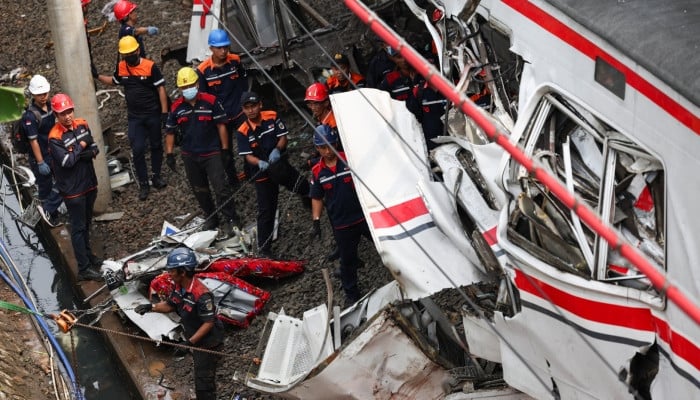
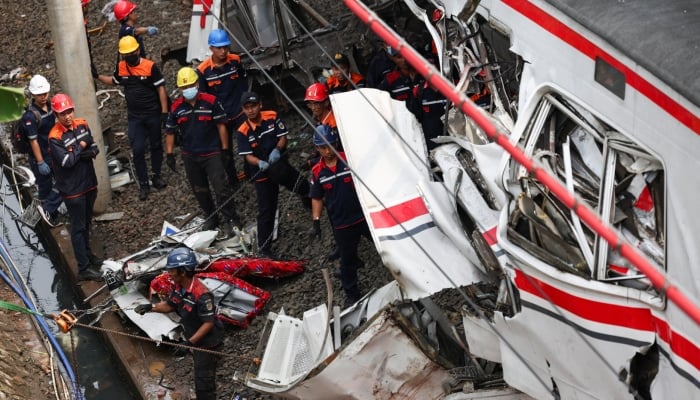
JAKARTA: The death toll from a train collision near the Indonesian capital Jakarta has risen to 14 with another 84 injured, the train operator said on Tuesday, as rescuers worked to extract survivors still trapped in the wreckage.
The collision between a commuter train and a long-distance train happened late on Monday in Bekasi, just outside Jakarta.
Bobby Rasyidi, chief executive of Indonesia’s state railway firm PT KAI, said the death toll had risen to 14 and that evacuation work was still ongoing.
Mohammad Syafii, the head of Indonesia’s search and rescue agency, told a press conference early on Tuesday that it was a delicate process to rescue survivors from the mangled carriages.
“We needed to involve personnel with certain skills to perform a measured extrication,” he said. “There are some victims who are alive to this minute and we’re hoping to extricate them, but they’re still pinned by the train material.”
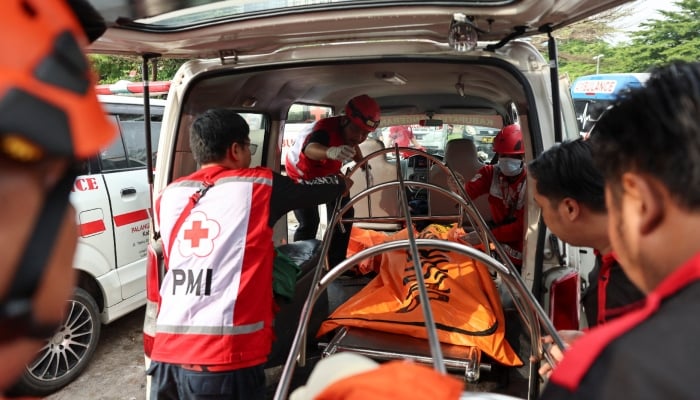
Rescuers have disengaged the trains, a Reuters witness said. They were seen using angle grinders to cut through the metal of the train compartments and reach the survivors.
Bobby told the press conference that the commuter train first collided with a taxi on the tracks and was then hit by the long-distance train. A women-only carriage bore the brunt of the crash.
Taxi operator Green SM Indonesia said on Instagram that the taxi involved in the accident was part of its fleet. It said it had sent information to authorities to assist in the investigation.
Green SM Indonesia is the Indonesian branch of Vietnamese electric-vehicle taxi operator Green and Smart Mobility JSC, an affiliate of Vingroup VIC.HM.
After visiting a hospital in Bekasi, President Prabowo Subianto said he had agreed to build a flyover near the train tracks to help resolve heavy traffic congestion, adding that authorities would investigate the collision. He said large parts of the train network are not well-maintained.
Indonesia’s National Transportation Safety Committee (KNKT) is investigating the crash.
On Tuesday, rescuers and people descended upon the train station, some looking for their relatives. A man was seen crying while holding his brother’s bloody bag.
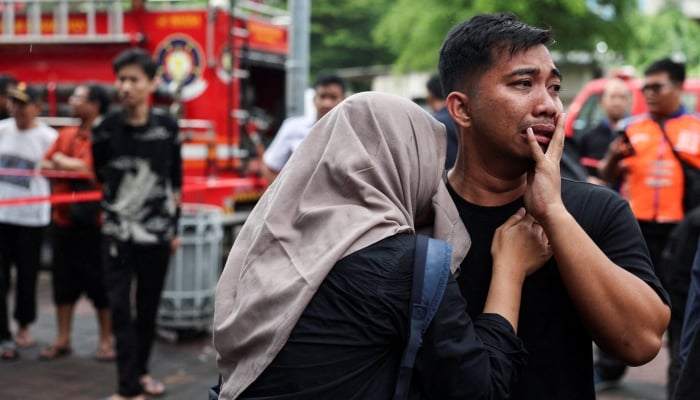
Heriyati, a passenger, said she initially intended to use the women-only carriage but opted for the one behind it. She had been on a call with her husband, asking him to pick her up from the station, when the collision occurred.
“I haven’t even finished with the call and the trains collided,” she said.
Commuter line trains are some of the busiest in Jakarta, the world’s most populous city. On Tuesday, PT KAI said several commuter train trips were cut short due to the crash.
Land transport accidents are common in Indonesia. A train collision in West Java province in 2024 killed four people and injured dozens.


BP profits more than double as oil trading booms amid Iran war

Buckingham Palace issues ‘disappointing’ update on King Charles amid threat

Trump not happy with latest Iran proposal to end war, says US official

-

 Sports1 week ago
NCAA men’s gymnastics championship: All-time winners list
-

 Sports1 week ago
WWE WrestleMania 42 Night 2: Live match results and analysis
-

 Fashion1 week ago
UK’s Sosandar returns to profitability amid robust FY26 performance
-

 Politics7 days ago
UK’s Starmer seeks to deflect blame over Mandelson appointment
-
 Business1 week ago
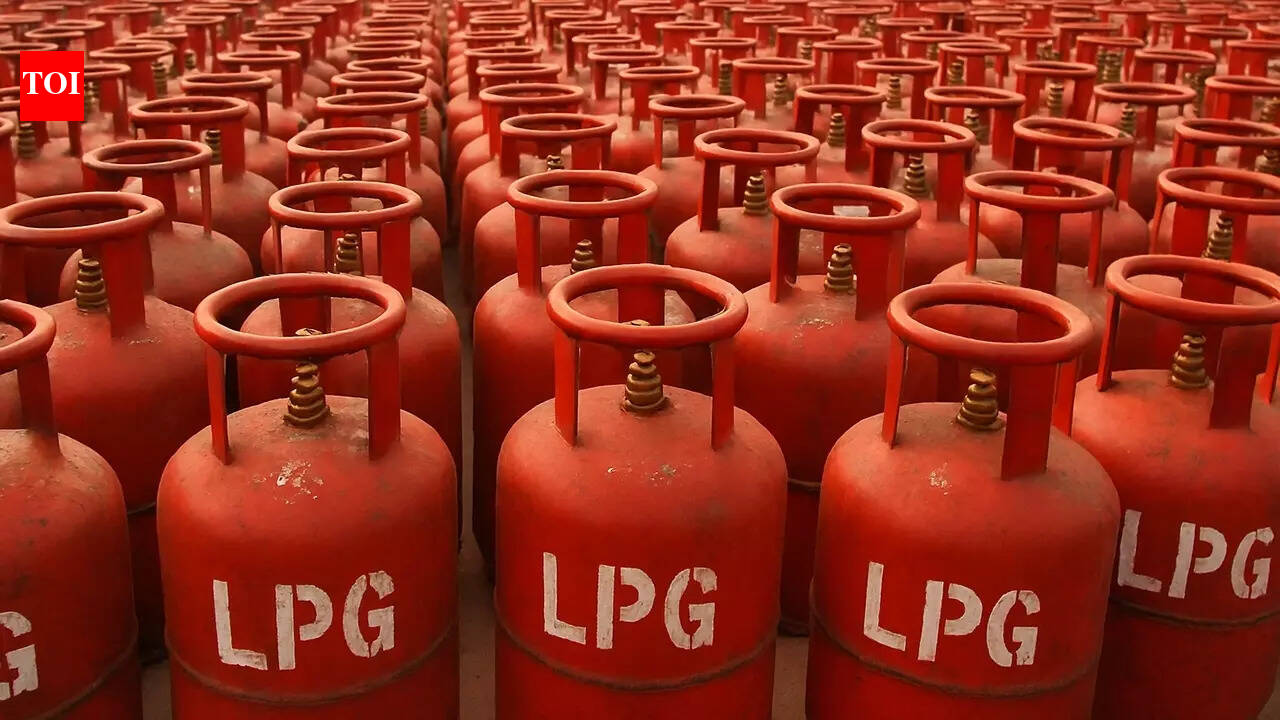
No fuel shortage: Govt assures 100% domestic LPG, PNG, CNG supply amid Hormuz energy crunch – The Times of India
-

 Entertainment1 week ago
Lee Anderson, Zarah Sultana kicked out of UK Parliament for calling PM ‘liar’
-
 Business1 week ago
How Trump’s psychedelics executive order could unlock stalled cannabis reform
-

 Sports1 week ago
Quetta Gladiators opt to bowl after winning toss against Peshawar Zalmi in PSL 11 clash