

Business
SHANTI shields N-plants from safety oversight: Experts – The Times of India

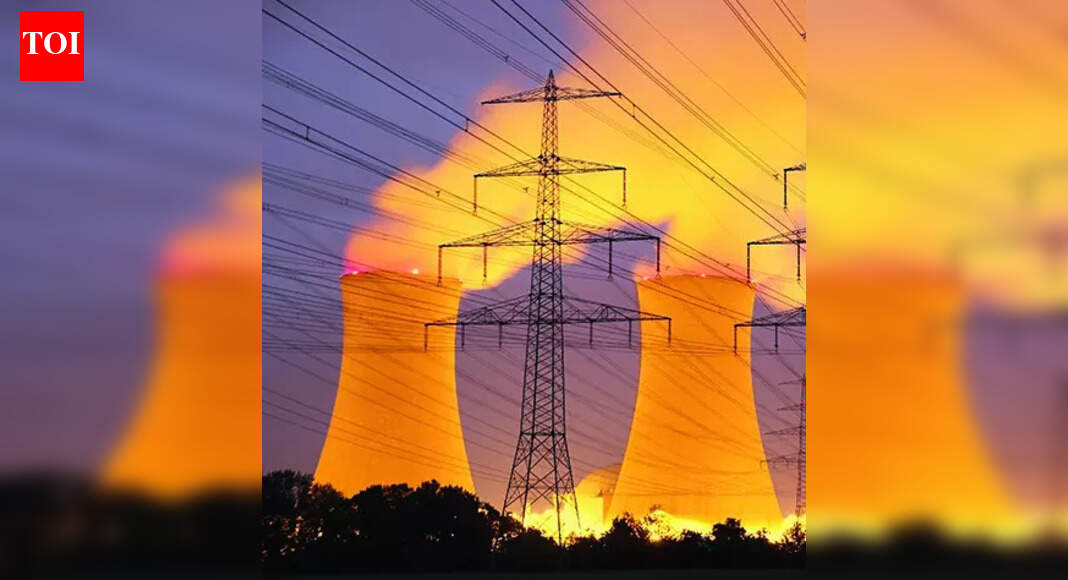
NEW DELHI: The new nuclear energy bill, which was passed in Rajya Sabha by voice vote after a four-hour discussion while rejecting many amendments moved by opposition to send it to a parliamentary panel for scrutiny, marks a decisive shift in India’s nuclear governance, embedding safety oversight in law across the lifecycle of an atomic plant, unlike the existing framework that relied largely on executive discretion and post-accident accountability.Sustainable Harnessing of Nuclear Energy for Transforming India (SHANTI) Bill will allow private participation in India’s tightly controlled civil nuclear sector as the country seeks to meet its clean energy goals by 2047. As opposition raised safety and liability concerns, officials said it establishes a statutory safety regime that ensures continuous compliance rather than reliance on one-time permissions. It seeks to provide for a “pragmatic civil liability regime for nuclear damage and confer statutory status to Atomic Energy Regulatory Board (AERB)”.Officials said unlike the previous law – in which nuclear safety oversight was shaped largely by broad executive authority and administrative rules – SHANTI fundamentally recasts the framework by shifting to a “statutory, lifecycle-based regulatory regime”. Govt manages radiation risks and radioactive waste, but does not mandate separate safety authorisations or legally bind safety obligations to each phase of a nuclear plant’s life. AERB’s stage-wise consent process for construction, commissioning and operation existed only as an administrative practice. Civil Liability for Nuclear Damage (CLND) Act, 2010 further reinforced a post-accident approach by focusing on compensation and insurance rather than prevention.“These laws (Atomic Energy Act and CLND Act) treated safety primarily as a post-damage responsibility, rather than a proactive governance requirement,” said an official. SHANTI separates “permission to operate” from “permission to operate safely”, requiring both a licence and an independent safety authorisation. Any activity involving radiation exposure risk – including construction, operation, transport, storage, decommissioning, or waste management – will now require explicit safety approval.It also consolidates regulation, enforcement, civil liability and dispute resolution within a single statute, reducing legal complexity and compliance uncertainty. “It grants a clear statutory authority to AERB to inspect facilities, investigate incidents, issue binding directions, and suspend or cancel operations that do not meet safety standards. Regulatory action is no longer dependent on executive discretion. Accident prevention is significantly enhanced by legally recognising serious risk situations as nuclear incidents, even without actual damage,” said the official. Core functions such as fuel enrichment, spent-fuel reprocessing, and heavy water production will remain exclusively under Centre’s control.Anujesh Dwivedi, partner at Deloitte India, said continuing with the existing legal framework would make it difficult for nuclear energy to replace thermal power in the long run. “Over decades, India added only about 8GW of nuclear capacity. Scaling this up to 100GW by 2047- and potentially 300GW or more by 2070 – required major reforms, which these regulations seek to address,” he said.Meanwhile, PM Modi said passing of the bill marks a “transformational moment for our technology landscape”.

Tiger Woods of Jupiter Links Golf Club looks on before the match against the Los Angeles Golf Club at SoFi Center in Palm Beach Gardens, Florida, March 24, 2026.
Adam Glanzman | TGL Golf | Getty Images
Tiger Woods’ future in professional golf remains unclear as he seeks treatment after a rollover car crash last week.
Woods was arrested for a DUI after the accident in Jupiter Island, Florida, his second rollover in five years, and said in a statement on X that he would be stepping back from golf “to return to a healthier stronger, and more focused place.”
Woods did not provide a timeline for his return, only that he would be stepping away for a “period of time.”
On Wednesday, the PGA of America announced that Woods will no longer serve as captain of the 2027 U.S. Ryder Cup Team.
“We support his decision,” the PGA of America said in a statement on X. “We commend Tiger for prioritizing his long-term health and deeply respect the courage it takes to make such a personal decision.”
The latest developments leave Woods at least temporarily at the fringes of the sport that made him a household name. The golf community has rallied around the sport’s biggest star as he vows to “focus on his health,” and the PGA Tour said in a statement that Woods has the organization’s full support.
“Tiger Woods is a legend of our sport whose impact extends far beyond his achievements on the course. But above all else, Tiger is a person, and our focus is on his health and well‑being,” the tour said.
Off the course, Woods has been serving as chairman of the PGA Tour’s Future Competition Committee since August. That group has been responsible for creating a vision for the future of professional golf.
A PGA Tour spokesperson said that Woods will return to that role when he is ready to do so.
Golf Channel analyst and former tour pro Brandel Chamblee suggested it could be time for Woods to consider retirement following his latest accident. Woods, 50, has been recovering from various injuries sustained in his car crash in 2021.
“Why would he need to play golf anymore?” Chamblee asked Friday on the Golf Channel’s “Golf Central.” “I think he should probably ask himself that. Consider not playing golf anymore.”
Until Friday’s accident, Woods held onto hope that he would compete in the upcoming Masters Tournament this month.
Augusta National Golf Club Chairman Fred Ridley confirmed this week that Woods would not play.
“Although Tiger will not be joining us in person next week, his presence will be felt here in Augusta,” Ridley said. “Augusta National Golf Club and the Masters Tournament fully support Tiger Woods as he focuses on his well-being.”
TGR, Woods’ education foundation, said it remains committed to serving its students and communities.
“Our thoughts are with our founder as he takes the time needed to focus on his health,” its CEO Hrag Hamalian said in a statement.
Woods’ apparel brand, Sun Day Red, also voiced its support this week.
“He is not just our partner, he is our friend. We are here for him and we remain focused on the work we are building together,” the company said in a post on the Meta-owned Threads platform.
TGL, the indoor golf league founded by Woods and Rory McIlroy, declined to comment about Woods’ hiatus and potential return.
Woods made his first TGL playing appearance of the season for the Jupiter Links team last week in front of a notable audience. ESPN said nearly 1 million viewers tuned in to watch Woods’ return, making it the largest audience this season.

A Sam’s Club in Miami, July 7, 2025.
Joe Raedle | Getty Images
Walmart-owned Sam’s Club said Wednesday it will raise its annual membership fee by $10.
Starting on May 1, the warehouse club — which directly competes with Costco and BJ’s Wholesale Club — will charge $60 per year for basic membership and $120 for its higher-tier option. It currently charges $50 for club members and $110 for Plus members and last raised annual fees in October 2022.
In a statement, Sam’s Club said it has “adjusted our membership pricing to support the things our members love,” citing perks including its assortment, expanded hours and better curbside pickup and delivery options.
Still, those new fees will be below those of rival Costco, which charges $65 per year for its basic membership and $130 per year for its higher-tier option. Costco hiked its fees in 2024. The fees bring Sam’s Club in line with BJ’s, which charges $60 per year for its basic membership and $120 per year for its higher-tier membership.
Sam’s Club is hiking membership fees as its annual sales and membership grow. Net sales for Sam’s Club in the U.S. grew by about 3.1% to $93 billion last fiscal year, according to Walmart’s fourth-quarter earnings report. That growth has come in part from an expanding digital business: In the holiday quarter, the warehouse club’s e-commerce sales increased by 23% year over year. Store and website visits increased, too, with transactions rising 5.3% year over year in the same quarter.
Higher gas prices, driven by the Iran war, have drawn more attention to one of warehouse clubs’ key perks: cheaper prices at the pump. Gas prices hit a nationwide average of $4.018 this week, according to travel association AAA. That’s the highest price since August 2022, when the Russia-Ukraine war drove up energy prices.
Sam’s Club does not disclose its membership count, but said that it hit a record high in the three-month quarter that ended Jan. 31. Membership for the retailer is estimated to be more than 30 million, with a similar proportion of members opting into the higher-tier level as at Costco, according to David Bellinger, a retail analyst for Mizuho Securities.
Based on the equity research firm’s estimate, the membership fee increase could bump up annual income from the subscriptions by more than $200 million. That would translate to a 2 cent annual earnings per share lift for parent company Walmart.
Membership fee increases for current members will take effect when they renew at the end of their billing cycle. Sam’s Club said it emailed members about the fee increase on Tuesday.
As part of the fee change, Sam’s Club said members of its higher-tier level, called “Plus,” will be able to earn up to $750 per year in Sam’s Cash rewards on eligible purchases, up from $500 per year.
European stocks rallied on Wednesday as comments from both sides of the Middle East war gave some conviction for a near-term end to hostilities.
“The market appears increasingly optimistic that an end to the war in Iran is in the offing as big gains in the US and Asia were matched in Europe,” said AJ Bell investment director Russ Mould.
The FTSE 100 closed up 188.34 points, 1.9%, at 10,364.79. The FTSE 250 ended up 484.48 points, 2.3%, at 21,688.19, and the AIM All-Share advanced 22.13 points, 3.1%, at 739.25.
On Wednesday, US President Donald Trump said that Iran had asked for a ceasefire but that the US would only consider this once the Strait of Hormuz, the vital oil and gas shipping route which Iran has effectively closed for most exports, is clear for shipping.
This came after Mr Trump told reporters on Tuesday the US would end operations in Iran “very soon”, perhaps within “two weeks, maybe three”.
The US president is due to make a televised address later on Wednesday.
Meanwhile, Iranian President Masoud Pezeshkian said the Islamic republic had the “necessary will” to end the war, provided its enemies guaranteed it would not flare up again.
But Israeli Prime Minister Benjamin Netanyahu insisted that Israel would press ahead with its military campaign and that “we will continue to crush the terror regime”.
Brent oil traded lower at 101.83 dollars a barrel on Wednesday afternoon, from 107.38 dollars late on Tuesday.
In European equities on Wednesday, the CAC 40 in Paris closed up 2.1%, while the DAX 40 in Frankfurt rose 2.7%.
Stocks in New York were higher, extending Tuesday’s bumper gains. The Dow Jones Industrial Average was up 0.9%, as was the S&P 500 index, and the Nasdaq Composite advanced 1.3%.
Michael Brown, senior research strategist, at Pepperstone pointed out that amid the “euphoria, exuberance, and relief” which has driven a rebound in risk appetite over the last day or so, the surge in energy prices means that a rise in headline inflation over the next few months is, essentially, “baked in”.
“Added to which, considerably higher energy prices, and continued supply chain disruption, are likely to bring with them substantial growth headwinds, in turn amounting to a notable negative demand shock, which will likely weaken what is already very anaemic economic momentum, most notably in Europe,” he said.
Mr Brown does not think financial markets have “ignored” these risks, but are essentially “parking these worries, to be dealt with on some other day in the future”.
Reflecting these concerns, the Bank of England said the Middle East war had caused “a substantial negative supply shock to the global economy”, increasing risks to the financial system.
The central bank said the fallout will also weigh on economic growth and tighten financial conditions, such as restricted lending by banks.
“Adverse impacts on the global macroeconomy increase the likelihood that multiple vulnerabilities could crystallise at the same time, amplifying their effect on financial stability,” the Bank said in a quarterly update on identifying risks to financial stability.
Bank governor Andrew Bailey sought to dampen expectations of interest rate hikes.
In an interview with Reuters, Mr Bailey responded to market expectations for higher rates by commenting “that is a judgment markets have to make but I think they’re getting ahead of themselves”.
Prime Minister Sir Keir Starmer said the UK could weather the economic storm caused by the Iran conflict but acknowledged the crisis will “affect the future of our country” as households faced higher fuel costs now and the prospect of energy bill hikes later this year.
The UK is leading a diplomatic initiative to reopen the Strait of Hormuz, but restoring the flow of global trade will not be easy, Sir Keir admitted.
Foreign Secretary Yvette Cooper will host an international meeting on Thursday to “assess all viable diplomatic and political measures” to reopen the strait, after 35 countries signed up to a statement expressing willingness to contribute to efforts to ensure safe passage for shipping.
The yield on the US 10-year Treasury narrowed to 4.31% on Wednesday from 4.33% on Tuesday. The yield on the US 30-year Treasury ebbed to 4.89% from 4.91%.
The pound rose to 1.3324 dollars on Wednesday afternoon from 1.3205 dollars at the equities close on Tuesday. Against the euro, sterling firmed to 1.1476 euro from 1.1463 euro.
The euro stood higher against the greenback at 1.1608 dollars from 1.1523 dollars. Against the yen, the dollar was trading lower at 158.66 yen compared to 159.02 yen.
On the FTSE 100, the risk-on mood saw gains for banks Lloyds, up 5.8%, NatWest, up 5.4%, and Barclays, up 5.1%.
British Airways owner, International Consolidated Airlines, flew 5.7% higher, budget airlines easyJet and Wizz Air soared 5.0% and 6.2% respectively.
But housebuilder Berkeley Group plunged 9.7% as its decision to halt land buying amid the uncertainty sparked by the Iran war sparked significant profit downgrades.
In an unscheduled trading update, the Surrey-based housebuilder said its fears, expressed in a recent trading statement, that the economic consequences of the conflict in the Middle East could reduce confidence in a near-term market recovery has “now become a reality”.
The builder said it is reducing work in progress investment to match current sales levels and will not acquire new land.
Berkeley anticipates delivering above £1.4 billion of pre-tax profit, over financial 2027 to 2030, which analysts at RBC Capital Markets said was 29% below Visible Alpha consensus of £1.98 billion.
Mr Mould said Berkeley has a “long-standing reputation for being adroit at calling the ups and downs of the property market”.
“In that context, the moves the company has announced today will make others sit up and take notice,” he said.
Rightmove fell 1.4% as it said it will “defend vigorously” a proposed class action claim filed against it, as estate agents accuse the firm of charging excessive fees.
The London-based online property portal confirmed it is aware of reports that an application to commence collective proceedings has been filed with the UK’s Competition Appeal Tribunal.
On the FTSE 250, Trustpilot climbed 7.3% as Panmure Liberum upgraded to “buy” from “hold”, while Raspberry Pi extended Tuesday’s bumper gains with a further 13% rise.
Gold traded at 4,781.92 dollars an ounce on Wednesday, up from 4,613.15 dollars at the same time on Tuesday.
The biggest risers on the FTSE 100 were Babcock International, up 110.0p at 1,268.0p, Rolls Royce, up 75.0p at 1,207.0p, 3i Group, up 146.0p at 2,584.0p, Endeavour Mining, up 260.0p at 4,720.0p and Fresnillo, up 192.0p at 4,720.0p.
The biggest fallers on the FTSE 100 were Berkeley Group, down 332.0p at 3,104.0p, BP, down 30.3p at 576.0p, Shell, down 139.5p at 3,443.5p, Rightmove, down 6.0p at 422.9p and British American Tobacco, down 58.0p at 4,313.0p.
Thursday’s global economic calendar has trade figures in the US and Canada, and US weekly jobless claims.
Thursday’s domestic corporate calendar has half year results from Baillie Gifford Japan Trust.
– Contributed by Alliance News


What is Kylie Jenner’s favourite Timothée Chalamet movie?

Bill Self announces return to Kansas sideline, set for 24th season despite health issues

Men’s March Madness 2026: Ranking the final four teams

-

 Politics1 week ago
Afghanistan announces release of detained US citizen
-

 Tech1 week ago
Can a Home Appliance Fix the Problem of Soft-Plastic Waste?
-

 Sports1 week ago
Broadcast industry CEO says consolidation is ‘essential’ to compete for NFL soaring media rights prices
-

 Entertainment1 week ago
UN warns migratory freshwater fish numbers are spiralling
-
 Business1 week ago
Property Play: Home flippers see smallest profits since the Great Recession, real estate data firm says
-
 Business1 week ago
Gold prices soar in Pakistan – SUCH TV
-

 Fashion1 week ago
ICE cotton slips on weaker crude, profit booking
-
 Business1 week ago
More women are entering wealth management, but few are in advisory roles, study finds