

Entertainment
Sharon and Kelly Osbourne attend first event after Ozzy Osbourne’s death

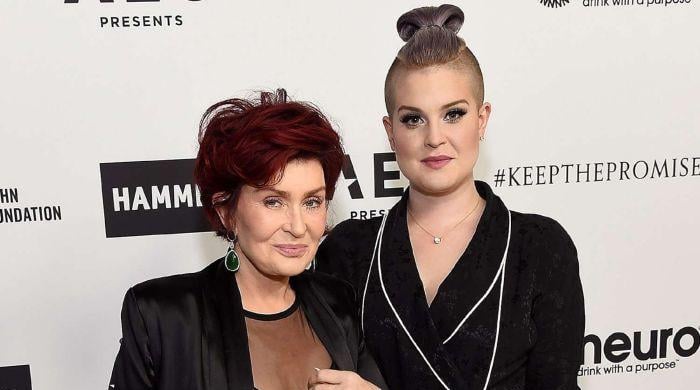
Sharon and Kelly Osbourne stepped back into the spotlight together this week, marking their first red carpet appearance since the death of Ozzy Osbourne in July.
The two attended a Rebecca Vallance event in London on Wednesday, holding hands and smiling as they posed for photos.
Sharon, 73, wore a floor-length maroon gown covered in sequins and completed her look with diamond earrings and a black clutch.
Kelly, 41, chose a rhinestone-embellished pink halter dress with a shimmering neckline and kept her jewelry simple, wearing diamond hoops.
Her fiancé, Sid Wilson, also joined the pair at the fashion event.
Kelly later shared photos on Instagram from the evening and wrote that it was a special moment.
She captioned, “Had the best time with my mum and @rebeccavallancegasan at the @rebeccavallance new launch,” adding that the dress took her out of her usual comfort zone.
“It took me out of my comfort zone of black and made my bubblegum pink dreams come true.” She also wrote, “I thought my mum looked beautiful and it was so nice to see her have a little fun!”
The outing comes during a difficult period for the family as they continue to navigate their loss.
Earlier this month, Kelly shared on The Osbournes Podcast that she slept in Sharon’s bed for two months after Ozzy died, saying her mother struggled to sleep alone.
She opened up about the depth of her grief, saying, “I never realized just how horrible grief is. I never knew I was capable of loving somebody so much and missing somebody so much.”
Sharon also spoke about her own experience and admitted, “I hate going to bed at night.”
For Kelly, mornings have been especially painful since losing her father.
She explained, “I wake up and for the first three seconds, I feel normal. And then, I remember everything. Mornings are the hardest for me.”
She went on to say mornings remind her most of her father: “What is the morning? Because it happened in the morning. And I used to spend most of my time with Dad in the morning.”
Ozzy Osbourne died on July 22 at the age of 76.
According to a death certificate filed by his daughter Aimée Osbourne at a London registry, the Black Sabbath legend died from a heart attack.
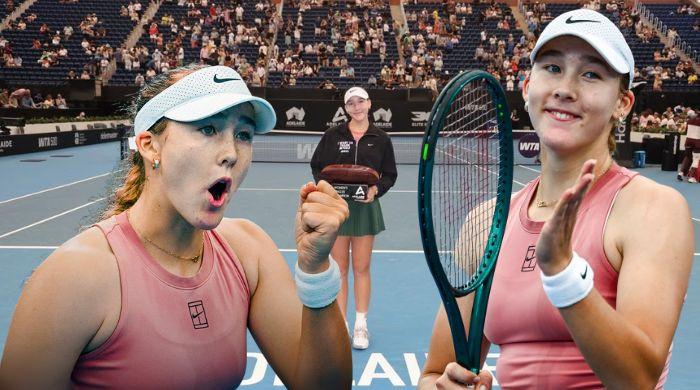
Teen phenom Andreeva has clinched the 2026 Adelaide International all-teen clash for the fourth straight time.
Andreeva defeated Victoria Mboko by 6-3, 6-1 in the final to win her first WTA 500 title.
It was Andreeva’s 12th win of the last 13 games to capture the 2026 Adelaide title.
After the victory, Andreeva said during the trophy presentation ceremony, “Hello everyone, First, of course, I’m going to say congrats to Vicky and her team. You have been playing amazing since last year, and I just want to congratulate you for the great week.
She quipped at her own team, saying, “I don’t know, I guess my team comes next. But I do feel like it was all me. I don’t know what I can. I’ve been working, sweating, and I don’t know why you’re here, honestly.”
The world No. 8 showed to the world at the Adelaide final that it’s not about how you begin, but how you end.
As was evident from her spectacular display of the game, after she had dropped the first three games but won nine straight between the first and second sets to continue to a straight-sets victory over Victoria Mboko, she clinched her fourth career crown.
Buzzing with triumph, the teen phenom shared a post-match montage post.
In a lyrical two-line couplet, she was seen saying, “Mirra, Mirra on the wall, I’m the champion of Adelaide after all.”
Who is Mirra Andreeva?
Mirra Andreeva is the eighth-seeded player, who was born in Krasnoyarsk, the third-largest city in Siberia.
Mirra Andreeva started playing tennis when she was six years old. Both the sisters relocated to Sochi, Russia, and then Cannes, France, to set up a training base with coaches Jean-Rene Lisnard and Jean-Christophe Faurel.
Andreeva is the sister of Erika Anderson, who is also a professional tennis player.
Andreeva won her debut WTA Tour title in Romania in July 2024 and her second in Dubai in February 2025 before securing her third straight win in Indian Wells in March 2025.
After a historic victory in the 2026 Adelaide International on January 17, Mirra Andreeva is set to head to the Australian Open for her next big challenge, starting tomorrow, Sunday, January 18, 2026.
- Rodriguez reshuffles cabinet after US-backed transition in Venezuela.
- US pressure mounts as Venezuela drops Maduro ally Alex Saab.
- US deportation flight returns Venezuelans after Maduro ouster.
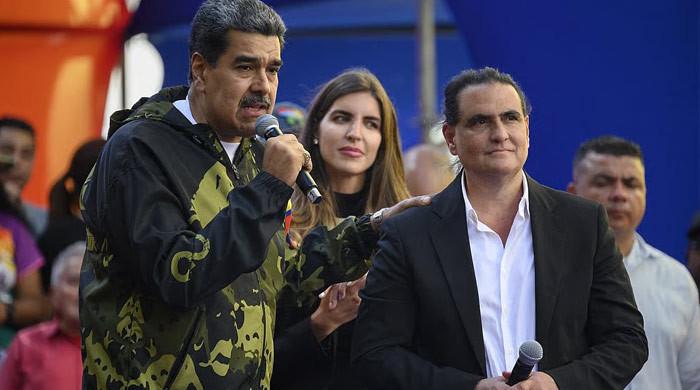
Venezuela’s interim president on Friday dismissed businessman Alex Saab, a close ally of deposed leader Nicolas Maduro, from his post as minister of industry.
In a Telegram message, Delcy Rodriguez announced the ministry would be combined with a commerce ministry and thanked Saab — a Colombian-born Venezuelan — “for his service to the Homeland; he will be taking on new responsibilities.”
The change comes amid pressure from Washington following the January 3 US military raid that ousted Maduro.
Saab, released in 2023 as part of a prisoner exchange with the United States, was appointed to office in 2024 by Maduro.
He had been arrested in Cape Verde in 2020 due to an Interpol notice over accusations that he had served as a money launderer for the socialist leader.
He was subsequently extradited to the US, where he and his business partner Alvaro Pulido were charged with running a network that exploited food aid destined for Venezuela.
Saab’s dismissal is among the latest key changes to Venezuela’s government by Rodriguez since the US capture of Maduro and his wife Cilia Flores.
Venezuelan opposition leader Maria Corina Machado, meanwhile, said her country is starting a “true transition” to democracy and will become free with support from the United States and President Donald Trump.
Trump, however, has sidelined Nobel laureate Machado and backed former vice president Rodriguez as interim leader of the oil-rich country following the seizure of Maduro.
“We are definitely now into the first steps of a true transition to democracy,” Machado said during an event in Washington, adding that this will have an “immense impact on the lives of all Venezuelans” as well as around the region and the world.
“Venezuela is going to be free, and that’s going to be achieved with the support of the people of the United States and the president, Donald Trump,” Machado said.
Her party has presented evidence that Maduro stole the 2024 election — claims supported by Washington and much of the international community.
But Trump has said that Machado does not have enough support among Venezuelans, and opted to stick with Rodriguez so long as she toes the line on US access to Venezuela’s vast oil reserves.
Machado said Friday that Rodriguez is “following orders” rather than acting of her own will.
The opposition leader’s remarks came a day after US Central Intelligence Agency chief John Ratcliffe met Rodriguez in Caracas.
Ratcliffe travelled to Venezuela to “deliver the message that the United States looks forward to an improved working relationship,” a US administration official said on condition of anonymity.
Nobel medal
In an indication of that improved relationship, a US deportation flight carrying 231 Venezuelans landed in Caracas on Friday, the first since Maduro’s overthrow.
Trump has made cracking down on undocumented immigrants a major part of his second term, carrying out sweeping immigration raids and deporting migrants.
Machado, 58, on Thursday presented her Nobel Peace Prize medal to Trump in a bid to win over the US president.
“He deserves it,” she said. “And it was a very emotional moment, I decided to present the Nobel Peace Prize medal on behalf of the people of Venezuela.”
It was not immediately clear if Trump — who said Friday that he and Machado will “be talking again” — kept the award following their White House lunch. The Norwegian Nobel Committee says its prizes cannot be transferred.
Trump had campaigned hard to win last year’s prize, falsely claiming that he stopped eight wars since taking office, but it went to Machado instead.
Trump and Rodriguez had their first telephone call on Wednesday and the White House said he “likes what he’s seeing” from her.
Rodriguez said, however, that her government will stand up to Washington.
“We know they are very powerful… we are not afraid to confront them diplomatically, through political dialogue,” she said Thursday.
Rodriguez was delivering Maduro’s state of the nation address to parliament while the long-time authoritarian leader is in a New York jail facing drug trafficking charges.
By contrast, Machado, who campaigned for years to end leftist Maduro’s rule, was greeted by jubilant supporters in Washington.
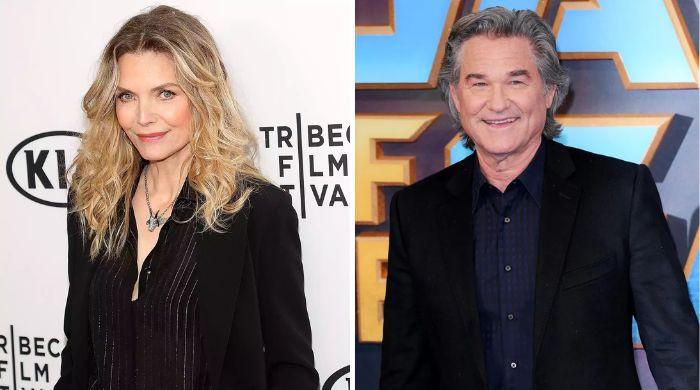
Paramount+ has announced a new spinoff to its hit Western series, Yellowstone, with Michelle Pfeiffer and Kurt Russell leading the project.
Recently sharing a first look at The Madison, the streamer highlighted the character names for both of the stars.
It was noted that Michelle will play Stacy Clyburn, described as “the heart of the family”, while Kurt will appear as Preston Clyburn.
“The new series premieres Saturday, March 14th, only on @paramountplus,” revealed the caption alongside both Michelle and Kurt’s stills.
Following the Clyburn family’s story, The Madison has been described as a “heartfelt study of grief and human connection following a New York City family in the Madison River valley of central Montana.”
Whereas its IMDb synopsis stated: “A New York family’s life unravels after a tragedy, as they process grief while vacationing in rural Montana, exploring human connection amidst profound sorrow.”
According to The Hollywood Reporter, while “the six-episode first season” of the series “will introduce the Clyburn family”, it is not yet known “if they are connected to the Duttons” — the protagonist clan from Yellowstone, led by Kevin Costner.
Meanwhile, The Madison cast additionally includes Beau Garrett, Elle Chapman, Patrick J. Adams, Amiah Miller, Alaina Pollack, Ben Schnetzer, Kevin Zegers, Rebecca Spence, Danielle Vasinova, and Matthew Fox.


The 16 Best EVs Coming in 2026

‘India makes more coaches than US, Europe’: PM Modi flags off Vande Bharat sleeper; calls it self-reliance push – The Times of India

Andreeva triumphs over Mboko in teenage clash, seizes fourth title

-

 Tech4 days ago
New Proposed Legislation Would Let Self-Driving Cars Operate in New York State
-
 Sports6 days ago
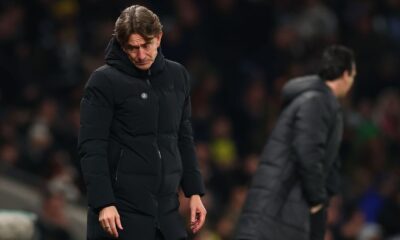
Clock is ticking for Frank at Spurs, with dwindling evidence he deserves extra time
-
Sports1 week ago
Commanders go young, promote David Blough to be offensive coordinator
-

 Fashion6 days ago
South India cotton yarn gains but market unease over US tariff fears
-

 Entertainment4 days ago
X (formerly Twitter) recovers after brief global outage affects thousands
-

 Fashion6 days ago
China’s central bank conducts $157-bn outright reverse repo operation
-
 Business1 week ago
SoftBank reduces Ola Electric stake to 13.5% from 15.6% – The Times of India
-

 Sports6 days ago
US figure skating power couple makes history with record breaking seventh national championship