

Sports
Should Arsenal’s penalty have been overturned? Plus, Man United’s spot-kick escape

Video Assistant Referee causes controversy every week in the Premier League, but how are decisions made, and are they correct?
After each weekend we take a look at the major incidents to examine and explain the process both in terms of VAR protocol and the Laws of the Game.
In this week’s VAR Review: Should Arsenal‘s penalty against West Ham United have been canceled? What happened with Sunderland‘s overturned spot kick at Manchester United? And why didn’t Alexander Isak win a penalty for Liverpool at Chelsea?
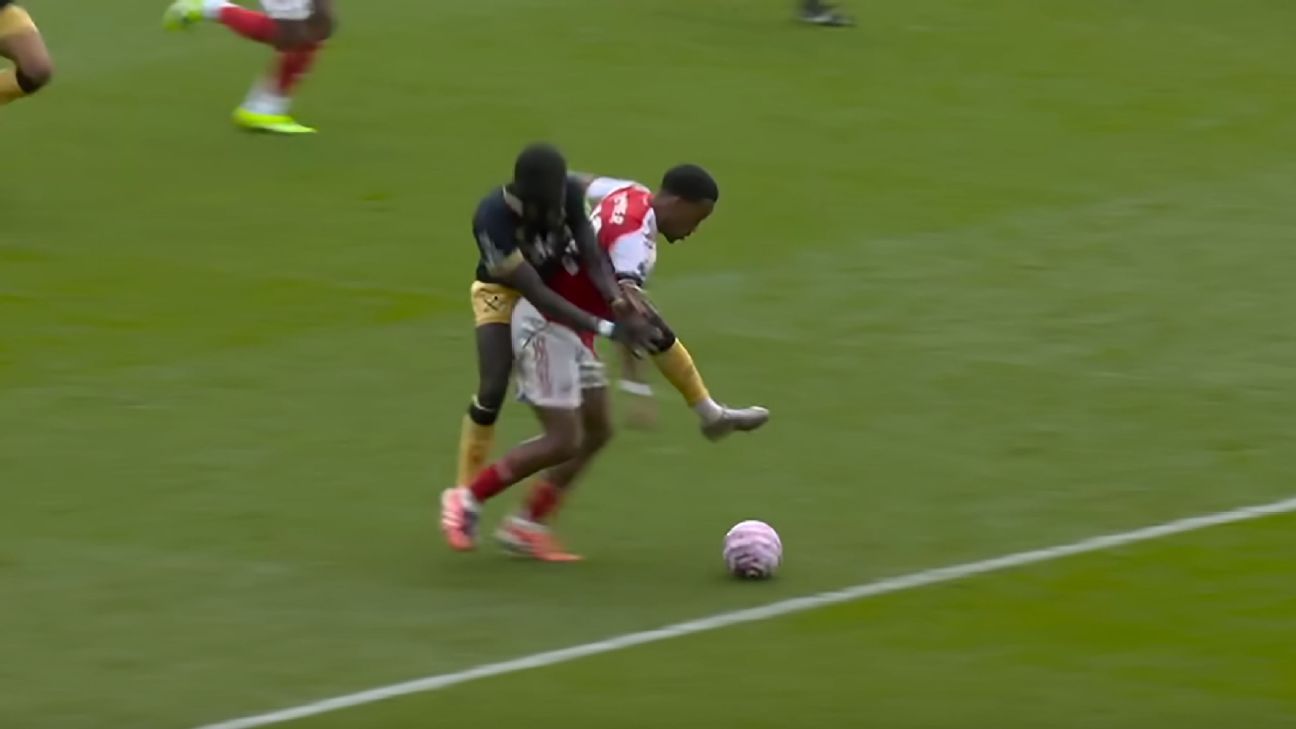
Possible penalty overturn: Position of foul by Diouf on Timber
What happened: Arsenal were awarded a penalty in the 67th minute when Jurriën Timber raced onto a pass and was brought down on the edge of the area by El Hadji Malick Diouf. Referee John Brooks pointed to the spot, and it was checked by the VAR, Michael Oliver.
VAR decision: Penalty stands, scored by Bukayo Saka.
VAR review: There’s no doubt this was a foul by Diouf, who clambered over the back of the Arsenal player. The query was about where it took place, with both players falling to the ground inside the area.
The referee and the VAR are looking for the point of contact that causes the foul. So it is possible for contact to begin outside the area and the foul to happen inside. This isn’t a foul continuing into the area, it’s the foul itself happening within it. It’s different than holding, which is the only offense that can start outside the box, continue into it, and be a penalty.
In December 2020, Southampton were awarded a VAR penalty against Brighton & Hove Albion when there was initial contact between Solly March and Kyle Walker-Peters outside the area, but the foul was judged to have taken place inside (watch here).
So in Saturday’s case, the VAR agreed that the first contact between Diouf and Timber outside the box wasn’t a foul, and it came on the line or inside.
Verdict: This would be considered a factual overturn, so the VAR alone would make the call and the referee wouldn’t be sent to the monitor. Yet other than situations determined by semi-automated offside technology, there’s no decision which is truly factual. The VAR is still looking at TV evidence and making a subjective judgement: Where did the foul take place? Was it handball by the goal scorer? Did the ball go out of play? The fact that different VARs could reach opposing judgements makes it subjective.
– Lindop, Olley: After dramatic Chelsea win, are Liverpool in crisis?
– Dawson: Pressure eases on Amorim — but for how long?
– Ogden: Hollywood derby gives us gritty realism rather than fairy tale
There’s a very strong argument that Diouf does foul Timber before the two players reach the box. The West Ham player is starting to climb over his opponent before they get to the line, and it really should have been a free kick … but it’s tight.
Subjective or objective? Oliver opted to leave the decision on the field, but would he have advised a penalty if a free kick had been given? It’s highly unlikely.
Possible goal: Offside check on Saka
What happened: Saka thought he had fired Arsenal into the lead in the 24th minute when he ran onto a pass over the top by Declan Rice. After the ball ended up in the net, the assistant referee raised the offside flag and the goal was disallowed.
VAR decision: No goal.
VAR review: As the ball was floated into the area, it bounced off the head of Diouf and dropped perfectly for Saka.
There was no question about Saka’s offside position — but did he commit an offside offence? Or should the offside phase have been canceled by the touch off Diouf?
Verdict: There are two considerations for the VAR. First, did Diouf make a “deliberate play” (meaning controlled) that would reset Saka’s offside position? As the ball simply landed on the West Ham player’s head, rather than him actually attempting to head it, this wasn’t a “deliberate play,” so Saka remains offside
Even if it was a “deliberate play,” Saka is so close to the defender that it would have been valid to consider whether the Arsenal forward had impacted or influenced him into playing the ball, so it’s highly unlikely the VAR would have stepped in.
Correct on-field decision.
Possible penalty: Handball by Mavropanos
What happened: Saka helped the ball into the area at the start of the second half, and it touched the arm of West Ham defender Konstantinos Mavropanos. Play continued, but was there a case for a penalty?
VAR decision: No penalty.
VAR review: The VAR determined that this was just part of Mavropanos’ running action, and the ball inadvertently touched his arm rather than the defender making his body unnaturally bigger, or making any deliberate action.
Verdict: The Premier League’s more-lenient application of the handball law gives far more consideration for how a player is naturally moving. There’s a chance this would be given as a spot kick in one of the other major European leagues, but it won’t be sent to review in England.
Possible penalty overturn: Challenge by Sesko on Hume
What happened: Sunderland delivered a long throw into the area in first-half stoppage time. As Trai Hume looked to win the ball, he went to ground under a high-foot challenge from Man United’s Benjamin Sesko. Referee Stuart Attwell allowed play to continue, and when the ball went out of play for a corner, the assistant advised that a penalty should be awarded. It was checked by the VAR, Neil Davies.
VAR decision: Penalty canceled.
VAR review: Last week we discussed how contact was required for a penalty kick to be awarded for a high boot. Chelsea‘s Malo Gusto escaped after the VAR determined he couldn’t be certain that he touched Yankuba Minteh. This was that situation in reverse.
Sesko tried to get to the ball ahead of Hume, and raised a boot — with the video evidence clear that there was no contact.
Verdict: It was a confusing situation at first, because of the delay between the incident and the penalty being awarded, and it may incorrectly have appeared that the VAR was advising a spot kick. But this was undoubtedly a correct intervention to cancel the penalty.
Usually, an overturned spot kick results in a restart with a dropped ball to the goalkeeper, because it has stayed in play. But when the ball has very clearly gone out of play before a penalty is given, the game restarts normally — in this case with a corner to Sunderland.
There’s an argument that the restart should have been an indirect free kick to Sunderland inside the area, as that’s how playing in a dangerous manner (no contact) should be dealt with. But this is never given in favor of the attacking team in the box.
Possible penalty: Challenge by Lammens and Fernandes on Traoré
What happened: Bertrand Traoré was booked for simulation in the 57th minute when he went to ground when trying to get past goalkeeper Senne Lammens and midfielder Bruno Fernandes on the edge of the box.
VAR decision: No penalty.
VAR review: There was glancing contact between Fernandes and Traoré, which took place just outside the area so the VAR wouldn’t be able to get involved.
The VAR could have considered a red card against Fernandes for denying an obvious goal-scoring opportunity, as Traore could have got to the ball inside the area with Lammens out of the game. However, there was enough doubt that there was enough in the contact to be a foul, and with Diogo Dalot mopping up the loose ball, it couldn’t be certain the Sunderland player would take control.
Verdict: While Traoré went down a little theatrically, he was probably unfortunate to pick up a yellow card, as he was nudged by the United captain as he tried to get past him.
Possible penalty: Challenge by Szoboszlai on Garnacho
What happened: Alejandro Garnacho moved into the penalty area in the 39th minute and went to ground under pressure from Dominik Szoboszlai. The Chelsea winger looked at Anthony Taylor asking for a penalty, but the referee waved away the claims. It was looked at by the VAR, Craig Pawson.
VAR decision: No penalty.
VAR review: There was a hand on the back of Garnacho, but the Argentina international went to ground too easily when he felt that contact.
Verdict: Definitely not enough in this for the VAR to get involved.
Possible penalty: Challenge by James on Isak
What happened: Alexander Isak ran onto a ball through the center in the 73rd minute and went down after being hit in the head by a flailing arm from Reece James. No penalty was awarded, so the VAR had a look.
VAR decision: No penalty.
VAR review: While Isak was caught in the face, this only came after the striker had pulled James back by his shirt.
Verdict: Arne Slot was annoyed by this decision, because Liverpool had conceded a penalty at Galatasaray in the Champions League on Tuesday when Szoboszlai caught Baris Alper Yilmaz in the face inside the area.
But there are two important differences: as ever, the crucial one being that the Galatasaray penalty was given by the on-field referee, and not through VAR. Also, there wasn’t any contact by Yilmaz on Szoboszlai that could be judged to have led to the touch on the head.
That’s not to say the Galatasaray penalty wasn’t exceptionally soft, but it doesn’t mean James should also be penalized, and definitely not through a VAR intervention.
Possible penalty: Challenge by Diop on Evanilson
What happened: James Hill lofted a ball into the area in the 54th minute, with Evanilson going to ground under a challenge from Issa Diop. Referee Simon Hooper wasn’t interested in the penalty appeals, so it was checked by the VAR, John Brooks.
VAR decision: No penalty.
VAR review: The VAR decided that while there was contact by Diop on the heel of Evanilson, it was accidental, so it didn’t reach the threshold for an intervention.
Verdict: Cast your mind back to the start of last season and the VAR penalty awarded to Fulham against Nottingham Forest, when Murillo stood on the heal of Andreas Pereira with the ball in the vicinity. The VAR? John Brooks.
There’s no doubt that the contact from Diop prevented Evanilson from being able to play the ball, and using Pereira as precedent, there’s a clear case for a VAR penalty. Consistency would say the same VAR might reach the same conclusion in both incidents.
The Premier League’s Key Match Incidents Panel supported the Pereira VAR intervention 5-0, though it did also note there was some contact on the attacker’s back. This perhaps isn’t quite as clear, but Diop was fortunate.
Possible red card: Violent conduct by Flemming on Buendía
What happened: Zian Flemming took control of the ball in the third minute of stoppage time, holding off Emiliano Buendía before then having his progress blocked. Buendía went down holding his face but referee Andrew Kitchen, in his third Premier League game, allowed play to continue. It was checked by the VAR, Michael Oliver, for a possible red card.
VAR decision: No red card.
VAR review: Flemming had his arm raised when Buendía came in from his blind side, with the Burnley player positioned to protect the space rather than throwing an elbow.
Verdict: This should at least have been a free kick to Aston Villa, and there’s an argument it should have been a yellow card. But there was no force or brutality in the way Flemming tried to hold off the Aston Villa player, and no deliberate act.
Two seasons ago, Fulham‘s João Palhinha escaped a red card after he caught Brighton’s Pascal Groß on the head with an arm when trying to keep possession. In that case, there was a clear movement into the opponent, with the KMI Panel voting 3-2 that it was a missed VAR intervention for a red card.
The Flemming incident doesn’t fall into the same category, so this won’t be seen as an error.
Possible penalty: Morato challenge on Burn
What happened: Newcastle United won a corner in the 54th minute; as it was delivered into the box, Dan Burn went down under pressure from Morato. Referee Peter Bankes allowed play to continue, and VAR Chris Kavanagh checked it out.
VAR decision: No penalty.
VAR review: Initially the two players were involved in mutual holding before Burn broke free. Morato didn’t seem to be interested in challenging for the ball, only stopping Burn from doing so. But the referee decided there wasn’t enough in it to give a penalty.
Verdict: Judging when holding goes from normal football contact to an offense is always a case of weighing up a variety of factors. Clear non-footballing actions, like dragging an opponent down by his shirt, are the only obvious examples.
There was a strong case for a penalty for a holding offense after Burn tried to get away from Morato, who can consider himself very fortunate.
The closest example is probably West Ham’s Mateus Fernandes holding back Tottenham Hotspur‘s Micky van de Ven last month. That wasn’t given as a spot kick, which the KMI Panel supported on a split 3-2 vote for both on-field and VAR judgements. But due to the non-footballing nature of the challenge, this could go down as a missed intervention.
Possible red card: Violent conduct by Uche on Tarkowski
What happened: The game was deep into added time when there was a VAR check for a possible punch by Christantus Uche on James Tarkowski. Should there have been a red card?
VAR decision: No red card.
VAR review: Quite a strange situation, because while Uche did appear to take a jab at Tarkowski, it seemed very light, and it was unclear whether there was contact. There doesn’t have to be contact for violent conduct, as “strikes or attempts to strike” is covered within the laws, but there does still need to be a level of brutality involved.
Verdict: Would there have been a different outcome had Tarkowski fallen to the ground? Possibly, but the fact that the Everton player barely had any reaction should be a decent indicator that there was very little in this.
A bizarre move by Uche, but there was not enough in it for violent conduct.
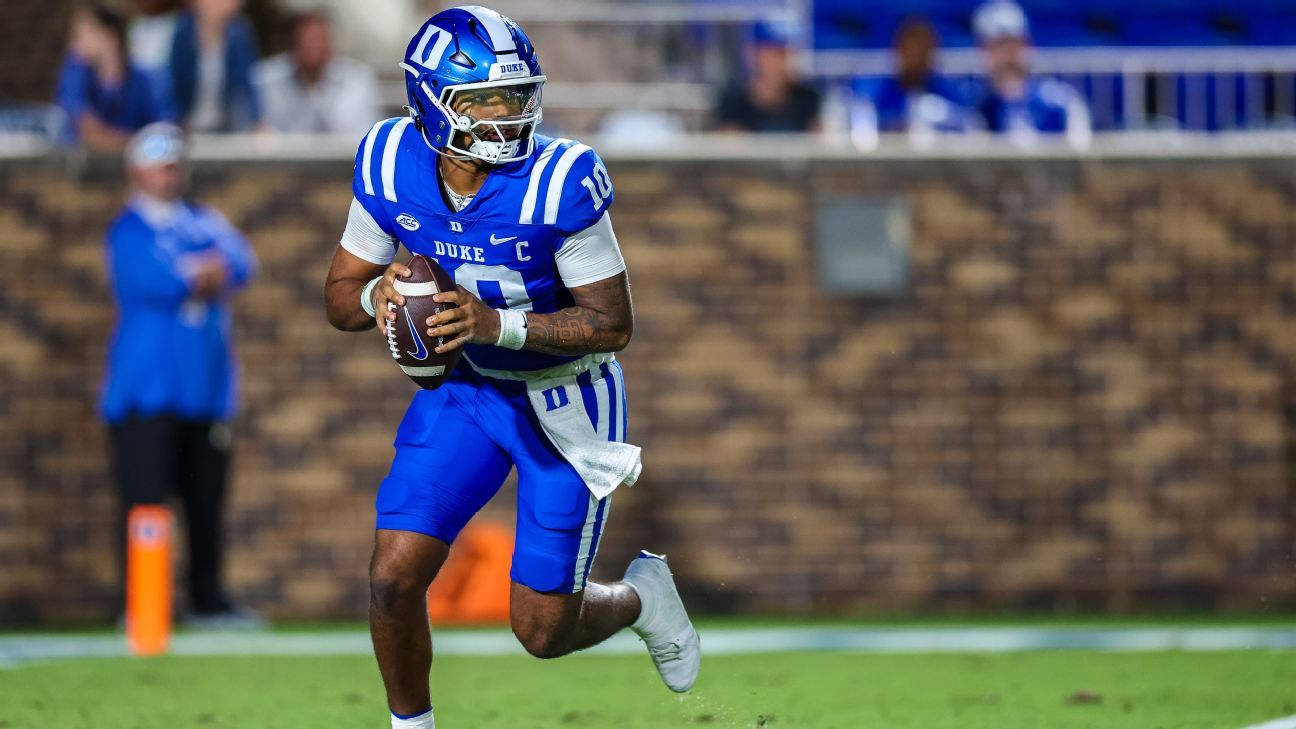
Duke starting quarterback Darian Mensah is entering the NCAA transfer portal.
Mensah submitted his request for transfer paperwork Friday, ahead of the midnight deadline for FBS and FCS players to enter the portal.
“This wasn’t an easy decision, but after talking with my family, I believe it’s in my best interest to enter the transfer portal,” Mensah said in a post on X.
Miami looms as the expected favorite in Mensah’s recruitment when he officially becomes available. The Hurricanes have signed transfer quarterbacks in consecutive years — Cam Ward and Carson Beck — and have not landed one during the two-week transfer window that opened Jan. 2.
Mensah had decided Dec. 19 to return to Duke for his redshirt junior season after exploring the possibility of entering the NFL draft. He was No. 5 in Mel Kiper Jr.’s quarterback rankings for the 2026 draft before his latest decision.
The quarterback was entering the second year of a two-year deal with Duke that would pay him up to $4 million in 2026. If Mensah leaves Duke, sources told ESPN’s Pete Thamel that his contract grants the university his exclusive name, image and likeness rights, which could prevent Mensah from earning revenue-sharing money at his next school unless Duke terminates its deal. There is not a specific buyout amount in Mensah’s contract with Duke, sources told Thamel.
The 6-foot-3, 205-pound redshirt sophomore from San Luis Obispo, California, transferred from Tulane to Duke after the 2024 season and led the Blue Devils to their first outright ACC championship since 1962 with a 27-20 overtime upset of No. 17 Virginia in the conference title game.
Mensah earned second-team All-ACC honors after producing a conference-leading 3,973 passing yards on 67% passing with 35 total touchdowns and six interceptions. He has started 27 career games at Tulane and Duke, and has two more years of eligibility.
If Mensah departs the program on the final day of the NCAA transfer window, it will put coach Manny Diaz and the Blue Devils in a difficult position with few proven options available in the portal.
Backup quarterback Henry Belin IV already entered the portal as a graduate transfer and committed to Missouri State on Thursday.
Duke closed out a 9-5 season with a 42-39 victory over Arizona State in the Tony the Tiger Sun Bowl on Dec. 31.
Every Friday, I will pick the weekend’s best or most exciting games that are not to be missed in the world of football. From derbies to top-of-the-table clashes, relegation six-pointers to world-class players facing each other, or interesting tactical battles, there will be something for everyone to enjoy.
This week, we take you to England, Spain, France, Germany and Morocco for a big derby, a top-of-the-table clash, some league debuts on benches, and a big tournament final!
 Battle between East French clubs
Strasbourg vs. Metz
Ligue 1, Matchday 18
Kickoff: Sunday, 9 a.m. ET / 2 p.m. GMT
The East of France derby is back! Metz, who were promoted back to the top flight last summer, will be greeted by arch-rivals Strasbourg and a very hostile crowd on Sunday.
Back in August, Strasbourg won away from home, but it is a different team now, with former Wolves boss Gary O’Neil replacing Liam Rosenior on the bench (after he left for Chelsea) and still no star striker Emmanuel Emegha up front because of injury. And we are more likely to see a back four for Strasbourg instead of Rosenior’s back three.
It is a new era starting, but there will still be some toxicity and I expect a lot of protests against the BlueCo ownership, who continue to strengthen Chelsea by weakening the French club. Strasbourg are seventh in the table, six points off fifth and eight points behind the UEFA Champions League positions. They have to win this game before some tough fixtures arrive with a trip to Lille, then Paris Saint-Germain, AS Monaco (in the Coupe de France), and Marseille.
But Metz are the ones who really need the points right now. They are bottom of the table with only three wins in 17 league games so far. It is not all bad as it is quite tight at the bottom of the table, with only six points between 18th and 13th, but a win would go a long way in terms confidence for Stephane Le Mignan — a manager very much under pressure.
MY PREDICTION: Strasbourg 3-1 Metz. O’Neil’s league debut will go well on Sunday. He will experience a great atmosphere in his first Ligue 1 game and his team will be too good for struggling Metz.
LaLiga, Matchday 20
Kickoff: Saturday 8 a.m. ET / 1 p.m. GMT
Stream LIVE on ESPN+ in the U.S.
Where do we even begin?
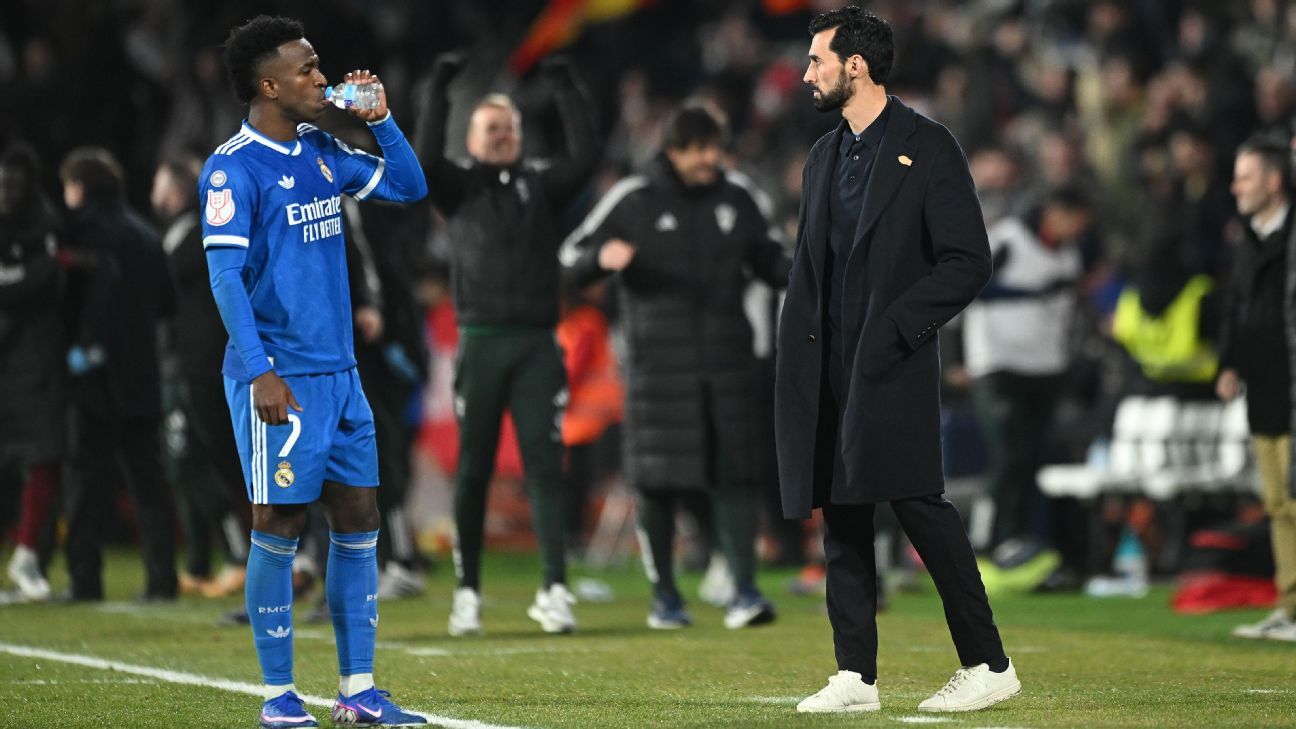
How about: what an incredible start to 2026 for Real Madrid! They lost the Spanish Supercopa final against Barcelona, sacked Xabi Alonso, and were then humiliated at second-tier Albacete in the Copa del Rey under new manager Alvaro Arbeloa. The last few days have been incredible. So you could say it is a good time to face struggling Levante, but is it really?
Levante will make it hard for the home side, even though they are not a defensive team. However, despite being second from bottom in the table, with three wins only so far this season, they have been good away from home. They are actually eighth in the away results table (three wins, two draws and five defeats). They surely couldn’t pull this off … could they?
Since Luis Castro took over as managerial role, Levante have won at Sevilla 3-0 and drawn against Espanyol 1-1 at home. But Saturday will be all about Real Madrid and how (or if) they can get out of the mini-crisis they are in. They are still only four points behind Barcelona and can still win LaLiga given the number of games remaining, but they will have to play better and defend better if they want to do so. They can’t afford anything less that a win, otherwise the crisis will deepen even more.
Making it slightly more difficult is the fact that Kylian Mbappé will not be returning to the lineup ahead of a meeting with his former club Monaco in the Champions League on Tuesday. His current team need him more than ever.
MY PREDICTION: Real Madrid 2-0 Levante. It won’t be pretty, but there is surely no way that Real Madrid don’t beat Levante at the Bernabéu. Losing to Albacete was bad enough, but they won’t have another disastrous result three days later. They will win but not convincingly.
Premier League, Matchday 21
Kickoff: Saturday, 7:30 a.m. ET / 12:30 p.m. GMT
This is the first game of the Michael Carrick era at Manchester United. It will be a short spell — he’s taken over until the end of the season, with no guarantees of anything further — but it starts with a bang and a Manchester derby against title-contenders Manchester City.
One can assume that Carrick would have preferred a gentler start than facing the second-best team in the league and legendary manager Pep Guardiola. It is what it is, however, and he will have to throw himself at the deep end and do his best.
We are not sure what to expect from him or United, but let’s hope the Red Devils play with a back four, that Bruno Fernandes is back in his natural No. 10 position, that Carrick can tighten things up defensively, and that forwards Benjamin Sesko, Matheus Cunha and Bryan Mbeumo (now back from AFCON) start performing well together up front. It is a lot to ask, especially with not much time in training, but not impossible.
It is also a great opportunity to derail City’s title challenge and the fans at Old Trafford would love that. City have not put in great performances or results lately, with some draws in the league preventing them from keeping close to leaders Arsenal, but new winger Antoine Semenyo (who has two goals in two games already) has shown how impactful he can be.
Erling Haaland‘s form is more of a worry. Of course he will probably score on Saturday, but he has not found the back of the net in open play now for five games in a row in all competitions, with just one penalty in that time. Rayan Cherki is the one who has been making City tick recently.
MY PREDICTION: Man United 1-2 Man City. United have actually done well against big clubs in the Premier League in recent seasons, despite the chaos, and will do well again. It just won’t be enough to stop their noisy neighbors from taking the win.
Bundesliga, Matchday 18
Kickoff: Saturday, 12:30 p.m. ET / 5:30 p.m. GMT
Stream LIVE on ESPN+ in the U.S.
Can Bayern repeat their almost perfect first half of the season? They start 2026 with the first of their three toughest away trips: first in Leipzig on Saturday, before they have to go to Borussia Dortmund and Bayer Leverkusen. But for now, they face a team eager to avenge their humiliating 6-0 defeat at the start of the season.
Leipzig are third and could trouble the Bayern defense, like Wolfsburg did at the start of the game last weekend before imploding and losing 8-1. Apart from Arsenal in the Champions League (3-1), Mainz (2-2) and Union Berlin (2-2), everyone else has lost against Bayern.
They are a machine with incredible attacking power; Harry Kane and Michael Olise are having the seasons of their lives, young prodigy Lennart Karl is shining, and Jamal Musiala is on his way back to full fitness after a horrific injury over the summer.
Leipzig will have to put a lot of intensity in their game, but without making the mistakes that usually get punished against this Bayern side.
MY PREDICTION: RB Leipzig 1-3 Bayern Munich. Bayern will remain unbeaten in the league; Leipzig will put them under pressure, but Kane and company will find a way to stay on top and win again.

 Who can become Africa’s best?
Morocco vs. Senegal
Africa Cup of Nations, Final
Kickoff: Sunday, 2 p.m. ET / 7 p.m GMT
This is an amazing final to finish off a great Africa Cup of Nations as arguably the two best teams on the continent — and in this tournament — face each other. There will be two massive stars on the pitch, in Achraf Hakimi and Sadio Mané, as well as a lot of tension and passion from both sets of fans.
The stats are massively in favor of Morocco. The AFCON host countries have won six out of seven finals in the competition, and Senegal have never beaten an AFCON host in the knockout phase. Meanwhile, Morocco have won 39 games in a row at home in official competitions — their last loss was in November 2009 against Cameroon during the 2010 World Cup qualifiers.
Home advantage will be a massive help for Morocco, but could the burden of expectation be too heavy to carry. The more of the game that passes without Morocco being in the lead, the more pressure there will be on their shoulders. And Senegal have played and won an AFCON final before. They have great experienced players who have been there before and have done it before. They will want to crash the party.
However, it is easier said than done. Morocco are a very well-organized team as we saw in their semifinal against Nigeria, who only put 0.05 expected goals in 120 minutes!
MY PREDICTION: Morocco 2-1 Senegal. It is hard to look past the hosts. Statistically they are the favorites and will have incredible home support. Senegal have been very good all tournament, but the odds are against them and they will lose a tight final.
NEWYou can now listen to Fox News articles!
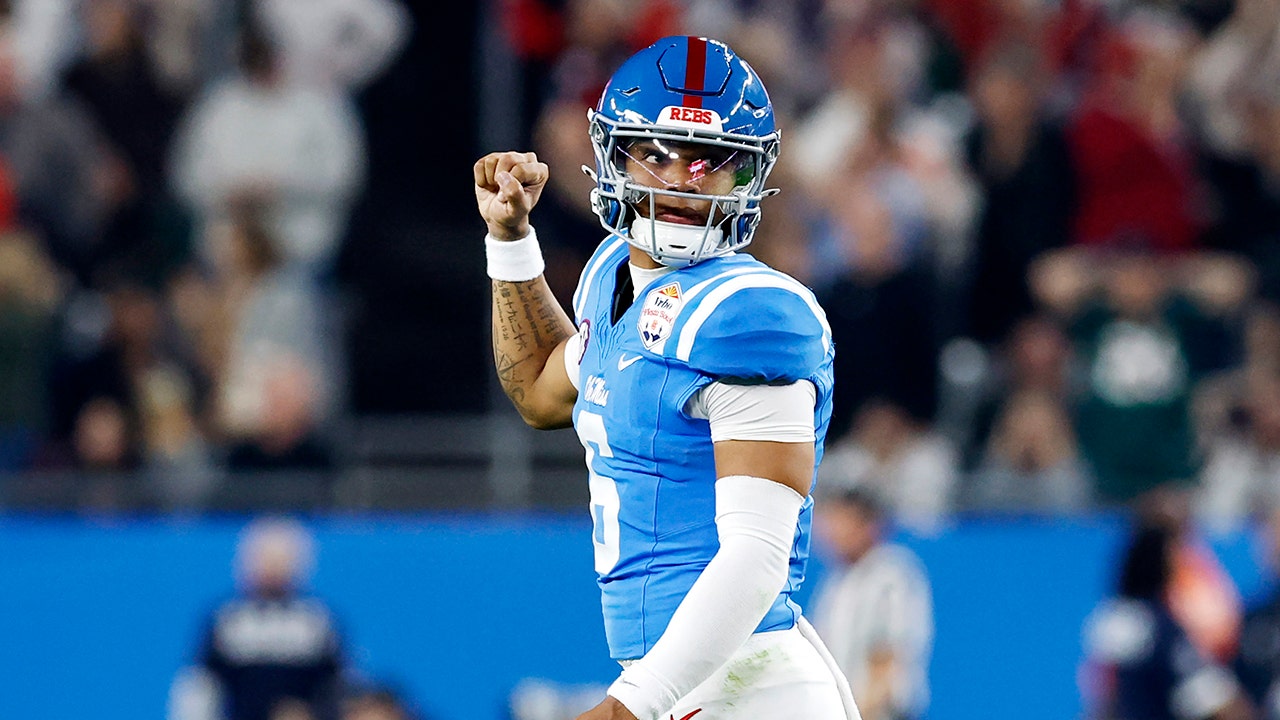
Ole Miss quarterback Trinidad Chambliss has sued the NCAA after being denied a sixth year of eligibility.
Chambliss’ lawyers are asking a Mississippi judge for a preliminary injunction that would allow him to play one more collegiate season, according to multiple reports.
The NCAA formally rejected his request for a sixth year of eligibility Jan. 9 due to him and his team not being able to provide evidence he was suffering from an “incapacitating injury or illness” when he did not play for Division II Ferris State in 2022 due to apparent respiratory issues.
CLICK HERE FOR MORE SPORTS COVERAGE ON FOXNEWS.COM
Mississippi Rebels quarterback Trinidad Chambliss warms up before a game against the Mississippi State Bulldogs at Davis Wade Stadium at Scott Field Nov. 28, 2025. (Petre Thomas/Imagn Images)
“In November, Ole Miss filed a waiver request for football student-athlete Trinidad Chambliss, seeking to extend his five-year Division I eligibility clock, citing an incapacitating illness or injury. Approval requires schools to submit medical documentation provided by a treating physician at the time of a student’s incapacitating injury or illness, which was not provided,” the statement says.
“The documents provided by Ole Miss and the student’s prior school include a physician’s note from a December 2022 visit, which stated the student-athlete was ‘doing very well’ since he was seen in August 2022.
“Additionally, the student-athlete’s prior school indicated it had no documentation on medical treatment, injury reports or medical conditions involving the student-athlete during that time frame and cited “developmental needs and our team’s competitive circumstances” as its reason the student-athlete did not play in the 2022-23 season. The waiver request was denied.”
TRUMP WARNS COLLEGE SPORTS ARE IN ‘BIG TROUBLE’ IN CRYPTIC POST
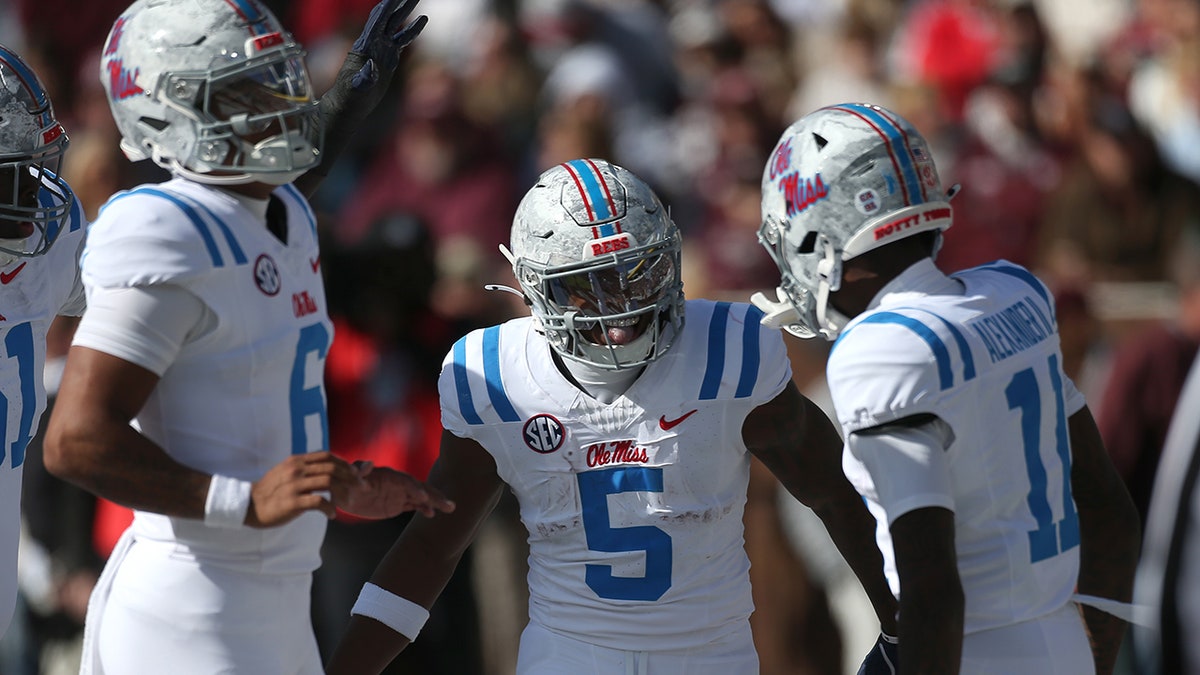
Mississippi Rebels running back Kewan Lacy (5) celebrates with quarterback Trinidad Chambliss (6) and wide receiver Deuce Alexander (11) after scoring a touchdown against the Mississippi State Bulldogs in the first half at Davis Wade Stadium at Scott Field Nov. 28, 2025. (Petre Thomas/Imagn Images)
Ole Miss athletic director Keith Carter said the school would appeal the ruling.
“We are disappointed with today’s announcement by the NCAA and plan to appeal the decision to the Committee level,” Carter said in a social media post, in which he included the flag of Trinidad and Tobago. “Additionally, we will continue to work in conjunction with Trinidad’s representatives in other avenues of support.”
Chambliss’ attorney also released a statement that day suggesting litigation could be coming.
“I understand that Ole Miss will file an appeal with the NCAA. However, there’s now an opportunity to move this case to a level playing field where Trinidad’s rights will be determined by the Mississippi judiciary instead of some bureaucrats in Indianapolis who couldn’t care less about the law or doing the right thing,” Tom Mars said.
“Whether to pursue that course of action is a decision only Trinidad and his parents can make.”
Chambliss and his legal team will go to court in an effort to keep him on the field for the 2026 season.
CLICK HERE TO DOWNLOAD THE FOX NEWS APP
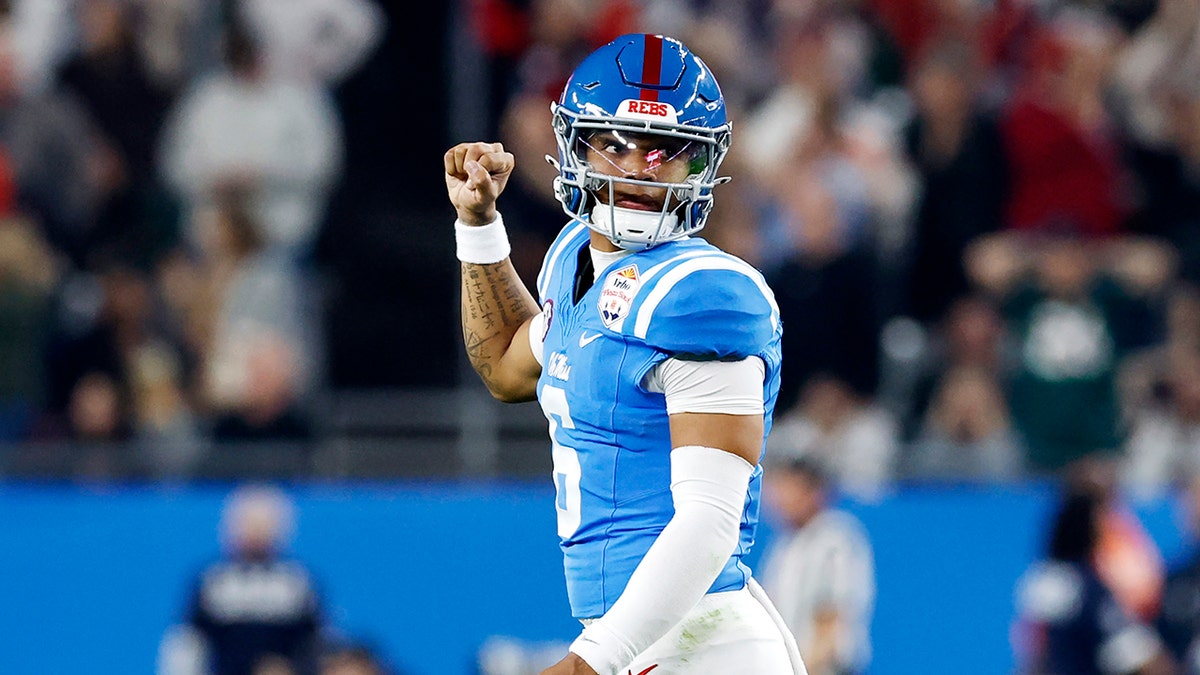
Trinidad Chambliss of the Ole Miss Rebels celebrates a touchdown against the Miami Hurricanes in the second quarter during a 2025 College Football Playoff semifinal at the VRBO Fiesta Bowl at State Farm Stadium Jan. 8, 2026, in Glendale, Ariz. (Ronald Martinez/Getty Images)
The NCAA referred to its Jan. 9 statement when contacted for a response to the lawsuit by Fox News Digital.
Ole Miss came within a quarter of advancing to the NCAA semifinal, losing a 31-27 thriller to Miami in the Fiesta Bowl Jan. 8.
Follow Fox News Digital’s sports coverage on X, and subscribe to the Fox News Sports Huddle newsletter.


AAFA & other US industry groups urge renewal of AGOA & Haiti pacts

Mickey Rourke considering new career path amid financial trouble

Duke QB Darian Mensah changes mind, enters transfer portal

-

 Tech4 days ago
New Proposed Legislation Would Let Self-Driving Cars Operate in New York State
-
 Sports6 days ago
Clock is ticking for Frank at Spurs, with dwindling evidence he deserves extra time
-
Sports1 week ago
Commanders go young, promote David Blough to be offensive coordinator
-

 Fashion6 days ago
South India cotton yarn gains but market unease over US tariff fears
-
 Entertainment4 days ago
X (formerly Twitter) recovers after brief global outage affects thousands
-

 Fashion6 days ago
China’s central bank conducts $157-bn outright reverse repo operation
-
 Business1 week ago
SoftBank reduces Ola Electric stake to 13.5% from 15.6% – The Times of India
-

 Sports6 days ago
US figure skating power couple makes history with record breaking seventh national championship