

Politics
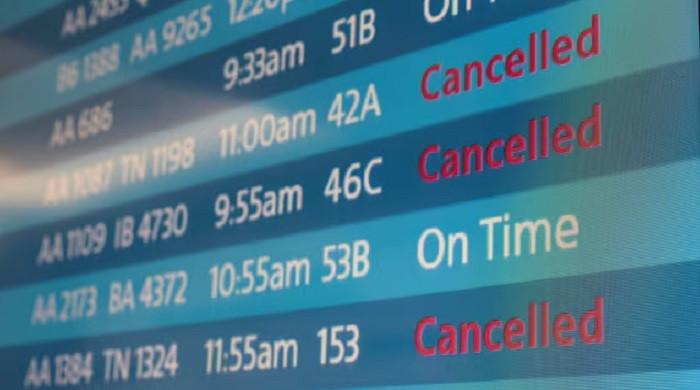
Shutdown leaves thousands stranded as US airlines cancel 1,330 flights

- Air traffic control staffing issues delay flights in 12 major US cities.
- FAA imposes ground delay plans, Atlanta flights delayed 337 mins.
- Transportation Secretary Duffy warns of potential 20% air traffic cuts.
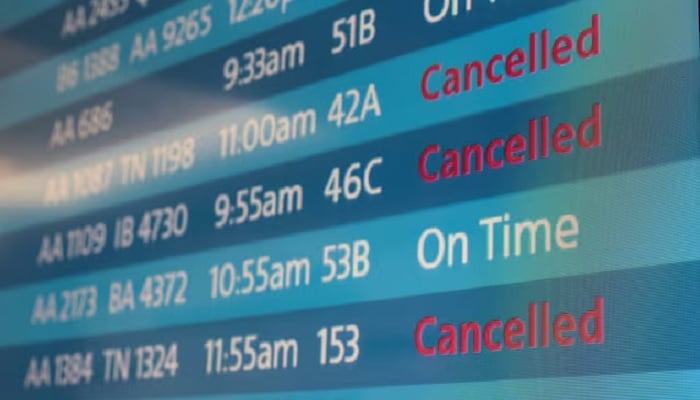
US airlines cancelled 1,330 flights on Day 2 of government-mandated flight cuts across the country on Saturday, and the industry braced for more cancellations as the federal shutdown continues.
The Federal Aviation Administration instructed airlines to cut 4% of daily flights starting on Friday at 40 major airports because of air traffic control safety concerns. The shutdown has led to shortages of air traffic controllers because they have not been paid for weeks.
Reductions in flights will rise to 6% on Tuesday before hitting 10% by November 14.
25 airports face flight jam
The FAA on Saturday reported air traffic control staffing issues at 25 airports and other centres, delaying flights in at least 12 major US cities, including Atlanta, Newark, San Francisco, Chicago and New York.
The FAA imposed ground delay programs at several airports on Saturday, with delays averaging 337 minutes for flights at Atlanta, one of the busiest US airports.
Some 5,450 flights were delayed on Saturday after 7,000 were delayed and 1,025 were cancelled on Friday.
The cuts, which began at 6am ET (1100 GMT) on Friday, include about 700 flights from the four largest carriers: American Airlines, Delta Air Lines, Southwest Airlines and United Airlines.
Those airlines cancelled about the same number of flights on Saturday.
Earlier this week, FAA Administrator Bryan Bedford said 20% to 40% of controllers have not been showing up for work over the past several days.
During a US Senate debate on Friday, Senator Ted Cruz blamed the shutdown for air traffic control concerns. Cruz, a Texas Republican who chairs the Senate Commerce Committee, said he has been told that since the shutdown started, pilots have filed more than 500 voluntary safety reports about mistakes made by air traffic controllers because of fatigue.
During the record 39-day government shutdown, 13,000 air traffic controllers and 50,000 security screeners were forced to work without pay, leading to increased absenteeism.
Many air traffic controllers were notified on Thursday that they would receive no compensation for a second consecutive pay period next week.
US Transportation Secretary Sean Duffy said it was possible he could require 20% cuts in air traffic if more controllers stop showing up for work. “I assess the data,” Duffy said. “We’re going to make decisions based on what we see in the airspace.”
The Trump administration has cited air traffic control problems as Republicans try to pressure Senate Democrats to back what they call a “clean” government funding bill with no strings attached.
Democrats blame the shutdown on a Republican refusal to negotiate over health insurance subsidies that will expire at the end of this year.
WASHINGTON: The US House of Representatives rejected an effort on Thursday to stop President Donald Trump’s air war on Iran and require that any hostilities against Iran be authorised by Congress, backing the Republican president’s military campaign on the sixth day of the expanding conflict.
The vote was 219 to 212, largely along party lines, in the House, where Trump’s fellow Republicans control a narrow majority of seats. Two Republicans voted in favour of the resolution and four Democrats voted against it.
Opponents accused Democrats of taking the issue to a vote only because they oppose Trump, putting Americans at increased risk.
“We all know that we wouldn’t be here today if the president’s name wasn’t Donald Trump,” Representative Rick Crawford of Arizona, the Republican chairman of the House Intelligence Committee, said during debate on Wednesday.
Sponsors of the resolution described it as a bid to take back Congress’ responsibility to authorise war, as spelled out in the US Constitution.
The US and Israel launched attacks on Iran on Saturday, a conflict that has killed more than 1,000 people, including at least six US service members, and caused damage and instability throughout the Middle East.
Supporters said the resolution, by requiring Trump to come to Congress for a war authorisation, would force him to explain to Americans why the US is fighting and how it might end.
“This is a war of choice, launched by this administration without authorisation, without clearly stated objectives or a defined endgame, and without explaining how they intend to keep Americans safe,” said Representative Gregory Meeks of New York, the top Democrat on the Foreign Affairs Committee.
Approval would not have stopped Iran air war
Just before the resolution vote, House members from both parties overwhelmingly passed a measure “Reaffirming Iran remains the largest state sponsor of terrorism.”
The vote would not have stopped the conflict even if the House had voted yes.
To go into effect, the resolution would also have had to pass the Senate and garner the two-thirds majorities needed to override Trump’s expected veto.
The Senate, also narrowly controlled by Trump’s party, backed his military campaign against Iran in a vote on Wednesday, voting to block a bipartisan resolution similar to the measure passed by the House. The votes this week are not the end of the matter. The War Powers Resolution of 1973, which provides for votes on the resolutions, says a president can only involve the military in an armed conflict when Congress has declared war or provided specific authority or in response to an attack.
Trump and his Republicans have argued that Iran posed an “imminent threat” so that his actions were legal under that law.
However, the War Powers measure also requires unauthorised military actions to be terminated within 60 days, giving the Trump administration a deadline at the end of April to seek Congress’ approval.
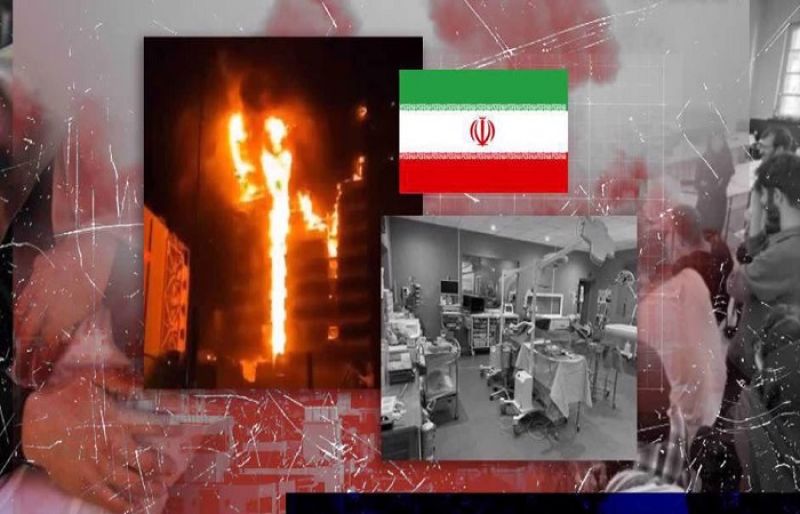

The air at the bombed-out Tehran hospital room hung thick with dust and the metallic tang of recent destruction carried out by the United States and the Israeli regime.
Against a backdrop of shattered concrete, two newborns clung precariously to life. Their breaths were being measured by the rhythmic beep of monitors connected by vital wires.
Amid the dust-choked room following the dastardly US-Israeli aggression, Iranian Red Crescent personnel worked to sever the fragile connection to the damaged infrastructure, to take the infants out of the wreckage.
The Gandhi Hospital in central Tehran, along with a nearby residential building, sustained catastrophic damage from strikes carried out by the United States and Israel late Sunday night, a day after the aggression was launched without provocation.
Immediately following the attack, harrowing footage depicted medical personnel urgently transferring the tiny newborns from their compromised incubators to ambulances.
Hope for new life, IVF centre targeted
The tragedy deepened with confirmation from hospital authorities later about the massive damage incurred by a specialized IVF center there, which lay in ruins.
The IVF centre was a sanctuary where hundreds of hopeful couples had invested their futures, their deepest desires for parenthood.
The US-Israeli aggression destroyed their dreams for future generations that had been painstakingly planned.
“The ledger of violated human rights in this war will be written in blood and shame,” Hossein Kermanpour, Health Ministry spokesman, wrote in a post on his X account.
“For the first time in my life, I am witnessing something I never even saw during the Iran-Iraq War. Patients being carried in their caregivers’ arms, fleeing into smoke-filled streets after missiles exploded beside their hospital,” Kermanpour added.
The assault was not limited to Gandhi Hospital. Reports confirmed that Khatam al-Anbiya Hospital and Motahari Hospital were also directly targeted in Tehran.
Furthermore, several missiles struck near Abuzar Hospital in the southern city of Ahvaz, forcing the immediate evacuation of 21 patients, including those in intensive care, requiring 30 ambulances to reroute them to other centers.
Images from Ahvaz captured the evacuation under dire circumstances. Emergency personnel were moving the sick through the thick plumes of smoke while the terrifying sounds of aerial bombardment still echoed overhead.
The American and Israeli regimes also targeted three emergency medical bases in Sarab, Chabahar, and Hamedan following the Abuzar attack.
A member of the Iranian Parliament said five hospitals and medical centers have been damaged or destroyed during the US-Israeli terrorist attacks on the Islamic Republic.
“Unfortunately, this illegal act of aggression resulted not only in the destruction of the buildings of hospitals and medical centers but also the injury of a number of students and local residents,” Fatemeh Mohammad Beigi, a member of the Parliament’s Health and Treatment Commission, said in a statement on Monday.
She added that a number of these medical centers have been evacuated in fear of more attacks.
Assault on life itself
Iranian President Masoud Pezeshkian denounced the US-Israeli strikes on civilian infrastructure, stating that the attacks on medical facilities “affect life itself and assaults on educational centers jeopardize the future of a nation.”
He made this reference following a US-Israeli strike on an elementary school in the southern Hormozgan Province that killed 171 girls.
He added that “targeting patients and children blatantly violates humanitarian principles.”
The Iranian president called upon the international community to censure the atrocities.
The Director-General of the World Health Organization (WHO), Tedros Adhanom Ghebreyesus, expressed extreme concern over the damage to Gandhi Hospital in Tehran.
Following the bombing, he posted on X, stating, “Reports of Tehran’s Gandhi Hospital being damaged during today’s bombardment of the Iranian capital are extremely worrying.”
Ghebreyesus reiterated that “all efforts must be taken to prevent health facilities from being caught up in the ongoing conflict,” emphasizing that “Health facilities are protected under international humanitarian law” with the hashtag “#healthisnotatarget.”
Strike on hospitals, a pattern
However, this event is part of a disturbing pattern. This is not the first time Israel has attacked medical facilities in the Islamic Republic. During the 12-day military aggression in June, nearly a dozen hospitals were targeted in clear violation of international conventions.
The Geneva Conventions, long considered the bedrock of humanitarian protection in wartime, have been repeatedly flouted by both the US and Israel.
In Gaza, an entire health system has been systematically crippled, and doctors have been killed while on duty since the genocidal war was launched in October 2023.
According to chilling WHO figures, 94 percent of hospitals in Gaza were destroyed by Israel during its two-year-long genocide.
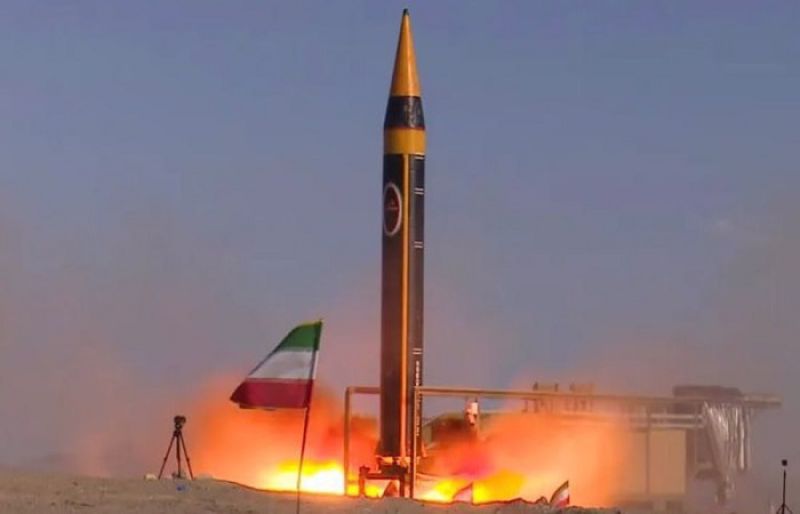

The Islamic Revolution Guards Corps (IRGC) announced early Wednesday that its aerospace force targeted the critical Israeli military infrastructure with heavy Khorramshahr-4 ballistic missiles in the 19th wave of True Promise 4 Operation.
In a statement, the IRGC said the super-heavy missiles, each fitted with a one-ton class warhead, were launched in the pre-dawn hours.
The targets of the strike were central Tel Aviv, Ben-Gurion Airport and Squadron 27 of the Israeli Air Force at the airport, according to the statement.
It said the strategic salvo was preceded by attack drones and that the strike package penetrated “seven layers” of regional and domestic air defenses to reach its objectives.
Khorramshahr-4 is one of Iran’s most advanced weapons, a roughly 13-metre missile with a boost weight of nearly 30 tonnes and a maneuverable re-entry warhead (MaRV) capable of carrying over 1,000 kilograms of explosive payload.
The IRGC statement also said that in the previous wave its forces had successfully struck some 20 US military targets across Bahrain, the United Arab Emirates and Kuwait.
The statement described the strikes as part of coordinated, multi-axis action by Iran’s armed forces that exceeded US and Israeli expectations and had altered the operational calculus of the ongoing war imposed on the Islamic Republic.
In the statement, the IRGC further said American troops were fleeing regional bases and seeking shelter in hotels in host countries, while decrying the US military for using civilian facilities in Persian Gulf states as cover for military activity.
The statement also warned that such movements are under constant intelligence surveillance and that Iranian forces remain prepared to target aggressor troops.
The IRGC says at least 560 American troops have been killed in retaliatory operations and many more injured since Saturday.


Trump pays tribute to Lou Holtz after legendary football coach’s death

US Senate backs Trump’s Iran operations after House vote

Harry Kane calf injury imperils Bundesliga record chase

What are Iran’s ballistic missile capabilities?

India Us Trade Deal: Fresh look at India-US trade deal? May be ‘rebalanced’ if circumstances change, says Piyush Goyal – The Times of India

Attock Cement’s acquisition approved | The Express Tribune

-
 Politics1 week ago
What are Iran’s ballistic missile capabilities?
-
Business7 days ago
India Us Trade Deal: Fresh look at India-US trade deal? May be ‘rebalanced’ if circumstances change, says Piyush Goyal – The Times of India
-
Business1 week ago
Attock Cement’s acquisition approved | The Express Tribune
-

 Fashion1 week ago
Policy easing drives Argentina’s garment import surge in 2025
-

 Politics1 week ago
US arrests ex-Air Force pilot for ‘training’ Chinese military
-
 Business6 days ago
Greggs to reveal trading amid pressure from cost of living and weight loss drugs
-

 Sports6 days ago
LPGA legend shares her feelings about US women’s Olympic wins: ‘Gets me really emotional’
-

 Fashion7 days ago
Texwin Spinning showcasing premium cotton yarn range at VIATT 2026