

Fashion
Silver tops $75 as gold and platinum surge to records


By
Reuters
Published
December 26, 2025
Silver hit $75 for the first time on Friday, with gold and platinum too striking record highs, as speculative bets, expectations for more US rate cuts, and rising geopolitical tensions powered precious metals.
Spot gold rose 0.8% to $4,515.73 per ounce, as of 0818 GMT, after touching a record $4,530.60 earlier. US gold futures for February delivery climbed 0.9% to $4,545.10. Spot silver jumped 3.8% to $74.68 per ounce, after touching an all-time high of $75.14.
“Momentum-driven and speculative players have been powering the rally in gold and silver since early December, with thin year-end liquidity, expectations of prolonged US rate cuts, a weaker dollar, and a flare-up in geopolitical risks combining to push precious metals to fresh record highs,” said Kelvin Wong, senior market analyst at OANDA.
“Looking ahead into the first half of 2026, gold could move towards the $5,000 level, while silver has the potential to reach around $90,” said Wong.
Gold staged a strong rally this year, recording its biggest annual gain since 1979, fuelled by Federal Reserve policy easing, geopolitical uncertainty, strong central bank demand, rising ETF holdings, and ongoing de-dollarisation. Meanwhile, gold discounts in India hit a more than six-month high as record prices curbed retail buying, while China’s discounts retreated from last week’s five-year peak.
Silver soared 158% year-to-date, outpacing gold’s nearly 72% gain, on structural deficits, its listing as a US critical mineral, and robust industrial demand. With traders pricing in two US rate cuts next year, non-yielding assets like gold are likely to remain well-supported in a low-interest-rate environment.
On the geopolitical front, the US is focusing on enforcing a “quarantine” of Venezuelan oil for the next two months. On Thursday, it struck Islamic State militants in northwest Nigeria over attacks on local Christian communities.
Spot platinum rose 5.8% to $2,349.65 per ounce, after touching an all-time high of $2,448.25 earlier, while palladium climbed 7% to $1,801.25, following a three-year high in the previous session. All precious metals were headed for weekly gains.
Platinum and palladium, widely used in automotive catalytic converters, have surged on tight supply, tariff uncertainty, and rotation from gold investment demand, with platinum up roughly 160% and palladium more than 90% year-to-date. “Platinum prices are being supported by strong industrial demand, and stockists in the US have been covering positions amid sanctions-related concerns, which is helping keep prices elevated,” said Jigar Trivedi, senior research analyst at Reliance Securities, based in Mumbai.
© Thomson Reuters 2025 All rights reserved.












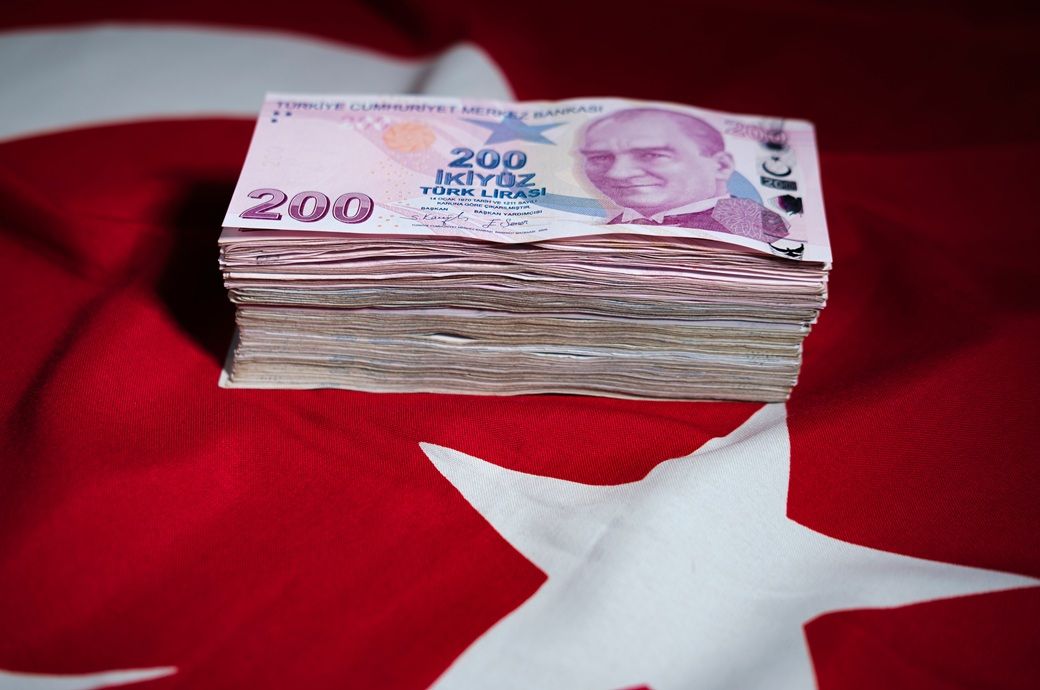
Current account excluding gold and energy indicated net deficit of $3.9 billion, while goods saw a deficit of $9.5 billion.
Turkiye recorded a current account deficit (CAD) of $9.6 billion in March, the country’s central bank said.
Treasury and Finance Minister Mehmet Simsek said the CAD is expected to widen this year, due to high energy and non-energy commodity prices.
Simsek said the deterioration is likely to remain temporary and manageable, thanks to stronger macroeconomic fundamentals and policy gains.
According to annualised data, current account deficit recorded as $39.7 billion (2.6 per cent of gross domestic product) in March, while the goods deficit recorded as $77.8 billion.
Simsek said the deterioration is likely to remain temporary and manageable thanks to stronger macroeconomic fundamentals and policy gains, domestic media outlets reported.
Turkiye is heavily reliant on imported energy, whose prices spiralled due to the Middle East conflict.
Simsek said elevated global commodity prices would put pressure on the external balance, but emphasised that the government’s economic programme had improved resilience against such shocks.
He said foreign direct investment (FDI) inflows totalled $1 billion in March, bringing annualised foreign direct investment to $12.6 billion.
The new investment incentive package under discussion in parliament now is expected to strengthen the country’s financing structure and support long-term capital inflows, he added.
Fibre2Fashion News Desk (DS)

During the first quarter of ****, the UK’s imports of textile fabrics eased down *.** to £*,*** million (~$*,*** million), against £*,*** million in January-March **** but slightly higher from £*,*** million in the fourth quarter of ****. Its imports of fibre were noted at £** million (~$***.** million) steady as £** million in Q*, **** but slightly lower than £** million in Q*, ****.
During the third month of this year, the country’s clothing imports declined *.** per cent to £*.*** billion (~$*.*** billion), compared with £*.*** billion in March ****. But the inbound shipment was slightly higher month on month compared with £*.*** billion in February ****.

Higher rents, utility bills and fuel prices are eating away at already thin profit margins, it found.
High inflation is cutting deep into Bangladesh consumer spending, with weak demand turning one of the biggest concerns for businesses, DCCI said.
Higher rents, utility bills and fuel prices are eating away at already thin profit margins.
DCCI’s economic position index revealed that consumers have sharply reduced spending as the cost of living continues to rise.
SMEs are feeling the pressure the most.
The chamber’s economic position index (EPI) revealed that consumers have sharply reduced spending as the cost of living continues to rise, putting pressure on retailers, transport operators and other service providers.
Small and medium enterprises (SMEs) are feeling the pressure the most as they struggle to manage higher operating costs without losing customers.
Businesses also cited difficulties in obtaining bank loans, while delays in licensing and other regulatory procedures are adding to costs.
The DCCI report identified a shortage of skilled workers, particularly in technical and customer service roles, as another challenge for the sector.
The country’s inflation rose to 9.04 per cent in April from 8.71 per cent in March, according to official statistics.
Fibre2Fashion News Desk (DS)


India will become history if it attempts any future misadventure, warns defence czar

Thomas Massie faces Trump-backed challenger in GOP primary: Can he win?

What to expect from "Survivor 50" finale

-

 Entertainment6 days ago
Conan O’Brien hat tricks as Oscar host
-

 Tech1 week ago
Could Contact-Tracing Apps Help With the Hantavirus? Not Really
-

 Fashion5 days ago
Italy’s Zegna Group’s Q1 growth boosted by strong organic performance
-

 Entertainment1 week ago
Martin Short: Facing tragedy with joy
-

 Entertainment1 week ago
Tom Brady gets back at Kevin Hart during Netflix roast
-

 Sports1 week ago
Jacob Fatu unleashes vicious assault on Roman Reigns after World Heavyweight Championship loss at WWE Backlash
-

 Entertainment1 week ago
Martha Stewart: How to make an omelet
-

 Tech1 week ago
Papa Johns Is Getting Into Drone Delivery—but Not for Pizza