

Politics
Snow, heavy rain kill 61 in three days in Afghanistan

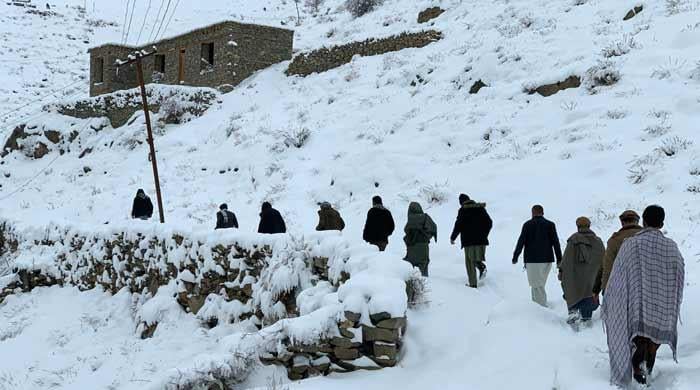
- Most of casualties caused by roof collapses, avalanches: official.
- Deaths occur mainly in central and northern provinces: ANDMA.
- Rescue teams unable to reach Salang pass because of blockage.
Snow and heavy rain have killed 61 people in Afghanistan in the past three days, disaster officials said on Saturday, with a major road and power also cut in several provinces.
The deaths occurred mainly in central and northern provinces between Wednesday and Friday, according to a map released by Afghanistan’s disaster management authority (ANDMA).
The “initial figures of casualties and destruction” also include 110 injured people and 458 houses that were either partially or fully destroyed, ANDMA said on social media platform X.
A total of 360 families were affected, said a spokesman who asked people in a video message to avoid unnecessary travel on snowy roads.
The spokesman also told AFP that most of the casualties were caused by roof collapses and avalanches, while many also died from frostbite in sub-zero temperatures.
The emergency department in the southern province of Kandahar said six children were killed when the roof of their home collapsed in strong wind and heavy rain on Wednesday.
Houses were also damaged in other districts.
Major highway cut
The Salang highway, one of Afghanistan’s main roads, has been closed, authorities in Parwan province north of Kabul said. The highway is a vital connection to Afghanistan’s northern provinces.
Food supplies were also distributed to travellers stuck on a mountain pass in central Bamyan province, west of the capital.
A transmission line importing electricity from Uzbekistan was also damaged on Thursday, leaving households in almost 12 provinces without power.
“The technical teams are ready but cannot reach the area because of the blockage of Salang pass,” said Mohammad Sadiq, the spokesman for Afghanistan’s national power utility Dabs.
The heavy snow and rain also destroyed shops and killed livestock in different parts of the predominantly rural country.
“Snow and rain, when managed properly, contribute positively to Afghanistan’s environment and livelihoods,” the Kabul Times daily wrote in an editorial.
“However, without sufficient preparation and timely intervention, these natural phenomena can quickly turn into sources of tragedy,” it said.
Around half of Afghanistan’s population of more than 40 million people will need humanitarian assistance this year, according to the United Nations, after a sharp drop in foreign assistance in recent years.
Natural disasters such as earthquakes and drought also often compound the daily struggle to survive.
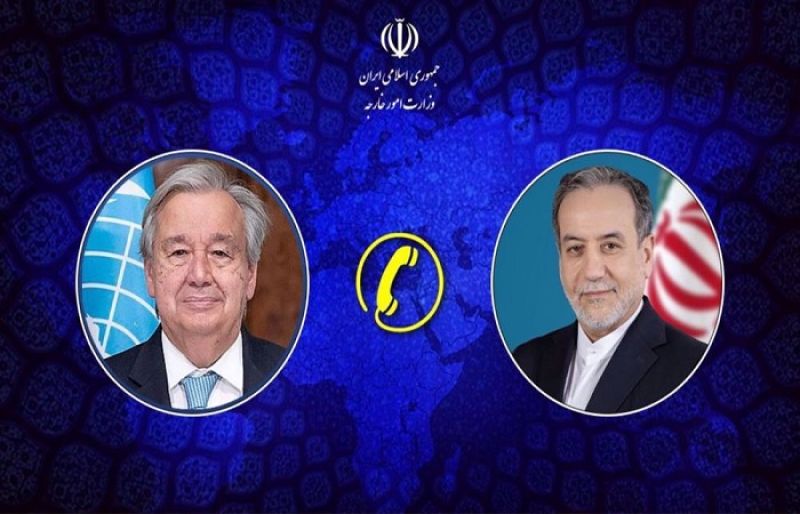

The Iranian foreign minister has called on the United Nations to condemn the US and the Israeli regime for waging an illegal war on the Islamic Republic and hold the regimes accountable for their crimes.
Abbas Araghchi made the remarks in a phone conversation on Thursday with UN Secretary-General Antonio Guterres as the sides discussed the latest developments and the atrocities that the invading coalition is committing against Iran.
Araghchi urged the UN to take serious action and adopt decisive and clear positions towards honoring its inherent duty to protect international peace and security by denouncing the aggressors and bringing them to account.
Referring to the brutal US-Israeli attacks on civilian sites, including schools, hospitals, cultural and historical monuments, public places and residential areas, the top Iranian diplomat reminded the UN of its responsibility to pursue the flagrant violation of the UN Charter and international law, including human rights law and international humanitarian law.
He further criticized those who are calling for Tehran to show restraint or end the war.
“The fact should not be ignored that it was the United States and the Zionist regime, which launched the military aggression against Iran and imposed the war on the region and the world, betraying diplomacy once again and endangering security and interests of all regional countries,” he said.
The criminal US-Israeli aggression on Iran began on February 28 with airstrikes that assassinated senior Iranian officials and commanders.
The Iranian armed forces have responded by launching almost daily missile and drone operations targeting locations in the Israelioccupied territories as well as US military bases and assets across the region.
They have also blocked the Strait of Hormuz to oil and gas tankers affiliated with the adversaries and those cooperating with them.
Araghchi said that insecurity in the strategic waterway, lying between the Persian Gulf and the Sea of Oman, is the direct result of the American-Zionist aggression against Iran.
“Transit prohibition for vessels belonging or linked to the enemies and their allies is the legal right of Iran as a coastal country. Related authorities of the Islamic Republic have taken necessary measures to provide maritime security and safety in the waterway.”
He also emphasized Iran’s resolve to continue the legitimate defense of its national security and sovereignty, as well as territorial integrity.
Guterres, for his part, stressed the UN’s principled position on the need for respecting countries’ national sovereignty and territorial integrity, expressing concerns about the continuation of the war and killings in the region.
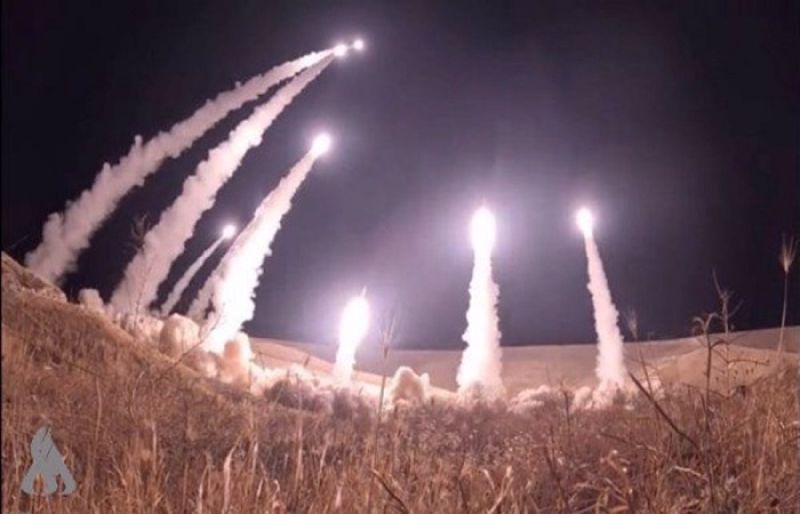

The Islamic Revolution Guards Corps (IRGC) announced the execution of wave 83 of Operation True Promise 4 in the early hours of Friday, targeting key American and Israeli military installations across the region with missiles and drones.
According to a statement from the IRGC’s Public Relations, the operation was dedicated to the “warm-hearted people of the southern strip of the country in the north of the ever-Persian Gulf” and was conducted under the blessed code “Ya Aba Abdullah Al-Hussein (AS).”
The strikes targeted a range of strategic assets belonging to American and Zionist forces.
Among the targets were storage tanks and the oil depot in Ashdod, a military personnel site in the Modi’in settlement, and a US military information exchange center in the region.
The IRGC also struck American military bases at Al-Dhafra and Al-Udeiri, along with maintenance and storage hangars for transport aircraft and drones at Ali Al-Salem Air Base.
Additional targets include fuel tanks for jets and fighter aircraft of American forces, as well as the maintenance and repair hangar for the Patriot missile system at Sheikh Isa Base.
The IRGC statement noted that the operation employed a combination of advanced weaponry, including long-range and medium-range systems, solid and liquid fuel missiles, precision-strike and multi-warhead capabilities, as well as suicide and loitering drones.
It further emphasized that the retaliatory attacks were carried out with “full success by the grace of God.”
In its statement, the IRGC highlighted the impact of ongoing operations on daily life for Israeli settlers, noting that “siren-to-siren living and prolonged confinement in shelters have become a daily routine for the Zionists.”
The IRGC concluded with a stark warning: “As we said, we will find you, and with God’s will, we will make you pay for your despicable deeds.”
Iranian armed forces have so far carried out 83 waves of missile and drone strikes with advanced weaponry targeting Israeli military facilities in the occupied territories, as well as US occupation bases and assets scattered across the West Asia region.
The retaliatory operations were launched immediately after the US-Israeli coalition carried out an unprovoked act of aggression against the Islamic Republic of Iran on February 28, leading to the martyrdom of the Leader of the Islamic Revolution, Ayatollah Seyyed Ali Khamenei, some top-ranking military commanders, and over 170 schoolchildren in Minab.
The Lebanese Hezbollah resistance movement and the Islamic Resistance in Iraq have also joined the front against the external aggressors, inflicting heavy blows on the enemy.
The retaliatory operations by the Iranian armed forces, as well as the resistance groups, have inflicted heavy blows on the enemy, decimating its military and strategic infrastructure.
Brigadier General Abolfazl Shekarchi, the spokesperson for the armed forces, in remarks on Thursday, said that US personnel are now forced to abandon military bases and take refuge in civilian hotels, a move that he condemned as an attempt by the US to use civilian structures for military cover.
“The Americans, who once relied on their military bases to establish a presence, are now hiding in hotels and relying on the civilian areas of our region as a protective shield,” Shekarchi said.
“This marks a humiliating retreat and an admission of their inability to defend themselves.”
The Iranian Army also continues to inflict severe blows on the enemy. It targeted sensitive locations in the strategic Haifa port on Thursday with a barrage of drones.
“The center for manufacturing and maintenance of various military vessels of the Zionist regime in the eastern Mediterranean Sea that played a key and sensitive role in logistics for the regime’s Navy as well as the huge fuel storage facilities for warplanes in Haifa port were, among others, targeted in the recent drone attack by the Islamic Republic’s Armed forces,” it said in a statement.
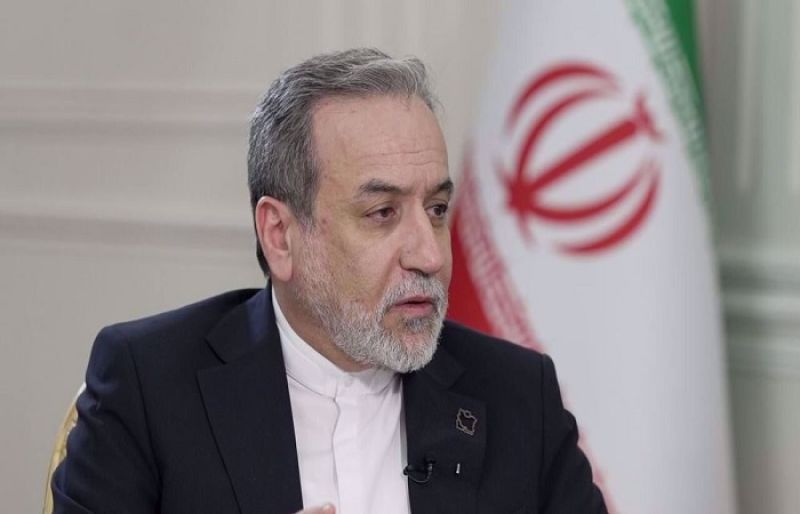

Iran’s Foreign Minister Seyed Abbas Araghchi said that US soldiers have abandoned their bases in the (Persian) Gulf Cooperation Council (GCC) countries since the very beginning of the war, seeking shelter in civilian hotels and offices while turning local populations into human shields.
In a post on X on Thursday, Araghchi stated: “From outset of this war, U.S. soldiers fled military bases in GCC to hide in hotels and offices. They use GCC citizens as human shield.”
Araghchi drew a comparison to practices inside the United States, noting that American hotels routinely deny bookings to military officers whose presence could endanger civilian guests.
“Hotels in U.S. deny bookings to officers who may endanger customers. GCC hotels should do same,” the top Iranian diplomat urged.
Despite Washington’s aggressive posturing and a war of aggression on Iranian territory that began on February 28 — which targeted civilian sites including schools, hospitals, and sports facilities — American troops have shown little resolve to defend their forward positions.
Instead, they have retreated into densely populated civilian areas, recklessly exposing innocent Arab citizens to potential retaliatory actions.
Iran’s firm and precise response to the unprovoked US-Israeli aggression has repeatedly demonstrated the strength and determination of the Islamic Republic.
While Iranian forces continue to inflict defeats on the aggressors on multiple fronts, US commanders appear more concerned with self-preservation than with protecting their allies.
By hiding among civilians, the US not only violates basic principles of international humanitarian law but also endangers the very populations whose governments have hosted American bases and facilities long used to threaten regional stability and Iranian sovereignty.
The US and Israel launched an unprovoked war of aggression against Iran on February 28, assassinating Leader of the Islamic Revolution Ayatollah Seyyed Ali Khamenei, along with several senior officials and military commanders, as well as hundreds of civilians.
The Iranian armed forces have responded by launching almost daily missile and drone operations targeting locations in the Israeli occupied territories as well as US military bases and assets across the region.
They have also blocked the strategic Strait of Hormuz to oil and gas tankers affiliated with the adversaries and those cooperating with them.


Prince William bold decision keeps Harry up at night: ‘No mercy’

NCAA men’s tournament: Rick Pitino’s case for best men’s college basketball coach ever

Gold price today (March 25, 2026): How much 24K and 22K gold cost in Delhi, Mumbai & more- Check rates – The Times of India

-

 Entertainment1 week ago
Val Kilmer revived 1 year after death through AI
-

 Fashion1 week ago
US’ G-III Apparel’s FY26 sales fall 7% to $2.96 bn
-

 Sports1 week ago
March Madness 2026 – How to watch in SA, start time, schedule, TV channel for NCAA championship basketball tournament
-
 Business1 week ago
Brits cashing in jewellery as gold price hits record high
-

 Fashion6 days ago
China’s textile & apparel exports surge 17% to $50 bn in Jan-Feb 2026
-
 Business1 week ago
Video: The Effects of High Oil Prices
-
 Business6 days ago
Flipkart group CFO to leave co amid IPO plans – The Times of India
-

 Sports7 days ago
Rating Adidas’ 2026 World Cup away shirts: Argentina, Spain, Mexico and more