

Sports
Socceroos spoil Canada’s party as World Cup momentum grows

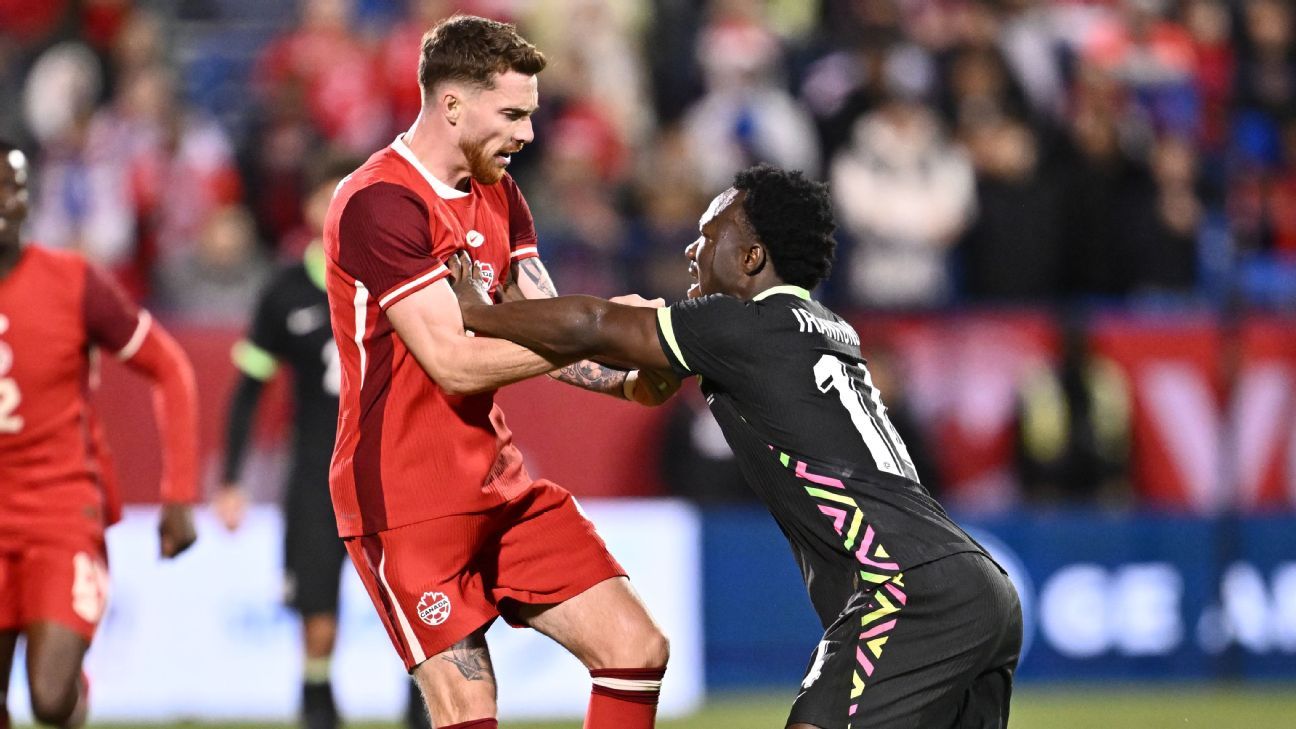
MONTRÉAL, Canada — Back when he was Melbourne Victory coach, Tony Popovic once described the chance to play the role of villain and ruin an opponent’s fairytale as beautiful. If he still feels the same way as Socceroos boss, then Friday evening’s 1-0 win over Canada might have been one of the most magnificent victories that he’s been a part of.
Canada’s meeting with Australia at Montréal’s Stade Saputo was supposed to be a homecoming and a celebration. Les Rouges hadn’t played in the Québec capital since 2017 and, adding to the sense of civic pride, they’d returned with a collection of Francophiles in the squad. With a home World Cup approaching, wins over Romania and Wales in the last window had pushed them to a record-high FIFA ranking of 26. Prime Minister Mark Carney was in attendance. So was FIFA president Gianni Infantino.
Montréal expected a party. Instead, they got 60% of the ball, 17 shots to five, eight shots on target to one, and a 1-0 loss. They got Mohamed Toure registering his fourth goal involvement in three games when he sent in a cross that initially appeared set to be cleared by Niko Sigur, only for Nestory Irankunda to pounce and send a tackle-cum-shot into the back of the net for his second international goal in as many games.
– 2026 World Cup: Who has qualified, and how the rest can make it
– Evolution of the World Cup ball as 2026’s Trionda is unveiled
– Socceroos midfielder Cameron Devlin coy on Hearts future
The hosts got Paul Izzo making a record-setting eight saves and laying down a challenge to Mathew Ryan for the Socceroos’ No. 1 shirt. And they got to see Australia make it seven wins on the bounce, 11 games unbeaten, and join Argentina (who did it twice), the Netherlands, and Mexico amongst the only sides to defeat Canada inside 90 minutes since the appointment of Jesse Marsch. Prime Minister Carney, welcome to Popaball.
“I think the biggest disappointment the guys have is they knew that the crowd was great, and they wanted to electrify them,” Marsch reflected post-game. “You could see the disappointment in their faces, because they wanted the crowd to feel the energy of the team and what’s being done with the team.”
By the time the final whistle rang out, any mirth and goodwill that had filled the stands before the kickoff had dissipated. Jeers rained down as fans sought an outlet for their frustration as their side repeatedly slammed their heads against an Izzo-shaped brick wall; his most incredible save came amid a helter-skelter ending in the 90th minute, when Liam Millar found a wide-open Jacob Shaffelburg, only for his resulting shot to be denied by the sprawling custodian.
“I’m very happy with the performance,” Izzo reflected. “Honestly, I’m a bit lost for words at the moment. I’m taking every game as I can. I wasn’t expecting to play today. But I was given an opportunity, and I really wanted to take it again with both hands.”
Those playing red wore their frayed emotions on their sleeve, too; Joel Waterman and Tani Oluwaseyi both got into a shoving match with Irankunda in stoppage time, only to be met by a goalscorer who refused to take a backwards step. Restrained by Ryan and the Socceroos’ bench, the teenager was immediately substituted by Popovic and pulled in for a bearhug with a message of support for the matchwinner and chief windup merchant.
“That’s something more for me and him that we shared,” Popovic said of their discussion. “I’m just proud of his contribution. He’s a young man who has so much growth to come. Now, in the last two games, he’s scored goals for Australia.
“He’s 19 years old, and we have a striker [Mohamed Toure] that’s 21 starting here, away from home against Canada. Very proud of them.
“And that’s part of football. He doesn’t back down. He was coming off regardless of what happened there.”
Ultimately, Australia came to Montréal and did what they do: frustrate, absorb, and make their foes pay. Few will care for the boos and some, like Connor Metcalfe, quietly emerging as a key cog in Popovic’s plans, might even have enjoyed them. Canada, meanwhile, will join an increasingly impressive-looking list of nations that would feel they did enough to beat the Socceroos, only to lose.
Yet there were lessons amidst the spectacle, too. Because, as the stat sheet and Izzo’s man-of-the-match antics would hint at, Australia still had to ride their luck at times — even if breaking down low blocks has been a consistent challenge for Canada.
For much of the contest, Marsch’s side would move the ball forward against a defence that was able to maintain its shape and, should the attack be maintained for an extended period, eventually settle into a low block. Against this highly organised defensive front, possessing cover for its cover, space would be at a premium and angles to goal fleeting. This saw passes being closed down, crosses being cleared, and shots being smothered. That’s all expected; the Socceroos are very good at defending, to the point we almost take it for granted.
But there were moments of danger, particularly when the Canadians were able to counter-press (one of the most effective tools for breaking down a low block) and didn’t afford a chance at a unified front. Invariably, winger Tajon Buchanan was at the heart of these efforts, giving Australia’s Kye Rowles — who started as a wingback once more as part of Popovic’s pre-World Cup experimentation — fits as he repeatedly burst into the box and created shots or angles to pass.
Many of these moments arose because against the Canadian press or counter-press, Australia’s attempts to play out for much of the game were largely unsuccessful. The profiles of Rowles, debutant fullback Jacob Italiano, and midfield pivots Max Balard and Aiden O’Neill didn’t gel, and moves forward would often either break down just as soon as they began or were snuffed out when an attempt was made to bypass the midfield entirely with a 50/50 long ball. Rowles is a proven World Cup performer at center back, but as the flanker of a five, there are stronger options.
Things started to change in the second half as the game stretch and really kicked into gear with the introduction of Patrick Yazbek and wingbacks Lewis Miller and Jordy Bos around the hour mark; it taking just seconds, and one Bos run down the left and cross into the box, to demonstrate the importance of having wingbacks that have the physicality and willingness to bomb up and down the flanks — and force opponents to respect that possibility — in Popovic’s system.
Expecting any drastic overhauls in the way the Socceroos play is unrealistic. And unfair. Eleven games unbeaten and seven wins straight is a platform that demands to be built on for the World Cup. However, as shown in the second half, earning wins in the way the Socceroos have is made infinitely easier when you’re helping yourself. And Popovic and his staff know this, and they’ve highlighted possession as a key focus heading into next year’s World Cup.
“It wasn’t our intention to let them have that much ball. But in certain areas of the park, they’re very strong,” said Popovic.
“Would I have liked us to do more with the ball? Yes. But those 20 minutes in the second half were excellent for us. Our challenge is how do we sustain that for longer periods?”
If they can unlock a greater level of adaptability and fluidity, with the next stern test to come against the United States on Tuesday in Denver, will be telling come 2026. But it’s a lot easier to do this work when you’re winning games. And the Socceroos are also getting rather good at that, which is pretty important as well.

Luis Díaz scored one goal and made another as Bayern Munich beat Borussia Mönchengladbach 4-1 on Friday to extend its lead at the top of the Bundesliga to 14 points over second-place Borussia Dortmund.
With Harry Kane injured, Nicolas Jackson started in the centre-forward position for Bayern, one of seven changes to the side that beat Dortmund in Der Klassiker last weekend.
But it was Colombian Díaz who started the rampage.
He opened the scoring after 33 minutes with a crashing volley and then turned provider 12 minutes later when his clever pass set up Konrad Laimer to make it 2-0.
Bayern’s task was made easier when Rocco Reitz was sent off for rugby tackling Jackson 10 minutes into the second half.
Stefan Matzke – sampics/Getty Images
Jamal Musiala dispatched the resulting penalty to score his first goal of the season and Jackson celebrated his return to the side by adding a fourth 11 minutes from time.
Wael Mohya, 17, grabbed a consolation goal for Gladbach in the dying moments, becoming the club’s youngest-ever goalscorer.
The only disconcerting note for reigning champion Bayern was the withdrawal at halftime of Manuel Neuer. The Germany goalkeeper had returned after missing two games through injury. The extent of his complaint was not immediately apparent.
Gladbach remains in 12th place with 25 points, only three clear of the relegation zone.
NEWYou can now listen to Fox News articles!
The Las Vegas Raiders and the Baltimore Ravens made a blockbuster trade ahead of the start of NFL free agency.
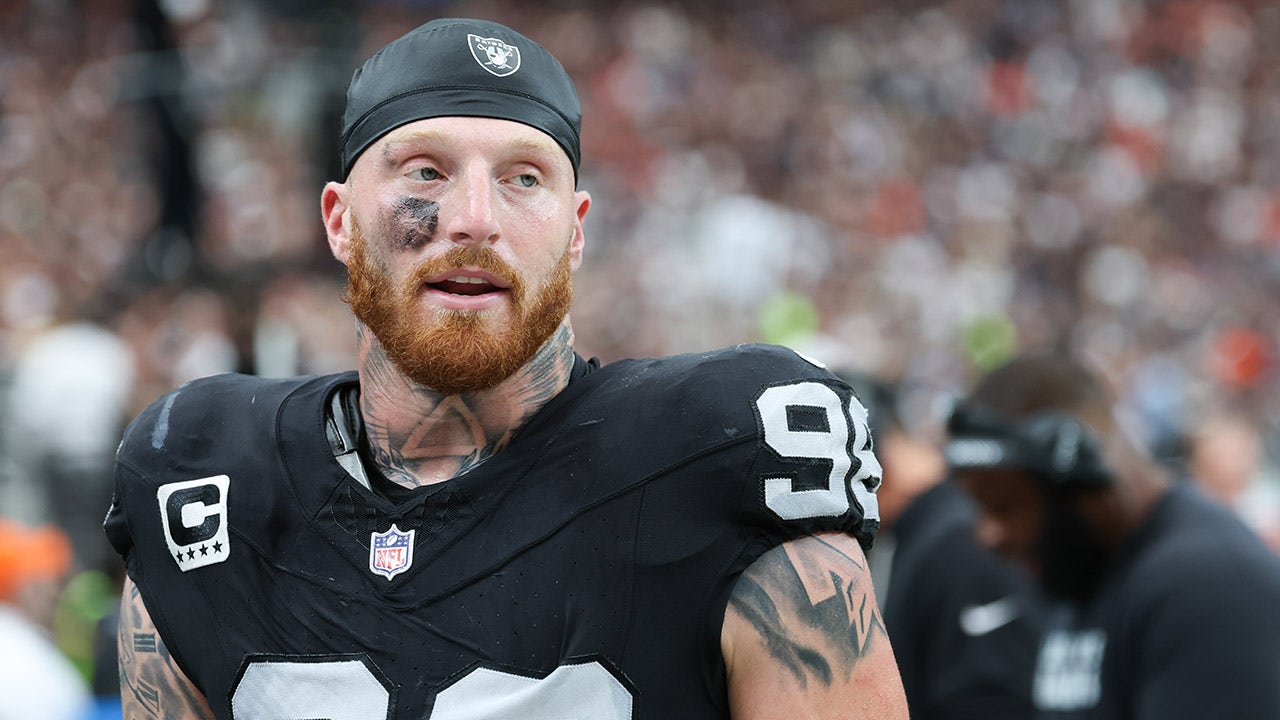
Las Vegas is trading five-time Pro Bowl edge rusher Maxx Crosby to the Baltimore Ravens, per multiple reports.
CLICK HERE FOR MORE SPORTS COVERAGE ON FOXNEWS.COM
Las Vegas Raiders defensive end Maxx Crosby (98) against the Arizona Cardinals during a preseason NFL game at State Farm Stadium on Aug. 23, 2025. (Mark J. Rebilas/Imagn Images)
The Raiders will receive two first-round picks from the Ravens, including the No. 14 overall pick in next month’s NFL draft, one report said.
The 28-year-old Crosby had 10 sacks last season and has reached double digits four times in his seven seasons.
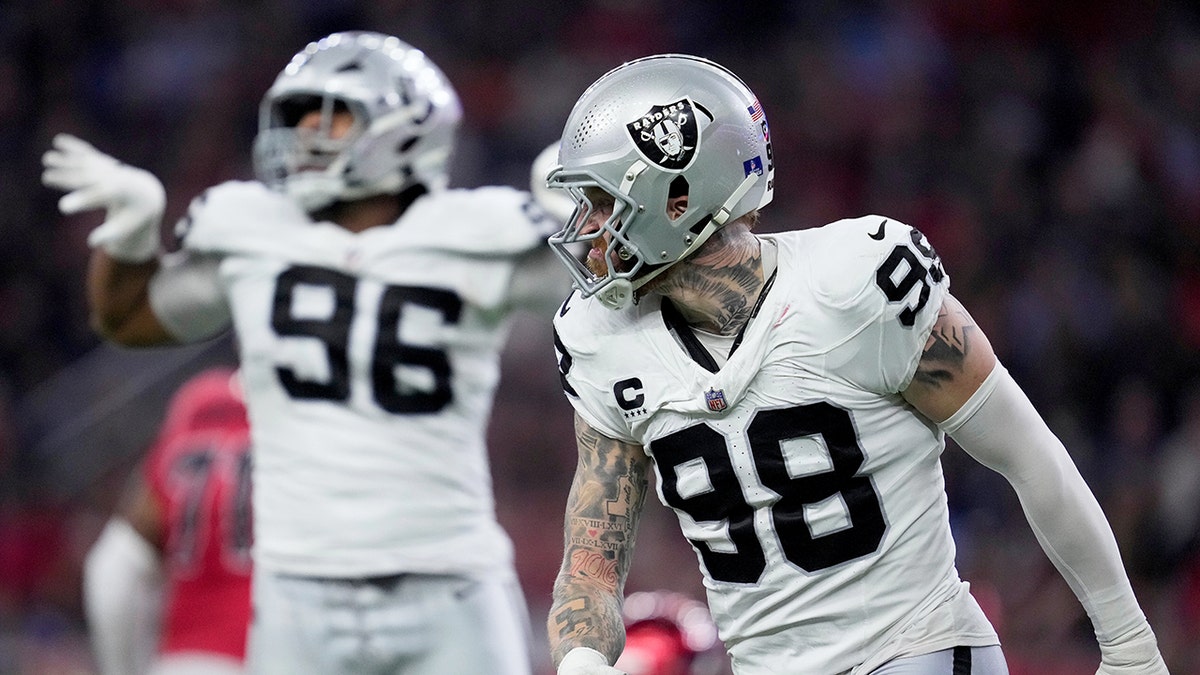
Las Vegas Raiders defensive tackle Jonah Laulu (96) and defensive end Maxx Crosby (98) celebrate during the second half of an NFL football game against the Houston Texans in Houston, Texas, on Dec. 21, 2025. (Ashley Landis/AP Photo)
The Raiders last appeared in the playoffs back in 2021 but have gone 7-27 over the past two seasons. They have the No. 1 pick in the 2026 draft, which is expected to land them Indiana quarterback Fernando Mendoza.
The Ravens, meanwhile, are entering a new era, after firing longtime head coach John Harbaugh and replacing him with former Chargers defensive coordinator Jesse Minter.
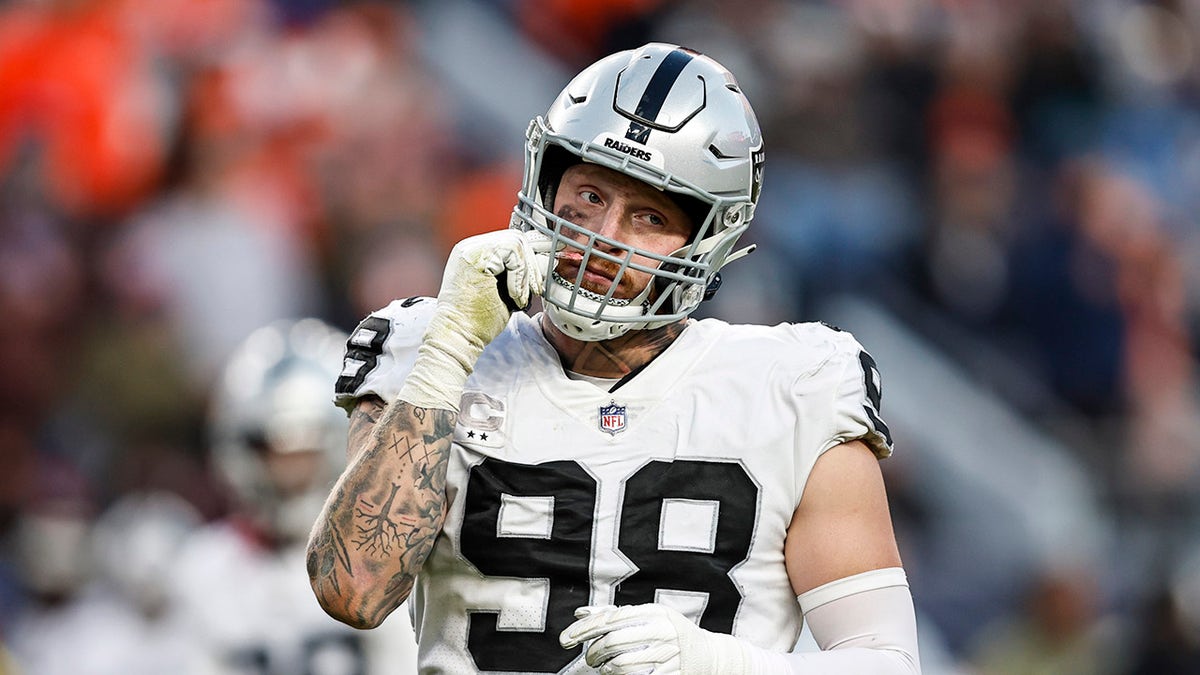
Maxx Crosby of the Las Vegas Raiders sniffs smelling salts during an NFL game between the Las Vegas Raiders and Denver Broncos at Empower Field At Mile High on November 20, 2022 in Denver, Colorado. (Michael Owens/Getty Images)
CLICK HERE TO DOWNLOAD THE FOX NEWS APP
The Associated Press contributed to this report.
Follow Fox News Digital’s sports coverage on X, and subscribe to the Fox News Sports Huddle newsletter.
-
Kristen Shilton
-
Greg Wyshynski


Multiple Authors
The 2026 NHL trade deadline had an unusual cadence. There was a week of interesting deals and genuine surprises; a deadline day where nothing of consequence happened; and then absolutely chaos as a flurry of trades was completed before the timer ticked down to zero.
Overall, NHL teams made 20 trades involving 33 players on Friday. Some teams and players did quite well for themselves. Others did not.
Here are some winners and losers of a peculiar NHL trade deadline, from ESPN reporters Ryan C. Clark, Kristen Shilton and Greg Wyshynski.

WINNERS

The Avalanche might be the best team in the NHL, and they are the odds-on favorites to win the Stanley Cup. Part of the reason is their addition of Brock Nelson at last season’s trade deadline. He is a proven second-line center behind Nathan MacKinnon, the kind of player they’d sought since Nazem Kadri left in 2022 after winning the Stanley Cup.
Adding Nicolas Roy on Thursday gave the Avs another proven two-way option down the middle, and someone who can provide secondary offense. Then they got Kadri back in a trade Friday, giving them the most dangerous center group in the NHL.
Obviously, MacKinnon will remain at first-line center, and Kadri and Nelson will split up second- and third-line duties. That then leaves Roy as Colorado’s fourth-line center. The Avs are now in a stronger position to win the fourth Stanley Cup in franchise history. If they do, March 6 could be the day that changed everything.
And if not, they can run it back again in 2026-27 because all four will still be under contract. — Clark
The Foligno family
Imagine growing up playing mini sticks with your brother, both of you dreaming that one day you’ll be suiting up for real in the NHL. Well, Marcus and Nick Foligno both achieved that goal — and now, they’re going to chase a Stanley Cup championship together in Minnesota.
The Wild brought in Chicago’s captain for “future considerations” — basically, the Blackhawks did right by their veteran leader by sending him to skate alongside family for a team with legitimate Cup contention aspirations.
Unsurprisingly, the Foligno wives were ecstatic to learn they’d be reunited for the rest of this season, and Nick couldn’t help but mention their departed mother looking down and smiling at her boys getting such a unique opportunity. Yes, the trade deadline is about making hockey deals, but there is also room for some wholesome, heartwarming content when the sport is more than just a game. — Shilton
Player empowerment
One of the defining trends of the deadline was having trades leak to the media before the focal point of said trade had agreed to waive his trade protection. It happened no less than five times, in deals involving Colton Parayko, Tyler Myers, Brayden Schenn, Jason Dickinson and MacKenzie Weegar. In most cases, the player involved eventually waived his no-trade or no-movement clause to facilitate the move. In two cases, the player did not.
Reports said that Myers was presented with a trade by the Vancouver Canucks to move to the Detroit Red Wings. He declined and eventually ended up being traded to the Dallas Stars, which was one of his preferred destinations. Meanwhile, media reports not only had the St. Louis Blues coming to Parayko with a trade to the Buffalo Sabres, they had the return on that trade reported out, too. Parayko refused to leave St. Louis for Buffalo, and the trade was dead.
Blues general manager Doug Armstrong said on Friday that the Blues checked phone records, texts and emails of staff members to find who leaked the trade. Perhaps it was the person who did the exact same thing in 2023, when the Blues were trying to compel defenseman Torey Krug to waive his trade protection.
Trade protection is a negotiated right in a player’s contract, usually at the cost of money or term. Clearly, something might have shifted at this deadline where public pressure is perceived to force a player’s hand. Good on Myers and Parayko for exercising their rights. — Wyshynski

Not that the Ducks necessarily needed to react to what the Edmonton Oilers and Vegas Golden Knights did ahead of the deadline. But the Ducks are in the three-team race for the top spot in the Pacific Division, so they did two things:
-
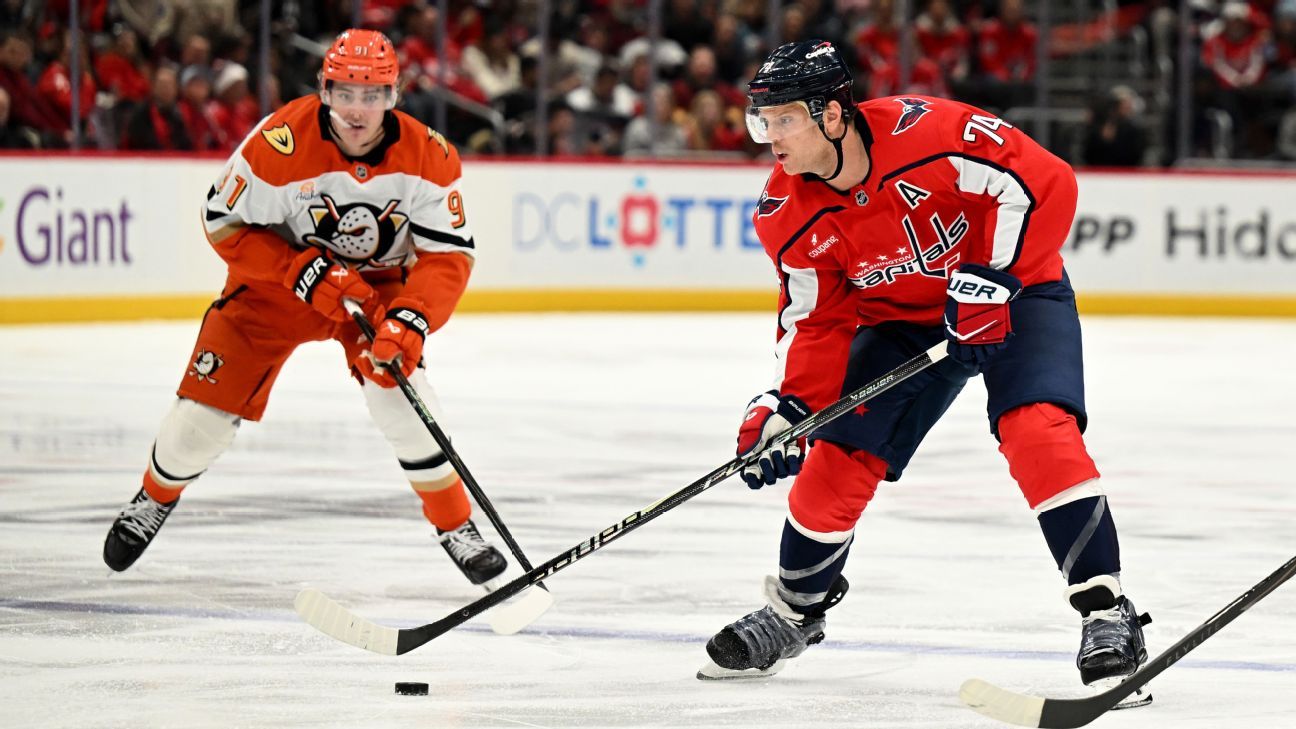
They made one of the most stunning moves of the deadline to get John Carlson from the Capitals.
-
They also traded Ryan Strome away, in a decision that will have a greater impact this summer.
Anaheim has added veterans with extensive playoff experience in order to establish a culture that its young players will eventually call their own. Carlson is a Stanley Cup winner who fits within that part of the Ducks’ plan. He also gives them a right-handed puck mover who is also one more weapon in the offensive zone; he will come in handy come playoff time.
But what makes trading Strome just as important is that he had one more year left on his contract worth $5 million annually. Shedding that salary will help in the offseason, when the Ducks must sign new contracts for their restricted free agent class that includes Leo Carlsson, Cutter Gauthier, Pavel Mintyukov and Olen Zellweger. — Clark

Stick taps to GM Doug Armstrong for (a) actually making trades and (b) negotiating some serious returns.
Armstrong reeled in two first-round draft choices, two third-round selections, an NHL-ready player in Jonathan Drouin, one with potential to return to an NHL lineup in defenseman Justin Holl and goalie prospect Marcus Gidlof — all for veterans Brayden Schenn and Justin Faulk.
It fits perfectly with the Blues accepting that a rebuild/retool/re-whateveryouwantocallit is happening, and it’s the right time to cash in on creating a hopeful future. Armstrong also didn’t make any rash decisions on Robert Thomas or Jordan Kyrou just for the sake of it.
Now there is time to determine where St. Louis is going and how — or if — those players fit into the new direction before the offseason hits. Armstrong turned this lemon season for the Blues into a refreshing lemonade. — Shilton

Has another general manager had a better 2026 than Craig Conroy of the Flames?
It started with the Rasmus Andersson trade with Vegas, getting a first-round pick, conditional second-rounder and defenseman Zach Whitecloud in a package for a pending unrestricted free agent. He then traded the remaining five years of MacKenzie Weegar‘s contract to the Utah Mammoth in a deal that included three second-round picks and college prospect Jonathan Castagna.
On deadline day, he made two change-of-scenery trades, acquiring forward Brennan Othmann from the Rangers and center Ryan Strome from the Ducks. Then, as the timer ticked down on the deadline, Calgary sent Nazem Kadri to Colorado for a conditional first, conditional second and an intriguing prospect in forward Max Curran for a 35-year-old center signed through 2028-29.
Conroy’s commitment to rebuilding is admirable in a league where teams are frightened by the teardown. Although it all comes down to drafting and development, Conroy has done a fantastic job of setting his team up for potential success. — Wyshynski
LOSERS
Goalie trade hype
The trade deadline is not the ideal time to acquire a goaltender. General managers have said in the past that it doesn’t give netminders enough time to get acclimated to new teammates and new systems before the playoffs arrive.
Perhaps that’s one reason not a single NHL goaltender was traded this week. Which is a shame. There were some contenders that could have used reinforcement in the crease, such as the Carolina Hurricanes, Montreal Canadiens and Vegas Golden Knights. There were several tantalizing names assumed to be available: Sergei Bobrovsky of the Panthers, Jordan Binnington of the Blues, Stuart Skinner of the Penguins, Anthony Stolarz of the Maple Leafs and Jesper Wallstadt of the Wild, according to ESPN’s Kevin Weekes.
But in the end, the only goalie news was one choosing to stay rather than move: Alex Nedeljkovic, signing a two-year contract extension with the Sharks. — Wyshynski

Just when Buffalo is actually winning on the ice — it’s also losing. The Sabres haven’t made the playoff in 14 years, and unless they perform a massive slide in the next month, that drought will finally end by April. New GM Jarmo Kekalainen attempted to make his team better by trying to acquire Colton Parayko from the Blues. But despite Buffalo’s uptick, despite it change of direction, despite its excellent young core … Parayko gave a hard pass on becoming a Sabre, invoking his no-trade clause.
Parayko’s presence would likely have been that missing piece to put Buffalo over the top as a true contender. Instead, Kekalainen settled for adding Logan Stanley and Luke Schenn from Winnipeg. Fine players, sure, but they are depth contributors, not difference-makers. And their playoff résumés aren’t exactly sparkling (Schenn, for instance, was a team-worst minus-8 for the Jets last postseason).
Sam Carrick and Tanner Pearson can fill in around the edges for Buffalo, of course. It’s just a shame for the Sabres that when they try to go big, and finally do the right things, there are still obstacles standing in their way. — Shilton

The Capitals enter Friday’s game slate four points out of the final Eastern Conference wild-card spot. They’ve played two more games than the Boston Bruins, who control that final playoff berth. It left the Capitals’ front office facing a dilemma about what it deemed was the best course of action for the remainder of the season.
This week, they traded forward Nic Dowd — which suggested they could be open for business in both directions. But in trading John Carlson, who might be the greatest defenseman in franchise history, it was a reality check on the present and the future.
Carlson’s departure means that captain Alex Ovechkin and winger Tom Wilson are the only players still on the roster from that 2018 Stanley Cup team. Ovechkin spoke with reporters Friday and said “it’s obviously a sad day. Probably the toughest day of my career, talking about personal-wise.”
The Capitals knew there would come a day when they would move on from Carlson and Ovechkin. Both players are in the final year of their respective contracts. But now that Carlson is gone, what does that mean for Ovechkin’s future? As he said, “I don’t know. I’m still here, so we’ll see what’s going to happen. It’s a hard one.” — Clark

Last summer, Connor McDavid gave the Oilers this season and two additional ones to build a winner around him before he can leave as an unrestricted free agent. GM Stan Bowman addressed the team’s goaltending by acquiring Tristan Jarry of the Penguins … who hasn’t necessarily been a solution for the Oilers’ biggest problem.
The trade deadline afforded Bowman another chance at dramatically improving the roster. Instead, he made two middling trades with his former team, the Chicago Blackhawks: acquiring defensive defenseman Connor Murphy and depth centers Jason Dickinson and Colton Dach. The Dickinson trade saw Edmonton give up a conditional first-rounder in 2027 to get rid of Andrew Mangiapane’s contract, i.e. make one of Bowman’s mistakes go away.
There’s a finite amount of time the Oilers have left with McDavid, and a finite amount of resources they have through which to build him a Stanley Cup winner. This deadline was a waste of both of them. — Wyshynski
Whoever finishes fifth and sixth in the Pacific Division
Having six teams separated by eight points in the Pacific Division is going to make for amazing theater. It’s also going to make those teams that miss the playoffs feel a certain type of way. Especially when each team made at least one move ahead of the deadline — though each faces its unique set of circumstances:
-
The Golden Knights are trying to win a second Cup but must try to find consistency amid the injuries they continue to battle.
-
The Ducks believe they now have everything in place to make the playoffs for the first time in seven years.
-
The Oilers are trying to return to a third consecutive Stanley Cup Final — and actually win this time.
-
The Sharks are ahead of schedule, with the idea that a playoff berth could change their current trajectory.
-
The Kraken missed out on Artemi Panarin but added help as they seek to make the playoffs for the second time in franchise history.
-
The Kings are trying to win a playoff series for the first time since 2014, and are trying to do it in captain Anze Kopitar‘s final season.
Again … someone is going to be left feeling a certain kind of way in the Pacific in mid-April. — Clark

The Bruins bodied their way back into the playoff picture this season, but GM Don Sweeney didn’t share his team’s tenacity at the deadline.
Boston seemed poised to add depth and give itself a real chance to not just reach the postseason but excel in it. The Bruins have earned, as they say, the right to reinforcements. What’s more, Sweeney had the draft capital (including multiple first-round choices), and yet he completed only minor transactions.
First, he acquired forwards Alexis Gendron and Massimo Rizzo from Philadelphia in exchange for forward Brett Harrison and defenseman Jackson Edward. Zero NHL games on their résumés. Then he got Lukas Reichel from Vancouver, who has played most of his season in the AHL.
It just feels like a missed opportunity for Boston to not add a single skater to help the team right now. Jeremy Swayman is back in form in the crease. The offense is rolling. There is so much potential for the Bruins and, well, it doesn’t seem like they’re taking advantage. — Shilton


Canada & EU push to modernise trade deal amid global shifts

Bayern 4-1 Gladbach (Mar 6, 2026) Game Analysis – ESPN

Holly Willoughby spotted with Nicole Appleton as she prepares for Youtube comeback

-
 Business1 week ago
Attock Cement’s acquisition approved | The Express Tribune
-

 Fashion1 week ago
Policy easing drives Argentina’s garment import surge in 2025
-

 Politics1 week ago
What are Iran’s ballistic missile capabilities?
-
 Business1 week ago
India Us Trade Deal: Fresh look at India-US trade deal? May be ‘rebalanced’ if circumstances change, says Piyush Goyal – The Times of India
-

 Sports1 week ago
LPGA legend shares her feelings about US women’s Olympic wins: ‘Gets me really emotional’
-

 Entertainment1 week ago
Bobby J. Brown, “The Wire” and “Law & Order: SUV” actor, dies of smoke inhalation after reported fire
-

 Fashion1 week ago
South Korea’s Misto Holdings completes planned leadership transition
-

 Entertainment1 week ago
Pakistan’s semi-final qualification scenario after England defeat New Zealand