

Business
Soft inflation data encourages hopes of pre-Christmas rates cut

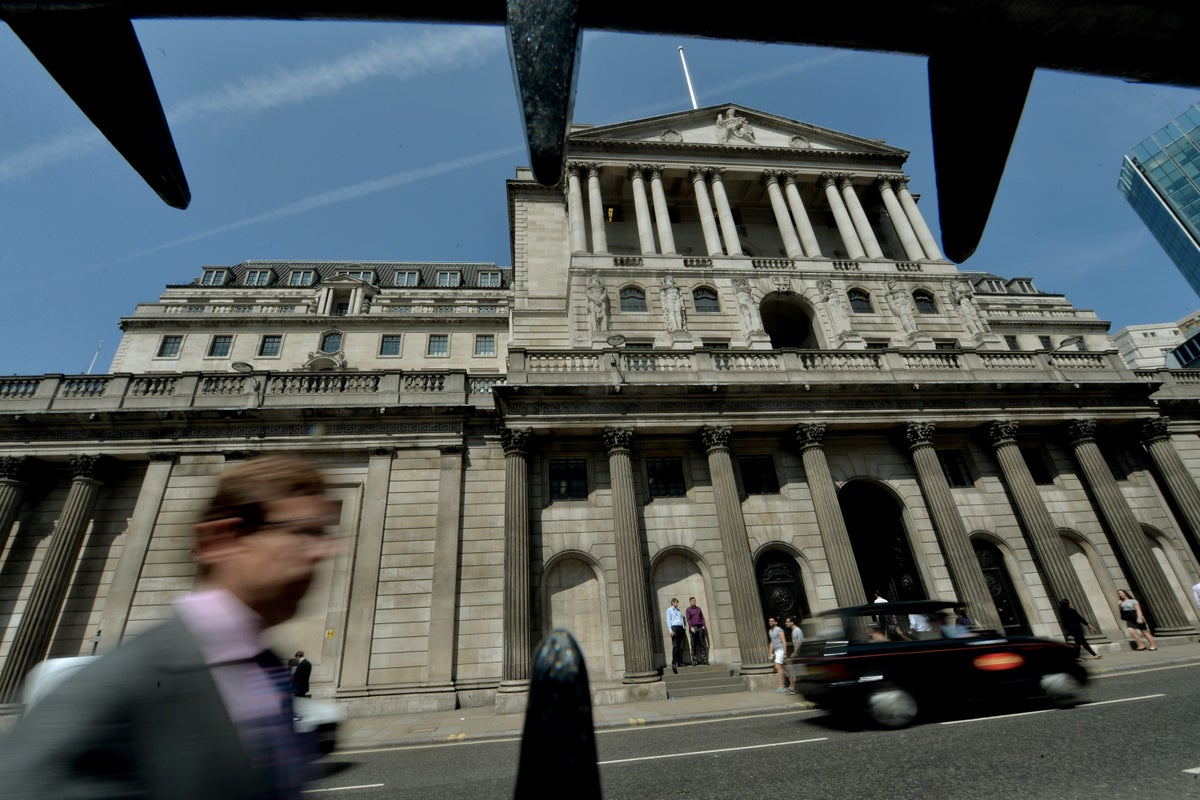
The FTSE 100 forged ahead on Wednesday, with housebuilders in demand, as weaker-than-expected inflation figures boosted hopes for an interest rate cut before the end of the year.
The FTSE 100 index closed up 88.01 points, 0.9%, at 9,515.00.
The FTSE 250 ended 321.49 points higher, 1.5%, at 22,229.79 and the AIM All-Share advanced 2.17 points, 0.3%, at 768.03.
Consumer prices rose 3.8% year-on-year, unchanged from August and below the FXStreet-cited consensus of a 4.0% increase, according to figures from the Office for National Statistics.
Core inflation, which strips out energy, food, alcohol, and tobacco, eased to 3.5% from 3.6%.
Both readings were below Bank of England forecasts for 4.0% and 3.8%.
In addition, closely watched services inflation held steady at 4.7%, defying forecasts for a rise to 4.8%, and below the Bank’s 5.0% projection.
Kathleen Brooks, at XTB, noted rate cut bets ramped up post the inflation report bolstering the chances of an early Christmas present from the UK’s central bank.
She said there are now 17 basis points (bps) of cuts priced in for December, compared to 10 bps of cuts expected on Tuesday.
“Better UK inflation news brings a December rate cut back into play,” said James Smith, developed markets economist at ING.
While Barclays said a quarter point rate cut could come as soon as November.
“The flow of data since the September (Bank of England) meeting has been soft on the labour market, soft on activity and now soft on inflation – a compelling trinity,” the bank noted.
While Goldman Sachs said the data “increase the risks that the next (Bank of England) cut comes earlier than our February baseline.”
In response, sterling fell while bond yields fell. The yield on the UK 10-year gilt traded below 4.40% in Wednesday, after topping 4.80% a month ago.
The pound was quoted lower at 1.3366 US dollars at the time of the London equity market close on Wednesday, compared to 1.3390 dollars on Tuesday.
The euro stood at 1.1610 dollars, down slightly compared to 1.1612 dollars. Against the yen, the dollar was trading at 151.78 yen, a touch higher compared to 151.74 yen.
On the FTSE 100, rate sensitive housebuilders were buoyant, with Persimmon up 6.3%, Barratt Redrow up 5.1% and Berkeley Group up 3.8%.
On the FTSE 250, builders merchant Travis Perkins surged 6.9% and building materials firm Marshalls climbed 5.9% on hopes that rate cuts will accelerate growth in the housing market.
Banks were also in favour after well received third quarter results from lender Barclays.
The London-based bank surprised the City by bringing forward a £500 million share buyback and also raised guidance.
This came despite increasing its provision for car finance and taking a £110 million hit from the collapse of subprime lender, Tricolor.
Barclays Group finance director Anna Cross said, excluding the motor finance provision, the operational performance of the business has continued to strengthen with signs of momentum visible across the business.
She also said there are “no signs of consumer distress” in the UK ahead of November’s budget, with arrears low and stable, demand robust, and customers managing spend carefully.
Barclays rose 4.9%, while NatWest, which reports third quarter results on Friday, climbed 1.6%, and Lloyds Banking Group, which reports on Wednesday, advanced 1.0%.
The mood was less bright in Europe. The CAC 40 in Paris ended 0.6% lower, while DAX 40 in Frankfurt closed 0.7% lower.
Stocks in New York were lower at the time of the London close. The Dow Jones Industrial Average was down 0.3%, the S&P 500 was 0.6% lower, while the Nasdaq Composite declined 1.1%.
Netflix stumbled 10% after reporting weaker-than-expected earnings after Tuesday’s US market close.
The streaming service took a 619 million US dollars (£463 million) charge related to an ongoing dispute with Brazilian tax authorities.
The yield on the US 10-year Treasury was quoted at 3.96%, unchanged from Tuesday. The yield on the US 30-year Treasury stood at 4.55%, widened from 4.54% on Tuesday.
Elsewhere, British Airways owner IAG rose 2.2%, benefiting from an upgrade by Goldman Sachs to “buy” from “neutral”.
On the FTSE 250, ITV plunged 8.1% after Liberty Global sold £135 million worth of ITV shares in a placing to institutional investors, cutting its stake in the broadcaster to 5% from 10%.
The telecommunications company, based in Denver, Colorado, first took a stake in London-based television broadcaster ITV in 2014 from satellite subscription service provider Sky for £481 million and nearly doubled it the following year – to 9.9% from 6.4%.
Also on the FTSE 250, Softcat climbed 4.6% after posting double-digit annual growth in both profit and revenue.
The IT infrastructure provider reported a 12% rise in pre-tax profit to £178.2 million on revenue up 52% to £1.46 billion, driven by an “exceptionally strong” second half and large project wins.
Gold continued to track lower after its record-breaking run. The metal traded at 4,028.64 dollars an ounce on Wednesday, down from 4,131.30 dollars on Tuesday.
Joshua Mahony at Rostro said gold traders are desperately trying to gauge whether Tuesday’s historic collapse was indicative of a new period of weakness or simply a case of “blowing off steam” after a dramatic surge into record highs.
He said: “Ongoing themes around geopolitics, trade tensions, debt, dollar strength and haven demand means that there is always likely to be a concoction of factors for traders to consider.
“However, with the Trump-Putin meeting called off, and scepticism over the likeliness of a wide-reaching US and China trade agreement, there will likely be calls for gold to regain its upward momentum soon enough.”
Brent oil traded at 62.61 dollars a barrel, up from 61.26 dollars late on Tuesday.
The biggest risers on the FTSE 100 were: Persimmon, up 74p at 1,253p; Howden Joinery, up 51p at 863.5p; Barratt Redrow, up 19.5p at 405.9p; Barclays, up 17.75p at 382p; and Entain, up 37.8p at 824p.
The biggest fallers on the FTSE 100 were: Rolls Royce, down 32p at 1,102.5p; Fresnillo, down 34p at 2,080p; Polar Capital Technology Trust, down 7p at 433p; Melrose, down 8.8p at 625.2p; and Glencore, down 4.2p at 340.2p.
Thursday’s global economic diary has retail sales figures in Canada and a eurozone consumer confidence report.
Thursday’s UK corporate calendar has third quarter results from lender Lloyds Banking Group; exchange operator and data provider London Stock Exchange; pest control firm Rentokil; consumer goods company Unilever; and miner Antofagasta.
Contributed by Alliance News
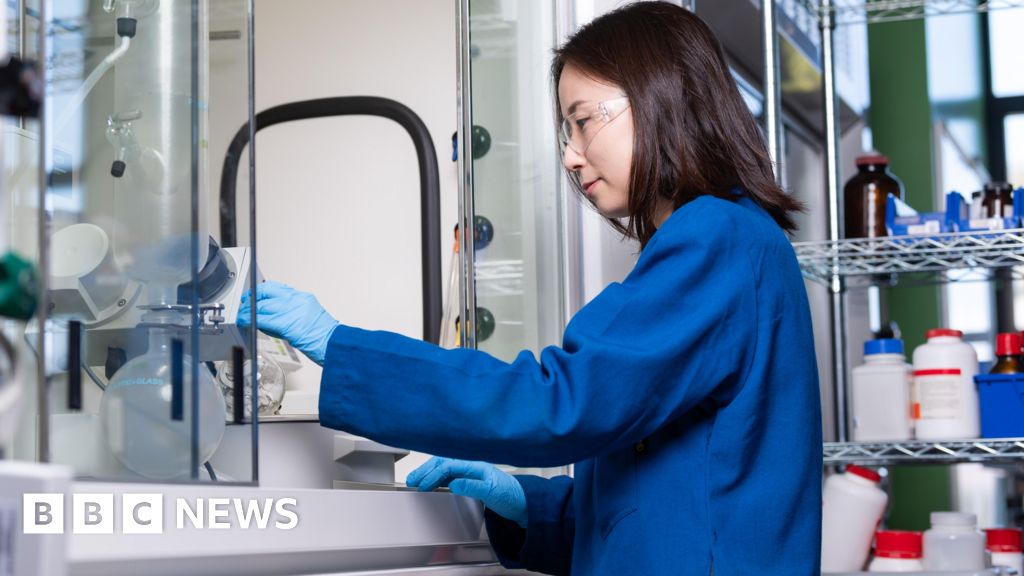
Molecules that can capture heat could be a useful technology to decarbonise heating.
Source link

NEW DELHI: The West Asia conflict is pushing govt to look at a faster transition towards renewable energy, including the possibility of increasing ethanol blending in petrol from 20-25%, although in a calibrated manner. This will come along with increased refining capacity within the country, so that there is a buffer in the system and greater domestic resilience, those familiar with the discussions said, pointing out that sustaining refineries at 100% capacity is not sustainable.While Barmer refinery has begun operations, expansion at Numaligarh is underway and work on integrated refineries on the west coast is also under focus. Apart from a mega refinery in Maharashtra, a new facility in Gujarat is also planned.Officials said rising use of renewables, biofuels and hydrogen in the energy mix was no longer just an environmental issue, but a strategic necessity in a situation like the present one, where the military conflict in West Asia has disrupted global energy supplies, triggering a supply crisis and a surge in oil and gas prices.According to officials, 20% ethanol blending has helped India save 4.5 crore barrels of crude annually and reduce foreign exchange outflow by around ₹1.5 lakh crore so far. Given the concerns over fuel efficiency and impact on vehicles, govt is expected to take a gradual approach that addresses the anxiety on ethanol blending. The third pillar on energy is expanding the strategic petroleum reserves.

A cup of coffee and strawberry frosted donut with sprinkles at a Dunkin’ Donuts location in Los Angeles, Sept. 6, 2017.
Patrick T. Fallon | Bloomberg | Getty Images
Dunkin’ and Buffalo Wild Wings owner Inspire Brands has confidentially filed for an initial public offering, the company announced on Friday.
If Inspire goes public, it will be one of the biggest-ever restaurant offerings. Private equity firm Roark Capital, which backs Inspire, is reportedly seeking a valuation of roughly $20 billion.
Inspire was founded in 2018 through a merger between Arby’s and Buffalo Wild Wings. Acquisitions followed: Sonic Drive-In later in 2018 and Jimmy John’s in 2019. And in 2020, Inspire took Dunkin’ and its sister chain Baskin Robbins private in an $11 billion deal.
Across those six chains, Inspire has more than 33,300 restaurants worldwide and $33.4 billion in annual sales, according to the company’s website.
Inspire isn’t the only restaurant company pursuing an IPO. Last month, Jersey Mike’s also announced that it had confidentially filed with the Securities and Exchange Commission.
The market for initial public offerings has been tepid, although that could change later this year. Market volatility, economic uncertainty and recent poor performance among IPO stocks has led to a backlog of listings.
However, several blockbuster IPOs, such as the SpaceX offering that could value the company at more than $1 trillion, are anticipated in the coming months.


Rory McIlroy slams LIV golfers who don’t want to come back to PGA Tour—but why now?

Iran could withstand blockade for four months, claims CIA report, as tensions flare
[CinePlex360] Please moderate: “Texas orders im

-

 Politics6 days ago
Iran weighs US reply delivered via Pakistan as Trump signals opposition to deal terms
-

 Tech1 week ago
Almost half of UK businesses hit by cyber attacks | Computer Weekly
-

 Tech1 week ago
This Indigenous Language Survived Russian Occupation. Can It Survive YouTube?
-

 Fashion1 week ago
Canada’s Lululemon appoints Esi Eggleston Bracey to board of directors
-

 Fashion1 week ago
US’ J.Jill, Inc. appoints Kimberly Wallengren as CMO
-

 Entertainment1 week ago
David Allan Coe, country singer who wrote “Take This Job and Shove It,” dies at age 86
-
 Business1 week ago
Government hikes jet fuel prices by 5% for international airlines – The Times of India
-
 Business1 week ago
Apollo Sports Capital and Tom Dundon make landmark $225 million investment in pickleball