

Sports
Sources: Big Ten mulling $2B private capital deal

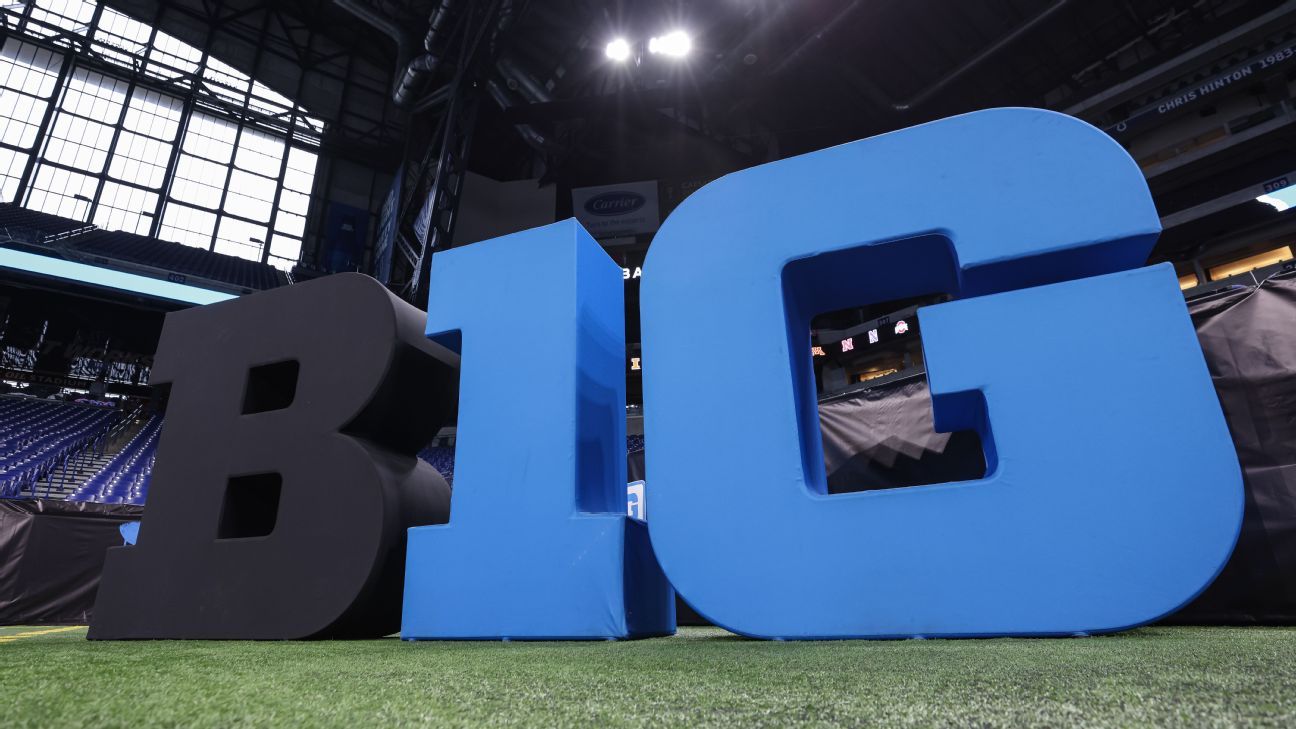
The Big Ten is in discussions about a private capital deal that would infuse at least $2 billion into the league and its schools, sources told ESPN on Wednesday.
The discussions include a 10-year extension of the league’s grant of rights until 2046, sources told ESPN, which would ensure long-term stability in the Big Ten.
According to sources, the private capital deal and grant of rights extension have been discussed for months and presented in multiple forms. A deal and the grant of rights extension would also be a distinct blow to the outside entities attempting to form super leagues around college sports.
While there is support from nearly the entire league, according to sources, a few of the league’s biggest brands — including Ohio State and Michigan — are still in discussions with the league. The aim is to have unanimous support before a vote, sources told ESPN.
A decision on the private capital deal is expected in the upcoming weeks from the schools in the Big Ten, sources said, and nothing is considered imminent or certain. There are three different private capital entities being considered by the Big Ten, sources told ESPN, and the league has not taken a vote on any plan.
Like most businesses, athletic departments can always use more money to cover ever-increasing costs. The need is particularly acute now for schools with middle and lower revenues within the league after the NCAA’s recent settlement of legal cases that has led to direct revenue sharing with athletes.
The setup being discussed, sources said, is that this will essentially be the formation of a new commercial entity within the Big Ten that would house all revenue generation such as media rights, sponsorships and league revenue streams.
The working title for the new entity is Big Ten Enterprises, sources told ESPN.
The private capital company would get money back through the new entity through annual distribution in proportion to its financial stake. The Big Ten will essentially have 20 equity shares, comprising the 18 schools, the league and this investor.
Sources told ESPN that this setup eliminates the need to give an outside investor a specific portion of control over decisions or board seats, something that college presidents have generally been uncomfortable with.
“Think of it this way — the conference is not selling a piece of the conference,” a league source told ESPN. “Traditional conference functions would remain 100 percent with the conference office — scheduling, officiating and championships. The new entity being created would focus on business development, and it would include an outside investor with a small financial stake.”
One of the philosophies behind the proposed move, which is being shepherded by Big Ten commissioner Tony Petitti, is that the league believes its ability to generate revenue holistically has been underserved, and it would be sharing a small percentage of greater profits with the outside investor.
It also helps the league potentially better scale and leverage its 18 members.
Another source familiar with the Big Ten’s discussions summed it up this way: “We’re underselling the strength of what we do the way we are structured. This is a way to organize ourselves better.”
As a micro example of that, Nebraska athletic director Troy Dannen was quoted in an Associated Press article last week on the looming discussion of teams wearing corporate logos on their jersey: “If you jump in now, and I’m going to get a little bit [of money] because of the jersey patches. I would really like to see if there’s an opportunity for our conference to put all those jersey patch rights together and, all of a sudden, they’re worth a whole lot more to the institutions when 18 are playing instead of just one.”
The potentially groundbreaking plan, which has been presented across the 18-member conference over the past few months, calls for immediate cash payments to each school, the amount based on a formula that factors in numerous variables including current budgets.
The amount of those payments is still being discussed, but the basic format, sources told ESPN, is believed to be tiered. All schools in the league are expected to receive at least a nine-figure amount up front.
The final financial details are still being discussed as universities with bigger brands are expected to receive more money.
“Our membership has clearly expressed the need to modernize the operations and structure of our conference to ensure that the Big Ten remains best positioned to offer the highest level of athletic and academic excellence in a rapidly evolving landscape,” a Big Ten spokesperson told ESPN in a statement when asked about the private capital.
“Over a year ago, we initiated a comprehensive evaluation of our practices to identify partnerships that could secure the financial stability of our member institutions and allow us to not only protect, but expand, opportunities for our student-athletes. This is an ongoing process, and we remain committed to finding a path that strengthens the conference for the future.”
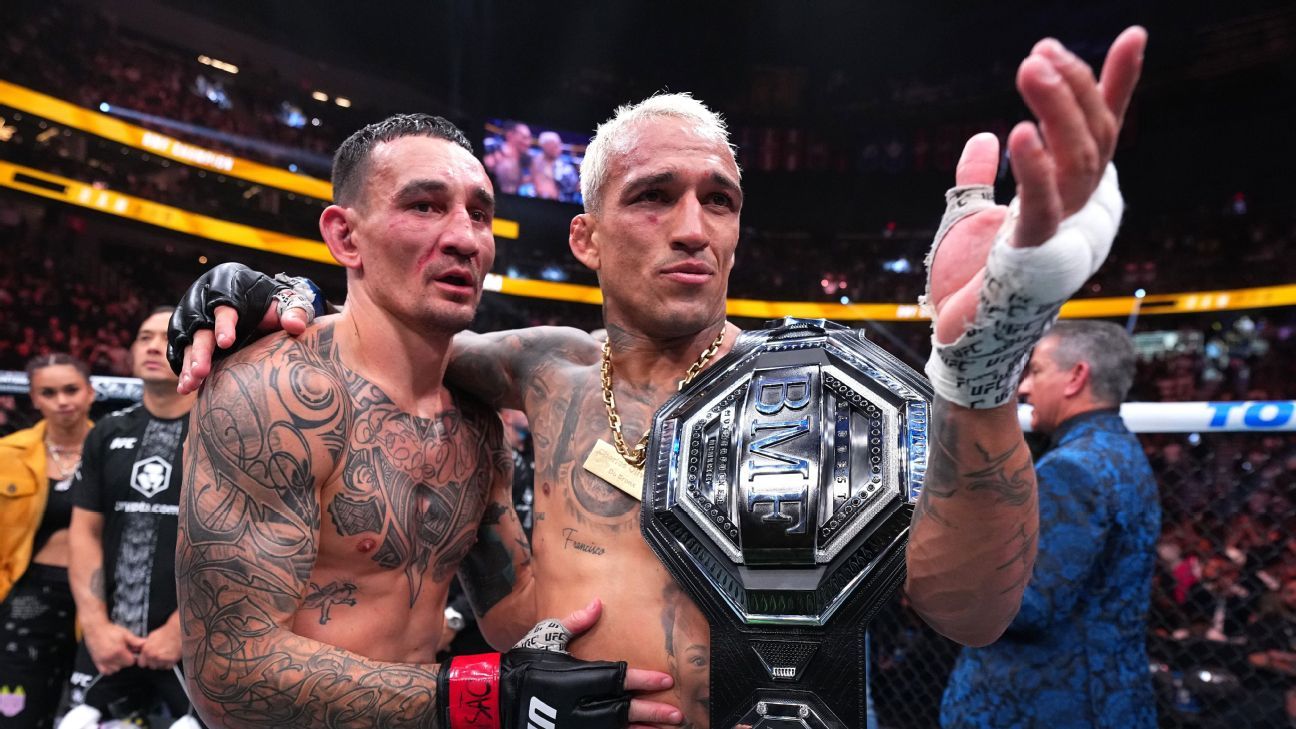
The BMF legacy is used to a certain type of fight that Holloway vs. Oliveira just didn’t bring.
Source link
CORALVILLE, Iowa — Yu Sakamoto beat Riley Rayome of North Central (IL) 4-3 to win the 117-pound crown and clinch the team title for McKendree on Saturday night at the inaugural NCAA women’s wrestling championships.
After a wild scramble in the final seconds, a challenge by North Central and a review, Sakamoto’s win gave McKendree a 167-166 lead over Iowa — which finished with three individual champions and a runner-up but had no remaining competitors with two matches remaining. The Bearcats finished with 171 points and third-place North Central had 123.5.
Grand Valley State’s Katerina Lange, the No. 1 seed, beat second-seeded Claire DiCugno of North Central 4-1 to claim the 138-pound title and become the first women’s wrestling national champion.
North Central’s Bella Mir won at 145 pounds, beating No. 1 seed and former teammate Reese Larramendy of Iowa in the first round to avenge her only regular-season loss. The second-seeded Mir — an Iowa transfer and the daughter of former UFC heavyweight champion, Frank Mir — reversed a takedown attempt, immediately rolled and pinned Larramendy with 34 seconds left.
Iowa’s Valarie Solorio, the No. 2 seed, beat fourth-seeded Rayana Sahagun of Grand Valley State by technical fall in the second round to win the 103-pound title. Sahagun beat No. 1 seed Heather Crull on criteria (7-7) in the semifinals.
Lehigh’s Audrey Jimenez pinned Sage Mortimer of Grand Valley State just 1:19 into the first round to claim the crown at 110 pounds.
Quincy’s Xochitl Mota-Pettis won at 124 pounds, beating Shelby Moore of McKendree by technical fall (10-0) in the second round.
Cameron Guerin of McKendree beat Alexis Janlak of Aurora on criteria (5-5) to win the championship at 131 pounds in the final match of the night.
Iowa’s Kennedy Blades, the No. 1 seed, pinned third-seeded Tiffani Baublitz of East Stroudsburg in 1:19 to claim the 160-pound crown.
Iowa’s Kylie Welker outscored Destiny Rodriguez of McKendree 11-0 in the first round to win the 180-pound title by technical fall.
McKendree’s Tristan Kelly beat Sabrina Nauss of Grand Valley State by technical fall (11-0) in the second round to secure the national championship at 207 pounds.
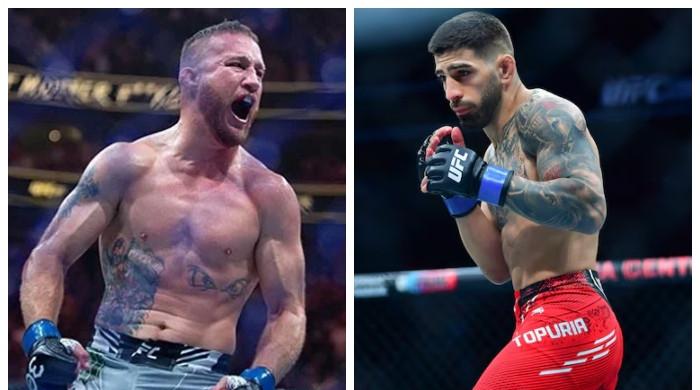
WASHINGTON: An Ultimate Fighting Championship event to be staged on the White House’s South Lawn in June will be headlined by Ilia Topuria and Justin Gaethje, the UFC announced Saturday.
The lightweight championship clash will top a bill of six fights set to take place on the US Flag Day holiday and the 80th birthday of President Donald Trump, who is an avowed UFC fan.
The June 14 event has been dubbed “UFC Freedom 250,” in reference to the United States’ 250th anniversary celebrations this summer.
Topuria is one of the UFC’s top-rated fighters and a double-weight champion who has won all 17 of his fights.
A former featherweight champion, he earned the lightweight belt last year by knocking out Brazil’s Charles Oliveira before temporarily stepping away from the sport for personal reasons.
Born in Germany to Georgian refugee parents, Topuria moved to Spain as a teenager, and has both Georgian and Spanish citizenship.
In Topuria’s UFC absence, Arizona native Gaethje won an interim lightweight title, but will now have a chance to capture the undisputed championship.
The 37-year-old American has a 27-5 record in UFC.
Trump has said a stadium for more than 100,000 people would be constructed in front of the White House for the fight, although organisers have since said the event is expected to host some 3,000 to 4,000 people at the heart of Washington DC.
Large screens to view the event are expected to be raised in other places near the White House for larger crowds to watch the show.
The event was originally announced for July 4, which is Independence Day in the US, before being moved to Trump’s birthday.
The Republican president has also unveiled plans for an IndyCar race on the streets of Washington to mark the 250th anniversary of the country’s independence.
UFC is the largest and most successful organisation in the burgeoning world of MMA, a blend of martial arts disciplines like jiu-jitsu, kickboxing, boxing and wrestling.
Bouts take place in an eight-sided ring — dubbed “The Octagon” — bounded by a chainlink fence.
With few exceptions — such as eye-gouging — male and female fighters are allowed to employ almost any technique to attack their opponent.
The sport’s popularity with young men — a key demographic in the 2024 US election — and Trump’s long association with the UFC have made the president a regular fixture at some of its more high-profile events, where he is greeted like a rock star.
Its brutal nature and high injury rate mean the sport is controversial, with doctors decrying the potential for brain damage amongst fighters who are repeatedly hit in the head, though it has gained increasing mainstream acceptance in recent years.


President Pezeshkian’s gesture to neighbors immediately killed by Trump: Iran FM

Christian Bale makes shocking confession about Jacob Elordi’s ‘Frankenstein’

UFC 326 takeaways: Is this the end of the BMF title?

-

 Sports1 week ago
LPGA legend shares her feelings about US women’s Olympic wins: ‘Gets me really emotional’
-

 Entertainment1 week ago
Pakistan’s semi-final qualification scenario after England defeat New Zealand
-

 Fashion1 week ago
South Korea’s Misto Holdings completes planned leadership transition
-

 Entertainment1 week ago
Bobby J. Brown, “The Wire” and “Law & Order: SUV” actor, dies of smoke inhalation after reported fire
-
 Business1 week ago
Greggs to reveal trading amid pressure from cost of living and weight loss drugs
-
 Business1 week ago
CNBC To Merge TV And Digital News Operations, Nearly A Dozen Jobs To Be Cut: Report
-
 Entertainment1 week ago
What’s new in Pokémon? Every game, update, surprise from 30th anniversary event
-

 Politics1 week ago
Iran launches retaliation against Israel, launches ballistic missiles