

Politics
South Korean president Lee asks China’s Xi for help engaging North Korea

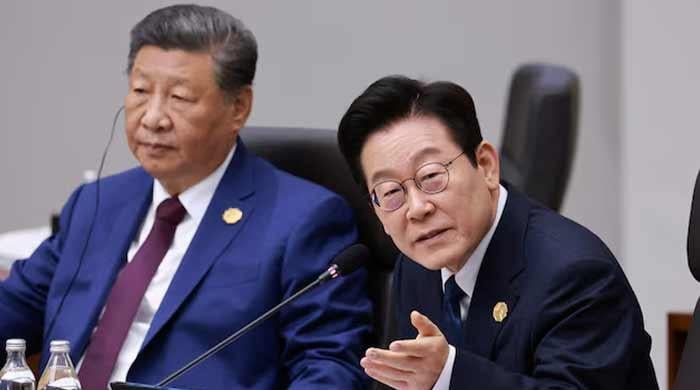
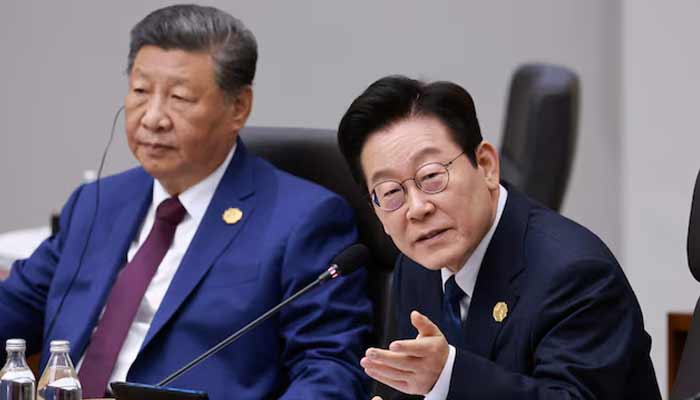
- Lee hosts Xi in Asia-Pacific leaders’ forum after 11 years.
- South Korean leader also promises to strengthen ties with US.
- Lee calls for phased approach to denuclearising North Korea.
South Korean President Lee Jae Myung sought Chinese President Xi Jinping’s help in efforts to resume talks with nuclear-armed neighbour North Korea on Saturday, while Xi told Lee he was willing to widen cooperation and jointly tackle the challenges they face.
Lee hosted Xi at a state summit and dinner after an Asia-Pacific leaders’ forum in the South Korean city of Gyeongju, marking Xi’s first visit to the US ally in 11 years.
Beijing attaches great importance to relations with Seoul and sees South Korea as an inseparable cooperative partner, Xi said ahead of the summit according to Lee’s office.
Lee, who was elected president in a snap election in June, has promised to strengthen ties with the United States while not antagonising China and seeking to reduce tensions with the North.
“I am very positive about the situation in which conditions for engagement with North Korea are being formed,” Lee said, referring to recent high-level exchanges between China and North Korea.
“I also hope that South Korea and China will take advantage of these favourable conditions to strengthen strategic communication to resume dialogue with North Korea.”
Lee has called for a phased approach to denuclearising North Korea, starting with engagement and a freeze on further development of nuclear weapons.
In a statement on Saturday, Pyongyang, a military and economic ally of China, dismissed the denuclearisation agenda as an unrealisable “pipe dream”.
North Korea has repeatedly and explicitly rejected Lee’s overtures, saying it will never talk to the South. In recent years Pyongyang abandoned its longstanding policy of unification with the South and called Seoul a main enemy.
Leader Kim Jong Un said he would be willing to talk to the United States if Washington drops demands for denuclearisation, but he did not publicly respond when US President Donald Trump offered talks during his visit to South Korea earlier this week.
Trump and Lee announced a surprise breakthrough in talks to lower US tariffs in return for billions of dollars in investment from South Korea. The US president then departed before the main APEC leaders’ summit.
South Korean national security adviser Wi Sunglac told a briefing that China expressed its willingness to cooperate for peace and stability on the Korean peninsula, but the leaders did not specifically discuss what kind of role China would play. Both sides also agreed that US-North Korea dialogue was most important, Wi said.
Chinese state media reports on the meeting with Lee made no mention of the North Korea discussions.
According to Xinhua, Xi proposed ways to open a new chapter in relations, including having each country “respect each other’s social systems and development paths, accommodate core interests and major concerns, and properly handle differences through friendly consultation.”
Xi also called for upholding multilateralism and increasing cooperation in areas such as artificial intelligence, biopharmaceuticals, green industries and aging populations, Xinhua reported.
During Xi’s visit, China and South Korea signed seven agreements including a won-yuan currency swap and memorandums of understanding on online crime, businesses that cater to aging populations, and innovation, among other issues.
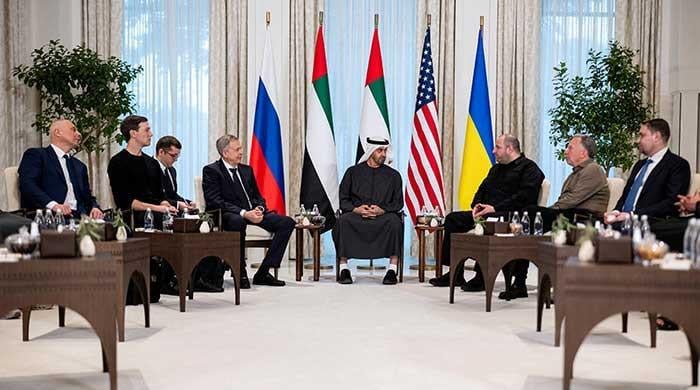
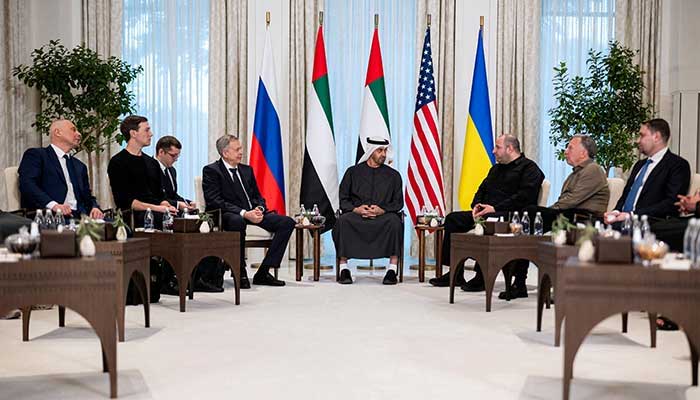
The first day of talks between Ukraine, Russia and the United States seeking to broker an end to the war in Ukraine concluded Wednesday in Abu Dhabi with Kyiv describing the negotiations as “substantive and productive”.
While there was no apparent breakthrough in the most recent round of discussions, the negotiations were set to carry on into a second day, Kyiv said.
The US-mediated talks are the latest in a flurry of diplomacy that has so far failed to strike a deal to halt the war, unleashed by Russia’s February 2022 invasion.
The war has spiralled into Europe’s deadliest conflict since World War II, with hundreds of thousands killed, millions forced to flee their homes in Ukraine and much of the eastern and southern part of the country decimated.
The talks were going on Wednesday as stepped-up Russian strikes on Ukraine’s power infrastructure left Kyiv residents in darkness and cold, with temperatures dropping as low as -20C.
But though the massive barrage threatened to overshadow progress, Ukraine’s top negotiator Rustem Umerov said the talks the first day were “substantive and productive, focused on concrete steps and practical solutions”.
As talks got underway, the Kremlin repeated its hardline demand that Kyiv give in if it wanted the four-year invasion to end.
“Our position is well known,” Kremlin spokesman Dmitry Peskov told reporters on Wednesday as the talks got underway.
“Until the Kyiv regime makes the appropriate decisions, the special military operation continues,” he said, using Russia´s term for the offensive.
In Ukraine, foreign ministry spokesman Georgiy Tykhy said Kyiv was “interested in finding out what the Russians and Americans really want.”
The content of the talks was on “military and military-political issues,” he added, without elaborating.
The main sticking point in settling the conflict is the long-term fate of territory in eastern Ukraine.
Moscow is demanding that Kyiv pull its troops out of swathes of the Donbas, including heavily fortified cities atop vast natural resources, as a precondition of any deal.
It also wants international recognition that land seized in the invasion belongs to Russia.
Kyiv has said the conflict should be frozen along the current front line and has rejected a unilateral pull-back of forces.
Trump dispatched his ubiquitous envoy Steve Witkoff and son-in-law Jared Kushner to try to corral the sides to an agreement.
Russia’s top negotiator is military intelligence director Igor Kostyukov, a career naval officer sanctioned in the West over his role in the Ukraine invasion.
Europe fears it has been sidelined in the process, even as France and Britain lead efforts to put together a peacekeeping force that could be deployed to Ukraine after any deal.
It was “strategically important for Europe to at some point be part of the negotiations,” the EU’s ambassador to Ukraine Katarina Mathernova told AFP on Wednesday in Kyiv.
Russia occupies around 20% of Ukraine, but Kyiv still controls around one-fifth of the Donetsk region.
Ukraine has warned that ceding ground will embolden Moscow and that it will not sign a deal that fails to deter Russia from invading again.
Russia also claims the Lugansk, Kherson and Zaporizhzhia regions as its own, and holds pockets of territory in at least three other Ukrainian regions in the east.
‘Prepare for the worst’
On the battlefield, Russia has been notching up gains at immense human cost, hoping it can outlast and outgun Kyiv’s stretched army.
Russian shelling of a market square in the frontline town of Druzhkivka killed seven on Wednesday, Ukrainian regional authorities said.
Following the first round of US-brokered talks in Abu Dhabi last month, Ukrainians were sceptical that a deal could be struck with Moscow.
“I think it’s all just a show for the public,” Petro, a Kyiv resident, told AFP.
“We must prepare for the worst and hope for the best.”
On the streets of Moscow, some were more hopeful.
“Everyone hopes, everyone is very optimistic about these negotiations,” says Larisa, a retiree who said she had family in Ukraine and relatives fighting at the front.
“It has to end one day, everyone’s had enough,” said Anton, a 43-year-old engineer.
- Xi urges peaceful coexistence and win-win cooperation with US.
- Trump says US-China relationship is “extremely good” after call.
- Trump looks forward to planned trip to China, discusses trade, Iran.
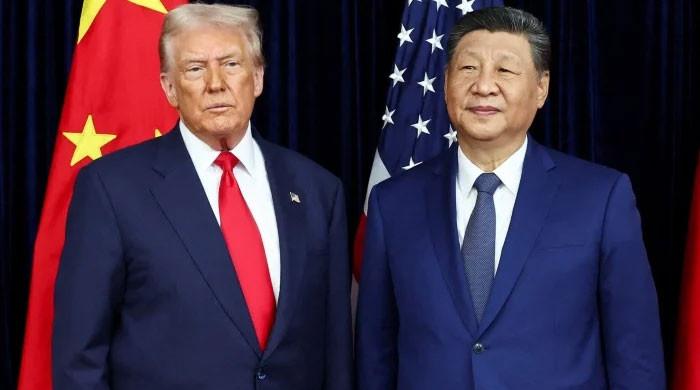
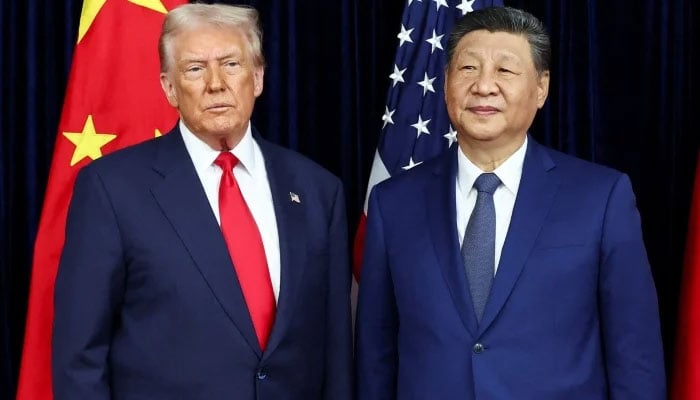
Chinese leader Xi Jinping called Wednesday for “mutual respect” in strengthening relations with the United States, warning President Donald Trump in a phone call to use “caution” when selling arms to Taiwan, Beijing’s state media reported.
Xi expressed the hope that bilateral issues — amongst which trade figures highly — could be resolved amicably between the world’s two largest economies.
“By tackling issues one by one and continuously building mutual trust, we can forge a right way for the two countries to get along,” Xi said, according to state broadcaster CCTV.
“Let us make 2026 a year in which China and the United States, as two major countries, move toward mutual respect, peaceful coexistence, and win-win cooperation,” he added.
Trump, in a post on his Truth Social platform following what he called an “excellent” call, said ties between the two countries were “extremely good”.
“The relationship with China, and my personal relationship with President Xi, is an extremely good one, and we both realise how important it is to keep it that way,” Trump said.
The president said he and Xi discussed trade, Taiwan, the Russian war against Ukraine, and Iran, as well as a planned trip to China, which he said “I very much look forward to”.
On Taiwan, however, Xi warned Washington to exercise caution in arms sales to the island.
“The Taiwan question is the most important issue in China-US relations… The US must handle arms sales to Taiwan with caution,” Xi said, according to state broadcaster CCTV.
The United States approved $11 billion-worth of arms to Taiwan in December, Taipei said.
Putin’s ‘dear friend’
Speaking by video call several hours earlier, Xi and Putin hailed the strengthening of Chinese-Russian ties.
The two countries have sought to present a united front against the West, with ties deepening since Moscow´s 2022 invasion of Ukraine.
A Kremlin aide said the Xi-Putin call was “friendly and trusting” and lasted nearly an hour and a half.
Moscow has increasingly relied on China throughout the Ukraine conflict to keep its economy afloat, faced with crippling Western sanctions.
“Since the beginning of the year, the international situation has become increasingly turbulent,” Xi told Putin, calling for “deeper” Chinese-Russian coordination, according to state TV.
Addressing Xi as his “dear friend”, Putin voiced a similar message, in a video broadcast on Russian state TV.
The Kremlin said Putin had accepted invitations to visit China in the first half of 2026 and attend the APEC regional summit hosted by Xi in November.
Xi also reiterated his commitment to the international system with the United Nations at its core, after Trump in January unveiled plans for a “Board of Peace” that critics see as an attempt to rival the UN.
The calls took place as Russian, Ukrainian and US negotiators met in Abu Dhabi for a new round of talks on ending the almost four-year war, which has turned into Europe’s worst conflict since World War II.
Putin and Xi discussed their “opinions” on the United States, views that, according to the Kremlin, “practically matched” each other.
And “special attention was given to the tense situation in Iran”, said Kremlin aide Yuri Ushakov.
The calls follow a series of meetings between Xi and various leaders in recent months, as he consolidates diplomatic support in the face of an increasingly unpredictable United States.
- Tensions escalated after anti-government protests in Iran.
- Meeting moved to Oman as Iran demands bilateral talks.
- Iran wants talks to focus only on its nuclear programme.
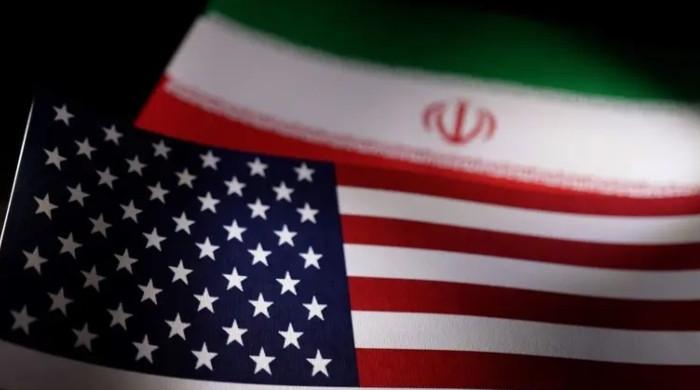
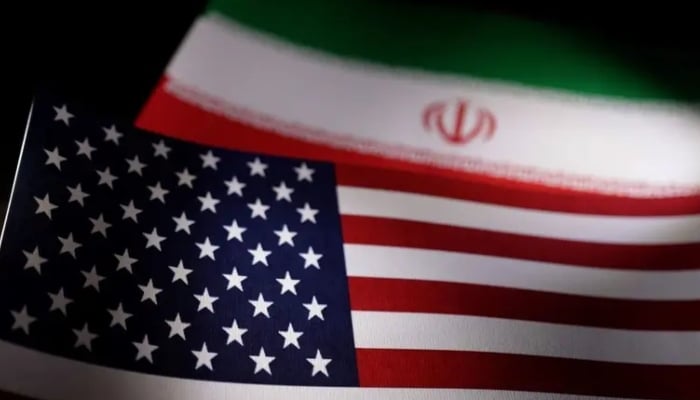
The United States and Iran are due to hold talks in Oman on Friday after Tehran requested a change of venue to limit negotiations to its nuclear programme, a regional official said, with a build-up of US forces in the Middle East raising fears of a confrontation.
Iran wanted the meeting to take place in Oman as a continuation of previous rounds of talks held in the Gulf Arab country on its nuclear programme, asking for a change of location from Turkiye to avoid any expansion of the discussions to issues such as Tehran’s ballistic missiles, the regional official said.
Iran has said it will not make concessions on its formidable ballistic missile programme — one of the biggest in the Middle East — calling that a red line in negotiations.
Tehran, which says it replenished its stockpile of ballistic missiles since coming under attack from Israel last year, has warned that it will unleash its missiles to defend the itself if its security is under threat.
The regional official, speaking on condition of anonymity, said Iran had since the beginning stressed that it would only discuss its nuclear programme, while Washington wanted other issues on the agenda.
Oil prices extended gains on Wednesday after the US shot down an Iranian drone and armed Iranian boats approached a US-flagged vessel in the Strait of Hormuz, rekindling fears of an escalation between Washington and Tehran.
Iran sought bilateral talks
US President Donald Trump has warned that “bad things” would probably happen if a deal could not be reached, ratcheting up pressure on Iran in a standoff that has led to mutual threats of air strikes and stirred fears of a wider war.
On Tuesday, the US military shot down an Iranian drone that “aggressively” approached the Abraham Lincoln aircraft carrier in the Arabian Sea, the US military said, in an incident first reported by Reuters.
Trump told reporters at the White House on Tuesday: “We are negotiating with them right now.” He did not elaborate and declined to say where he expected talks to take place.
A source familiar with the situation said Trump’s son-in-law, Jared Kushner, was due to take part in the talks, along with US Special Envoy Steve Witkoff and Iranian Foreign Minister Abbas Araqchi.
Ministers from several other countries in the region including Pakistan, Saudi Arabia, Qatar, Egypt and the United Arab Emirates had also been expected to attend, but a regional source told Reuters that Tehran wanted only bilateral talks with the US.
In June, the United States struck Iranian nuclear targets, joining in at the close of a 12-day Israeli bombing campaign.
More recently, the US navy built up forces in the region following protests against the government in Iran, the deadliest since the 1979 revolution.
Trump, who stopped short of carrying out threats to intervene, has since demanded nuclear concessions from Iran, sending a flotilla to its coast.
Iran’s leadership is increasingly worried a US strike could break its grip on power by driving an already enraged public back onto the streets, according to six current and former Iranian officials.
The priority of the diplomatic effort is to avoid conflict and de-escalate tension, a regional official told Reuters earlier.
Tanker incident
Iranian sources told Reuters last week that Trump had demanded three conditions for the resumption of talks: zero enrichment of uranium in Iran, limits on Tehran’s ballistic missile programme and an end to its support for regional proxies.
Iran has long said all three demands are unacceptable infringements of its sovereignty, but two Iranian officials told Reuters its rulers saw the ballistic missile programme, rather than uranium enrichment, as the bigger obstacle.
An Iranian official said there should not be preconditions for talks and that Iran was ready to show flexibility on uranium enrichment, which it says is for peaceful, not military purposes.
Since the US strikes in June, Tehran has said its uranium enrichment work has stopped.
In another incident on Tuesday, this one in the Strait of Hormuz, the US Central Command said Iran’s Islamic Revolutionary Guard Corps forces had approached a US-flagged tanker at speed and threatened to board and seize it.
Maritime risk management group Vanguard said the Iranian boats ordered the tanker to stop its engine and prepare to be boarded. Instead, the tanker sped up and continued its voyage.


Measles Is Causing Brain Swelling in Children in South Carolina

Eli Lilly’s GLP-1 growth is only getting started as Novo Nordisk braces for a decline in 2026

Ukraine says Abu Dhabi talks with Russia ‘substantive and productive’

-

 Sports1 week ago
PSL 11: Local players’ category renewals unveiled ahead of auction
-

 Entertainment1 week ago
Claire Danes reveals how she reacted to pregnancy at 44
-

 Sports1 week ago
College football’s top 100 games of the 2025 season
-
 Business1 week ago
Banking services disrupted as bank employees go on nationwide strike demanding five-day work week
-
 Politics1 week ago
Trump vows to ‘de-escalate’ after Minneapolis shootings
-

 Sports1 week ago
Tammy Abraham joins Aston Villa 1 day after Besiktas transfer
-

 Entertainment1 week ago
K-Pop star Rosé to appear in special podcast before Grammy’s
-

 Tech1 week ago
Brighten Your Darkest Time (of Year) With This Smart Home Upgrade