

Business
Spirit Airlines files for Chapter 11 bankruptcy protection for the second time in a year


A Spirit Airlines Airbus A320 taxis at Los Angeles International Airport after arriving from Boston on September 1, 2024 in Los Angeles, California.
Kevin Carter | Getty Images News | Getty Images
Spirit Airlines on Friday filed for bankruptcy protection for the second time in a year, just months after the country’s largest budget carrier failed find to sturdy financial footing when it came out of Chapter 11 protection in March.
Spirit debtholders agreed in the airline’s previous bankruptcy to exchange $795 million in debt for equity, but the carrier avoided bigger changes to cut costs, like getting rid of planes or more dramatically shrinking its footprint.
Spirit now says it will reduce its network and shrink its fleet, cuts that it said will reduce costs by “hundreds of millions of dollars” a year.
“Since emerging from our previous restructuring, which was targeted exclusively on reducing Spirit’s funded debt and raising equity capital, it has become clear that there is much more work to be done and many more tools are available to best position Spirit for the future,” Spirit CEO Dave Davis said in a news release on Friday.
The carrier sought to reassure customers that they can continue to book and fly on Spirit after its bankruptcy filing.
“Virtually every major U.S. airline has used these tools to improve their businesses and position them for long-term success,” Spirit posted on its Instagram account on Friday, written in white against a black background, uncharacteristic for the carrier that is usually featuring its bright-yellow planes and tropical beaches.
Dashed hopes
Spirit, known for its bright yellow planes, had expected to come out stronger from its previous bankruptcy, which it entered in November and emerged from in March. But the airline was dragged down by continued high costs and weaker U.S. domestic travel demand.
In a court filing in December, Spirit had forecast a net profit of $252 million this year. But earlier this month, it said it instead lost nearly $257 million since March 13, after it exited Chapter 11, through the end of June.
Spirit warned a few weeks ago that it might not be able to survive a year unless it significantly increased its cash. It also said its credit card processor was seeking additional collateral. It then borrowed the entire $275 million available under its revolving credit facility and said that the card processor could hold back up to $3 million a day from the airline.
Spirit’s shares are down 72% over the past month.
Labor cuts
Labor unions warned pilots and flight attendants earlier this month that more changes could be ahead. Hundreds of flight attendants are already on voluntary leave, and Spirit has planned to furlough hundreds of pilots this year to cut costs.
“This bankruptcy will be harder and look different than last year, but we will keep you closely informed and stick together as we move forward,” the Association of Flight Attendants-CWA told the carrier’s flight attendants on Friday after Spirit’s filing.
It said it expects more leaves will be offered. “As we communicated a few weeks ago, we urge you to take an honest look at your personal situation, examine all your options, and prepare for all possible scenarios,” the union said.
Rivals circle
Spirit had struggled for years as it dealt with a glut of U.S. flights, a Pratt & Whitney engine recall and a failed takeover by JetBlue Airways, a deal that was blocked in court.
Spirit’s aircraft lessors had reached out to rival airlines in recent weeks to gauge executives’ interest in some of the carrier’s planes, according to people familiar with the matter, who spoke on the condition of anonymity because the talks were private.
The carrier is the United States’ largest budget airline, followed closely by rival Frontier Airlines, which has tried and failed to merge with Spirit repeatedly since 2022.
Frontier on Tuesday announced 20 new routes that compete with Spirit to win over its struggling competitor’s customers.
Spirit has been an icon of budget travel and its bare-bones service — and fees for bags and everything else — became a favorite punchline for comedians.
Over the years, larger airlines like American and United rolled out their own basic fares for price-sensitive customers, but with more perks on board like snacks and big global networks where loyalty members could use their miles for more destinations.
Another challenge was that many travelers, especially post-pandemic, have sought out pricier and more spacious seats on board, as well as more international travel. Spirit has tried to rebrand to bundle fares and provide more premium seating options, though competitors have still said they have an advantage in part because they have bigger networks and more brand loyalty.





Business
Rs 20,000 crore gold, silver rush: What will people buy this Akshaya Tritiya? – The Times of India
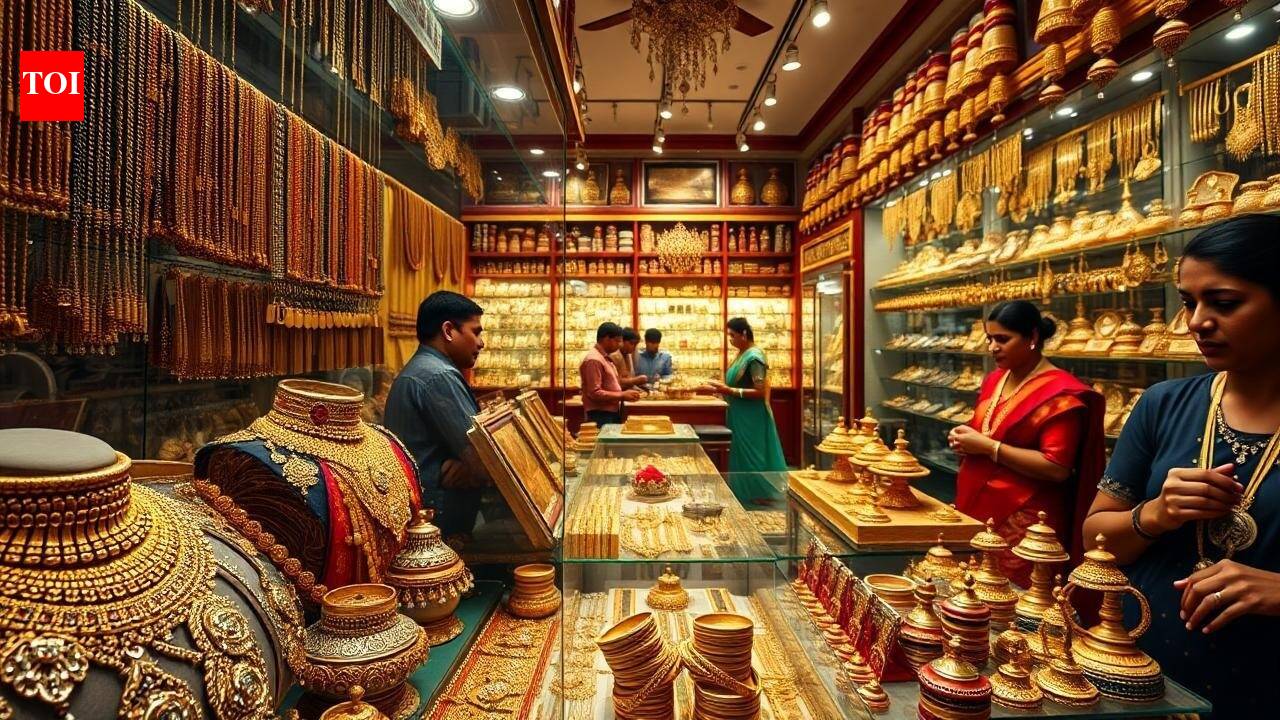
This Akshaya Tritiya, India’s gold and silver markets are heading for bumper purchases, with overall trade likely to cross Rs 20,000 crore even as record-high prices reshape buying patterns. The estimate, shared by the Confederation of All India Traders (CAIT), is higher than last year’s Rs 16,000 crore, signalling growth in value despite a sharp rise in bullion rates.Prices for the yellow metal have surged sharply over the past year, going from Rs 1,00,000 per 10 grams, to Rs 1.58 lakh. Meanwhile, silver has shown a steeper rally, jumping from Rs 85,000 per kilogram to Rs 2.55 lakh per kilogram. According to CAIT, this sharp escalation has not weakened demand, but is instead prompting consumers to make more deliberate and value-oriented purchases.Praveen Khandelwal, member of parliament from Chandni Chowk and secretary general of CAIT told ANI, “Akshaya Tritiya has traditionally been one of India’s most auspicious occasions for purchasing gold… While gold continues to dominate, the nature of purchasing is evolving significantly in response to steep price escalation.”Commenting on customer preference, CAIT national president BC Bhartia highlighted, “There is a clear shift towards lightweight, wearable jewellery, alongside a stronger focus on silver and diamond products. Attractive incentives such as reduced making charges and complimentary gold coins are also helping sustain consumer interest.”Despite the increase in overall trade value, the quantity of metals being sold tells a different story. Pankaj Arora, National President of the All India Jewellers and Goldsmith Federation (AIJGF), an associate of CAIT, explained that the projected Rs 16,000 crore gold trade amounts to nearly 10,000 kilograms (10 tonnes) at current rates. The value, spread across an estimated 2 to 4 lakh jewellers, translates to average sales of only 25 to 50 grams per jeweller, “clearly indicating a sharp decline in volume”.Meanwhile for silver, the estimated Rs 4,000 crore trade corresponds to around 1,56,800 kilograms (157 tonnes), resulting in average sales of about 400 to 800 grams per jeweller during the festival period. “These figures underline a critical shift: while the value of business is expanding due to rising prices, actual consumption is contracting,” Khandelwal said.This gap between value and volume is also reshaping consumer’s buying pattern, with smaller items and lightweight jewellery gaining popularity. At the same time, jewellers are facing challenges due to fluctuating prices, especially when it comes to managing inventory.Even so, festive demand remains steady, with markets witnessing healthy footfall. “Consumers are now adopting a more cautious and pragmatic approach, balancing traditional beliefs with financial discipline,” Khandelwal added.At the same time, it’s not just about physical gold anymore as consumers are increasingly exploring alternatives like digital gold, Sovereign Gold Bonds and gold ETFs, drawn by the promise of liquidity, safety and flexibility when prices are volatile.CAIT and AIJGF have urged jewellers to comply with mandatory hallmarking standards, including HUID certification, and advised buyers to verify the purity and authenticity of their purchases.

Lauren Elcock is among the young Londoners who say rising rents are forcing them to quit the capital.
Source link
As governments across the world restricted the movements of their citizens during Covid lockdowns from 2020, people spent more time online. We bought more online and socialised more online, and this brought us closer to the people who want to scam us. At the same time, realistic video impersonations, voices, websites, and texts became more commonplace, and scammers increased their use of social media including WhatsApp.

Rs 20,000 crore gold, silver rush: What will people buy this Akshaya Tritiya? – The Times of India

Prince Harry corrects blunder before peace with King Charles suffers again
The cost of rising rents: Working four jobs and pushed on to benefits

-

 Entertainment6 days ago
Palace left in shock as Prince William cancels grand ceremony
-

 Sports6 days ago
The case for Man United’s Fernandes as Premier League’s best
-

 Politics1 week ago
Chinese, Taiwanese will unite, Xi tells Taiwan opposition leader
-

 Entertainment1 week ago
Dua Lipa hits major career high ahead of wedding with Callum Turner
-
 Business1 week ago
100% road tax waiver for electric cars, new rules for 2, 3 and 4 wheelers – what Delhi govt’s draft EV policy says – The Times of India
-
 Business6 days ago
UK could adopt EU single market rules under new legislation
-
 Business1 week ago
The FAA wants gamers to apply for air traffic control jobs
-

 Sports1 week ago
Lamar Jackson hits back at critics with faithful message on social media