

Fashion
Sri Lanka can lift revenue by 2% of GDP by 2029: World Bank


The adjustment was also sharper and faster by international standards – when compared with more than 330 similar efforts in 123 countries worldwide since 1980. According to the review, Sri Lanka is now well-positioned to focus on making public finances work better for all citizens.
Sri Lanka can boost revenue by up to 2 per cent of GDP by 2029 without harming growth or equity, according to the World Bank.
Following significant fiscal stabilisation, the country is urged to focus on fairer taxation—especially direct taxes—and smarter spending.
Improved tax administration, efficient budgeting, and targeted reforms can enhance service delivery and support inclusive growth.
While fiscal measures helped restore stability, they have also placed pressure on households through higher indirect taxes and reduced real public-sector wages, and slowed growth due to lower public investment. The next phase of fiscal calibration should prioritise raising revenues in ways that support growth and fairness, and improve the quality of government spending.
The review recommends raising revenue more fairly and efficiently by shifting towards direct taxes—such as implementing a minimum corporate income tax—and by digitising tax administration to make compliance easier, more transparent, and efficient. On the spending side, it emphasises that neither increasing nor decreasing overall spending is feasible; instead, the focus should be on using existing resources more effectively. By spending smarter—improving efficiency, reducing waste, and enhancing service delivery—the government can achieve better outcomes without altering the total budget.
“Now that Sri Lanka has largely stabilised its economy, the challenge is to get better results from every rupee collected and spent,” said David Sislen, World Bank division director for Maldives, Nepal and Sri Lanka. “This means modernising tax administration, focusing on direct taxes, and making sure public spending is both efficient and fair—especially for the most vulnerable.”
Looking ahead, Sri Lanka can design the next phase of its public finance reforms to build long-term fiscal resilience. Strengthening links between planning and budgeting, improving accountability, and focusing on measurable performance outcomes will help deliver better services, support inclusive growth, and protect the most vulnerable.
Fibre2Fashion News Desk (RR)










Booth No.: T1001
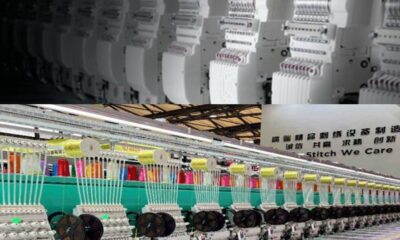
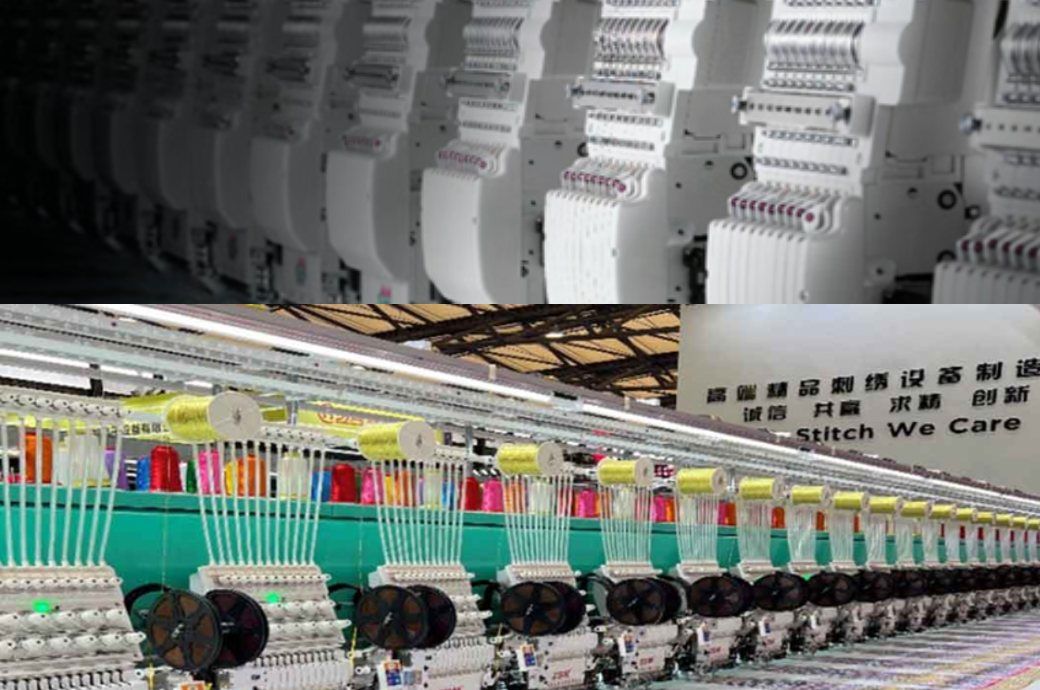
At ITCPE Guangzhou 2026, leading embroidery machine manufacturers including Xinsheng, Tajima, Zhaoshan, Baolun and others will showcase advanced, high-speed, and intelligent solutions.
These companies will focus on strong R&D capabilities, global market reach, and patented technologies, while focusing on automation, precision, and diversified applications.
Zhejiang Xinsheng Technology Co, Ltd is one of the largest, most dynamic and competitive leading enterprises in the global embroidery machine industry. Founded in 2002, the company has four subsidiaries, covers a total area of 160,000 square meters, with annual operating revenue exceeding 1 billion yuan.
With more than 20 years of heritage and innovation, the company has successively become a national standard setter in the embroidery machine industry, a national manufacturing champion product enterprise, a key national-level “Specialized, Sophisticated, Unique and New” little giant enterprise by the Ministry of Industry and Information Technology, and ranked first in China’s light industry embroidery machine sector.
Xinsheng Technology is committed to developing intelligent and diversified computerized embroidery machines. Its SINSIM brand products are sold to nearly 80 countries and regions around the world, serving apparel, home textiles, automotive, shoemaking, toys, luggage, healthcare, automotive interiors, outdoor products and other industries.
The company has built provincial-level technology centers, R&D centers and foreign expert stations. It actively participates in cross-industry, cross-field and cross-region scientific and technological innovation cooperation, and many projects have won provincial science and technology awards. It owns more than 400 national patents, including 39 invention patents, leading the development and breakthroughs in the embroidery machine industry.
Upholding the principle of “Winning trust with integrity, succeeding with quality”, Xinsheng keeps pace with the times and strives for continuous self-improvement. In the future, the company will continue to deepen intelligent and green transformation, promote the upgrading of the embroidery equipment industry, and strive to become a global high-tech benchmark enterprise.
Tajima Embroidery Machines (China) Co., Ltd.
Booth No.: T1009
Established in 1944, Japan-based Tokai Industrial Sewing Machine Co., Ltd. (Tajima Group) has long been dedicated to the R&D and manufacturing of world-class computerized embroidery machines. With over 80 years of production experience and cutting-edge embroidery technologies, Tajima has earned high recognition and trust from the industry and customers worldwide, adhering to the philosophy of serving clients with excellence and superior technology.
Founded in 1984, Tajima Embroidery Machines Co., Ltd. was appointed by Tajima Industries Ltd., Japan as the general agent in China for “Tajima Multi-head Electronic Embroidery Machines”. It maintains an office in Hong Kong and has set up branches, factories, R&D centers and technical support centers across mainland China, aiming to provide customers with advanced, high-quality and efficient fully automatic computerized embroidery machines.
With complete technology transfer from Japan Tajima, Tajima Embroidery Machines (China) Co., Ltd. was founded in 2001 in Jieyang, Guangdong Province, serving as the China-based assembly and production base for TAJIMA embroidery machines.
To support national business expansion, Huizhou Shentian Precision Machinery Co., Ltd. was established in 2006 in Huizhou, Guangdong Province, acting as the China operation and development headquarters of Tajima. It provides customers with professional and high-quality pre-sales and after-sales services, including R&D, technical support and training.
With exquisite technology, high-quality products and premium services, Tajima has been leading the development of the embroidery industry since its establishment. Committed to delivering one-stop embroidery solutions to customers with advanced technologies, Tajima continues to innovate and explore diversified development paths in the global embroidery market.
Zhejiang Zhaoshan Mechanism-Electricity Co.,Ltd.
Booth No.: T2011
Zhejiang Zhaoshan Electromechanical Co., Ltd., a subsidiary of Zhaoshan Group, is a national high-tech enterprise specializing in the design, R&D, manufacturing and sales of computerized embroidery machines. Founded in 2005, the company has long adhered to the policy of “Technology as the guide, brand driving development”. It has successively obtained ISO9001 Quality Management System Certification, ISO14001 Environmental Management System Certification, CE Certification, and Intellectual Property Management System Certification, and has won honors including Municipal Civilized Unit and Zhejiang Famous Brand Product.
Covering an area of 150 mu, the company has an annual output of more than 3,000 sets of computerized embroidery machines. Its “Zhaoshan” and “ZSM” brand computerized embroidery machines feature low thread breakage rate, low noise and exquisite embroidery quality, with product quality leading the industry.
The sales network covers more than 50 countries and regions worldwide, including China, the United States, the United Kingdom, India, Pakistan, South America, Eastern Europe and North Africa.The company is committed to providing one-stop embroidery solutions for every customer, and has won unanimous praise from clients.
Zhaoshan has always followed the philosophy of “Integrity, Win-win, Excellence, Innovation” in its operation and to repay the trust of customers.
Dongguan Baolun Computerized Embroidery Machinery CO., Ltd.
Booth No.: T1008
Dongguan Baolun Computerized Embroidery Machinery Co., Ltd. is located in Dongguan, Guangdong Province, a renowned manufacturing hub in China. Since its founding in 2003, the company has focused on the R&D and manufacturing of high-end computerized embroidery machines.In 2015, it was recognized as a High-Tech Enterprise of Guangdong Province and a “Contract-abiding and Credit-worthy Enterprise” of Guangdong Province. It is currently among the Top 10 Enterprises in China’s Light Industry Embroidery Machine Sector.The company persists in continuous innovation in products and services to meet customers’ demands for high quality, high standard and high efficiency.
Baolun owns two independent brands: CBL and ZXB. Its embroidery machines have been granted more than 20 national patents and obtained EU CE certification.
Against the rapid development of global economic integration, Baolun has developed a full series of highly competitive models:
· CBL Fenghuang Kunlun High-Speed Flat Embroidery Machine (PKL Series)
· Fenghuang Ultra-high-speed Flat Embroidery Machine (CHP Series)
· Fenghuang Premium High-speed Flat Embroidery Machine (JP Series)
· Fenghuang Heavy-thread High-speed Flat Embroidery Machine (CP Series)
· Exquisite Thick-material High-speed Flat Embroidery Machine (JM Series)
· High-speed 3-bead & Sequin Flat Embroidery Machine (JP-MBS Series)
· Qilin Cord Embroidery & Fenghuang Premium Flat Embroidery Machine (CKP Series)
· High-speed Flat Embroidery & Laser Embroidery Machine (JPJ Series)
· Fenghuang Premium High-speed Cap & Finished Garment Embroidery Machine (PC Series)
· Jinlong High-speed Towel Embroidery & Fenghuang Premium Flat Embroidery Machine (CDP Series)
CBL high-speed machines deliver outstanding performance for high-end brand logos, small letter embroidery, badges, embroidery on shoes, hats and thick materials, home textiles, bed linens, lace, water-soluble knitting, toys, handbags, curtains, apparel, luggage, wall cloth and artistic paintings.
CBL high-speed machines have completely changed the traditional impression of low-quality, low-price Chinese embroidery machines, serving as a genuine alternative to imported embroidery machines — a truly national brand embroidery machine made by the Chinese for the world.
Each Baolun machine undergoes strict inspection through 18 procedures:material inspection, machining accuracy, finish, salt spray test, aging test, wear resistance, hardness, parallelism, verticality, symmetry, thread trimming, thread hooking, thread pressing, noise, laser function, color changing, vibration and leakage test, ensuring all indexes meet international standards.
Every machine must pass practical embroidery tests for at least 2 days before delivery.
Foshan Shuangxin Electromechanical Manufacturing Co., Ltd
Booth No.: T1010
Foshan Shuangxin Electromechanical Manufacturing Co., Ltd. is a high-tech machinery enterprise integrating R&D, production and sales. Led by special and high-quality embroidery machinery, the company specializes in the production of high-end computerized embroidery machines under the “Sanxin” brand. Founded in August 2005, the company is located in the High-Tech Industrial Zone, Sanshui District, Foshan City, Guangdong Province—a famous textile city with superior geographical location and convenient transportation.
After years of development and technological accumulation, driven by the strong “Sanxin” brand, the company has an efficient management team, professional R&D staff, skilled business personnel and exquisite production technicians. Committed to high-tech innovation and manufacturing of special and high-quality “Sanxin” embroidery machines, we strive to meet the demands of domestic and overseas customers with quality products and comprehensive, efficient services.
Adhering to the business philosophy of “Professional Credibility, Quality Credibility and Service Credibility”, the company has established a modern enterprise management system and an efficient sales and service system, winning high praise from customers at home and abroad. It has obtained a number of national patents in technological innovation and process improvement, enjoying a high reputation in the industry. The company has built a stable sales network and reliable after-sales service system in major domestic cities, Southeast Asia, Europe and the United States.
“Trust builds the world, integrity forges the future” is the persistent service tenet of all Shuangxin staff. Upholding exquisite craftsmanship and quality after-sales service, we strive to create a high-tech platform for high-end embroidery machines, and work hand in hand with domestic and foreign customers for win-win cooperation and brilliant achievements!
Zhuji Hongfang Machinery Manufacturing Co., Ltd.
Booth No.:T2026
Zhuji Hongfang Machinery Manufacturing Co., Ltd., formerly known as Zhengda Electrical and Mechanical Factory, was founded in August 2007. It is located at No. 525 Jidong Road, Huandong Street, Zhuji City, Zhejiang Province. It is a technology-oriented small and medium-sized enterprise and a high-tech enterprise specializing in the R&D, design, production, sales and service of computerized embroidery machines. The company belongs to the special equipment manufacturing industry.
Adhering to the corporate spirit of “Taking technology as the guide, seeking development through innovation, surviving by quality, and treating customers with integrity”, and the business philosophy of “Abiding by integrity, continuous innovation, ensuring quality, and providing excellent service”, the company follows the country’s strong support for the industrialization of the industrial computerized embroidery industry. It takes breaking the external dependence of the computerized embroidery industry chain as its mission, and aims to achieve both economic and social benefits. All staff are diligent, dedicated and enterprising.
Zhuji Leye Electromechanical Co., Ltd.
Booth No.: T1018
Zhuji Leye Electromechanical Co., Ltd. was founded in 2000. It is a high-tech enterprise independently engaged in the R&D and production of computerized embroidery machines. It has grown into a national high-tech enterprise with an annual output of 3,000 sets and an output value of over 300 million yuan. The company has 2 production bases covering an area of 50,000 square meters, more than 300 employees and over 50 highly educated technical personnel.
The high-speed embroidery machines produced by Leye Electromechanical are mainly exported to Europe, South America, Southeast Asia and other regions. In 2016, the newly developed high-speed intelligent and ultra-multi-head embroidery machines have become high-end products in China.
Leye has always adhered to the corporate tenet of “survive by quality, develop by innovation, build image by integrity, and expand market by service”, providing customers with the best service and optimal products, and winning the trust and recommendation of numerous new and old customers.
Foshan Yueshun Computer Embroidery Equipment Co., Ltd
Booth No.: T2018
Foshan Yueshun Computer Embroidery Equipment Co., Ltd. (referred to as “Yueshun Embroidery Machine”) is located at No. 56 Huanzhen Road, Nanhai District, Foshan City, Guangdong Province. It is a high-tech enterprise specializing in the R&D, design, production, sales and service of computer embroidery equipment. We are committed to providing customers with advanced and stable embroidery equipment to meet diverse market demands.
Our product range includes high-speed flat embroidery, towel embroidery, mixed embroidery and other series, which are widely used in apparel, home textiles, accessories and other fields. Yueshun Embroidery Machine has won wide recognition in the market for its excellent performance and wide applicability.
Adhering to the core values of “Innovation, Quality, Customer, Team”, the company continuously promotes technological innovation, improves product quality and optimizes customer service. Our goal is to become a global leader in the field of computer embroidery equipment, broaden the application of embroidery art through intelligent embroidery technology, and inherit and promote embroidery culture.
Yueshun Embroidery Machine will work hand in hand with customers to create a better future with innovative spirit and excellent quality.
ZHUJI HAOBANG TECHNOLOGY CO.,LTD
Booth No.: T1027
Zhuji Haobang Technology Co., Ltd. was founded in 2024 and is located in Zhuji City, Zhejiang Province, China. It is a rapidly growing embroidery machine manufacturer with strong technical strength. The company is a professional embroidery machine producer integrating R&D, spare parts production, frame manufacturing and embroidery machine assembly, and is now one of the member enterprises of China Embroidery Machine Industrial Base.
After years of development, Zhuji Haobang Technology Co., Ltd. produces a full range of embroidery machines, including:Ultra-high speed embroidery machines with fully independent motor presser feet (1800 rpm),Latest chenille / chain stitch embroidery machines with stable operation at 1200 rpm,corded mixed embroidery machines,finished garment / cap embroidery machines,and various single-head embroidery machines.Our products are widely recognized and praised by the global market.
With precision parts, strong technical force, advanced production equipment, professional talents, practical management mode and comprehensive after-sales service, the company actively explores the international market.
After years of efforts, our embroidery machines have been exported to India, Pakistan, Bangladesh, Brazil, Egypt, Turkey, Morocco, Dubai, Vietnam, South Africa and other countries and regions, thanks to their leading technology, stable performance and high-quality sales and service.
We are now sincerely seeking long-term global partners to work together with customers aspiring to be industry leaders, and create a brilliant future for the embroidery machine industry.
Zhuji Hongtian Sewing Equipment Co., Ltd.
Booth No.: T2034a
Zhuji Hongtian Sewing Equipment Co., Ltd. is a professional company dedicated to the design, R&D, production and sales of embroidery machinery. “Integrity, Gratitude, Harmony, Innovation” is our corporate culture and development philosophy. With sincere pre-sales and after-sales service, as well as years of technical accumulation and practice, we have built a large base of loyal users in the embroidery machine market.
We regard innovation as a pleasure. In the R&D process, we listen to market feedback, address user pain points, and continuously improve our products to make embroidery operations more convenient and efficient. “Never Mediocre, Never Give Up, Never Be Satisfied” is our development tenet. Facing new challenges, we will continue to uphold the spirit of hard work, unity and progress, strive to expand market space, take continuous innovation as the engine and edge for self-development, and create more value for users with high-quality equipment and services.
Our main products include:
· High-speed flat embroidery + corded embroidery machine series
· Sequin / corded embroidery machine series
· Towel / chain stitch embroidery machine series
· High-speed flat embroidery machine series
· 1500 rpm ultra-high speed embroidery machine series
· Multi-color high-speed flat embroidery machine series
We can also equip these machines with optional devices to meet your diverse embroidery needs, such as sequin embroidery device, simple cord embroidery device, bead embroidery device, simple towel embroidery device, perforation device, and laser cutting device.
Zhuji Chengyu Sewing Equipment Co., Ltd.
Booth No.: T2038
Zhuji Chengyu Sewing Equipment Co., Ltd. is a comprehensive enterprise focusing on the R&D and production of modern embroidery equipment. Over the years, with a stable and reliable product reputation and continuous R&D and innovation, the company has established a good reputation in the market and won a large number of loyal users.
Chengyu Sewing Equipment Co., Ltd. is good at summing up experience from production, listening to user feedback from the market, continuously improving process details in practice, and striving to improve machine quality in production. It uses high-precision laser equipment to complete cutting and welding, and ultra-large turning and milling machines to improve frame manufacturing accuracy, further enhancing product consistency and stability. This effectively reduces vibration and noise during the operation of embroidery equipment, improves the precision of embroidery works, and effectively extends the service life of the equipment.
Adhering to the business philosophy of “Focus, Pragmatism, Progress and Innovation”, the company has accumulated a large number of loyal users in the market with excellent product quality and a serious and responsible business attitude. The company’s main products include: high-speed embroidery machines, multi-functional sequin machines, bead embroidery machines, towel machines, corded machines, laser machines and other popular models. With multi-function, stability and high efficiency, these machines meet the production needs of different customers and have been widely praised in domestic and foreign markets.
In the future, the company will continue to adhere to the work spirit of “taking quality as the cornerstone and innovation as the driving force”, win market space with high-quality products, drive self-development with innovation, repay the market with high-quality products and services, and grow and progress together with users.
Note: The headline, insights, and image of this press release may have been refined by the Fibre2Fashion staff; the rest of the content remains unchanged.
Fibre2Fashion News Desk (SG)
Despite the overall decline, the group indicated improving momentum in the second half of 2025, with revenue contraction narrowing significantly compared to the first half. This trend reflects early gains from ongoing transformation initiatives, including operational restructuring, cost discipline, and retail network optimisation.
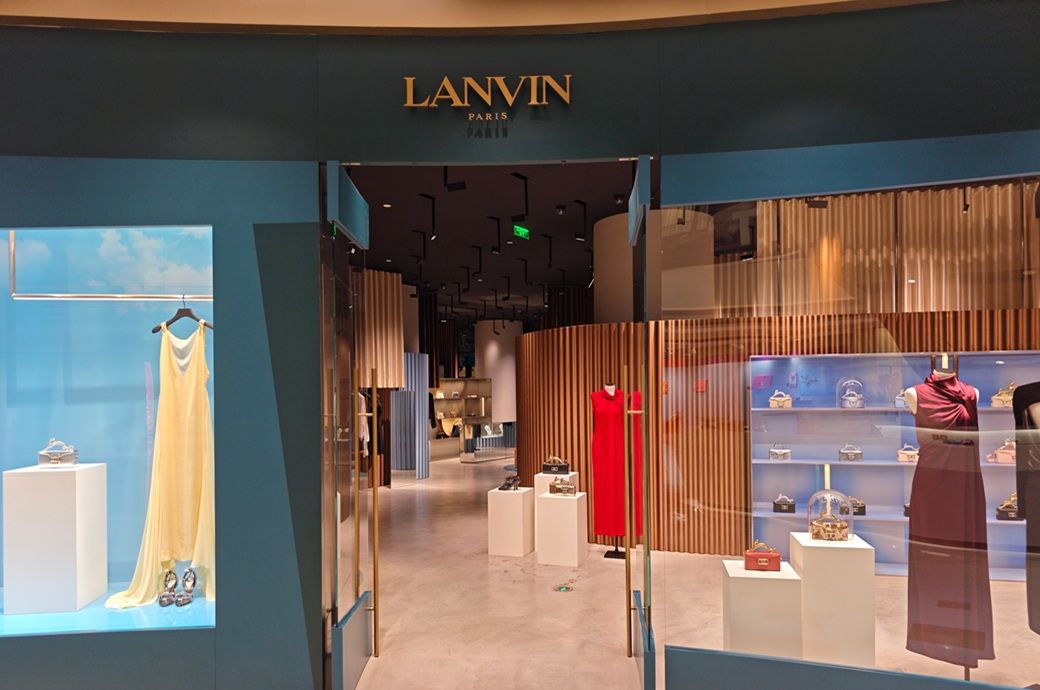
Lanvin Group has reported revenue of €240.5 million (~$276.58 million) in FY25, down 17.6 per cent YoY, amid global luxury headwinds.
While Lanvin and Sergio Rossi declined sharply, St John remained resilient.
North America was stable, but China weakened significantly.
The group continues restructuring, leadership changes, and retail optimisation, targeting stronger growth and profitability by 2026.
At the brand level, performance remained mixed. Lanvin and Sergio Rossi both recorded sharp declines of 30 per cent, while Wolford fell 14 per cent. St John showed resilience, with revenue slipping just 1 per cent, supported by an 8 per cent increase in North America in local currency terms. Wolford’s performance stabilised during the year, aided by improved supply conditions and stronger traction in e-commerce and wholesale channels. Meanwhile, Lanvin progressed in its creative repositioning under artistic director Peter Copping, Lanvin said in a press release.
Regionally, North America has emerged as the most stable market, with revenue declining a modest 6 per cent to €116 million. In contrast, Europe, Middle East, and Africa (EMEA) revenues fell 21 per cent, while Greater China saw a steep 42 per cent drop, reflecting softer demand and cautious wholesale activity. Other markets declined 26 per cent, underscoring broader global volatility in luxury consumption.
Across channels, direct-to-consumer (DTC) and e-commerce revenues declined 18 per cent to €164 million, while wholesale revenues fell 15 per cent. The Group continued to streamline its retail footprint, including selective store closures and organisational adjustments, as part of its broader efficiency drive.
Leadership changes also supported the transformation, with Marco Pozzo appointed CEO of Wolford, Barbara Werschine as deputy CEO of Lanvin, and Mandy West as CEO of St John. These appointments are aimed at strengthening brand execution and accelerating strategic priorities, added the release.
Looking ahead, Lanvin Group expects to largely complete its transformation programme in 2026. The company plans to deepen its presence in core markets, expand asset-light business models, and pursue strategic partnerships, while continuing creative renewal across its portfolio. These efforts are intended to reinforce long-term growth and improve profitability amid an evolving global luxury landscape.
Fibre2Fashion News Desk (SG)
Despite the tariff hike being larger than the 1930 Smoot-Hawley tariffs, the aggregate impact on the US economy appears small—between 0.1 per cent of gross domestic product (GDP) and minus 0.13 per cent, wrote Pablo Fajgelbaum, professor of economics at the University of California, Los Angeles, and Amit Khandelwal, Don-Soo Hahn professor of global affairs and economics at Yale University.
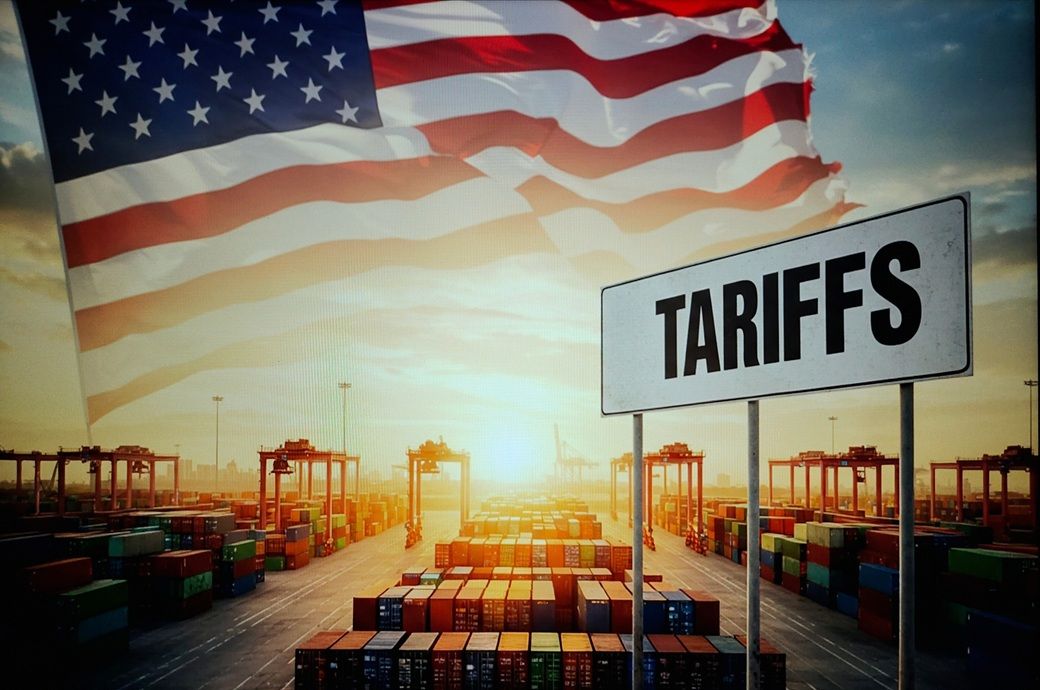
Though President Donald Trump’s 2025 tariff hikes raised US trade protectionism to the highest level in at least 80 years, these so far have had only a small effect on the US economy, a paper discussed at the Brookings Papers on Economic Activity conference recently noted.
That is because federal revenue generated by the tariffs and gains to US producers largely offset the tariffs paid by US importers.
That is because federal revenue generated by the tariffs and gains to US producers largely offset the tariffs paid by US importers, they wrote.
While the aggregate net economic impact may be small, the authors noted that the tariffs also have distributional impacts between producers and importers. They estimate roughly 90 per cent of the tariffs have been passed through to importers, with foreign exporters absorbing only about 10 per cent of the cost by lowering their before-tariff prices.
Except from China, the majority of US exports have not faced retaliatory tariffs. And, the tariffs’ magnitude may be smaller than perceived by the public because announced tariffs “exceeded the actual tariffs imposed at the border,” they wrote.
Moreover, 57 per cent of imports entered the US duty-free. That includes most imports from Canada and Mexico, which enter under the United States-Mexico-Canada Free Trade Agreement of 2020.
The authors found evidence that the tariffs are achieving the administration’s objectives of raising federal revenue and decoupling trade with China. However, they found no evidence, or said it is too early to determine, whether other stated goals will be met, including lowering import prices excluding tariffs, reducing the US trade deficit, increasing trade with friendly nations, boosting manufacturing jobs and wages, and reshoring strategic industries, a release from the Brookings Institution said.
The authors found that the reduction of US-China trade, which began shrinking with the application of tariffs in 2018, during the first Trump administration, “accelerated markedly in 2025”. However, the overall US goods trade deficit in 2025 rose modestly from 2024 and manufacturing jobs declined slightly despite the tariffs.
Fibre2Fashion News Desk (DS)


ITCPE Guangzhou 2026 to showcase next-gen embroidery innovations

Haiti massacre kills at least 70, rights group says, far exceeding official toll
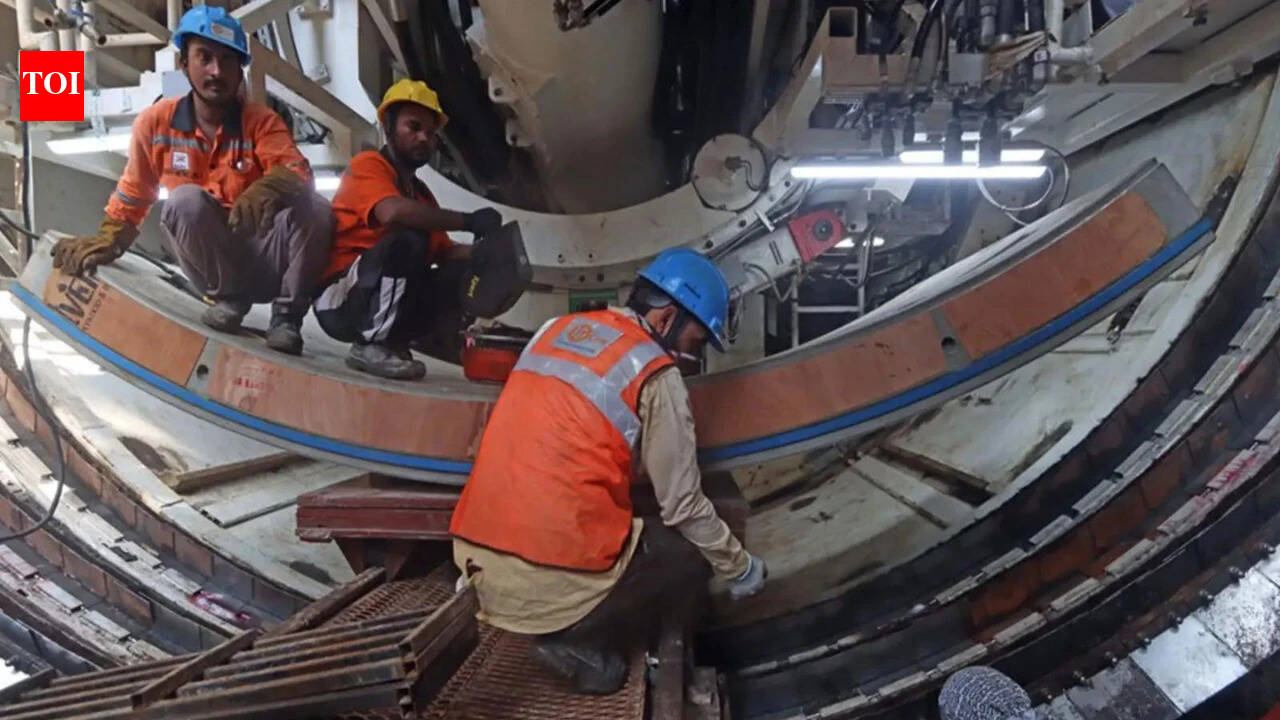
Industrial output grows 5.2 per cent as manufacturing rebounds – The Times of India

-

 Politics7 days ago
Afghanistan announces release of detained US citizen
-

 Sports7 days ago
Broadcast industry CEO says consolidation is ‘essential’ to compete for NFL soaring media rights prices
-

 Entertainment7 days ago
UN warns migratory freshwater fish numbers are spiralling
-
 Business7 days ago
Property Play: Home flippers see smallest profits since the Great Recession, real estate data firm says
-

 Tech7 days ago
Can a Home Appliance Fix the Problem of Soft-Plastic Waste?
-

 Fashion7 days ago
ICE cotton slips on weaker crude, profit booking
-
 Business7 days ago
More women are entering wealth management, but few are in advisory roles, study finds
-
 Business7 days ago
Centre plans to cut broken rice share in PDS, boost ethanol feedstock supply – The Times of India