

Business
Starbucks staff are suing the coffee shop over its ‘tone deaf’ new dress code

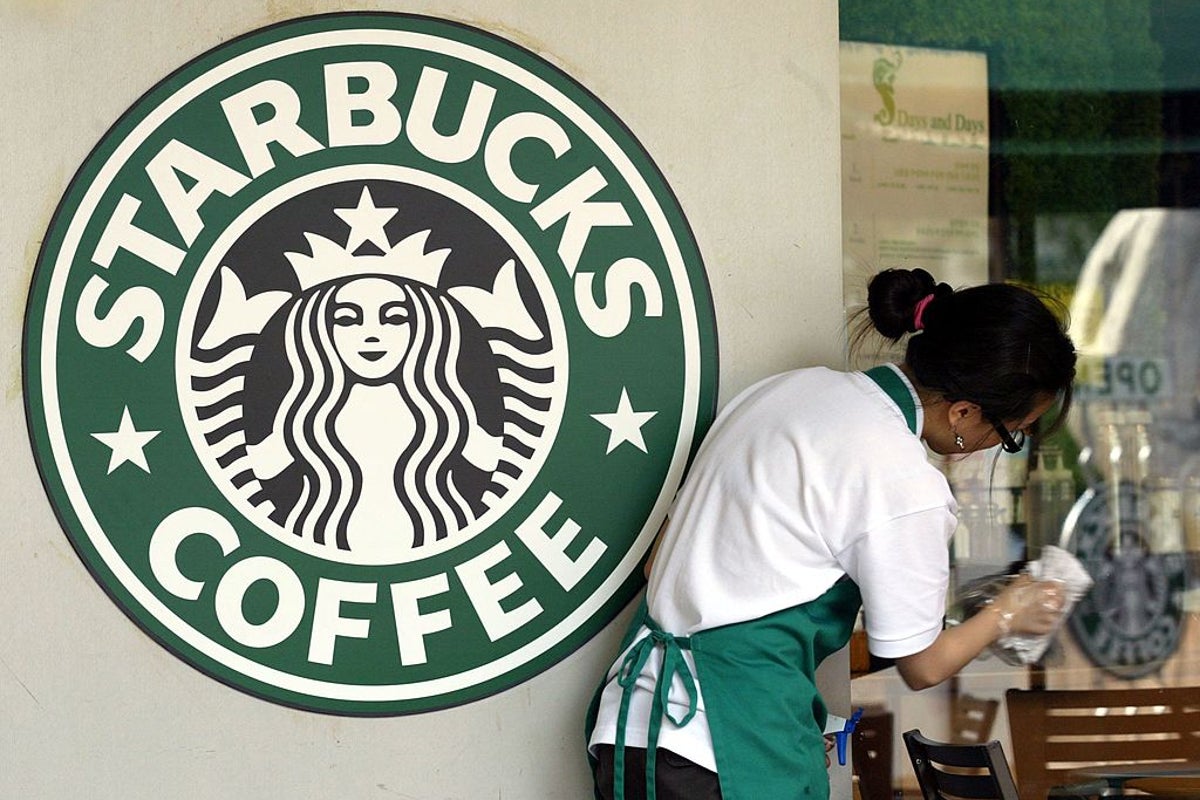
Starbucks is facing legal challenges in three US states after workers initiated action over a new dress code. Employees claim the coffee giant broke the law by not reimbursing them for new clothing required by the updated policy.
Backed by the union organising Starbucks staff, workers have filed class-action lawsuits in state courts in Illinois and Colorado. Additionally, complaints have been lodged with California’s Labor and Workforce Development Agency. Should the agency opt not to pursue penalties against Starbucks, the employees intend to launch a class-action lawsuit in California, according to the filings.
The new dress code, implemented on 12 May, mandates that all North American staff wear a plain black shirt, either short or long-sleeved, beneath their signature green aprons. These shirts must cover the midriff and armpits, with collars being optional. Starbucks did provide each employee with two complimentary T-shirts that meet the new specifications.
Employees must wear khaki, black or blue denim bottoms without patterns or frayed hems or solid black dresses that are not more than 4 inches above the knee. The dress code also requires workers to wear black, gray, dark blue, brown, tan or white shoes made from a waterproof material. Socks and hosiery must be “subdued,” the company said.
The dress code prohibits employees from having face tattoos or more than one facial piercing. Tongue piercings and “theatrical makeup” are also prohibited.
Starbucks said in April that the new dress code would make employees’ green aprons stand out and create a sense of familiarity for customers. It comes as the company is trying to reestablish a warmer, more welcoming experience in its stores.
Before the new dress code went into effect, Starbucks had a relatively lax policy. In 2016, it began allowing employees to wear patterned shirts in a wider variety of colors to give them more opportunities for self-expression.
The old dress code was also loosely enforced, according to the Colorado lawsuit. But under the new dress code, employees who don’t comply aren’t allowed to start their shifts.
Brooke Allen, a full-time student who also works at a Starbucks in Davis, California, said she was told by a manager in July that the Crocs she was wearing didn’t meet the new standards and she would have to wear different shoes if she wanted to work the following day. Allen had to go to three stores to find a compliant pair that cost her $60.09.
Allen has spent an additional $86.95 on clothes for work, including black shirts and jeans.
“I think it’s extremely tone deaf on the company’s part to expect their employees to completely redesign their wardrobe without any compensation,” Allen said. “A lot of us are already living paycheck to paycheck.”
Allen said she misses the old dress code, which allowed her to express herself with colorful shirts and three facial piercings.
“It looks sad now that everyone is wearing black,” she said.
The lawsuits and complaints filed Wednesday allege that Starbucks’ dress code violates state laws that require companies to reimburse workers for expenses that primarily benefit the employer. Colorado law also prohibits employers from imposing expenses on workers without their written consent, according to that lawsuit. The plaintiffs seek damages on behalf of all Starbucks workers in those states, whether or not their stores are unionized.
Multiple plaintiffs, like Allen, said they requested reimbursement from Starbucks to conform to the dress code but were denied. Gilbert Cruz, an employee in Aurora, Illinois, requested $10 for the cost of removing a nose piercing.
Worker-led lawsuits in state courts are a shift in tactics in the multi-year effort to unionize Starbucks’ stores.
Starbucks Workers United, the labor group that has unionized 640 of Starbucks’ 10,000 company-owned U.S. stores, has filed hundreds of unfair labor practice charges against Starbucks with the National Labor Relations Board. The union filed an charge over the dress code in April.
But the board’s ability to hear cases has been curtailed under President Donald Trump. Trump fired an NLRB member in the spring, leaving the board without the quorum it needs to decide cases.
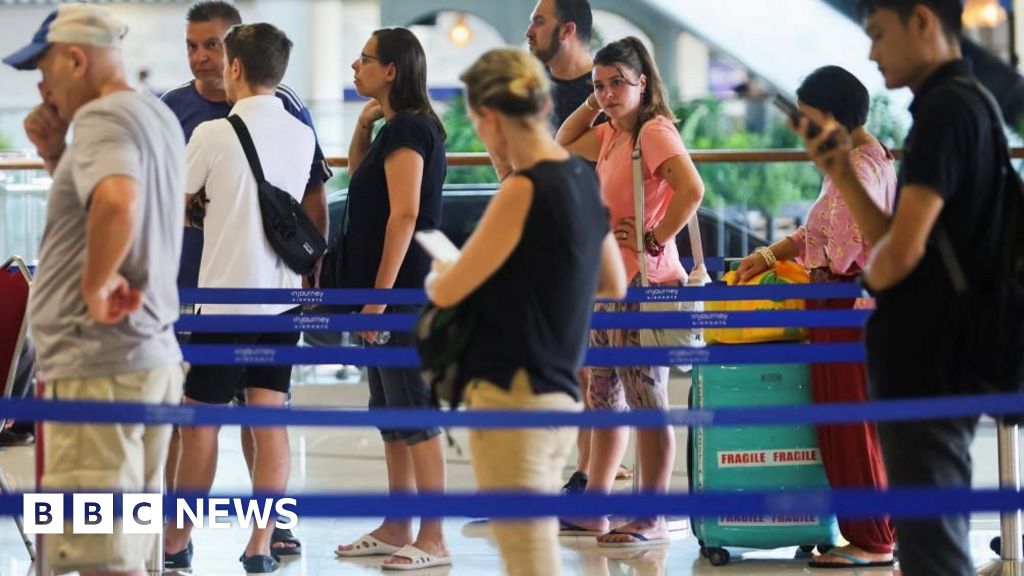
From the UK, flights have also been cancelled for many Middle East destinations, including all flights to Israel and Bahrain, three-quarters of the day’s scheduled flights to the United Arab Emirates, and more than two-thirds (69%) of flights to Qatar.
Business
IIP sees 4.8% YoY growth in January; manufacturing & electricity support rise – The Times of India

India’s Index of Industrial Production saw a 4.8% increase year-on-year in January 2026, according to the Ministry of Statistics & Programme Implementation. The rise in industrial output was largely driven by a 4.8 per cent expansion in manufacturing and a 5.1 per cent improvement in electricity generation. Mining activity also supported overall growth, registering a 4.3 per cent uptick during the month.Estimates placed IIP at 169.4 for January 2026, compared with 161.6 in January 2025. This follows a stronger reading in December 2025, when industrial production had grown by 7.8 per cent. For January 2026, the sector-specific indices stood at 157.2 for mining, 167.2 for manufacturing and 212.1 for electricity.Within manufacturing, 14 of the 23 industry groups at the NIC two-digit level posted year-on-year gains in January. The strongest contributors were manufacture of basic metals, which rose 13.2 per cent; manufacture of motor vehicles, trailers and semi-trailers, up 10.9 per cent; and manufacture of other non-metallic mineral products, which increased 9.9 per cent. Growth in basic metals was supported by items such as flat products of alloy steel, MS slabs, and hot-rolled coils and sheets of mild steel.The automobile category advanced on the back of higher output of auto components and spare parts, commercial vehicles, and bus and minibus bodies or chassis. In the non-metallic mineral products segment, cement of all types, cement clinkers and stone chips were key contributors.According to use-based classification, output of primary goods grew 3.1 per cent, capital goods rose 4.3 per cent and intermediate goods increased 6 per cent compared with January 2025. Infrastructure and construction goods recorded the sharpest rise at 13.7 per cent, while consumer durables expanded 6.3 per cent. In contrast, consumer non-durables declined by 2.7 per cent. The ministry identified infrastructure and construction goods, intermediate goods and primary goods as the leading drivers of growth under this classification.
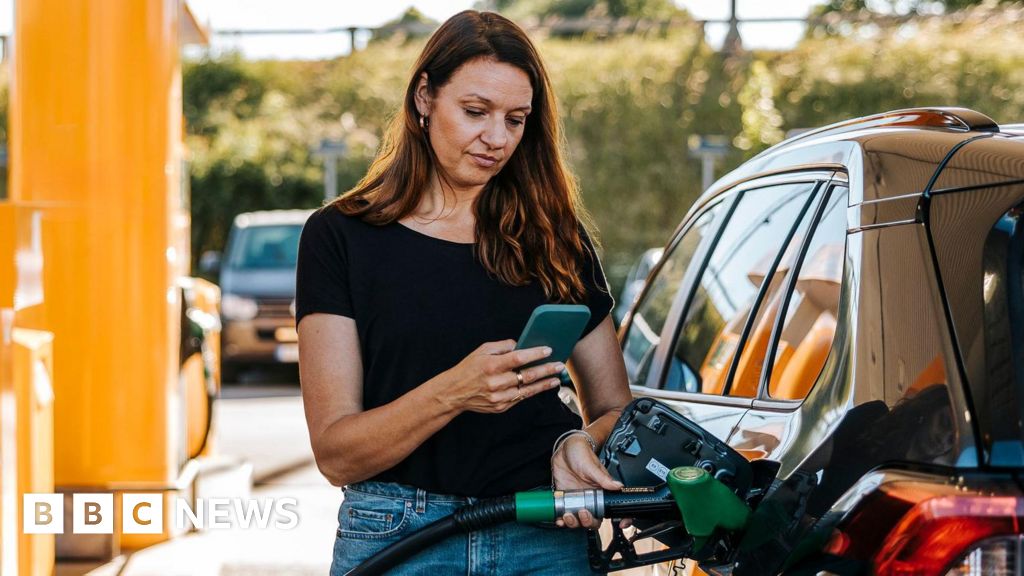
There might also be a more direct impact on food. “Some elements of crude oil are used in fertiliser, and so there could be a cost implication in terms of food prices,” Benjamin Goodwin, partner at banking advisory firm PRISM Strategic Intelligence told the BBC.


US’ Old Navy launches little navy, a new newborn essentials collection

Super-rich pay up to $350,000 for private jet evacuations as Middle East conflict escalates

5 key takeaways from Pete Hegseth’s Pentagon press conference on Iran-US war

-
 Politics1 week ago
Pakistan carries out precision strikes on seven militant hideouts in Afghanistan
-
 Tech1 week ago
These Cheap Noise-Cancelling Sony Headphones Are Even Cheaper Right Now
-

 Sports1 week ago
Kansas’ Darryn Peterson misses most of 2nd half with cramping
-
 Entertainment1 week ago
Viral monkey Punch makes IKEA toy global sensation: Here’s what it costs
-
Sports1 week ago
Mike Eruzione and the ‘Miracle on Ice’ team are looking for some company
-
 Business6 days ago
Households set for lower energy bills amid price cap shake-up
-

 Entertainment1 week ago
Talking minerals and megawatts
-
 Business6 days ago
Lucid widely misses earnings expectations, forecasts continued EV growth in 2026