

Business
State pension age starts rising to 67 – here’s how much you get and when


The age at which people can start receiving the state pension is going up in stages over the next two years.
Source link

The price of oil moved higher on Tuesday amid caution from investors ahead of Donald Trump’s deadline for Iran to agree to reopen the Strait of Hormuz.
The US president has threatened to launch a major attack on Iranian infrastructure if a ceasefire deal is not reached by 1am UK time on Wednesday.
Global financial markets were tentative ahead of the deadline as a result.
The price of Brent crude oil increased by around 1.5% to 111.4 US dollars a barrel in early trading.
It is around 53% higher than before the conflict started at the end of February, and has resulted in sharp increases in petrol and diesel costs as a result.
Traders are still hopeful a diplomatic breakthrough can be secured but have seen little headway from recent peace talks.
In London, the FTSE 100 opened a touch higher but quickly swung into the red. It was down 0.1% at 10,426.05 points shortly before 9am.
Elsewhere, the German Dax index was down 0.2% while the French Cac 40 was up 0.4% in early trading.
Richard Hunter, head of markets at Interactive Investor, said: “In the immediate term investors are facing a binary event – ceasefire or further escalation of the conflict.
“Asian markets provided little direction overnight, leading to a subdued UK mood although the main indices made cautious progress in opening exchanges.
“The FTSE 250 remains down by 3.4% so far this year, weighed down by a cocktail of domestic economic issues and the more general risk-off approach which has blighted other global markets.”
Business
Air India revises fuel surcharge amid energy crunch; here’s how much more you will pay – The Times of India
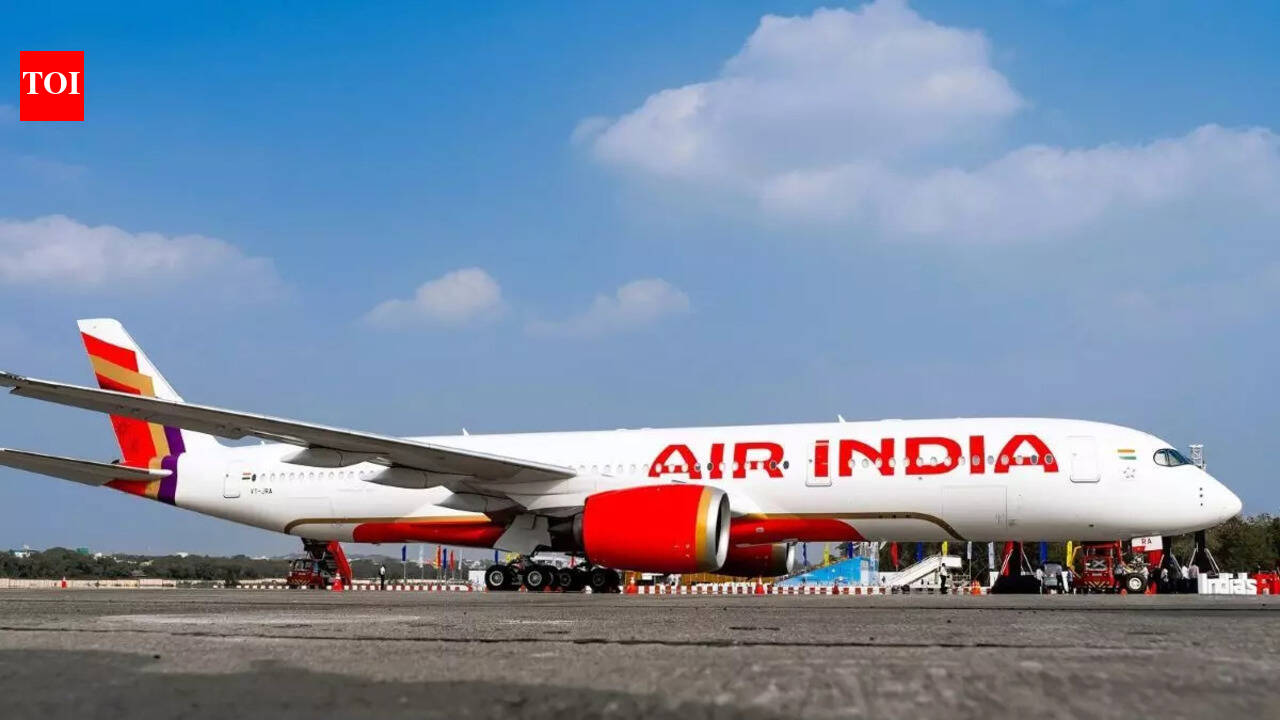
Aviation giant Air India group on Tuesday revised its fuel surcharge across domestic and international routes, as Middle East tensions continued to weigh oil supplies across the globe. The move follows the decision by the ministry of petroleum & natural gas and the ministry of civil aviation to cap the increase in domestic aviation turbine fuel (atf) prices at 25%. For domestic travel, the airline will replace its existing flat surcharge with a distance-linked structure. The revised domestic surcharge will come into effect from 0901 hrs IST on April 8, 2026, and will apply across the group, including Air India Express flights.As per the latest data released by the International Air Transport Association (IATA), the global average jet fuel price nearly doubled within a month, rising from $99.40 per barrel at the end of February to $195.19 for the week ending March 27, 2026.
Here’s how much more you will pay from Wednesday:
- Passengers flying up to 500 km will pay an additional Rs 299 per sector.
- Those travelling between 501 and 1,000 km will be charged Rs 399.
- Journeys of 1,001 to 1,500 km will attract Rs 549.
- For distances between 1,501 and 2,000 km, the surcharge will be Rs 749.
- The surcharge will further increase to Rs 899 for sectors beyond 2,000 km.
On the international front, the airline has introduced steeper revisions, citing the lack of similar price controls on ATF. Effective from 0901 hrs IST on April 8, 2026, passengers flying to SAARC destinations (excluding Bangladesh) will pay a surcharge of $24 per sector. Charges for the Middle East have been set at $50, while routes to China and Southeast Asia (excluding Singapore) will attract $100. The surcharge for Singapore stands at $60, and for Africa at $130.For flights to Europe, including the United Kingdom, the surcharge has been fixed at $205. Meanwhile, passengers travelling to North America and Australia will be charged $280 per sector, with these rates taking effect from 0001 hrs IST on April 10, 2026.
Why Air India introduced the surcharge?
The airline pointed out that the increase is not limited to crude oil prices alone. Refinery margins, referred to as ‘crack spread’, have also surged sharply, climbing from $27.83 per barrel for the week ending February 27 to $81.44 by March 27. This combination has intensified cost pressures for airlines worldwide. Air India stated that even after the revision, the updated international fuel surcharge does not fully offset the rise in fuel costs, and a substantial portion continues to be absorbed by the airline. The airline added that revisions for flights to and from Bangladesh, along with Far East destinations such as Japan, Hong Kong and South Korea, will be announced later, subject to regulatory approvals. Air India clarified that tickets issued before the revised timelines will not be subject to the new surcharge unless passengers make changes to their travel plans that require a recalculation of fares.
Business
Supreme Court: No personal oral hearing needed before labelling bank accounts as fraud: SC | India News – The Times of India
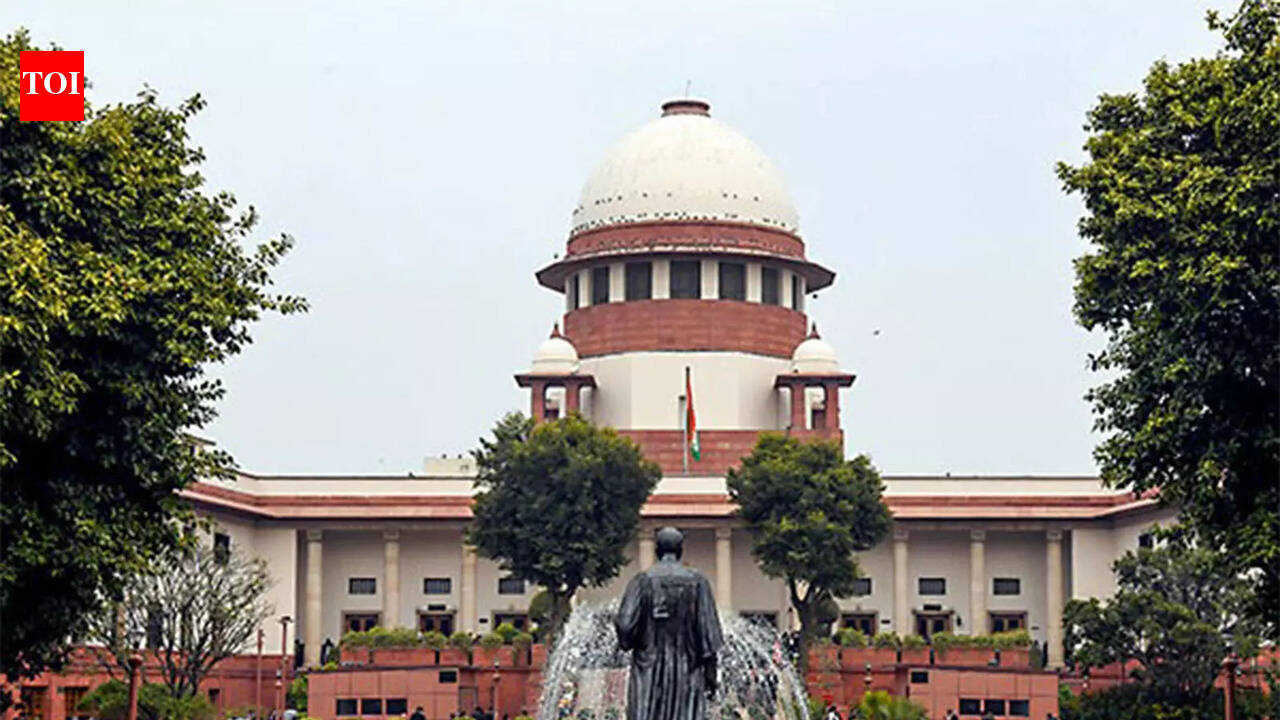
The Supreme Court, on Tuesday, issued a decision regarding the classification of bank accounts as fraud. The apex court ordered that banks are not obligated to grant customers a personal oral hearing before declaring their accounts as fraud. However, prior to labelling them, banks must provide customers with a forensic audit report.The ruling follows submissions made earlier this year by the Reserve Bank of India (RBI) and State Bank of India (SBI), which argued that conducting personal hearings in every case would not be feasible given the scale of fraud in the banking system.Earlier, appearing for SBI, solicitor general Tushar Mehta had told the court that the volume of fraud cases has risen sharply, making individual hearings difficult to implement. He said that introducing such a requirement could disrupt the process of identifying and declaring fraudulent accounts.
Poll
Do you agree with the Supreme Court ruling that banks are not obligated to grant personal oral hearings for fraud declarations?
The court was informed that around 60,000 instances of bank fraud were recorded over the past two financial years, involving Rs 48,244 crore. Breaking down the figures, Mehta said there were 36,060 cases in 2023–24 and 23,953 in 2024–25. The amount involved in 2024–25 stood at Rs 36,014 crore, reflecting a 194 per cent increase from Rs 12,230 crore in the previous year.A bench of Justices J B Pardiwala and K V Viswanathan had earlier questioned the absence of personal hearings, noting that such a step is generally linked to principles of natural justice. In response, Mehta maintained that banks do not offer personal hearings in these situations, as it may defeat the purpose of the classification process. He added that there could also be circumstances where providing such hearings is not possible.


Middle East tensions hit Dubai imports, drive up computer prices

BKMEA urges Bangladesh govt to change amended labour law
Oil prices nudge higher amid caution ahead of Trump’s Iran deadline

-
Uncategorized1 week ago
[CinePlex360] Please moderate: “Further tariff
-
Uncategorized5 days ago
[CinePlex360] Please moderate: “Trump signals p
-

 Tech4 days ago
Our Favorite iPad Is $50 Off
-

 Entertainment4 days ago
Joe Jonas shares candid glimpse into parenthood with Sophie Turner
-

 Fashion6 days ago
China’s Anta Sports posts record $11.62 bn revenue in 2025
-
 Business6 days ago
UPI transactions hit record Rs 29.53 lakh crore in March; volumes cross 22.6 billion – The Times of India
-

 Politics1 week ago
Trump considers asking Arab allies to help to pay for Iran war
-

 Sports1 week ago
Fakhar Zaman denies ball-tampering charge in PSL match | The Express Tribune