Connect with us

Business

Stock Market Ends Week On Positive Note, Clock 8 Consecutive Session Gains Despite Uncertainties

Published

on

Stock Market Ends Week On Positive Note, Clock 8 Consecutive Session Gains Despite Uncertainties
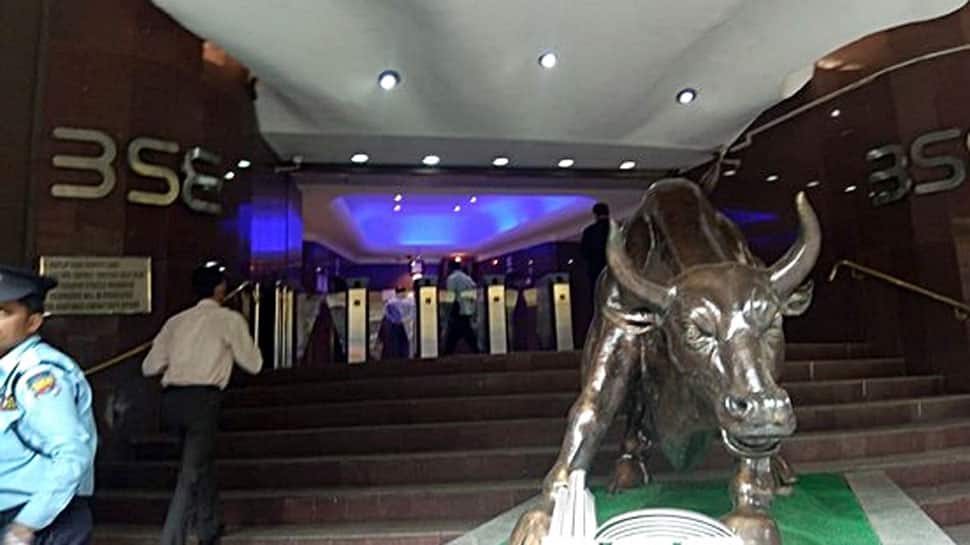

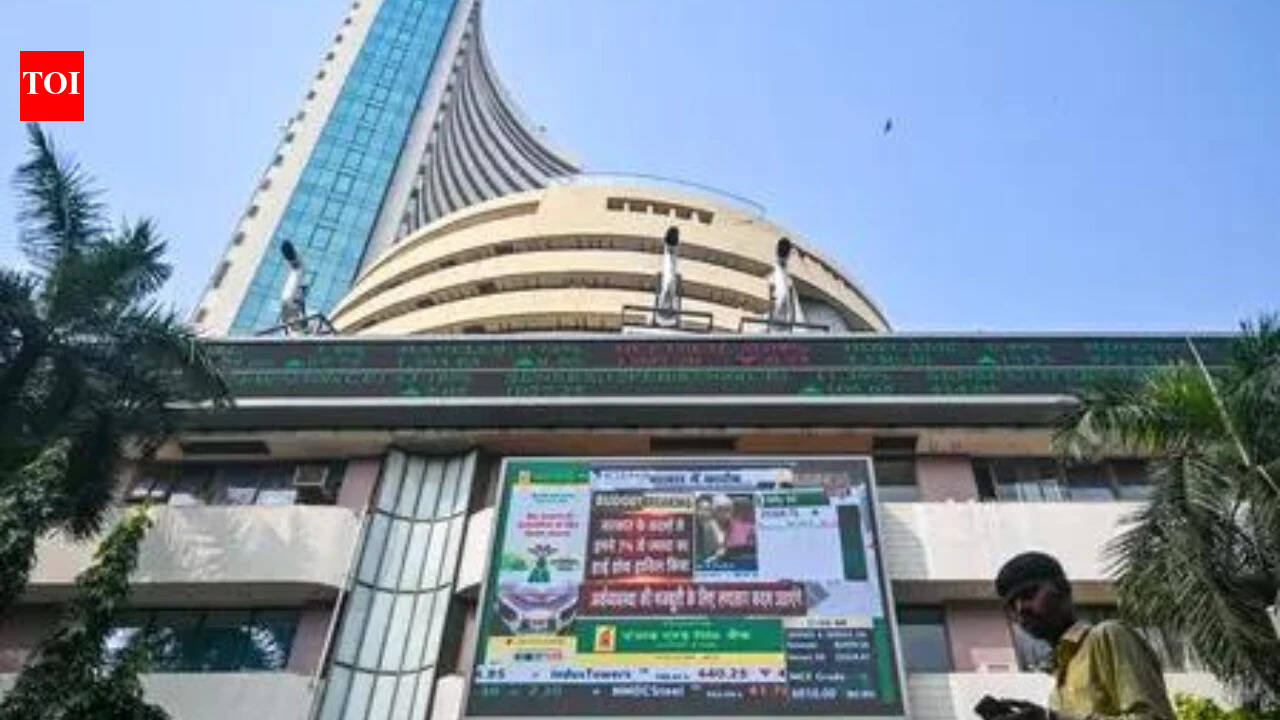
Mumbai: The Indian equity indices ended the week on a positive note on Friday, maintaining the winning streak for the eight consecutive trading sessions despite geo-political uncertainties. 

Optimism over a potential rate cut by the US Fed, positive developments in India-US trade talks and buying in defence stocks fueled the market sentiment.

Sensex settled the session at 81,904.70, up 355.97 points or 0.44 per cent. The 30-share index started trading with a decent gap-up at 81,758.95 against last day’s closing of 81,548.73. The index extended the momentum further amid positive global cues to hit an intraday high at 81,992.85.

Add Zee News as a Preferred Source


(Also Read: 8th Pay Commission 14-Point Update)

Nifty closed at 25,114.0, up 108.50 points or 0.43 per cent.

The national market closed at a three-week high, supported by renewed global optimism over a potential Fed rate cut. Sentiments improved further on reports that the EU may reject U.S. tariff proposals on India for buying Russian oil, analysts said.

(Also Read: GST Rules On Old Unsold Packs Of Products)

Progress in the US-India trade talks is also expected to keep the positive momentum intact in the near term. The defence sector outperformed, aided by the Indian procurement authorities beginning negotiations for six next-generation conventional submarines, analysts added.

BEL, Bajaj Finance, Bajaj FinServ, Axis Bank, Maruti, Tata Motors, ICICI Bank, L&T, Infosys, and PowerGrid were the top gainers from the Sensex basket. Eternal, Hindustan Unilever, Trent, Asian Paint, Bharati Airtel and ITC settled lower.

The majority of sectoral indices settled higher. Nifty Fin Services jumped 184 points or 0.70 per cent, Nifty Bank escalated 139 points or 0.26 per cent, Nifty Auto increased 122 points or 0.46 per cent, and Nifty IT settled the session 107 points or 0.3 per cent. Nifty FMCG fell.

Broader indices followed suit as well. Nifty Smallcap 100 moved 114 points or 0.64 per cent, Nifty Midcap 100 jumped 183 points or 0.32 per cent, and Nifty 100 closed 106 points or 0.41 per cent.

Rupee traded positively with gains of 0.18 per cent at 88.27 as mixed FII inflows supported sentiment.

“The dollar index remained weak below 98, providing additional strength to the rupee, while ongoing trade deal talks with the US also added optimism. Weakness in crude prices offered further minor support,” said Jateen Trivedi f LKP Securities.

Overall, the rupee looks set to gain some lost ground with scope to test 87.75 in the coming days, while 88.50 is seen as a reversal resistance zone, he added.




Source link

Business

Asda boss rejects profiteering claims as petrol price tops 150p

Published

on

Asda boss rejects profiteering claims as petrol price tops 150p


Motorists are facing higher fuel prices ahead of Easter break due to the conflict in the Middle East, the RAC says.


Source link

Continue Reading

Business

E-cheques coming soon? RBI unveils Payments Vision 2028, plans wider oversight of digital players – The Times of India

Published

on

E-cheques coming soon? RBI unveils Payments Vision 2028, plans wider oversight of digital players – The Times of India


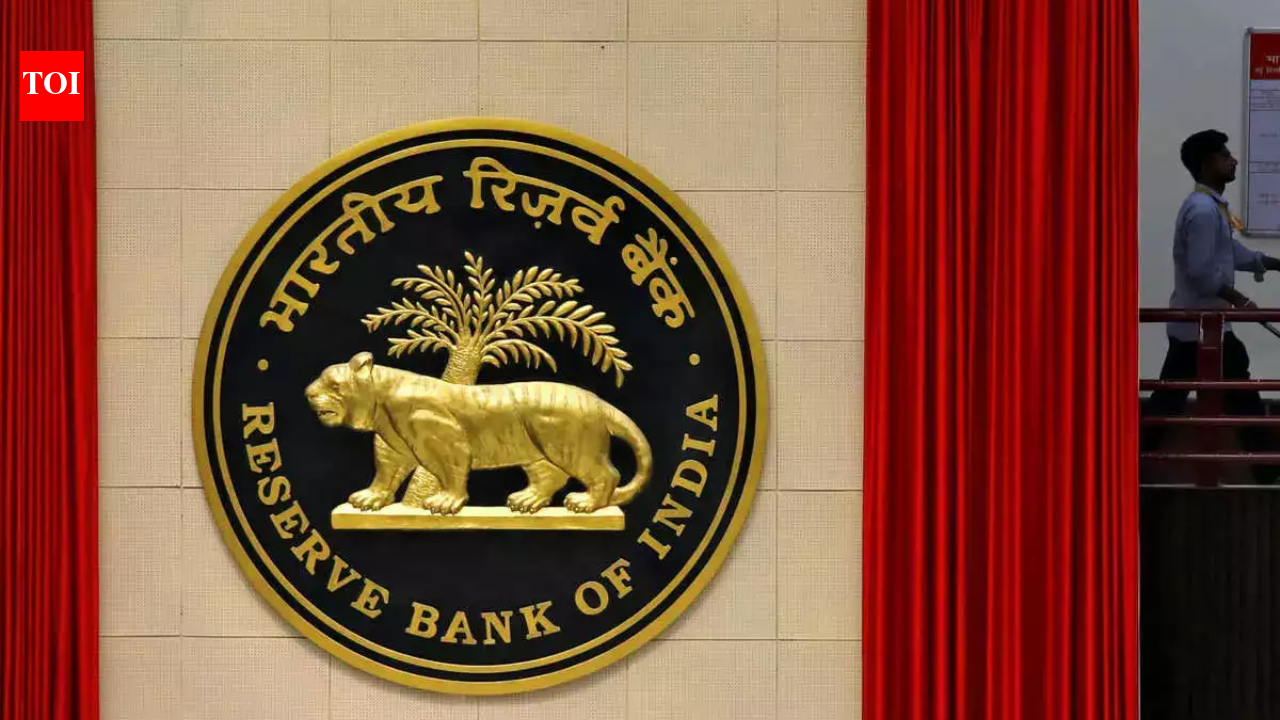
The Reserve Bank of India (RBI) on Friday unveiled its ‘Payments Vision 2028’ document, outlining a roadmap that includes exploring electronic cheques, expanding regulatory oversight to digital platforms, and strengthening safeguards in the fast-growing payments ecosystem, PTI reported.The central bank said it will examine the introduction of e-cheques to combine the advantages of paper instruments with the speed and reliability of digital payments. “To leverage the unique benefits of paper-based instruments and the speed and reliability of electronic payments, and cater to new business use cases, the introduction of electronic cheques in India shall be explored,” the RBI said.Alongside, the RBI is considering widening the regulatory ambit to include entities such as e-commerce marketplaces and centralised platforms that play a growing role in facilitating digital transactions.“In addition, e-commerce marketplaces and centralized platforms have been assuming significant responsibilities that could have implications on the orderly functioning of the payments ecosystem. These aspects shall be examined in detail and, if required, the scope of direct regulations shall be extended to cover such entities,” the document said.The vision document also proposes allowing users to enable or disable transactions across digital payment modes, similar to controls available for card transactions.To address fraud risks, the RBI is exploring a “shared responsibility framework” under which both the issuing bank and the beneficiary bank would share liability in cases of unauthorised digital transactions.The central bank also plans to review cheque design and security features, introduce a Domestic Legal Entity Identifier (DLEI) framework for better transaction traceability, and bring in a Cyber Key Risk Indicators (KRI) framework for non-bank payment system operators.Other initiatives include exploring white-label solutions in the Aadhaar Enabled Payment System (AePS), developing interoperability in the Trade Receivables e-Discounting System (TReDS), and introducing a ‘Payments Switching Service’ to ease customer migration across platforms.The RBI said it will also review the cross-border payments ecosystem to improve efficiency and streamline authorisation processes, alongside publishing periodic reports on global and domestic payment trends.Additionally, the central bank aims to enhance access to payment data and reimagine the card payments ecosystem by promoting secure tokenisation, improved transparency in pricing, and greater choice for users and merchants.


Source link

Continue Reading

Business

FTSE 100 ends down as oil rises while Iran war remains in deadlock

Published

on

FTSE 100 ends down as oil rises while Iran war remains in deadlock


Blue chips in London outperformed European and US peers on Friday, but closed marginally lower, as oil prices rose once more amid few signs of progress in ending the Iran war.

“The simple fact is that sentiment is likely to stay negative for as long as the Strait of Hormuz remains unsafe for shipping and controlled by Iran,” commented David Morrison, senior market analyst at Trade Nation.

The FTSE 100 closed down just 4.82 points at 9,967.35. The FTSE 250 ended down 331.32 points, 1.6%, at 20,964.75, and the AIM All-Share closed down 13.43 points, 1.9%, at 705.63.

For the week, the FTSE 100 rose 0.5%, the FTSE 250 fell 1.8% and the AIM All-Share Index fell 1.7%.

On Thursday, US President Donald Trump issued a 10-day extension on his deadline for Tehran to open the Strait of Hormuz or face the destruction of its energy assets.

But with Iran maintaining a hold on the Straits, Mr Trump’s announcement largely failed to lift the mood for markets.

“Traders are now discounting the daily torrent of posts and incoherent press conferences from the White House, as the war rages on,” said Kathleen Brooks, research director at XTB.

“Investors are facing the facts: the Strait of Hormuz is effectively closed and it does not appear that there is a real end in sight to the war.”

Mr Trump has insisted Iran wanted “to make a deal” to end the war engulfing the region, but the Iranian side has indicated no let-up in reprisal attacks against Israel and targets across the Gulf.

Kuwait said on Friday its main commercial port was damaged in a drone attack.

Iran’s Tasnim news agency said the country has responded to Washington’s 15-point plan to end the war and was awaiting a reply.

Reports also suggested the US is weighing up sending up to 10,000 additional troops to the Middle East, fuelling speculation that Washington may be preparing for a potential ground operation in Iran.

The Wall Street Journal reported that the move would provide Mr Trump with “more military options”.

Amid the impasse, the oil price’s upward trajectory resumed.

Brent oil was higher at 111.63 US dollars a barrel on Friday afternoon, from 108.80 dollars late on Thursday.

In European equities on Friday, the CAC 40 in Paris closed down 0.9%, while the DAX 40 in Frankfurt ended 1.4% lower.

“Trump’s 10-day Taco (Trump always chickens out) has had a less profound impact compared with Monday’s five-day reprieve, with equities losing ground in Europe despite the president’s decision to once again postpone strikes on key energy infrastructure. Instead, there is a real concern that we could see escalation through the use of boots on the ground,” said Joshua Mahony at Scope Markets.

Stocks in New York were lower. The Dow Jones Industrial Average was down 1.1%, the S&P 500 index was 1.0% lower, and the Nasdaq Composite fell 1.4%.

The yield on the US 10-year Treasury widened to 4.42% on Friday from 4.40% on Thursday. The yield on the US 30-year Treasury stretched to 4.95% from 4.94%.

The pound fell to 1.3288 US dollars on Friday afternoon from 1.3338 dollars at the equities close on Thursday. Against the euro, sterling fell to 1.1554 euros from 1.1563 euros a day prior.

The euro stood lower against the greenback at 1.1521 dollars from 1.1534 dollars. Against the Japanese yen, the dollar was trading higher at 160.10 yen compared to 159.65 yen.

Supporting the FTSE 100, AstraZeneca rose 3.4% after reporting positive phase three results for its chronic obstructive pulmonary disease treatment, tozorakimab.

The company said the drug delivered “significant and highly clinically meaningful” reductions in exacerbations in two replicate trials, Oberon and Titania.

The Bank of America said the data was a “pleasant surprise” after failed trials at Roche and Sanofi for similar drugs.

Cambridge-based AstraZeneca is the FTSE 100’s most valuable company, worth about £223 billion.

The firm sees peak sales for tozorakimab of 3-5 billion dollars, while the current Visible Alpha consensus is 1.2 billion dollars.

3i rallied by 1.0%, after slumping 18% on Thursday amid disappointing like-for-like growth at its main investment, Dutch discount retailer Action.

JPMorgan said lower guidance for flat margins and lower like-for-like sales at Action “than we were expecting, was disappointing.”

Nonetheless, JPM said Action remains a “leading compound growth story” and “3i now offers a cheap way in”.

Elsewhere, the rising gold price boosted Fresnillo and Endeavour Mining, up 0.6% and 1.9% respectively.

Gold rose to 4,517.90 dollars an ounce on Friday from 4,383.70 dollars at the same time on Thursday.

NatWest rose 0.9% as Deutsche Bank raised its share price target to 840p from 730p.

“NatWest has unfairly derated in our view,” analyst Robert Noble said.

In the debit column, Metlen Energy was the biggest faller, down 8.6%.

The Athens-based energy and metallurgy company said auditors PricewaterhouseCoopers have requested more time to complete work on its 2025 financial statements, its first as a dual-listed company in London and Athens.

The group now expects to release results on April 9, a nine-day delay, and reiterated guidance for earnings before interest, tax, depreciation and amortisation of around £750 million.

Housebuilders were once more under pressure. The Bank of America cut price targets by 20% across the sector and lowered pre-tax profit forecasts by 7% through 2026 to 2028, with sector earnings per share expectations now 6% below consensus.

Barratt Redrow fell 4.7%, Persimmon 3.9% and Taylor Wimpey 1.7%.

The biggest risers on the FTSE 100 were: AstraZeneca, up 472.0p at 14,302.0p; Endeavour Mining, up 80.0p at 4,262.0p; Rio Tinto, up 115.0p at 6,545.0p; Reckitt Benckiser, up 90.0p at 5,164.0p; and Glencore, up 6.4p at 538.4p.

The biggest fallers on the FTSE 100 were: Metlen Energy & Metals, down 3.0p at 31.75p; Barratt Redrow, down 12.6p at 255.7p; Babcock International, down 57.0p at 1,155.0p; Persimmon, down 43.0p at 1,075.0p; and Autotrader, down 17.5p at 447.3p.

Monday’s global economic calendar has UK mortgage approvals data at 7am BST. German and Italian inflation figures are also due, along with the Dallas Fed manufacturing index in the US.

Monday’s local corporate calendar has full-year results from Artisanal Spirits, Aoti and RTW Biotech.

In Europe, daylight saving time starts on Sunday, and clocks go forward by one hour.

Contributed by Alliance News


Source link

Continue Reading

Trending