

Business
Stock market: PSX closes flat amid profit-taking, ADB’s cautious outlook | The Express Tribune

PAKISTAN:
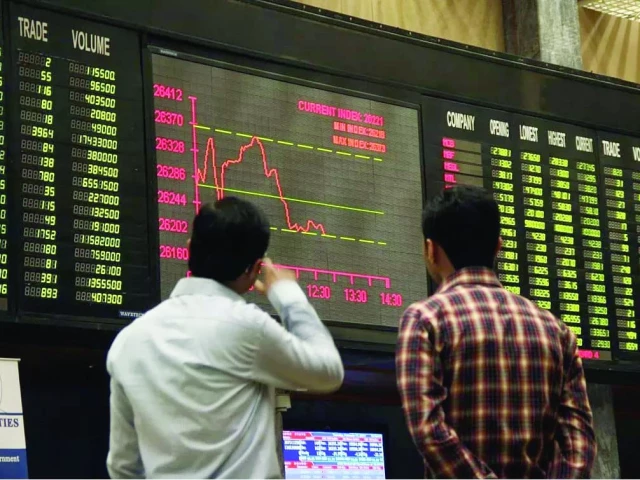
It was a choppy day at the Pakistan Stock Exchange (PSX) on Wednesday, as the benchmark KSE-100 Index moved in both directions before ending the session almost flat.
The market opened on a strong note, touching an intra-day high of 166,522.61 points. However, confidence remained shaky and gains were short-lived following news circulating that the Asian Development Bank (ADB) kept Pakistan’s growth forecast unchanged at 3% and flagged delays in reforms, while fresh disclosures to the IMF about a $1 billion hit to exports from floods added to concerns.
Read: In stellar run, PSX climbs to new high
Despite the government projecting a lower current account deficit and banking on higher remittances, both lenders’ cautious tone was enough to dampen market enthusiasm. As a result, investors opted for profit-taking, dragging the index to a low of 164,155.32.
Despite the volatility, the bourse managed to recover some ground by the close, finishing at 165,640.34, in a flat state with a slight gain of just 0.09%, or 146.75 points.
KTrade Securities noted that the KSE-100 index closed at 165,640.34, gaining 146.75 points (+0.09%). Momentum came from banking, fertiliser, and energy names, while some pressure remained in other key sectors.
Read More: KSE-100 hits record as investors respond to IMF optimism
Overall, trading volume increased to 1.63 billion shares compared with Tuesday’s tally of 1.34 billion. Values of shares dropped to Rs69.6 billion from Tuesday’s figure of Rs76.7 billion.
Shares of 486 companies were traded. Of these, 173 closed higher, 287 dropped and 26 remained unchanged. K-Electric was the volume winner with trading in 299.7 million shares, gaining Rs0.39 to close at Rs7.34.
Early optimism in the session was fuelled by positive sentiment across select blue-chip stocks, but with the index hovering near record levels, many investors chose to book profits. This selling pressure outweighed fresh buying in the latter half, keeping the overall momentum in check.
Market direction unclear
The sideways close reflects growing investor caution amid uncertainty about interest rate policy, upcoming corporate earnings, and macroeconomic indicators. While underlying sentiment remains cautiously optimistic, further consolidation may be on the cards unless a fresh trigger emerges.
Volumes remained decent, but the indecisive trend suggests participants are waiting for clearer signals before making aggressive moves.




At a meeting of the local authority’s executive on Tuesday, MacBeath said the scheme aimed to move beyond emergency aid by helping families become more financially “resilient”, offering advice on managing money, accessing benefits, reducing debt and finding work.
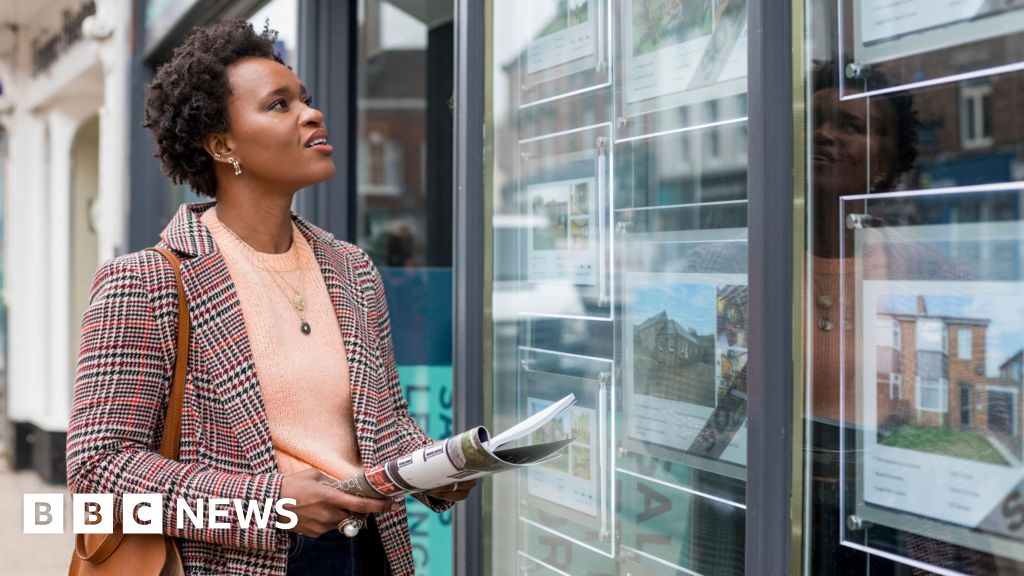
People with lower incomes benefitted less from the house-buying scheme than those with high incomes, the influential think tank says.
Source link

Lucid electric vehicles are seen at the New York International Auto Show on April 2, 2026.
Danielle DeVries | CNBC
Lucid Group has named the former chairman and CEO of Schindler Group, an industrial manufacturer of escalators and elevators, as its new chief executive.
Silvio Napoli, who spent nearly 31 years at Schindler, is set to become the all-electric vehicle maker’s second CEO following the abrupt departure of Lucid founder Peter Rawlinson in February 2025.
Interim CEO Marc Winterhoff will remain with the company as its chief operating officer once Napoli takes the reins, according to Lucid. A company spokesman said Napoli is expected to begin as CEO in the coming weeks, pending completion of his relocation from Switzerland and U.S. visa process.
Shares of Lucid fell roughly 5% in midday trading, as the company also announced expanded investments Tuesday of $750 million from an affiliate of Saudi Arabia’s Public Investment Fund — its largest shareholder — and Uber Technologies.
The latter is an expansion of a previously announced tie-up with Uber that includes the ride-hailing company investing another $200 million in Lucid. Uber has also agreed to purchase at least 35,000 Lucid vehicles designed exclusively for use as part of Uber’s future global robotaxi service. That’s up from $300 million and 20,00 vehicles announced in July.
The PIF-backed investment is $550 million, according to Lucid.
Napoli, who also serves on the board of American-Irish multinational power management company Eaton Corp., has not previously led an auto company before, while Rawlinson and Winterhoff are automotive veterans.
The company said Napoli’s “deep operational expertise, financial discipline and track record of leadership in innovation” would position Lucid for its future growth plans, including upcoming midsize EVs and new autonomy initiatives.
“His expertise in capital allocation, operational efficiency and translating advanced technology into consistent high-quality performance over time will be critical as Lucid continues to scale and execute its strategy,” Lucid Chairman Turqi Alnowaiser said in a statement.

Crisis grants launched for struggling Bradford families

Germany unveils $1.9-bn fuel price relief package amid energy shock

PSX rallies sharply, gains over 4,000 points on Iran-US talks optimism

-

 Fashion1 week ago
India’s exports face reset as EU links trade to carbon metrics: EY
-

 Entertainment7 days ago
Queen Elizabeth II emotional message for Archie, Lilibet sparks speculation
-

 Tech6 days ago
As the Strait of Hormuz Reopens, Global Shipping Will Take Months to Recover
-

 Entertainment1 week ago
Lamar Odom shocking response to Khloé Kardashian account of his overdose
-

 Tech7 days ago
Azure customers up in arms over ‘full’ UK South region | Computer Weekly
-

 Fashion7 days ago
CII submits 20-pt agenda to Indian govt to back firms hit by Iran war
-

 Tech6 days ago
This AI Button Wearable From Ex-Apple Engineers Looks Like an iPod Shuffle
-

 Tech1 week ago
A Single Strike Won’t Shut Off the Gulf’s Desalination System