

Business
Stocks slide and pound dives as bond yields spike

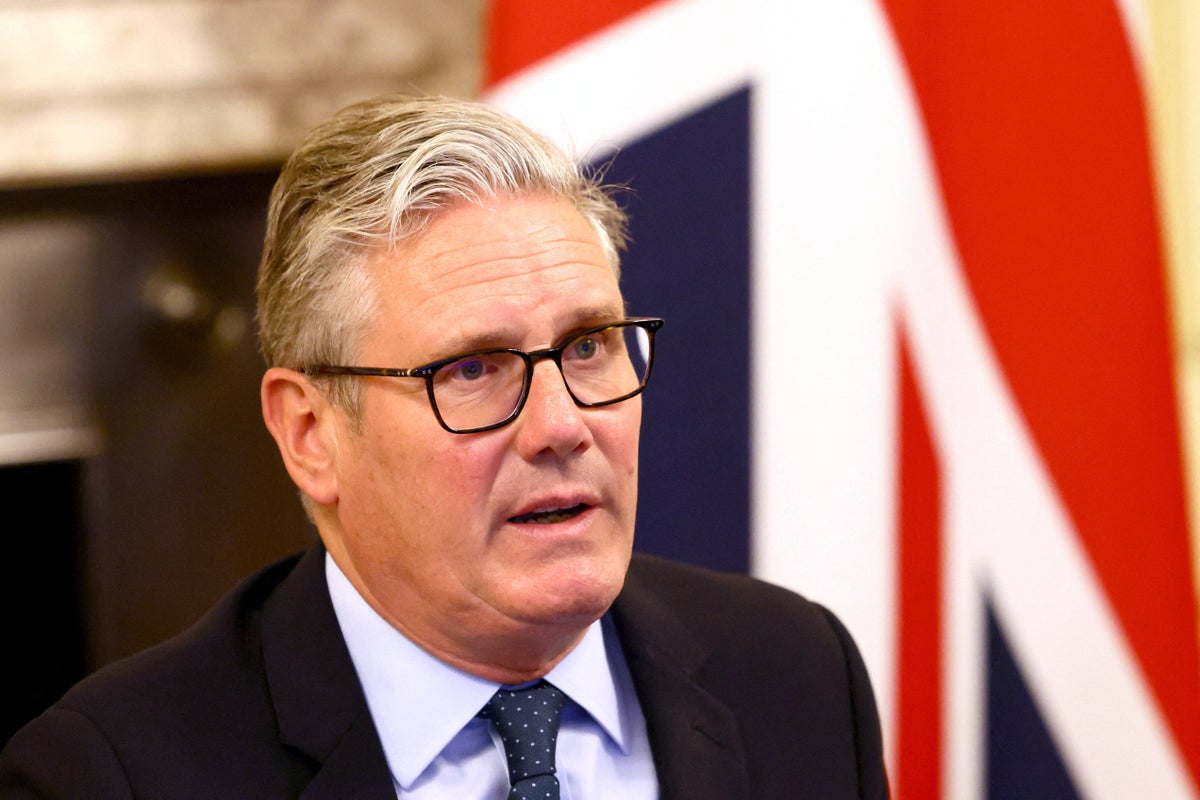
Stocks in London fell sharply on Tuesday and the pound sank, unnerved by a renewed spike in bond yields.
“Warning lights are flashing about increasingly tricky economic conditions and geopolitical risk,” said Susannah Streeter, head of money and markets at Hargreaves Lansdown.
“As concerns collide about the global outlook, inflationary pressures and worrisome public finances, the FTSE 100 remains on the back foot, with other European indices also largely in the red.”
The FTSE 100 index closed down 79.65 points, or 0.9%, at 9,116.69. The FTSE 250 ended 470.80 points lower, or 2.2%, at 21,162.89 and the AIM All-Share finished down 3.07 points, or 0.4%, at 765.57.
In Europe, the Cac 40 in Paris ended down 0.7%, while the Dax 40 in Frankfurt closed 2.3% lower.
“Investors are finding little reason to chase stocks higher when bond markets continue to promote the need for caution,” said Rostro analyst Joshua Mahony.
The yield on UK 30-year government bonds – also known as gilts – jumped to the highest level since 1998, at 5.71% on Tuesday, up seven points from Monday, while the yield on the 10-year bond stretched to 4.81%, up six points.
Gilt yields move counter to the value of the bonds, meaning their prices fall when yields rise.
Bond yields also soared across Europe. In Germany, the 10-year bond climbed four points to 2.79%, while in France, the 10-year bond yield widened to 3.59%, up five points. The yield on 30-year government bonds hit 4.50% in France, a 14-year high. In Italy, the 10-year bond yield increased seven points to 3.71%.
The latest gains came amid political instability in France and concerns over rising government debt across Europe.
Kathleen Brooks at XTB Research said a driver of weakness in the UK bond market could be a delayed reaction to the Government reshuffle on Monday.
“The Prime Minister beefed up his economic team in the lead-up to the budget. This has not gone down too well, with concerns that there is still a strategy void when it comes to the economy, as the Government struggles to deliver the growth that it promised,” she said.
The shake-up saw the chancellor’s deputy Darren Jones move into a new role as Chief Secretary to the Prime Minister.
Sir Keir Starmer also brought in Minouche Shafik, a former Bank of England deputy governor, as his chief economic adviser.
Treasury minister James Murray replaced Mr Jones as Treasury chief secretary, while Chipping Barnet MP Dan Tomlinson replaced Mr Murray as Treasury exchequer secretary.
Simon French, head of economics at Panmure Liberum, said Mr Jones and Ms Shafik were a “sensible” duo of appointments and “long overdue” given the lack of economic expertise in the Prime Minister’s team.
But he noted gilts were sold off partly because Mr Murray and Mr Tomlinson “are seen as more left wing than Darren.”
Ms Brooks said the UK was not an “outlier” as European bond yields were also moving higher.
“A rise in UK yields always garner more attention, because our yields are at a higher level to begin with. However, if UK yields continue to rise, and if they start to rise at a faster rate than elsewhere, then it could be a sign the market is pricing in a growing probability that Rachel Reeves will throw away her fiscal rules and borrow more at the budget to fund spending, rather than increase taxes and stymie growth.”
Deutsche Bank thinks the autumn budget will be a “defining moment” for the UK as the Chancellor looks to fill a fiscal hole worth around £20 billion to £25 billion.
“How the Chancellor decides to fill the fiscal hole will be important,” Deutsche said.
“While we expect fiscal headroom to be restored, we expect the Chancellor to adopt a slightly looser fiscal policy path in the near term, compared to March, with a good chunk of fiscal consolidation likely to be backloaded,” the bank said.
The pound dropped to 1.3389 dollars late on Tuesday afternoon in London, compared with 1.3548 at the equities close on Monday. The euro fell to 1.1659 dollars, against 1.1705 dollars. Against the yen, the dollar was trading higher at 148.20 compared with 147.27.
On the FTSE 100, insurer Legal & General fell 4.5%, while wealth management firms Phoenix Group and St James’s Place declined 4.2% and 3.6% respectively.
Rate sensitive housebuilders Persimmon and Taylor Wimpey fell 3.4% and 3.2%, with the latter not helped by a rating downgrade by Bank of America to “neutral” from “buy”.
Retailer Marks & Spencer tumbled 4.0% on fears consumer spending could stall amid slowing economic growth, and as house broker Shore Capital lowered earnings forecasts.
Electricity generator SSE fell 3.7%, which JPMorgan attributed to “rising UK bond yields and concerns around the company’s balance sheet”. However, JPM sees the weakness as a “buying opportunity”.
On the FTSE 250, Ithaca Energy tumbled 13% as its two leading shareholders sold a 3% stake.
Peel Hunt confirmed DKL Energy, a wholly owned subsidiary of Delek Group, and Eni UK, an indirect wholly owned subsidiary of Eni, offloaded 49.6 million shares. They were placed by Peel Hunt with institutional investors at a price of 213.75p per share for a value of £106.0 million.
Gold hit another record high, climbing to 3,511.91 dollars an ounce on Tuesday against 3,476.94 on Monday.
UBS said elevated political and geopolitical risks underline the appeal of gold, which tends to benefit from uncertainty.
“Gold’s status as a durable long-term portfolio diversifier is strengthening amid higher government debts, persistent inflation, geopolitical risks, and the desire of ex-G10 central banks to raise their longer-term holdings as a percentage of total reserves,” the Swiss bank said.
A barrel of Brent traded at 68.81 dollars late on Tuesday afternoon, up from 68.63 on Monday.
The biggest risers on the FTSE 100 were Fresnillo, up 94.0p at 1,919.0p, Endeavour Mining, up 40.0p at 2,664.0p, Unilever, up 64.0p at 4,728.0p, BP, up 3.1p at 434.2p and Haleon, up 2.5p at 363.2p.
The biggest fallers were Whitbread, down 142.0p at 2,983.0p, Legal & General, down 11.0p at 236.1p, Unite Group, down 30.5p at 674.5p, Phoenix Group, down 28.5p at 653.0p and Land Securities, down 23.0p at 529.0p.
Contributed by Alliance News

New flights to the UK from the Middle East follow days of widespread air travel disruption which had left Britons stranded.
Source link
Business
‘Indians been good actors’: Why US ‘agreed to let’ India resume buying Russian oil temporarily – The Times of India

The United States has given “permission” to India to buy Russian oil already stranded at sea issuing a temporary waiver aimed at stabilising global oil supplies amid disruptions caused by the escalating conflict in West Asia.US President Donald Trump’s aide Scott Bessent referred to India as a “very good actor” for previously complying with Washington’s request to halt purchases of sanctioned Russian oil and said the temporary measure would help ease supply pressures in the global market.
The move comes a day after Washington issued a 30-day waiver permitting the sale of Russian crude currently stranded at sea to continue to India.
US cites temporary supply concerns
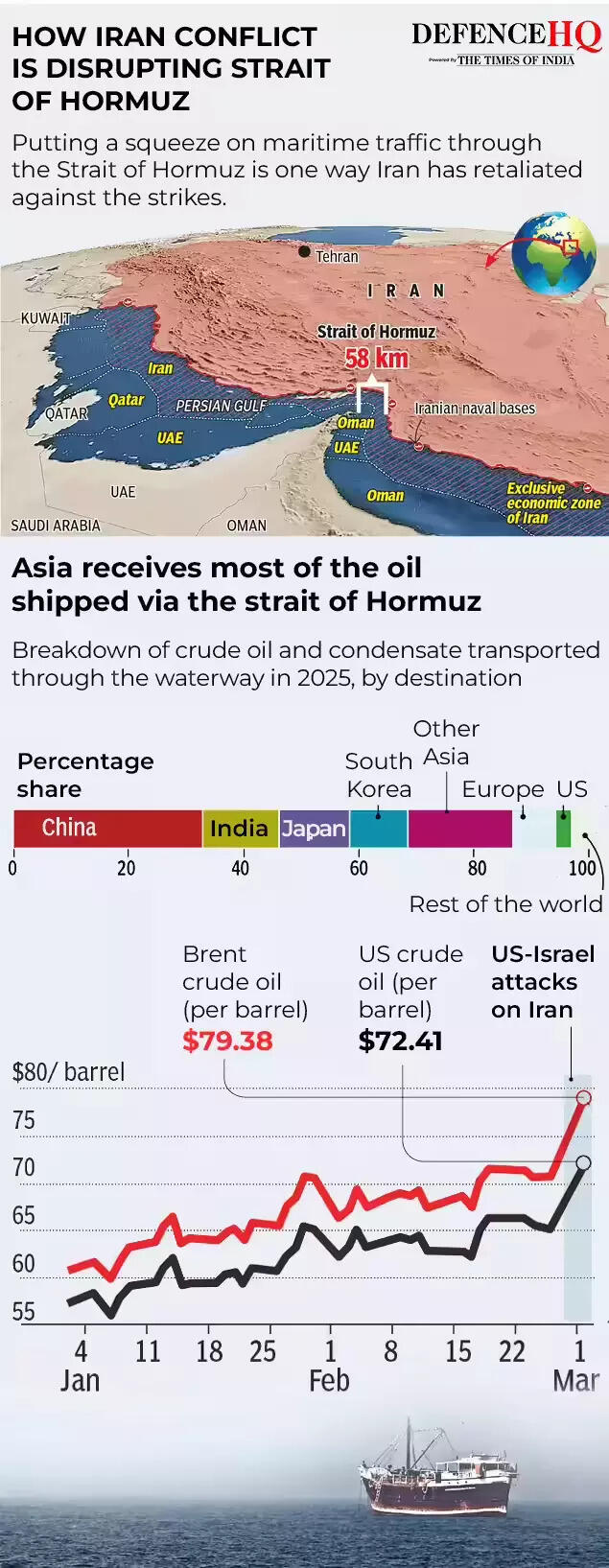
Speaking to Fox Business, US treasury secretary Bessent said the decision was intended to ease short-term supply constraints during the ongoing crisis.“The world is very well supplied in oil. The Treasury (Department) agreed to let our allies in India start buying Russian oil that was already on the water,” Bessent said.“The Indians had been very good actors. We had asked them to stop buying sanctioned Russian oil this fall. They did. They were going to substitute it with US oil,” he said.“But to ease the temporary gap of oil around the world, we have given them permission to accept the Russian oil. We may unsanction other Russian oil,” he added.Bessent also noted that a large volume of sanctioned crude remains stranded at sea stating that, “There are hundreds of millions of sanctioned barrels of sanctioned crude on the water,” he said, adding that “by unsanctioning them, Treasury can create supply.”“And we are looking at that. We are going to keep a cadence of announcing measures to bring relief to the market during this conflict,” he added.
‘Short term measures to help keep oil prices down’
Other officials in the Trump administration have also confirmed that Washington has “permitted” India to buy Russian crude that is already loaded on ships.Earlier, US energy secretary Chris Wright said the step was intended to quickly move existing oil supplies into the market.“We have implemented short term measures to help keep oil prices down. We are allowing our friends in India to take oil that is already on ships, refine it, and move those barrels into the market quickly. A practical way to get supply flowing and ease pressure,” Wright said in a post on X.In an interview with ABC News Live, Wright emphasised that the measure was temporary.“But as oil gets bid up a little bit because of those constraints coming out of the Strait of Hormuz, we’re taking a short-term action to say all this floating Russian oil storage that’s around Southern Asia, it’s China just backed up, China does not treat their suppliers well, so there’s a bunch of floating barrels just sitting there,” he said.“We’ve reached out to our friends in India and said, ‘Buy that oil. Bring it into your refineries’. That pulls stored oil immediately into Indian refineries and releases the pressure on other refineries around the world to buy oil that they’re no longer competing with the Indians for in that marketplace,” Wright added.“So we have a number of measures like that that are short-term and temporary. This is no change in policy towards Russia. This is a very brief change in policy just to keep oil prices down a little bit better than we could otherwise,” he further noted.
Waiver amid Strait of Hormuz tensions
The US Treasury earlier issued an order granting a 30-day licence allowing delivery and sale of Russian crude and petroleum products to India. The decision comes as shipping routes through the strategically important Strait of Hormuz face disruptions due to the ongoing conflict in the region.“President Trump’s energy agenda has resulted in oil and gas production reaching the highest levels ever recorded. To enable oil to keep flowing into the global market, the Treasury Department is issuing a temporary 30-day waiver to allow Indian refiners to purchase Russian oil,” Bessent said earlier.He stressed that the step was a limited measure and would not significantly benefit Moscow.“This deliberately short-term measure will not provide significant financial benefit to the Russian government, as it only authorises transactions involving oil already stranded at sea,” he said.“India is an essential partner of the United States, and we fully anticipate that New Delhi will ramp up purchases of US oil. This stop-gap measure will alleviate pressure caused by Iran’s attempt to take global energy hostage,” he added.
India’s oil supply position
The move comes months after the Trump administration imposed 25% punitive tariffs on India over its purchases of Russian oil, arguing that such imports were helping finance Moscow’s war against Ukraine.However, the tariffs were later lifted after the two countries agreed on a framework for an interim trade agreement and India committed to reducing imports from Russia while increasing purchases of American energy.India currently imports nearly 5.5–5.6 million barrels of crude oil per day, accounting for about 90% of its domestic consumption. Officials say the country’s energy position remains comfortable despite the regional tensions.Around 15 million barrels of crude are currently on tankers in the Arabian Sea and the Bay of Bengal, while vessels carrying another seven million barrels are waiting near Singapore. Additional tankers in the Mediterranean and the Suez Canal are also heading towards Indian ports and could arrive within a week.According to data from Kpler, India imported slightly over 1 million barrels per day of Russian crude in February, compared with 1.1 million bpd in January and 1.2 million bpd in December.Before the Ukraine war in 2022, Russian crude accounted for just 0.2% of India’s imports, but purchases increased sharply after Moscow began offering deep discounts.

Rising heating oil prices are hitting Northern Ireland harder than the rest of the UK – here’s everything you need to know.
Source link


South Korea’s apparel imports slightly lower at $1 billion in January
Emirates resumes some Dubai flights – what’s the latest on travel to UK?

Vibes war? Trump pitches Iran conflict on ‘feeling’

-
 Business1 week ago
Attock Cement’s acquisition approved | The Express Tribune
-

 Politics1 week ago
US arrests ex-Air Force pilot for ‘training’ Chinese military
-

 Politics1 week ago
What are Iran’s ballistic missile capabilities?
-
 Business1 week ago
India Us Trade Deal: Fresh look at India-US trade deal? May be ‘rebalanced’ if circumstances change, says Piyush Goyal – The Times of India
-

 Fashion1 week ago
Policy easing drives Argentina’s garment import surge in 2025
-

 Sports1 week ago
LPGA legend shares her feelings about US women’s Olympic wins: ‘Gets me really emotional’
-

 Sports1 week ago
Sri Lanka’s Shanaka says constant criticism has affected players’ mental health
-

 Entertainment1 week ago
Bobby J. Brown, “The Wire” and “Law & Order: SUV” actor, dies of smoke inhalation after reported fire