

Business
‘Stranger Things’ ushered in a new era for Netflix


Noah Schnapp, Caleb McLaughlin, Finn Wolfhard and Gaten Matarazzo star in Season 5 of Netflix’s “Stranger Things.”
Courtesy: Netflix
The original concept for what would become “Stranger Things” was rejected by more than 15 studios before landing a spot on Netflix’s roster of original programming.
A decade later, the show created, written and directed by Matt and Ross Duffer has become one of the biggest cultural touchstones of the streaming era and has solidified Netflix as not just a competitor, but a leader in the space.
“People always talk about Netflix and [say] our big moment was when we’d put on ‘House of Cards,’ and that was a big deal. But our real moment was when we put on ‘Stranger Things,'” co-CEO Ted Sarandos said during the “Stranger Things” Season 5 premiere in Los Angeles last month.
“‘House of Cards’ was great. It kind of told the world that we’re going to make some really good TV shows,” he continued. “But with ‘Stranger Things,’ this was a lot closer to a ‘Star Wars’ moment. This is a show, characters that move the culture, that spawned live events and consumer products and spinoffs and sequels.”
The final bow
Released in 2016, “Stranger Things” is set in the ’80s and centers on a group of middle schoolers in a fictional rural town in Indiana who must navigate paranormal and supernatural occurrences following the disappearance of their friend. In the mix is a young girl with psychokinetic powers who has escaped from a secret research lab, an alcoholic police chief who is trying to find the missing boy and a frantic mother.
Now, almost a decade later, the fifth and final season is making its staggered debut on Netflix.
An advertisement for “Stranger Things” on one of Netflix’s buildings in the Hollywood neighborhood of Los Angeles, Dec. 2, 2025.
Mike Blake | Reuters
Volume 1, which consists of the first four episodes, debuted over the Thanksgiving holiday and amassed 59.6 million views in the first five days, the biggest premiere week for an English-language series on Netflix. It ranks third overall behind Season 2 and Season 3 of the Korean series “Squid Game.”
In its second week on the platform, Volume 1 generated another 23.6 million views, topping the streamer’s weekly charts, and each of the previous four seasons saw week-over-week viewership bumps, as fans rewatched prior episodes, Netflix reported.
Volume 2 of “Stranger Things” Season 5, which contains three episodes, arrives on Christmas, and the finale episode, which has a run time of a little over two hours, is set for New Year’s Eve. The finale will be available for viewing in select theaters New Year’s Eve and New Year’s Day.
In a break with tradition, Netflix will not be selling tickets for these screenings. Instead, more than 500 domestic cinemas will sell concession vouchers that will guarantee seating for the showings. These vouchers can be used toward purchases of food and beverages at the venues. Furthermore, theater owners will keep all revenue from these purchases.
Netflix and exhibitors have tangled in the past over release terms, as the streamer does not commit to a prolonged run in theaters for movies that it wants to be eligible for awards contention.
“Nothing would make us happier than to play Netflix theatrical movies in our theaters,” AMC’s CEO Adam Aron said in a statement earlier this month. “We think that could be beneficial for all involved. But as we need to treat our existing studio partners fairly, there is much that still needs to be sorted out to that end. Even so, there is progress.”
Turning culture upside down
“Stranger Things” has brought about a renaissance of the 1980s, reviving fashion trends, music and even discontinued food brands for a new generation.
When the series debuted, Netflix partnered with consumer brands to create T-shirts, mugs, plush toys and the like, but it was predominantly working with licensees. This means it was collecting fees for other companies to design and make the products, or participating in brand partnerships where no fees were exchanged.
In 2019, the company launched its own consumer products division and two years later its own officially licensed online shop.
Coinciding with the launch of the final season of “Stranger Things,” Netflix announced dozens of partnerships and collaborations with brands across the merchandise, retail and restaurant spectrum.
The streamer has tapped Lego, Funko, Squishmallows, Hasbro, Jazwares and Care Bears to bring “Stranger Things” toys and collectibles to fans of the series. It has apparel and lifestyle deals with Gap, Nike, Crocs, CoverGirl, Zara and Wrangler, among others, and food and beverage collaborations with the likes of Eggo, Doritos, Kellogg, Gatorade and Starbucks.
Millie Bobby Brown as Eleven in the first season of Netflix’s “Stranger Things.”
Courtesy: Netflix
“We are incredibly excited to partner with so many fantastic brands, offering fans — and fellow nerds — the largest collection of products and experiences in ‘Stranger Things’ history and one of our biggest campaigns yet as we celebrate the fifth and final season of this globally beloved series,” said Marian Lee, Netflix’s chief marketing officer, in a statement earlier this month.
Outside the retail space, Netflix has delved into the live event space, bringing “Stranger Things” to life through an immersive experience that enables fans to explore Hawkins Lab and other iconic locations from the series. It’s currently running in Abu Dhabi, United Arab Emirates, and will open in Mexico City next month.
There is also a play called “Stranger Things: The First Shadow,” which has been running in the West End in London since 2023 and in New York since this spring.
In addition, Netflix has a deal with Epic Games that has brought “Stranger Things” items to the popular online video game Fortnite.
Netflix’s merchandise and live events strategy is more than a way for the company to generate revenue outside of its streaming subscriptions. It helps keep fans engaged with its content during show hiatuses and in between movie sequels, industry experts said.
The cast of Netflix’s “Stranger Things” Season 5.
Courtesy: Netflix
This playbook is not unique to Netflix, but it showcases the maturation of the streaming service. “Strangers Things” is less of a blueprint that can be adopted by every Netflix show or film, but rather a gold standard for what is possible.
“[Netflix] had a few good shows early on (‘Orange is the New Black’ and ‘House of Cards’), but it took a couple of years of whiffs before they came up with ‘Stranger Things,'” Michael Pachter, analyst at Wedbush, told CNBC via email. “They have had a ton of success since, with shows like ‘Squid Game’ and ‘Bridgerton,’ but it was questionable if they could settle on a formula for coming up with original IP.
“‘Stranger Things’ has remained a solid IP throughout, and has driven a lot of recognition,” he added.






Britain is to “step up” defensive support for Gulf states after Iran attacked energy sites across the region in a “serious escalation” of the war that could push up inflation and interest rates.
The price of Brent crude climbed as high as $119 a barrel and European gas prices briefly surged by 35 per cent after Iran pounded Qatar’s Ras Laffan energy hub and other Middle Eastern oil and gas infrastructure with missiles.
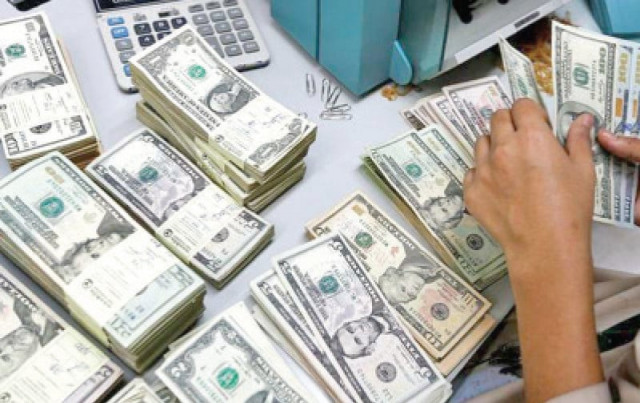
Interest rates were held at 3.75 per cent instead of the previously expected cut, as the Bank of England warned that the war could push inflation as high as 3.5 per cent by July on the back of rising energy bills, and that rates could rise – creating misery for homeowners.
It came as:
- US defence secretary Pete Hegseth said “ungrateful” European allies should be thanking Donald Trump for the war
- Trump claimed he was unaware of Israel’s strike on Iran’s South Pars gas field
- Oman called the US/Israel attacks a “grave miscalculation”
- Europe’s biggest airlines warned of higher fares
Iran’s attacks were in retaliation to an Israeli strike on the vital South Pars gas field, which drew condemnation from the Gulf states as well as Tehran. It was the first attack of the war so far on an energy production facility. Tehran fired missiles at multiple energy sites across the Gulf, including a Saudi oil refinery, Qatari gas facilities and two more oil refineries in Kuwait.
While Sir Keir Starmer and Emmanuel Macron called for de-escalation, President Trump threatened to “massively blow up” the South Pars facility if Iran did not halt its retaliatory attacks, repeating his claim that US forces had “obliterated” Iran’s navy and military, adding that the war was “substantially ahead of schedule”. He denied that plans were being made to send more American troops to the region.
John Healey, the UK defence secretary, said Tehran’s tit-for-tat responses threatened to further destabilise the region and Europe’s economies. He called them a “serious escalation”, adding: “They further destabilise the region and we will step up the defensive support that we can offer to those Gulf states.”
British forces are already deployed to the Middle East, with RAF jets flying defensive sorties against Iranian drones across the Gulf and British air defence systems protecting critical infrastructure in Saudi Arabia. UK military planners have also joined US Central Command to help formulate proposals for opening the Strait of Hormuz, a critical trade route for the world’s oil and gas.But there were signs of growing frustration towards Washington’s war aims in the Gulf states, with Oman’s foreign minister claiming that the conflict was President Trump’s “greatest miscalculation”.
In the most scathing attack on Washington’s foreign policy yet by a Gulf state, Badr Albusaidi said “this is not America’s war” and criticised Mr Trump for supporting Israel. Writing in The Economist, he called on American allies to help extricate it from the conflict, which has continued for a third week despite failing to achieve the US and Israel’s stated aim of instigating regime change in Tehran or stopping its nuclear programme.
Meanwhile, the Bank of England has warned that it may have to put up interest rates if the war continues to drive up inflation and unemployment. Its governor, Andrew Bailey, said the impact was already being felt by consumers as petrol prices surge and that he is “ready to act as necessary to ensure inflation remains on track to meet the 2 per cent target”. That would pave the way for a rate hike as early as the end of April.
Bets on the financial markets suggest a 50/50 chance that Britain will face higher interest rates from next month – and the possibility of two more rises by the end of the year.
Danni Hewson, head of financial analysis at AJ Bell, said: “Markets are now pricing in an almost 50 per cent chance that April’s meeting will see rates rise to 4 per cent with the potential for two additional rate hikes by the end of the year. But no one has a crystal ball. No one knows how long the conflict will last or the amount of damage that could be inflicted on crucial energy infrastructure by the time it ends.”
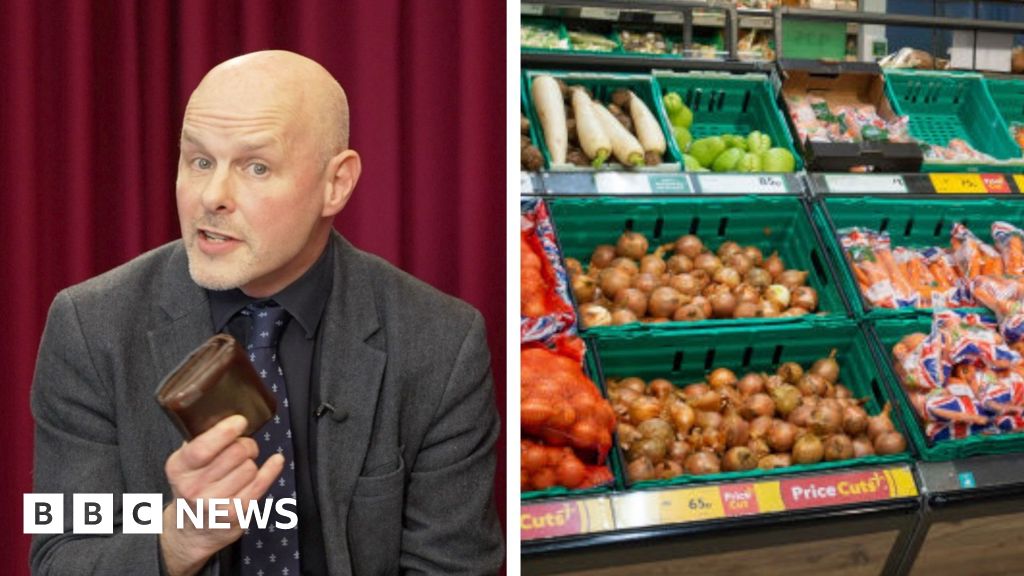
From fuel to mortgages, the BBC looks at how oil and gas prices could push up the cost of living.
Source link
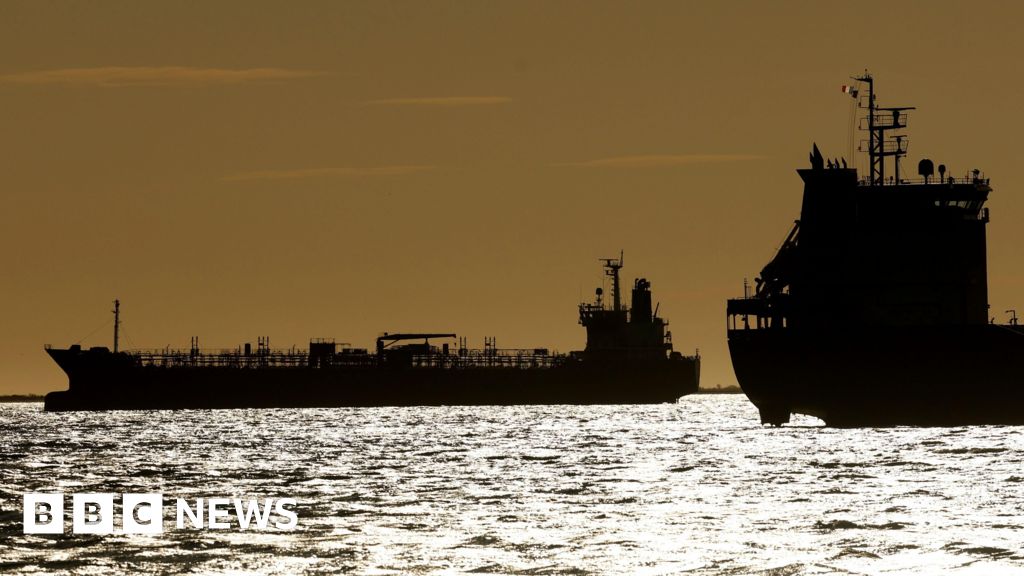
“To put it mildly, this is bananas,” said David Tannenbaum, director of Blackstone Compliance Services, a consultancy specialising in maritime sanctions. “Essentially we’re allowing Iran to sell oil, which could then be used to fund the war effort.”


FIFA clears Israeli settlement clubs but fines IFA over breaches

Prince William and Kate wow with last-minute surprise portrait drop

US Takes Down Botnets Used in Record-Breaking Cyberattacks
Stock market crash today (March 12, 2026): Nifty50 opens below 23,600; BSE Sensex down over 900 points on continuing US-Iran war – The Times of India

UK’s Topshop unveils Tolu Coker capsule collection
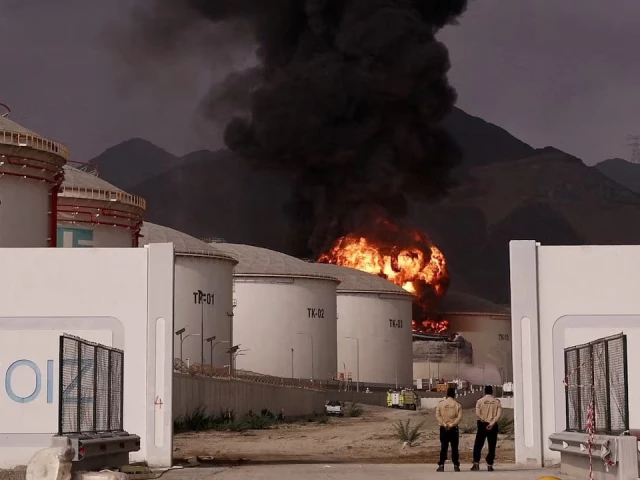
US ignites Iran war, but Gulf Arab states pay the price | The Express Tribune

-
Business1 week ago
Stock market crash today (March 12, 2026): Nifty50 opens below 23,600; BSE Sensex down over 900 points on continuing US-Iran war – The Times of India
-
 Fashion1 week ago
UK’s Topshop unveils Tolu Coker capsule collection
-
Business1 week ago
US ignites Iran war, but Gulf Arab states pay the price | The Express Tribune
-

 Fashion1 week ago
India’s textile recycling market may reach $3.5 bn by 2030: Report
-

 Tech1 week ago
Meta Developed 4 New Chips to Power Its AI and Recommendation Systems
-

 Sports1 week ago
Bangladesh crush Pakistan in ODI series opener | The Express Tribune
-
 Business1 week ago
8th Pay Commission: How Much Will Central Govt Employees’ Salaries Rise? What We Know So Far
-

 Entertainment1 week ago
Ed Sheeran makes surprising Benny Blanco confession after hygiene uproar