

Business
‘Stranger Things’ ushered in a new era for Netflix


Noah Schnapp, Caleb McLaughlin, Finn Wolfhard and Gaten Matarazzo star in Season 5 of Netflix’s “Stranger Things.”
Courtesy: Netflix
The original concept for what would become “Stranger Things” was rejected by more than 15 studios before landing a spot on Netflix’s roster of original programming.
A decade later, the show created, written and directed by Matt and Ross Duffer has become one of the biggest cultural touchstones of the streaming era and has solidified Netflix as not just a competitor, but a leader in the space.
“People always talk about Netflix and [say] our big moment was when we’d put on ‘House of Cards,’ and that was a big deal. But our real moment was when we put on ‘Stranger Things,'” co-CEO Ted Sarandos said during the “Stranger Things” Season 5 premiere in Los Angeles last month.
“‘House of Cards’ was great. It kind of told the world that we’re going to make some really good TV shows,” he continued. “But with ‘Stranger Things,’ this was a lot closer to a ‘Star Wars’ moment. This is a show, characters that move the culture, that spawned live events and consumer products and spinoffs and sequels.”
The final bow
Released in 2016, “Stranger Things” is set in the ’80s and centers on a group of middle schoolers in a fictional rural town in Indiana who must navigate paranormal and supernatural occurrences following the disappearance of their friend. In the mix is a young girl with psychokinetic powers who has escaped from a secret research lab, an alcoholic police chief who is trying to find the missing boy and a frantic mother.
Now, almost a decade later, the fifth and final season is making its staggered debut on Netflix.
An advertisement for “Stranger Things” on one of Netflix’s buildings in the Hollywood neighborhood of Los Angeles, Dec. 2, 2025.
Mike Blake | Reuters
Volume 1, which consists of the first four episodes, debuted over the Thanksgiving holiday and amassed 59.6 million views in the first five days, the biggest premiere week for an English-language series on Netflix. It ranks third overall behind Season 2 and Season 3 of the Korean series “Squid Game.”
In its second week on the platform, Volume 1 generated another 23.6 million views, topping the streamer’s weekly charts, and each of the previous four seasons saw week-over-week viewership bumps, as fans rewatched prior episodes, Netflix reported.
Volume 2 of “Stranger Things” Season 5, which contains three episodes, arrives on Christmas, and the finale episode, which has a run time of a little over two hours, is set for New Year’s Eve. The finale will be available for viewing in select theaters New Year’s Eve and New Year’s Day.
In a break with tradition, Netflix will not be selling tickets for these screenings. Instead, more than 500 domestic cinemas will sell concession vouchers that will guarantee seating for the showings. These vouchers can be used toward purchases of food and beverages at the venues. Furthermore, theater owners will keep all revenue from these purchases.
Netflix and exhibitors have tangled in the past over release terms, as the streamer does not commit to a prolonged run in theaters for movies that it wants to be eligible for awards contention.
“Nothing would make us happier than to play Netflix theatrical movies in our theaters,” AMC’s CEO Adam Aron said in a statement earlier this month. “We think that could be beneficial for all involved. But as we need to treat our existing studio partners fairly, there is much that still needs to be sorted out to that end. Even so, there is progress.”
Turning culture upside down
“Stranger Things” has brought about a renaissance of the 1980s, reviving fashion trends, music and even discontinued food brands for a new generation.
When the series debuted, Netflix partnered with consumer brands to create T-shirts, mugs, plush toys and the like, but it was predominantly working with licensees. This means it was collecting fees for other companies to design and make the products, or participating in brand partnerships where no fees were exchanged.
In 2019, the company launched its own consumer products division and two years later its own officially licensed online shop.
Coinciding with the launch of the final season of “Stranger Things,” Netflix announced dozens of partnerships and collaborations with brands across the merchandise, retail and restaurant spectrum.
The streamer has tapped Lego, Funko, Squishmallows, Hasbro, Jazwares and Care Bears to bring “Stranger Things” toys and collectibles to fans of the series. It has apparel and lifestyle deals with Gap, Nike, Crocs, CoverGirl, Zara and Wrangler, among others, and food and beverage collaborations with the likes of Eggo, Doritos, Kellogg, Gatorade and Starbucks.
Millie Bobby Brown as Eleven in the first season of Netflix’s “Stranger Things.”
Courtesy: Netflix
“We are incredibly excited to partner with so many fantastic brands, offering fans — and fellow nerds — the largest collection of products and experiences in ‘Stranger Things’ history and one of our biggest campaigns yet as we celebrate the fifth and final season of this globally beloved series,” said Marian Lee, Netflix’s chief marketing officer, in a statement earlier this month.
Outside the retail space, Netflix has delved into the live event space, bringing “Stranger Things” to life through an immersive experience that enables fans to explore Hawkins Lab and other iconic locations from the series. It’s currently running in Abu Dhabi, United Arab Emirates, and will open in Mexico City next month.
There is also a play called “Stranger Things: The First Shadow,” which has been running in the West End in London since 2023 and in New York since this spring.
In addition, Netflix has a deal with Epic Games that has brought “Stranger Things” items to the popular online video game Fortnite.
Netflix’s merchandise and live events strategy is more than a way for the company to generate revenue outside of its streaming subscriptions. It helps keep fans engaged with its content during show hiatuses and in between movie sequels, industry experts said.
The cast of Netflix’s “Stranger Things” Season 5.
Courtesy: Netflix
This playbook is not unique to Netflix, but it showcases the maturation of the streaming service. “Strangers Things” is less of a blueprint that can be adopted by every Netflix show or film, but rather a gold standard for what is possible.
“[Netflix] had a few good shows early on (‘Orange is the New Black’ and ‘House of Cards’), but it took a couple of years of whiffs before they came up with ‘Stranger Things,'” Michael Pachter, analyst at Wedbush, told CNBC via email. “They have had a ton of success since, with shows like ‘Squid Game’ and ‘Bridgerton,’ but it was questionable if they could settle on a formula for coming up with original IP.
“‘Stranger Things’ has remained a solid IP throughout, and has driven a lot of recognition,” he added.

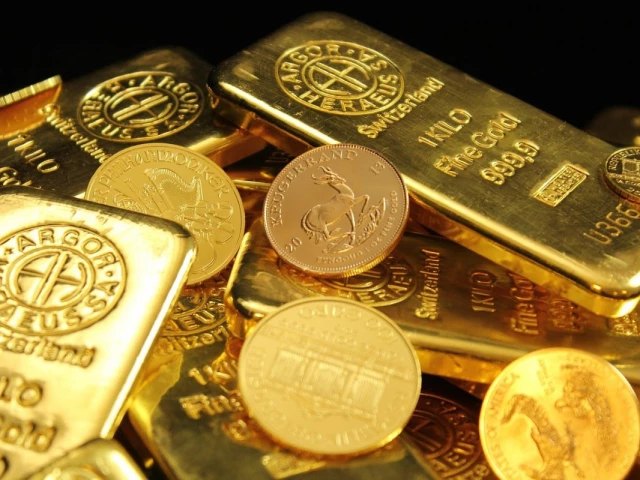





Oil prices have fallen sharply to below 100 US dollars a barrel on fresh hopes of an end to the Iran war and unblocking of the crucial Strait of Hormuz.
The cost of benchmark Brent crude dropped 11% to under 98 dollars a barrel in afternoon trading on Wednesday as US President Donald Trump said he was pausing efforts to guide stranded ships out of the strait to finalise a deal with Iran on ending the conflict.
But he confirmed a US blockade of Iranian ports would remain in place while talks were held to end the war.
Stock markets across the UK and Europe surged in response, with London’s FTSE 100 Index soaring 2.6% to 10485.9.
In France, the Cac 40 was 3.3% higher and Germany’s Dax was 2.8% higher.
Investor sentiment was boosted on reports that Iranian officials were travelling to China ahead of a summit between Mr Trump and Chinese leader Xi Jinping.
A ceasefire with Iran is already in place, but it has been increasingly fragile.
The US military is trying to reopen a path in the Strait of Hormuz, which would allow oil tankers to resume shipments from the Persian Gulf.
The blockage of the strait, through which a fifth of the world’s oil is carried, has sent oil and energy prices soaring worldwide.
Chris Beauchamp, chief market analyst at investing and trading platform IG, said: “There does seem to have been some real progress on key issues, and perhaps a pathway has been found that strikes a deal amenable to both sides.
“Such a result would allow markets to go back to focusing on earnings growth and a recovery in economic momentum, putting the worries of the last two months behind them.”
Long-term UK government borrowing costs also eased back, as gilts recovered from Tuesday’s sell-off thanks to optimism over inflation concerns should the Iran war come to an end.
The yield on 30-year UK government bonds, also known as gilts, fell back to 5.63%, having reached their highest level since 1998 on Tuesday, at 5.798%.
Ten-year gilt yields fell to 4.94%, having hit a six-week high of 5.102% on Tuesday.
Gilt yields move counter to the value of the bonds, meaning their prices fall when yields rise.
Business
Sebi sets Rs 20,000 crore threshold for ‘significant indices’; Sensex, Nifty among benchmarks covered – The Times of India
Markets regulator Sebi has introduced a new framework to classify stock market benchmarks as “significant indices” if mutual fund schemes tracking them have a daily average cumulative assets under management (AUM) of more than Rs 20,000 crore for each of the preceding six months, PTI reported.The move is aimed at strengthening transparency, governance and accountability in the index ecosystem.“It is specified that a Benchmark or Index (including index of indices) based on listed securities shall be considered as ‘significant Indices’, if the daily average cumulative AUM tracking the Benchmark or Index across schemes of Mutual Fund(s) exceeds Rs 20,000 crore for each of the past six months, ending on June 30 and December 31 each year,” Sebi said in a circular.The regulator said the threshold will be reviewed on a half-yearly basis, and once classified as significant, an index will continue in that category unless its tracked AUM falls below the threshold for three consecutive years.The framework follows the introduction of the Sebi (Index Providers) Regulations, 2024, which govern entities administering such indices.Sebi also released an initial list of indices that qualify under the new norms. These include major benchmarks such as the BSE Sensex, Nifty 50, Nifty 500 and BSE 500, along with several sectoral, debt and hybrid indices managed by NSE Indices Ltd, BSE Index Services Pvt Ltd and CRISIL.Under the new rules, index providers offering significant indices must apply for Sebi registration within six months.However, indices already notified or authorised as benchmarks by the Reserve Bank of India under relevant RBI provisions have been exempted from this requirement.Existing index providers can continue operations during the transition phase if they file registration applications within the stipulated timeline.Sebi also said entities already registered in another category with the regulator but engaged in index-related activities will have to create a separate legal entity within two years to undertake index provider operations.The regulator clarified that grievance redressal mechanisms under the new regulations will apply only to significant indices administered by Sebi-registered index providers.
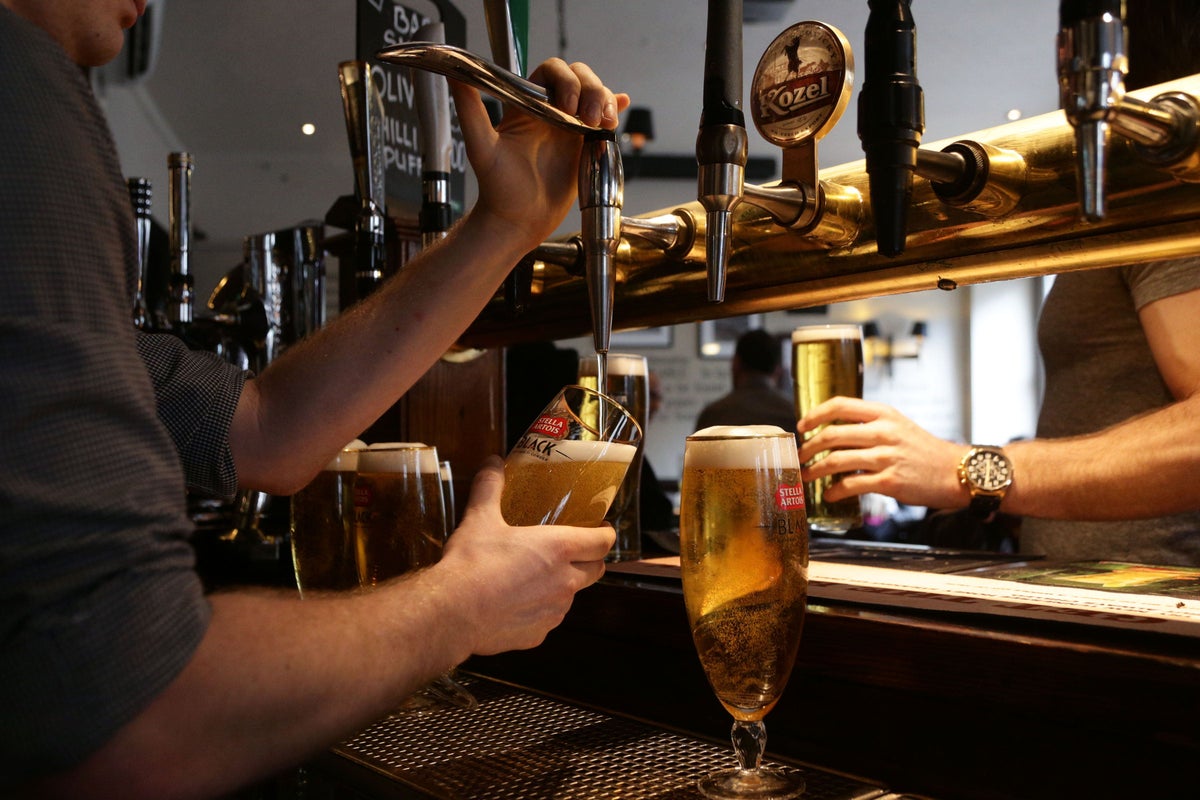
Growth in the UK’s services sector rebounded last month with business activity picking up, but firms face a “short-lived” recovery amid surging costs and lower demand linked to war in the Middle East, a new survey has shown.
Experts cautioned that the outlook for firms may be weaker after a rush of activity in April.
The S&P Global UK services PMI survey showed a reading of 52.7 in April, up from 50.5 the previous month.
Any reading above 50.0 means the sector is growing while any reading below signals it is contracting.
Activity across the industry, which spans businesses from hospitality and leisure to healthcare and transport, has been increasing for almost a year.
But while the latest reading marked an improvement from March – when the US-Israel’s conflict with Iran escalated – it signals a slower rate of growth than at the start of the year.
Businesses taking part in the survey, which is watched closely by economists, cited worries about intensifying pressures on inflation, global supply shortages and elevated borrowing costs as factors holding back business and consumer demand in April.
Some firms said export sales were lower due to disruptions to business travel and weaker demand in the Middle East.
Nevertheless, others pointed out resilient global demand for technology services while backlogs of work also decreased.
But the survey revealed that cost pressures ramped up for businesses in the service industry last month.
Costs for companies rose at the fastest pace since November 2022, with firms widely attributing the increased bills to fuel costs and higher prices for raw materials including metals and plastics, which have been driven up by soaring energy prices since the start of the war.
Many firms also cited pressure from higher wages, following the increase to the national minimum wage at the start of April.
Tim Moore, economics director at S&P Global Market Intelligence, said April’s “modest recovery” for the industry could “easily prove short-lived as new business intakes remained subdued in comparison to the start of 2026”.
Mr Moore said: “Survey respondents widely noted that the Middle East conflict and subsequent global supply chain disruptions had weighed heavily on business and consumer confidence.”
Matt Swannell, chief economist for the Item Club, agreed that there were “already some signs that this jump will be short-lived as businesses reported little improvement in new work amidst weak domestic and foreign demand”.
“We think that the outlook for private sector activity is gloomier,” he went on.
“A sharp rise in inflation will cause households’ real incomes to fall and spending growth to slow.
“Supply chain disruption, rising costs and lingering geopolitical uncertainty will cause some businesses to put their investment plans on hold.”
Mr Swannell added that the survey suggests the Bank of England will prefer to keep interest rates held steady for the rest of the year, but that there was the potential for a hike in the summer.
Thomas Pugh, chief economist at RSM UK, said firms showed “resilience” last month, adding: “However, the rebound is partly fuelled by a rush of activity before price rises and supply shortages start to bite.”
He said future interest rate hikes were “more likely” as a result, but that “everything depends on how energy prices move going forward”.


I’ve Tried Every Digital Notebook. These Are the Best Ones

ASEAN manufacturing momentum eases in April amid rising cost pressures
Oil prices drop below 100 dollars a barrel on renewed hopes over peace deal

A Brain Implant for Depression Is About to Be Tested in Humans

Pro wrestling star Steph De Lander reveals how colleague’s advice helped lead her to title triumph at ACW

‘I had £20,000 stolen and had to fight a 13-month fraud reporting rule to get it back’

-
 Tech1 week ago
A Brain Implant for Depression Is About to Be Tested in Humans
-
 Sports1 week ago
Pro wrestling star Steph De Lander reveals how colleague’s advice helped lead her to title triumph at ACW
-
Business1 week ago
‘I had £20,000 stolen and had to fight a 13-month fraud reporting rule to get it back’
-

 Entertainment1 week ago
Norway joins Type 26 Frigate Programme to boost NATO naval power
-

 Entertainment1 week ago
Melania Trump says ABC should ‘take a stand’ on late-night host Kimmel
-

 Tech1 week ago
Are tech leaders risking a cyber resourcing crisis? | Computer Weekly
-
 Business6 days ago
PSX plunges over 4,800 points | The Express Tribune
-

 Tech1 week ago
This Ambitious Laptop Doesn’t Leave Much Room for Your Hands