

Business
Striking defense workers reject Boeing contract offer


The Boeing Company at Paris Air Show 2025 in Le Bourget Airport.
Nicolas Economou | Nurphoto | Getty Images
Striking Boeing defense workers in Missouri voted Friday against the company’s latest offer of a modified contract deal, according to the union representing the workers.
More than 3,000 workers in the St. Louis area will remain on strike, the first walkout in almost three decades.
“Boeing’s modified offer did not include a sufficient signing bonus relative to what other Boeing workers have received, or a raise in 401(k) benefits,” a statement from the International Association of Machinists and Aerospace Workers read. “The democratic vote underscores the determination of approximately 3,200 IAM Union members to continue their stand together until their voices are heard.”
The union had said it reached a tentative five-year agreement with Boeing on Wednesday, with better wages and a signing bonus, and set a vote on the deal for Friday.
The deal that workers rejected included 45% average wage growth, among other things. The local chapter of the union, IAM 837, said it would bring the average wage from $75,000 to $109,000.
“Our members in St. Louis have once again shown that they will not settle for Boeing’s half-measures,” IAM International President Brian Bryant said in a statement. “Boeing must start listening to its employees and come back to the table with a meaningful offer that respects the sacrifices and skill of these workers.”
Boeing has said it is hiring more workers to replace those who are on strike to meet rising demand.
Boeing Air Dominance Vice President Dan Gillian said in a statement that no further talks are scheduled between Boeing and the striking workers, and that the company is “disappointed.”
“We’ve made clear the overall economic framework of our offer will not change, but we have consistently adjusted the offer based on employee and union feedback to better address their concerns,” Gillian said. “We will continue to execute our contingency plan, including hiring permanent replacement workers, as we maintain support for our customers.”
The striking workers mostly assemble and maintain F-15 fighter jets and missile systems, according to the union. The employees went on strike in early August and turned down a previous offer, which included 20% general wage increases and a $5,000 signing bonus, among other improvements.




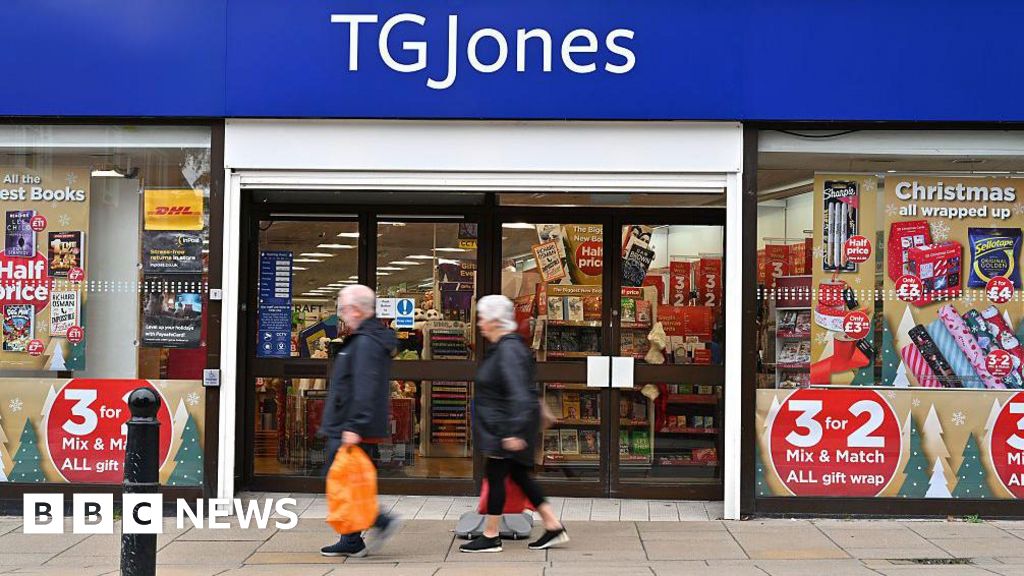
The stores were purchased by Modella Capital last year, and then rebranded under the name TGJones.
Source link
Business
US stock markets today (May 6, 2026): Wall Street rallies to record highs, crude oil tumbles on Strait of Hormuz reopening hopes – The Times of India
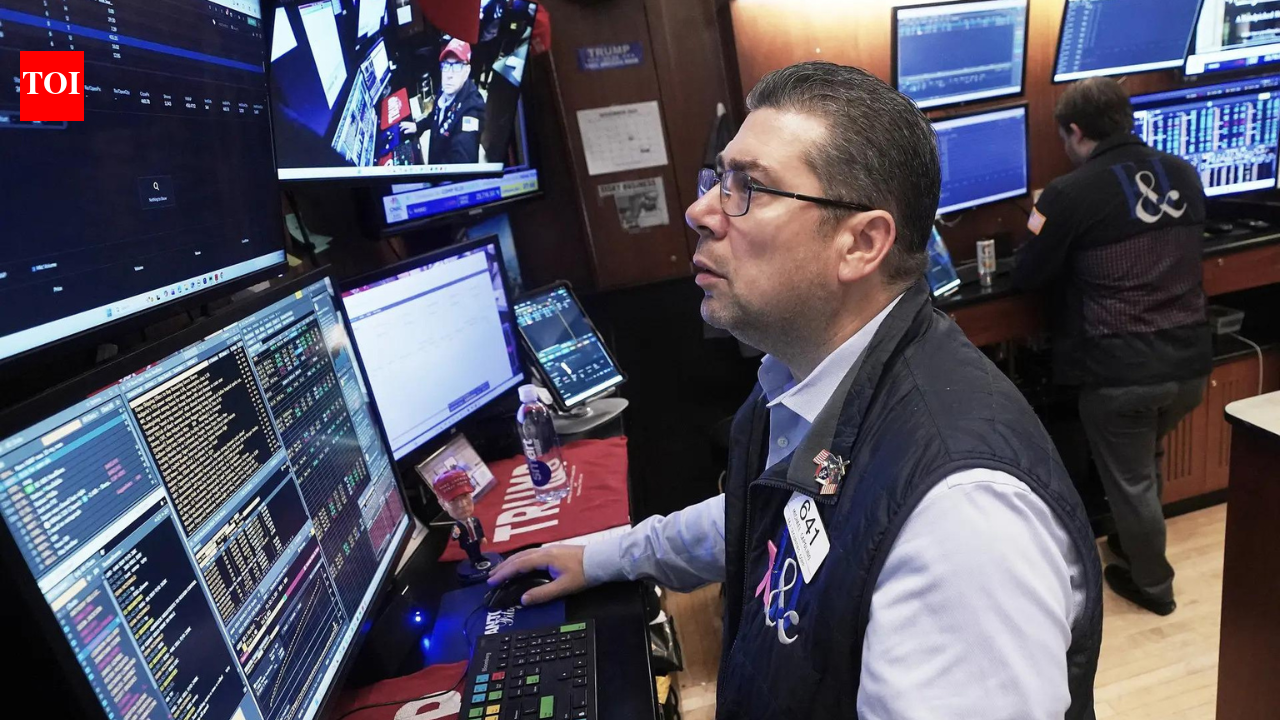
US stock markets surged on Wednesday while oil prices plunged sharply as investors bet on a possible breakthrough in US-Iran negotiations that could reopen the Strait of Hormuz and restore global crude supplies, AP reported.The S&P 500 climbed 0.8 per cent and headed towards another record close. The Dow Jones Industrial Average rose 487 points, or 1 per cent, while the Nasdaq Composite gained 0.8 per cent.Brent crude, the international oil benchmark, slumped 5.7 per cent to $103.61 per barrel after falling from levels above $115 earlier this week. At one point during the session, Brent briefly dropped below $97 before recovering some losses.The rally came after US President Donald Trump said the Strait of Hormuz could be “OPEN TO ALL” if Iran accepts a reported agreement, though he did not disclose details of the proposed deal.The Strait of Hormuz has remained at the centre of the global energy crisis since the Iran conflict disrupted oil tanker movement through the Persian Gulf, pushing crude prices sharply higher and stoking inflation fears worldwide.Markets also drew optimism from Trump’s indication that the US may scale back efforts to reopen the strait through military means, while China called for a comprehensive ceasefire after talks between Chinese and Iranian foreign ministers.Asian and European markets also rallied strongly. South Korea’s Kospi surged 6.5 per cent to cross the 7,000 mark for the first time, while Hong Kong’s Hang Seng rose 1.2 per cent. London’s FTSE 100 gained 2.2 per cent and France’s CAC 40 climbed 2.9 per cent.On Wall Street, technology and AI-linked stocks led gains after strong earnings reports.AMD jumped 19.3 per cent after reporting better-than-expected quarterly profit and revenue. CEO Lisa Su said continued growth in artificial intelligence demand had boosted the company’s performance.The chipmaker also projected revenue growth of around 46 per cent in the current quarter.Super Micro Computer rallied 14.2 per cent after posting earnings above analyst estimates.CVS Health gained 8.2 per cent after beating first-quarter expectations and raising its full-year forecasts.Stocks of companies with high fuel costs also rose sharply amid hopes of lower oil prices. United Airlines climbed 5.2 per cent, while Carnival and Royal Caribbean gained 5.5 per cent and 5.2 per cent, respectively.In the bond market, Treasury yields fell as easing oil prices reduced inflation concerns. The yield on the 10-year Treasury dropped to 4.35 per cent from 4.43 per cent a day earlier.Lower bond yields generally reduce borrowing costs for households and businesses and tend to support equity valuations.

Oil prices have fallen sharply to below 100 US dollars a barrel on fresh hopes of an end to the Iran war and unblocking of the crucial Strait of Hormuz.
The cost of benchmark Brent crude dropped 11% to under 98 dollars a barrel in afternoon trading on Wednesday as US President Donald Trump said he was pausing efforts to guide stranded ships out of the strait to finalise a deal with Iran on ending the conflict.
But he confirmed a US blockade of Iranian ports would remain in place while talks were held to end the war.
Stock markets across the UK and Europe surged in response, with London’s FTSE 100 Index soaring 2.6% to 10485.9.
In France, the Cac 40 was 3.3% higher and Germany’s Dax was 2.8% higher.
Investor sentiment was boosted on reports that Iranian officials were travelling to China ahead of a summit between Mr Trump and Chinese leader Xi Jinping.
A ceasefire with Iran is already in place, but it has been increasingly fragile.
The US military is trying to reopen a path in the Strait of Hormuz, which would allow oil tankers to resume shipments from the Persian Gulf.
The blockage of the strait, through which a fifth of the world’s oil is carried, has sent oil and energy prices soaring worldwide.
Chris Beauchamp, chief market analyst at investing and trading platform IG, said: “There does seem to have been some real progress on key issues, and perhaps a pathway has been found that strikes a deal amenable to both sides.
“Such a result would allow markets to go back to focusing on earnings growth and a recovery in economic momentum, putting the worries of the last two months behind them.”
Long-term UK government borrowing costs also eased back, as gilts recovered from Tuesday’s sell-off thanks to optimism over inflation concerns should the Iran war come to an end.
The yield on 30-year UK government bonds, also known as gilts, fell back to 5.63%, having reached their highest level since 1998 on Tuesday, at 5.798%.
Ten-year gilt yields fell to 4.94%, having hit a six-week high of 5.102% on Tuesday.
Gilt yields move counter to the value of the bonds, meaning their prices fall when yields rise.


NYCEDC unveils $1.7 mn to boost local fashion manufacturing

Everything to know about CNN founder’s life, career, legacy
Up to 150 former WHSmith high street stores to close

Pro wrestling star Steph De Lander reveals how colleague’s advice helped lead her to title triumph at ACW

‘I had £20,000 stolen and had to fight a 13-month fraud reporting rule to get it back’

Norway joins Type 26 Frigate Programme to boost NATO naval power

-
 Sports1 week ago
Pro wrestling star Steph De Lander reveals how colleague’s advice helped lead her to title triumph at ACW
-
Business1 week ago
‘I had £20,000 stolen and had to fight a 13-month fraud reporting rule to get it back’
-
 Entertainment1 week ago
Norway joins Type 26 Frigate Programme to boost NATO naval power
-
 Business7 days ago
PSX plunges over 4,800 points | The Express Tribune
-

 Tech1 week ago
This Ambitious Laptop Doesn’t Leave Much Room for Your Hands
-

 Tech6 days ago
Almost half of UK businesses hit by cyber attacks | Computer Weekly
-
 Business1 week ago
BP profits more than double as oil trading booms amid Iran war
-

 Sports1 week ago
Match officials announced for HBL PSL 11 qualifier – SUCH TV