

Business
Studying Abroad Is Costly, But Not Impossible: Experts On Smarter Financial Planning


Last Updated:
Experts urge students to begin financial planning 18–24 months before studying abroad, factoring in all costs, buffers, and realistic job prospects.
From Fees To Living Costs: How Students Should Plan Finances For Studying Abroad In 2026
Getting a good education is becoming costlier, especially when it comes to higher education. For those students planning to study abroad, the cost of education increases manifold times, because of the associated costs of living, accommodation and food in a foreign, developed country.
Middle class students tend to dream of studying in a foreign institute, but the cost barrier makes him/her reconsidering it. However, proper financial planning and support will catapult the young ones to achieve their dreams of studying abroad.
Experts say students aiming to study abroad in 2026 should treat education as a long-term financial decision, not a last-minute expense.
Start early, think long term
From a personal finance point of view, planning should ideally begin 18–24 months before the intended intake, says Neeraj Saxena, MD & CEO of Auxilo Finserve. This window helps families realistically map the full cost of education, including tuition fees, visa and travel expenses, living costs, health insurance and emergency buffers.
Starting early also allows room to plan for post-study costs, such as living expenses during the job-search period. Saxena notes that early planning gives families time to build savings, compare funding options and secure better loan terms instead of rushing into costly decisions.
Rajesh Narayan Kachave, Chief Business Officer – Student Lending International Business, Avanse Financial Services, also adds that students should begin financial preparation well before application deadlines. Early planning helps align course selection, funding strategy and long-term career goals, especially as tuition and living costs have risen sharply across global destinations.
Calculate the real cost, not just fees
One common mistake is focusing only on tuition. Experts advise students to calculate the total cost for the entire course duration, not year by year. This includes education fees, accommodation, food, utilities, local travel, insurance, visa costs and one-time pre-departure expenses.
Saxena recommends keeping an extra 5–10 percent buffer to manage currency fluctuations and inflation. Kachave adds that destination-specific requirements, such as insurance or mandatory deposits, should also be factored in, along with a separate emergency fund for unexpected situations.
Avoid common money mistakes
Experts warn that chasing university rankings without understanding actual costs and job prospects can lead to long-term financial strain. Families often overestimate post-study salaries and underestimate how competitive global job markets have become.
To reduce risk, Saxena suggests aligning loan amounts with realistic salary expectations, choosing destinations with strong post-study work policies and keeping at least one semester’s expenses liquid. Kachave adds that relying fully on family savings or delaying documentation can create avoidable pressure.
 Click here to add News18 as your preferred news source on Google.
 December 15, 2025, 17:44 IST
Read More

Panic selling returned to the Pakistan Stock Exchange (PSX) on Thursday as President Donald Trump said the United States would continue to attack Iran, with the benchmark KSE-100 Index sinking by about 5,500 points during the opening minutes of business.
At 9:35am, the benchmark index was hovering at 150,022, down by 5,489 points or 3.45%.
However, by 11:00 the equities recovered some losses and the index was trading at 151,621.26 points down by 3,890.30 or 2.57 percent.
Experts opined that the jubilation of yesterday’s market halt has been completely wiped out as the ‘ceasefire rally’ crashed into a harsh geopolitical reality.
Offloading was observed in key sectors, including automobile assemblers, cement, commercial banks, oil and gas exploration companies, OMCs and power generation.
Index-heavy stocks, including MARI, OGDC, POL, PPL, MCB, MEBL, NBP and UBL, traded in the red.
On Wednesday, the PSX had staged a powerful rally with the benchmark KSE-100 Index surging past the key psychological barrier of 150,000 points as improving investor sentiment.
The KSE-100 Index closed at 155,511.57 points, registering a sharp gain of 6,768.25 points or 4.55%.
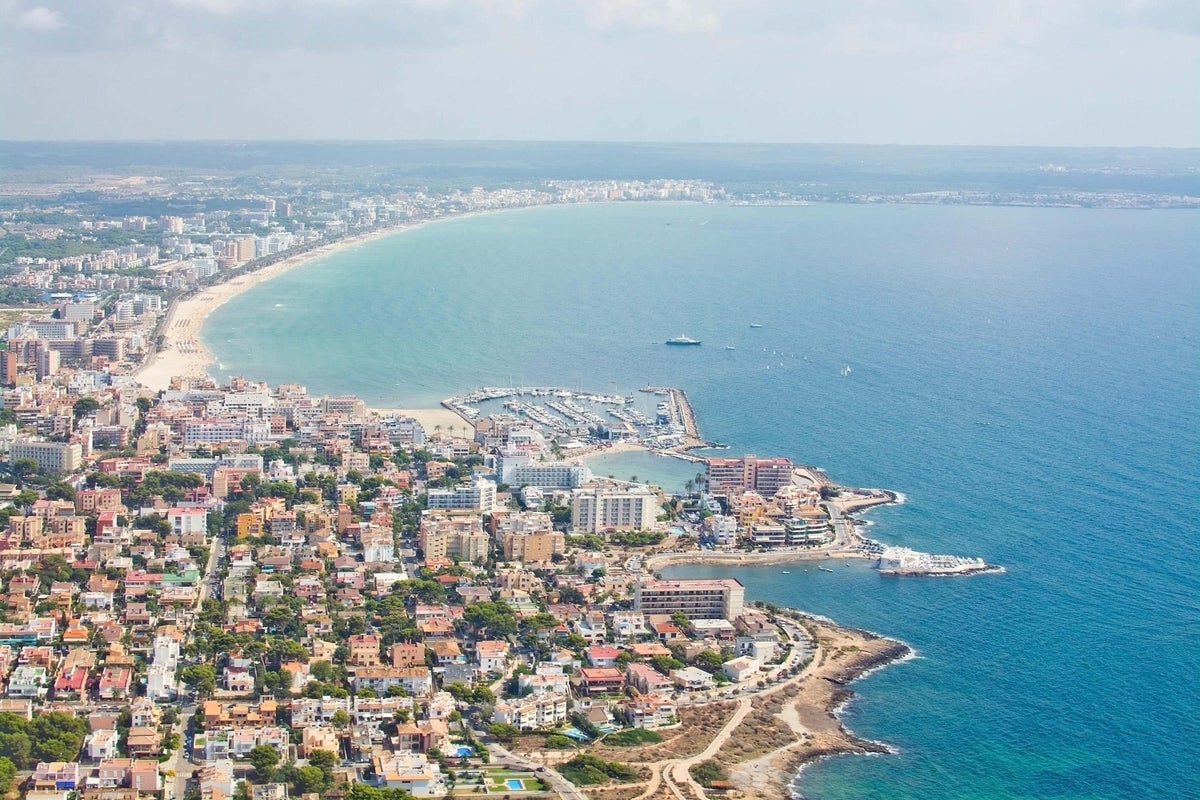
Travel agent Lastminute.com said war in the Middle East has impacted some 17,000 bookings, while holidaymakers are shifting towards alternative destinations like the Canary Islands and Sardinia.
The website, which offers holiday packages to destinations including Dubai and Abu Dhabi, said it was having to “adapt quickly” to travellers changing their preferences in light of the conflict.
The US-Israeli war with Iran, which escalated at the end of February, led to disruption and cancellations of some flights to Gulf states including the United Arab Emirates, Saudi Arabia and Qatar.
The airspace closures, coupled with consumer sentiment when it comes to travel taking a hit, affected approximately 17,000 bookings, Lastminute revealed.
It said the total volume of affected travel around the region is currently the equivalent of about a day and a half of its normal daily operations.
Despite the conflict influencing where and when people choose to book trips, the “overall intent to travel remains high”, according to Lastminute.
Consumers have been seeking reassurance and flexibility, and early booking patters indicate a shift in the preferences of travellers.
It noted increased demand toward alternative destinations such as Spanish archipelagos the Canary and Balearic Islands, Italian islands Sicily and Sardinia, and other European city breaks.
Lastminute’s chief executive Alessandro Petazzi said: “We continue to closely monitor the evolving situation in the Middle East, with supporting our customers remaining our top priority.
“At the same time, Lastminute.com’s flexible, pan-European model enables us to adapt quickly as travel patterns evolve, with demand naturally rebalancing across destinations.”
The Netherlands-based company reported a 15% jump in revenues to 361 million euro (£315 million) for the 2025 financial year, compared with the year before.
Adjusted earnings before tax and other costs increased by a third to 55 million euro (48 million).
The company said it was remaining “vigilant” against the geopolitical situation in the Middle East, but added that it was sticking to forecasts of a roughly 10% increase in revenues and profits in the year ahead.
Oven Pride household goods group McBride has revealed “temporary” price hikes to cover increased costs from the Iran war and warned it was seeing the first signs of supply shortages caused by the conflict.
The group, which makes branded and white label household and cleaning products for the likes of Tesco and Sainsbury’s, said until now it had only seen a small impact from higher haulage costs due to fuel price rises, but said “these conditions have now started to change”.
It said the “most heavily impacted” chemical and packaging suppliers are pushing through price increases as they face rising costs for petrochemical-derived feedstocks and higher energy costs in chemical and packaging production.
“The first signs of possible shortages in supply chains around the world are beginning to emerge,” it added.
McBride said its costs are increasing this month and will rise further due to the war, and is set to lift prices to offset the hit.
“The group has already informed all customers about temporary price adjustments, or surcharges to current pricing, to recover these higher, beyond our control, cost impacts from the Middle East conflict,” McBride said.
The warnings come amid mounting worries over the impact of the conflict on supply and costs, having sent oil prices surging above 100 US dollars a barrel and causing widespread disruption to global shipping.
Supermarkets met with Chancellor Rachel Reeves and Energy Secretary Ed Miliband at No 11 on Wednesday to look at issues caused by the war and agreed to explore together how to ease the cost-of-living impact for consumers.
McBride’s comments came in an update as it also announced a £34.5 million deal to buy Eurotab – a French-based specialist in cleaning tablets, such as for dishwashers.


China-Kenya trade corridor relaunched to boost SME participation

15 Design-Forward DIY Tools Worth Upgrading to This Year

England’s Brook, Bethell warned after New Zealand nightclub incident

-

 Entertainment1 week ago
UN warns migratory freshwater fish numbers are spiralling
-

 Politics1 week ago
Afghanistan announces release of detained US citizen
-

 Sports1 week ago
Broadcast industry CEO says consolidation is ‘essential’ to compete for NFL soaring media rights prices
-

 Tech1 week ago
Can a Home Appliance Fix the Problem of Soft-Plastic Waste?
-
 Business1 week ago
Property Play: Home flippers see smallest profits since the Great Recession, real estate data firm says
-
 Business1 week ago
Gold prices soar in Pakistan – SUCH TV
-
 Business1 week ago
More women are entering wealth management, but few are in advisory roles, study finds
-

 Fashion1 week ago
ICE cotton slips on weaker crude, profit booking