

Business
Sugar mills face CCP action for alleged collusion | The Express Tribune

ISLAMABAD:
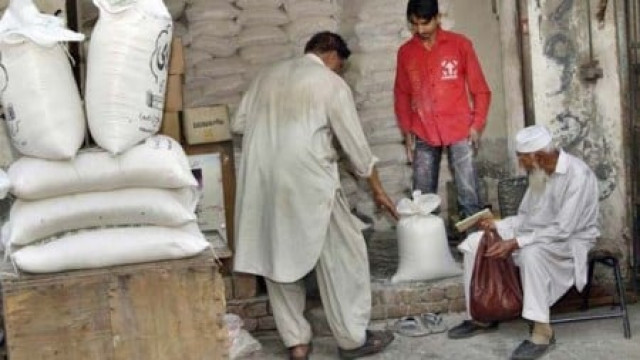
The Competition Commission of Pakistan (CCP) has issued show-cause notices to 10 sugar mills in Punjab for colluding in relation to the start of crushing season and fixing the sugarcane procurement price at Rs400 per maund.
A CCP review found that representatives of these mills held a meeting on November 10, 2025 where they decided to commence crushing on November 28, instead of the Punjab Sugarcane Commissioner’s officially notified date of November 15. The mills also agreed to fix the cane purchase price at Rs400 per maund, an act that constitutes collusive decision-making.
The meeting was chaired by the resident director of Fatima Sugar Mills and attended by representatives of Sheikhoo Sugar Mills, Thal Industries Corporation, Tandlianwala Sugar Mills (Rehman Hajra Unit), JK-1 Sugar Mills, Ashraf Sugar Mills and Kashmir Sugar Mills, while Siraj Sugar Mills, Two Star Sugar Mills and Haq Bahoo Sugar Mills joined online.
Under Section 4 of the Competition Act, 2010, any agreement or arrangement between market players to fix prices or coordinate on business decisions is strictly prohibited and constitutes a violation of competition law.
There is a significant imbalance in negotiation power between sugar mill owners and farmers. Ideally, the sugarcane price should be determined through individual negotiations between each mill and farmers, based on the natural interplay of demand and supply.
However, instead of allowing market forces to operate, all mill owners collectively and unilaterally fixed the price at Rs400 per 40 kg.
The CCP has directed all 10 mills to submit a written response within 14 days, explaining why legal proceedings should not be initiated against them for entering into prohibited agreements, influencing the sugarcane market and gaining undue commercial advantage through a coordinated delay in crushing.








From the UK, flights have also been cancelled for many Middle East destinations, including all flights to Israel and Bahrain, three-quarters of the day’s scheduled flights to the United Arab Emirates, and more than two-thirds (69%) of flights to Qatar.
Business
IIP sees 4.8% YoY growth in January; manufacturing & electricity support rise – The Times of India

India’s Index of Industrial Production saw a 4.8% increase year-on-year in January 2026, according to the Ministry of Statistics & Programme Implementation. The rise in industrial output was largely driven by a 4.8 per cent expansion in manufacturing and a 5.1 per cent improvement in electricity generation. Mining activity also supported overall growth, registering a 4.3 per cent uptick during the month.Estimates placed IIP at 169.4 for January 2026, compared with 161.6 in January 2025. This follows a stronger reading in December 2025, when industrial production had grown by 7.8 per cent. For January 2026, the sector-specific indices stood at 157.2 for mining, 167.2 for manufacturing and 212.1 for electricity.Within manufacturing, 14 of the 23 industry groups at the NIC two-digit level posted year-on-year gains in January. The strongest contributors were manufacture of basic metals, which rose 13.2 per cent; manufacture of motor vehicles, trailers and semi-trailers, up 10.9 per cent; and manufacture of other non-metallic mineral products, which increased 9.9 per cent. Growth in basic metals was supported by items such as flat products of alloy steel, MS slabs, and hot-rolled coils and sheets of mild steel.The automobile category advanced on the back of higher output of auto components and spare parts, commercial vehicles, and bus and minibus bodies or chassis. In the non-metallic mineral products segment, cement of all types, cement clinkers and stone chips were key contributors.According to use-based classification, output of primary goods grew 3.1 per cent, capital goods rose 4.3 per cent and intermediate goods increased 6 per cent compared with January 2025. Infrastructure and construction goods recorded the sharpest rise at 13.7 per cent, while consumer durables expanded 6.3 per cent. In contrast, consumer non-durables declined by 2.7 per cent. The ministry identified infrastructure and construction goods, intermediate goods and primary goods as the leading drivers of growth under this classification.

There might also be a more direct impact on food. “Some elements of crude oil are used in fertiliser, and so there could be a cost implication in terms of food prices,” Benjamin Goodwin, partner at banking advisory firm PRISM Strategic Intelligence told the BBC.


US’ Old Navy launches little navy, a new newborn essentials collection

Super-rich pay up to $350,000 for private jet evacuations as Middle East conflict escalates

5 key takeaways from Pete Hegseth’s Pentagon press conference on Iran-US war

-

 Politics1 week ago
Pakistan carries out precision strikes on seven militant hideouts in Afghanistan
-

 Tech1 week ago
These Cheap Noise-Cancelling Sony Headphones Are Even Cheaper Right Now
-

 Sports1 week ago
Kansas’ Darryn Peterson misses most of 2nd half with cramping
-

 Entertainment1 week ago
Viral monkey Punch makes IKEA toy global sensation: Here’s what it costs
-
Sports1 week ago
Mike Eruzione and the ‘Miracle on Ice’ team are looking for some company
-
 Business6 days ago
Households set for lower energy bills amid price cap shake-up
-

 Entertainment1 week ago
Talking minerals and megawatts
-
 Business6 days ago
Lucid widely misses earnings expectations, forecasts continued EV growth in 2026