

Fashion
Sweden’s H&M delivers stronger FY25 margins on inventory gains

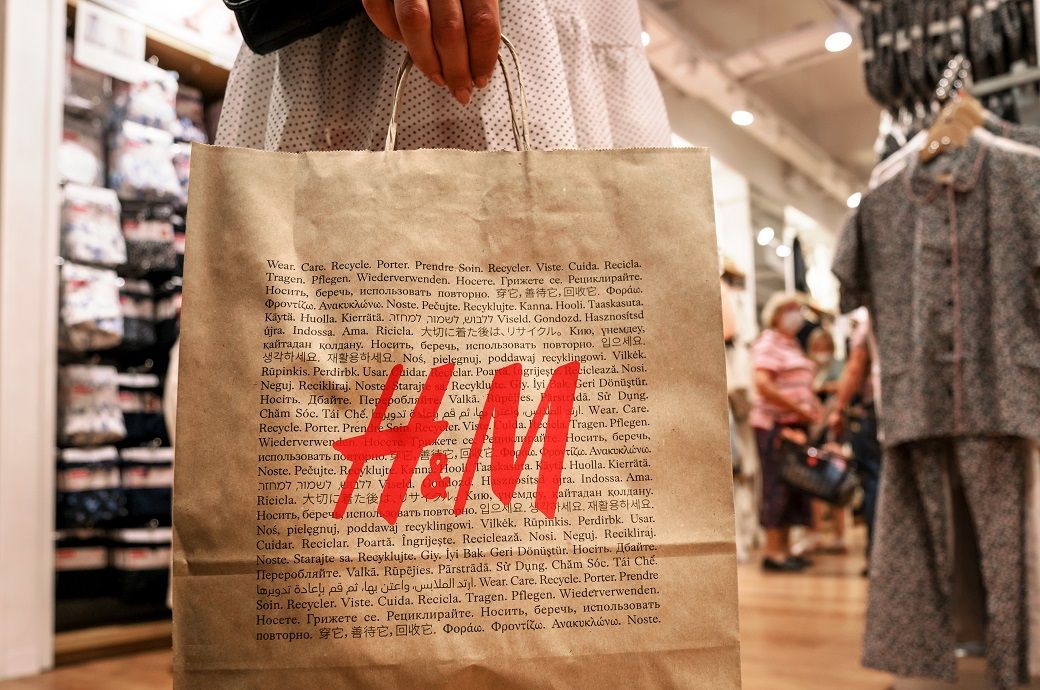
The gross profit totalled SEK 121,821 million, with the gross margin unchanged at 53.4 per cent. Selling and administrative expenses declined 4 per cent to SEK 103,292 million (~$11.7 billion).
H&M has improved profitability in FY25 despite currency headwinds, with local-currency sales up 2 per cent and operating margin rising to 8.1 per cent.
Cost control, inventory optimisation and strong European demand supported earnings.
Q4 margins strengthened sharply, while store rationalisation and sustainability progress remained key strategic pillars.
The operating profit increased to SEK 18,395 million from SEK 17,306 million, lifting the operating margin to 8.1 per cent from 7.4 per cent. Profit after tax rose to SEK 12,085 million, corresponding to earnings per share of SEK 7.58. Cash flow from operating activities after working capital changes amounted to SEK 31,120 million, H&M said in a press release.
Region-wise, Western Europe remained the largest market at SEK 79,195 million, with flat sales in SEK but 2 per cent growth in local currencies, indicating stable core demand. Eastern and Southern Europe delivered the strongest underlying growth, with local currency sales rising 4 per cent and 5 per cent respectively for the full fiscal. The Nordics recorded a 1 per cent decline in local currencies, reflecting a more mature home market. North and South America saw softer demand, with sales down 5 per cent in SEK and 1 per cent in local currencies, while Asia, Oceania and Africa declined 7 per cent in SEK and 1 per cent in local currencies, impacted by weaker markets and FX effects.
The store network continued to be optimised, with total stores falling to 4,101 from 4,253, a net reduction of 152 stores YoY. The largest closures were in Asia, Oceania and Africa, followed by Western Europe, while North and South America was the only region to add stores.
In the fourth quarter of FY25, sales increased 2 per cent in local currencies, even as the store base was around 4 per cent smaller YoY. In SEK terms, Q4 net sales declined to SEK 59,221 million from SEK 62,193 million, reflecting a negative currency translation impact of around 7 percentage points due to the stronger krona.
The gross margin improved to 55.9 per cent from 54.6 per cent, while operating profit surged 38 per cent to SEK 6,364 million, lifting the operating margin to 10.7 per cent. Profit after tax rose to SEK 4,332 million, or SEK 2.72 per share. Inventory levels declined 12 per cent YoY to SEK 35,427 million, signalling improved stock efficiency.
On sustainability, H&M said its Scope 3 greenhouse gas emissions fell by around 30 per cent in 2025 compared with the 2019 baseline, keeping the group on track to meet its 56 per cent reduction target by 2030. The company was A-listed by CDP for climate and water during the year.
Looking ahead, H&M expects sales between December 1, 2025, and January 31, 2026, to decline 2 per cent in local currencies, citing strong Black Friday sales, weaker December demand and a negative calendar effect linked to the timing of the Chinese New Year. Capital expenditure for 2026 is planned at SEK 9-10 billion, focused on store upgrades, technology infrastructure and the gradual rollout of new logistics solutions in Europe.
“Our work in 2025 has gradually contributed to positive development towards all our long-term targets. The sales trend is positive over the year as a whole, and earnings strengthened in the second half,” said Daniel Erver, CEO of H&M.
Fibre2Fashion News Desk (SG)










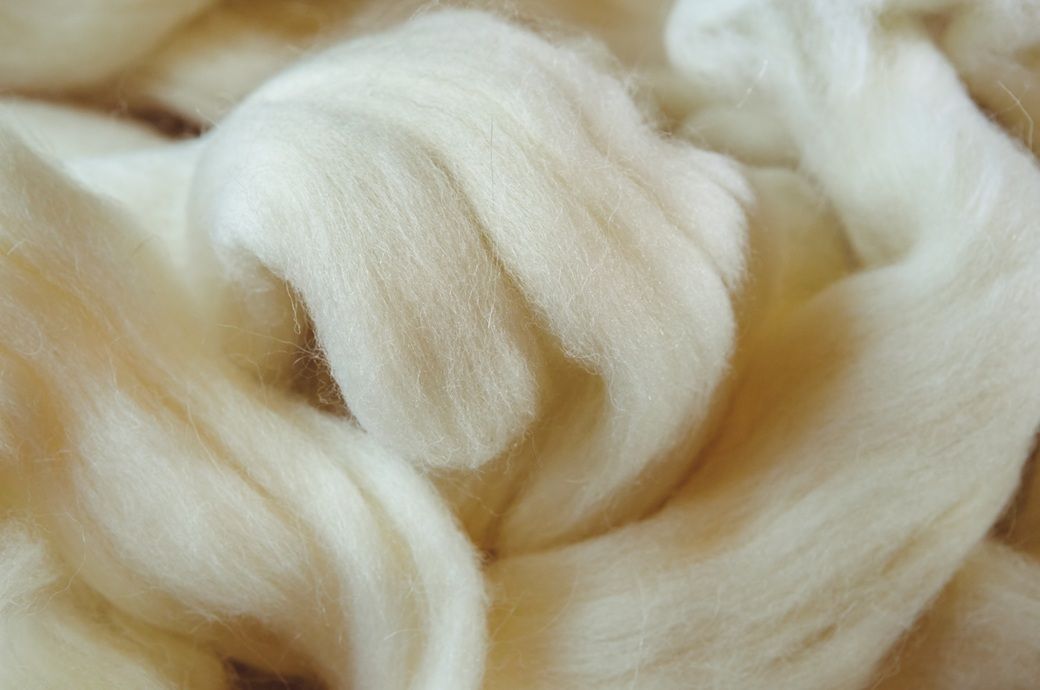
“The price weakness was most evident in the 18.5–21 micron Merino fleece range, particularly in Southern and Western regions, where declines of 40–60 cents were recorded. Crossbred wool prices also eased, while the Northern market showed some firmness in 20–21 microns,” said Australian Wool Innovation (AWI) in its week 39 commentary.
Australian wool prices declined this week, with the Eastern Market Indicator (EMI) falling 27 cents to 1,724 c/kg amid buyer caution and rising logistics costs.
Weakness was led by Merino fleece, while crossbreds also eased.
Strong auction volumes and increased supply reduced competition, signalling a pause after sustained price gains.
Market sentiment was impacted by increased supply, with offerings nearing 40,000 bales. Pass-in rates stood at 9 per cent nationally and over 13 per cent in the West, signalling growing seller resistance. Despite lower annual production, supply levels remain elevated, partly supported by broker and farm-held stocks, the AWI commentary noted.
Rising freight costs linked to Middle East tensions and sustained supply are expected to test market stability. Around 37,815 bales are scheduled for sale next week, the AWI commentary added.
Fibre2Fashion News Desk (CG)
Ukraine’s apparel imports increased from $***.*** million in **** and $***.*** million in ****, reflecting a steady recovery in demand. However, Turkiye’s exports dropped to $***.*** million in ****, reducing its share to **.** per cent from **.** per cent in **** and a dominant **.** per cent in ****, when it was the leading supplier, according to *fashion.com/market-intelligence/texpro-textile-and-apparel/” target=”_blank”>sourcing intelligence tool TexPro.
China emerged as the top supplier in ****, with shipments valued at $***.*** million, accounting for **.** per cent of total imports, only marginally higher than **.** per cent in ****. Bangladesh continued its strong growth trajectory, supplying $***.*** million and capturing a **.** per cent share, up significantly from **.** per cent in ****.



US-Iran mediation: Politicians castigate India’s Jaishankar for spiteful remarks on Pakistan

The 2026 ESPN Fantasy Baseball draft guide: Rankings, tips, stats, strategy and more

Fellow Readers, Don’t Miss These E-Reader Sales

Sales at US apparel, clothing accessories stores up 4% YoY in Jan 2026

Justice Department Says Anthropic Can’t Be Trusted With Warfighting Systems

March Madness 2026 – How to watch in SA, start time, schedule, TV channel for NCAA championship basketball tournament

-
 Fashion1 week ago
Sales at US apparel, clothing accessories stores up 4% YoY in Jan 2026
-
 Tech1 week ago
Justice Department Says Anthropic Can’t Be Trusted With Warfighting Systems
-
 Sports1 week ago
March Madness 2026 – How to watch in SA, start time, schedule, TV channel for NCAA championship basketball tournament
-
 Fashion1 week ago
Spain’s Inditex FY25 sales rise 3.2% to $46.28 bn amid strong demand
-

 Politics1 week ago
Iran strikes Tel Aviv with cluster-warhead missiles in retaliation of Larijani’s martyrdom
-

 Entertainment1 week ago
Val Kilmer revived 1 year after death through AI
-

 Entertainment1 week ago
With few new leads 45 days after Nancy Guthrie’s disappearance, investigation “becomes much harder,” expert says
-
 Business1 week ago
Brits cashing in jewellery as gold price hits record high