

Sports
Tahiti vs. Vanuatu? All you need to know about soccer’s newest pro league

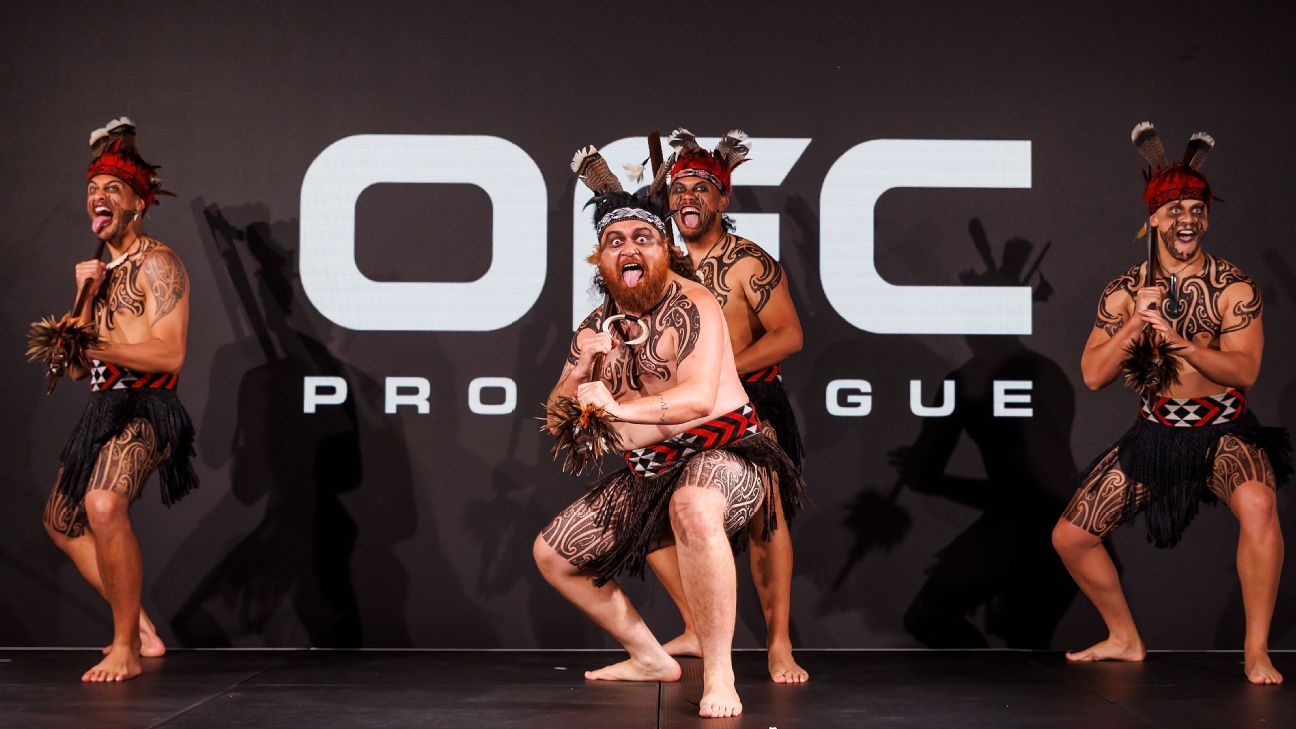
Kicking off on Jan. 17, 2026, at Auckland’s famous Eden Park, the OFC Professional League, even if you might not have heard of it until now, is one of the most ambitious footballing projects in recent memory.
Covering the vast expanse of the Pacific, the FIFA-backed league will seek to bring professional football to not just one country for the first time but an entire confederation, with a view already towards expanding as far as the United States.
Here’s all you need to know about soccer’s newest professional league.
What is the OFC Pro League?
The OFC Pro League is a new, professional competition that has been set up by the Oceania Football Confederation (OFC), with the support of FIFA. Given their small size and the relatively nascent stage of its footballing development — New Zealand is the largest nation in the region — none of the OFC’s members have previously been able to support a fully professional competition, which this cross-confederation competition seeks to address.
In providing a new professional destination, it’s hoped the competition will help to raise the level of football in the OFC, which now holds a direct qualification slot to the FIFA World Cup under the newly expanded 48-team format. The competition will also provide a stronger pathway and platform for players from the Pacific to earn moves to clubs in Australia, Asia, and the rest of the world.
– Icicle kick?! Crazy goal helps win Canadian Premier League final
– A-League of their own: Sydney FC release stunning Jacaranda kit
– Latvian league star beating Mbappé, Haaland in Golden Shoe race
“To be accepted into this professional league is already huge for us,” Solomon Islands technical director Moses Toata told ESPN. “It means a lot of opportunities for coaches, for players, and for football in the country. It will change a lot of things; the way we look at football, the way we approach football.
“The changes that the professional league will bring to player development, there’s aspiration, even for the young ones. They will look up to the pros in the league, and say: ‘That’s where I want to be.’
“We just don’t [presently] have the right environment to nurture them and to develop the talents. We do have a lot of younger fans coming up, and I can say, with this league, I think this will increase the opportunity for more players coming up through the ranks. For our youth development programs, to our national academy program, and hopefully, in the future, we can see them at this stage.”
Which clubs will play in the OFC Pro League?
The inaugural edition of the competition will field eight teams, featuring a mix of existing and newly created entities. New Zealand is the only nation with two representatives, with Auckland FC representing the country’s North Island, and South Island United (rebadged from Christchurch United) representing its South.
Auckland FC (Auckland, New Zealand)
Bula FC (Fiji)
PNG Hekari (Papua New Guinea)
Solomon Kings (Solomon Islands)
South Island United (Christchurch, New Zealand)
South Melbourne (Australia)
Tahiti United (French Polynesia)
Vanuatu United (Vanuatu)
What’s the format of the OFC Pro League?
The new competition will run from January through to the end of May, with each entrant playing a minimum of 17 games. Teams will initially face each other twice across a series of circuit rounds planned to be staged across Auckland (New Zealand), Port Moresby (Papua New Guinea), Melbourne (Australia), Honiara (Solomon Islands), Lautoka (Fiji), and Suva (Fiji). Full fixtures are yet to be released.
Following the circuit series’ conclusion, the four sides with the most points will be split off into a “leaders” group, and the bottom four will be placed into a “challengers” group. Following another round-robin, the three highest-ranked sides from the leaders group will advance to the semifinals, while its bottom-placed side will face the highest-ranked side from the challengers group in a playoff to determine the final semifinal spot.
The single-leg semifinals and final will then be played in a central location, with Eden Park set to host these fixtures in the first year.
What’s at stake in the OFC Pro League?
Beyond earning the right to call themselves the champions of the Pacific, the winner of the OFC Pro League will secure a place in the FIFA Intercontinental Cup, while team’s performances in the competition on a quadrennial basis will be used to determine Oceania’s entrant at the newly reformatted FIFA Club World Cup.
How is the OFC Pro League being funded?
Clubs will be required to cover the costs of their own personnel, but the OFC has committed to subsidising the first four years of the competition with a US$40 million investment, which itself has been made possible thanks to the financial backing of FIFA.
Speaking at a launch event for Fijian outfit Bula FC, Fiji Football Association president Rajesh Patel, who also serves as a member of the OFC Executive Committee and the FIFA Council, claimed the competition would receive a four-year, US$20 million investment from the Saudi Tourism Authority, saying “we are thankful for this investment, which makes professional football a reality in our region.”
Speaking at a launch event for the league in Auckland in October, OFC general secretary Franck Castillo wouldn’t comment on the prospect of Saudi money being used to help fund the competition, nor claims that such an investment would represent an attempt at “sportswashing.”
“We are still finalising. We cannot answer yet,” Castillo said. “We are formalising everything, but in due course we will announce all the funding, but let’s say that it’s secured.
“I won’t comment on that, but when it comes to partnerships, I will explain [at a later date].
“We’ve got a good reason to partner with the people who want to partner.”
The Pacific has seen a significant amount of investment in sports in recent years, mostly tied to broader geopolitical maneuvering. China invested more than $US100 million in infrastructure for the 2023 Pacific Games in the Solomon Islands — which was described as a gift, not a loan — while the Australian Government has partnered with the NRL to place a new franchise in Papua New Guinea.
Are there any roster or spending restrictions in the OFC Pro League?
The OFC Pro League will not feature a salary cap but will have limits on the number of foreign players a team can field. In addition to fielding an unlimited number of players drawn from within their country, entrants will be allowed to field three players from the OFC in their squads, in addition to a further three players drawn from anywhere in the world.
Vanuatu United has already announced the signing of former Brisbane Roar goalkeeper Matt Acton and Australian defender Hassan Ramazani ahead of the opening season, while PNG Hekari — Papua New Guinea’s most successful side, that has rebranded from Hekari United — have signed Brazilians Erick Joe, Kaûe Silva, and Rafael Chaves.
Is there VAR in the OFC Pro League?
Yes, the cameras necessary to implement video review will be placed at every stadium that hosts games during the competition, with training and match simulations already commenced for OFC VAR officials, who will work out of an Auckland-based hub, under the guidance of former UEFA Champions League final official Mihaly Fabian.
Who has the OFC Pro League broadcast rights?
While OFC officials hope the league eventually grows to the point where it is attracting broadcast revenue, the OFC Pro League will be available globally and for free on the FIFA+ platform, where games from various Oceanian club and international countries are currently broadcast.
The OFC says that broadcasts will be produced using a five-camera setup, with commentators — drawn from the ranks of local media at the various locations where the competition will be staged — that will visit during its circuit series, calling games on location.
What’s the future of the OFC Pro League?
Long-term, it’s the hope of clubs that the competitions will expand and become financially viable enough to adopt a home-and-away format. Castillo indicated that the OFC aspires to expand the league by two as soon as possible, but that this will depend on funding, with other officials telling ESPN that such an aspiration would largely depend not only on the strength of new applicants for the competition but also on how well foundational clubs established themselves.
American Samoa, Cook Islands, New Caledonia, Samoa, Tahiti, Tonga, are full OFC members that aren’t yet represented in the new competition, while Kiribati and Tuvalu are associate members that are likewise unrepresented. With Asian Football Confederation member Australia represented via South Melbourne, OFC officials have already flagged a willingness to take the league outside the confederation and have previously expressed an openness to a team based in the United States.
“The league needs to grow,” Castillo said at the launch event. “We are starting now with eight teams, because it’s about funding, and we have the funding for eight teams. But we want to have more than eight teams in the future. And we are very confident with that. The first year is always the most difficult, because people do not believe in this thing.
“We know that this will be a major project, not only for the region, but for the world. Because I can tell you, the world will talk about this league. We are the only confederation without professional football, and we will now demonstrate that we can do it.
“And you will see amazing results. And because of the amazing results, people will talk about this league around the world. That will be a human story. So I’m very confident that we will secure more funding, and with more funding, we can get more than eight teams. At the moment, it’s a circuit series. If we increase more than 10 teams, then we have like a conference League, and we can have more and more teams.”
Did you say a team from the United States could play in the OFC Pro League?
Yes, a team from Hawaii, to be precise. With Honolulu a nine-hour flight from Auckland, Castillo said that placing a team in Hawaii remains an aspiration of the OFC, which would not only maintain the Pacific nature of the competition but also give it a foothold in the United States, in theory giving it a greater ability to commercialise.
“It’s about market as well, to open to the U.S. market and the Americas market,” he said.
Why are Auckland FC allowed to play in the OFC Pro League?
Auckland FC somewhat stand out among the OFC Pro League’s inaugural entrants in that they’re the only club that was already playing in a professional competition: the A-League Men. Bankrolled by American billionaire businessman Bill Foley, who also owns AFC Bournemouth in the Premier League and the Vegas Golden Knights in the NHL, Auckland FC are the defending premiers of the A-League, finishing atop the table as an expansion franchise in 2025.
Despite the A-League and OFC Pro League seasons overlapping, the club plans to maintain a presence in both competitions heading into the future, with football director Terry McFlynn, rather than the A-League coach Steve Corica, to lead the side into the Pacific. This has necessitated extra restrictions on their roster: limited to fielding a maximum of three players over the age of 23 contracted to their A-League side. They will, however, be allowed to field further players over the age of 23 if they aren’t registered for the A-League. Both Auckland and the OFC insist that the club won’t simply be fielding a reserve side in the OFC Pro League, with it expected that it will look to recruit extra players, especially from the Pacific, for its new commitment.
Importantly, Auckland FC will also be eligible to qualify for the FIFA Club World Cup through the new competition, and while they’re prevented from fielding their strongest squad in the OFC Pro League, the placements of transfer windows surrounding the global club showpiece would allow them to do so in the Club World Cup without running afoul of their registration restrictions.
“The winner goes to the Intercontinental Cup each year, and then the most successful team every four years gets to go to the Club World Cup,” Auckland chief executive Nick Becker told ESPN. “That’s something that isn’t possible for us in the A-League setup. Even if we win the A-League, as we did when we won the Premiers’ Plate last season, we didn’t qualify for the Asian Champions League because we can’t, because we’re an Oceanian team. This now gives us the opportunity to go out there and compete on those global stages.”
Why is South Melbourne, an Australian team, allowed to play in the OFC Pro League?
South Melbourne also stand out given they’re based in Australia, which left the OFC to join the Asian confederation in 2006. South’s presence in the league — and the absence of A-League side Wellington Phoenix — has raised many an eyebrow in soccer circles.
South Melbourne have a long, storied history. Named Oceania Club of the Century in 2010, the then South Melbourne Hellas were a stalwart of the Australian top flight — the NSL — until its demise in 2004. Omitted when the A-League was founded in 2005, South have been fighting for top-league football ever since. Now a foundation member of the new Australian second-tier, the Australian Championship, South will maintain their existing commitments alongside the OFC Pro League and will be required to make the step up from a semi-professional level to compete.
However, mirroring the situation confronting Kiwi-based sides Auckland and Wellington in the A-League, South will not be eligible to qualify for FIFA international tournaments through the OFC Pro League. They will, though, be eligible to receive a share of the FIFA World Cup payments that will be redistributed throughout the league by the OFC to ensure competitive balance.
“It’s a little bit like the same situation that we’ve got with the A-League,” Castillo said. “The A-League has invited two teams from New Zealand [to compete] and we believe that we should have done the same [for the OFC Pro League].
“It’s also a practical situation. We open the Australian market and we open the Asian markets [with South Melbourne’s entry]. Therefore, it’s a win-win situation.
“Australia was part of the OFC before. And there’s a long history with South Melbourne. They have been named the club of the century for Oceania. And I think that they are very proud [of that]. It was a competitive [bidding] process, with independent members to select the clubs, and we are happy that, finally, South Melbourne can come back with us.”
How competitive will the OFC Pro League be?
On a surface level, fully professional Auckland, even with the restrictions on overaged players they will operate with, appear to be the clear favourites for this new competition — especially considering semiprofessional Kiwi outfit Auckland City ran roughshod over the OFC Champions League for years. South Melbourne, meanwhile, are one of the most well-backed clubs outside the A-League in Australia and, on a surface level, would seem their closest rivals.
OFC officials, however, are confident that both clubs will face plenty of challenges in the new season.
With the opportunity to play in a professional competition, many of the Pacific-based clubs are expected to almost become quasi-national teams. Stéphane Auvray is the head coach of both Bula FC and Fiji, Samuel Garcia is set to lead both Tahiti United and Tahiti, and German tactician Lars Hopp will have roles with both Vanuatu United and Vanuatu.

PROVIDENCE, R.I. — A deadly shooting during a youth hockey game in Rhode Island last week claimed a third victim, a grandfather whose daughter and grandson were also killed in the attack, authorities said Wednesday.
Gerald Dorgan, who had been in critical condition, died from his injuries, according to Pawtucket police.
Pawtucket Mayor Donald Grebien said he was heartbroken that another person had died because of the shooting.
“Our thoughts and prayers remain with the victim’s family, friends, and all those impacted by this tragic act of violence,” he said in a statement.
Dorgan’s daughter, Rhonda Dorgan, and grandson, Aidan Dorgan, were also killed in the shooting.
Police identified the shooter as Robert Dorgan, 56, who died from an apparent self-inflicted gunshot wound. Dorgan also went by the names Roberta Esposito and Roberta Dorgano, authorities said. Robert Dorgan’s ex-wife was Rhonda Dorgan and adult son was Aidan Dorgan.
Officials have said the shooter was specifically targeting family members.
Rhonda Dorgan’s mother, Linda Dorgan, and a family friend, Thomas Geruso, were wounded.
Law enforcement have credited several people who intervened and quickly stopped the attack. At least three bystanders were able to contain the shooter in the middle of the stands as the crowd fled and ran around them.
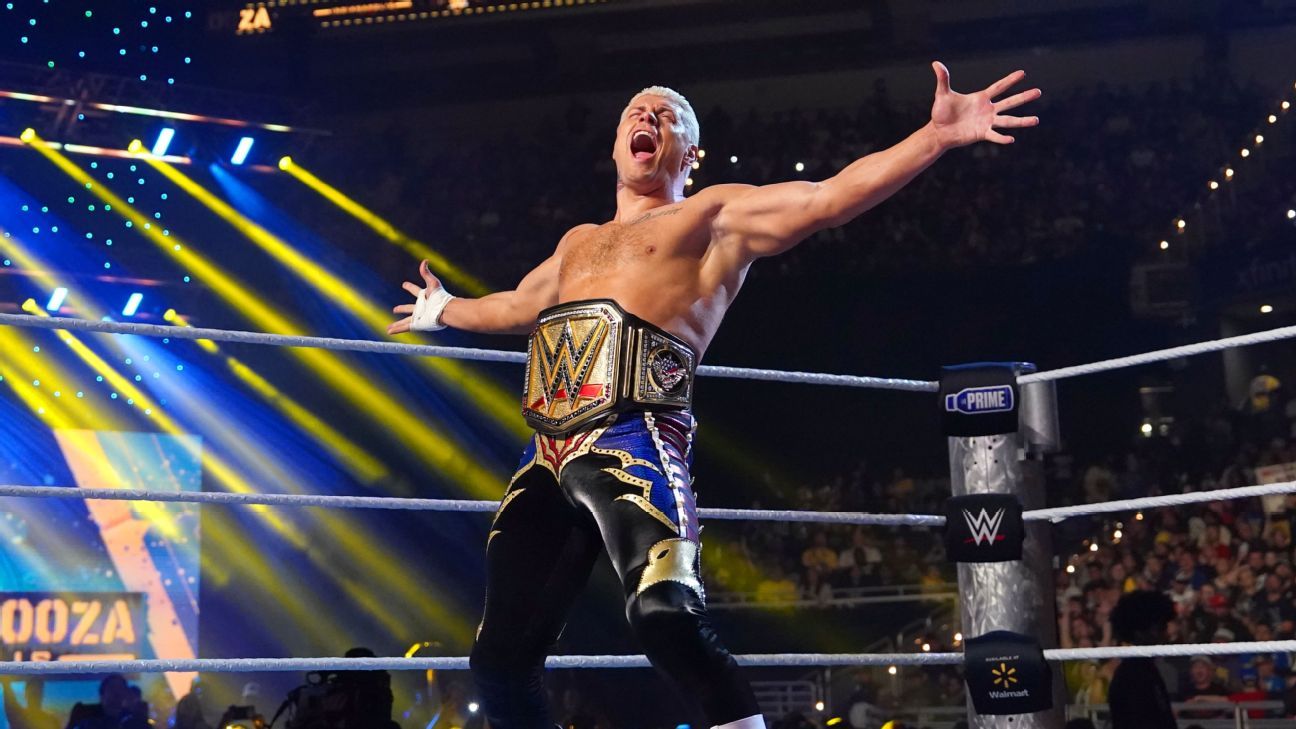
Less than two months remain until WrestleMania 42 from Las Vegas in April, and this Saturday marks a critical stop along the way. Chicago’s United Center will host the 16th WWE Elimination Chamber premium live event (7 p.m. ET on ESPN Unlimited), where the WrestleMania card will continue to be constructed.
The show will feature both men’s and women’s Elimination Chamber matches, during which six wrestlers, surrounded by a steel cage structure, work to pin or submit their opponents until one winner is left standing. That wrestler receives a championship opportunity at WrestleMania. CM Punk will also defend his World Heavyweight Championship in his hometown against Finn Bálor. And the Becky Lynch vs. AJ Lee saga continues with the Women’s Intercontinental Championship on the line.
Here are the notes, stats and Elimination Chamber history to know heading into Saturday’s event.
Men’s Elimination Chamber
Participants: Randy Orton, Cody Rhodes, LA Knight, Je’Von Evans, Trick Williams and Jey Uso
1:04
Cody Rhodes: ‘I need to officially point at the WrestleMania sign’
Cody Rhodes previews the Elimination Chamber against Randy Orton, LA Knight, Je’Von Evans and Trick Williams, readying to punch his ticket to WrestleMania.
• The first Elimination Chamber match occurred 23 years ago at Survivor Series in 2002. Shawn Michaels won the match to become world heavyweight champion.
• There have been 36 men’s and women’s Elimination Chamber matches combined, 11 of which have produced new champions.
• Triple H and John Cena share the distinction of most Elimination Chamber victories with four each. Daniel Bryan is next with three. Cena is the most recent Elimination Chamber winner, having won the men’s match in 2025. He turned heel and claimed his record-setting 17th championship the following month at WrestleMania 41.
• This will be a record-setting 10th Elimination Chamber match for Orton. Chris Jericho and Cena sit two back of Orton in the record book with eight entrants. If Orton records two eliminations in Saturday’s match, he will tie Jericho for the most all time (10). Orton is the only participant in the match with an Elimination Chamber win. He won in 2014 and retained the world title on his way to the WrestleMania 30 main event.
• Rhodes has lost three consecutive PLE matches, dating back to Crown Jewel in October 2025. It is Rhodes’ longest PLE losing streak since he returned to the WWE at WrestleMania 38 in 2022. On Saturday, Rhodes will make his first Elimination Chamber appearance since his WWE return, but not his first ever. In his first WWE stint, he took part in the World Heavyweight Championship Elimination Chamber match, won by Bryan in 2012.
• Uso won five straight WWE PLE matches from November 2024 to August 2025 — including his World Heavyweight Championship win at WrestleMania 41. Since then, he’s on a four-match PLE losing streak for the first time since 2020-21.
• Knight is looking for a change in luck at the Elimination Chamber. It has been more than a year since Knight has won a PLE match. Since Crown Jewel in November 2024, he has lost seven consecutive PLE bouts.
Women’s Elimination Chamber
Participants: Alexa Bliss, Tiffany Stratton, Rhea Ripley, Asuka, Kiana James and Raquel Rodriguez
• The first women’s Elimination Chamber match occurred in 2018. Bliss won the match and retained her “Raw” women’s championship. This will be the eighth women’s Elimination Chamber match in history.
• The only superstar with multiple women’s Elimination Chamber wins is Bianca Belair (2022 and 2025). Bliss or Asuka could join her on that list this weekend.
• Stratton is aiming to avoid her third straight WWE PLE loss after Liv Morgan eliminated her to win the Royal Rumble and Stephanie Vaquer defeated her to win the 2025 Crown Jewel Championship. Stratton hasn’t experienced a three-loss skid in PLE matches since her first three on the main roster in early 2024.
• Asuka has not won a match at a PLE event since Elimination Chamber in 2024, when the Kabuki Warriors defeated Candice LeRae and Indi Hartwell to retain the Women’s Tag Team Championship.
• Rodriguez could earn her first career singles victory at a WWE PLE this weekend. Rodriguez, who holds the women’s record for tag title reigns with six, has accumulated only tag team victories in her WWE PLE career.
• Will anyone run the table in this match? Only one wrestler, Shayna Baszler in 2020, has ever recorded every elimination in an Elimination Chamber match.
World Heavyweight Championship: CM Punk vs. Finn Bálor
1:24
Previewing CM Punk vs. Finn Balor at Elimination Chamber
Arda Ocal previews a huge match for the world heavyweight title between CM Punk and Finn Balor at Elimination Chamber in Chicago.
• The winner of this match is destined for a WrestleMania collision with Roman Reigns. Bálor defeated Reigns on his first night on the WWE main roster — the July 25, 2016, edition of “Raw.”
• This will be CM Punk’s first PLE match in Chicago since he took down Jericho at Payback in 2013. Overall, he has wrestled in six WWE PLE matches from Chicago and has a 4-2 record. One of Punk’s two UFC fights also occurred in Chicago.
• Punk is in the midst of an impressive run. He has not lost a match in more than two months. During that stretch, he successfully has retained the World Heavyweight Championship in three television matches against Bron Breakker, AJ Styles and his Elimination Chamber opponent, Bálor.
• It has been two years since Bálor last won a PLE match. In fact, his last such win occurred at the 2024 Elimination Chamber. At that event, he and Damian Priest successfully defended their tag titles against Pete Dunne and Tyler Bate.
Women’s Intercontinental Championship: Becky Lynch vs. AJ Lee
1:05
Best moments of WWE Elimination Chamber history
Relive some of the top moments of Elimination Chamber history as we gear up for Saturday’s event.
• Lee will compete in her first championship match in more than 11 years. Her last title bout occurred in December 2014, when she battled Nikki Bella at Tables, Ladders and Chairs … and Stairs for the Divas Championship.
• Lynch is 3-0 at Elimination Chamber. Her last such win occurred in 2024, when she won the women’s Elimination Chamber match.
• Lee will make her second career Chicago PLE appearance after she defeated Kaitlyn to win the Divas Championship at Payback in 2013.
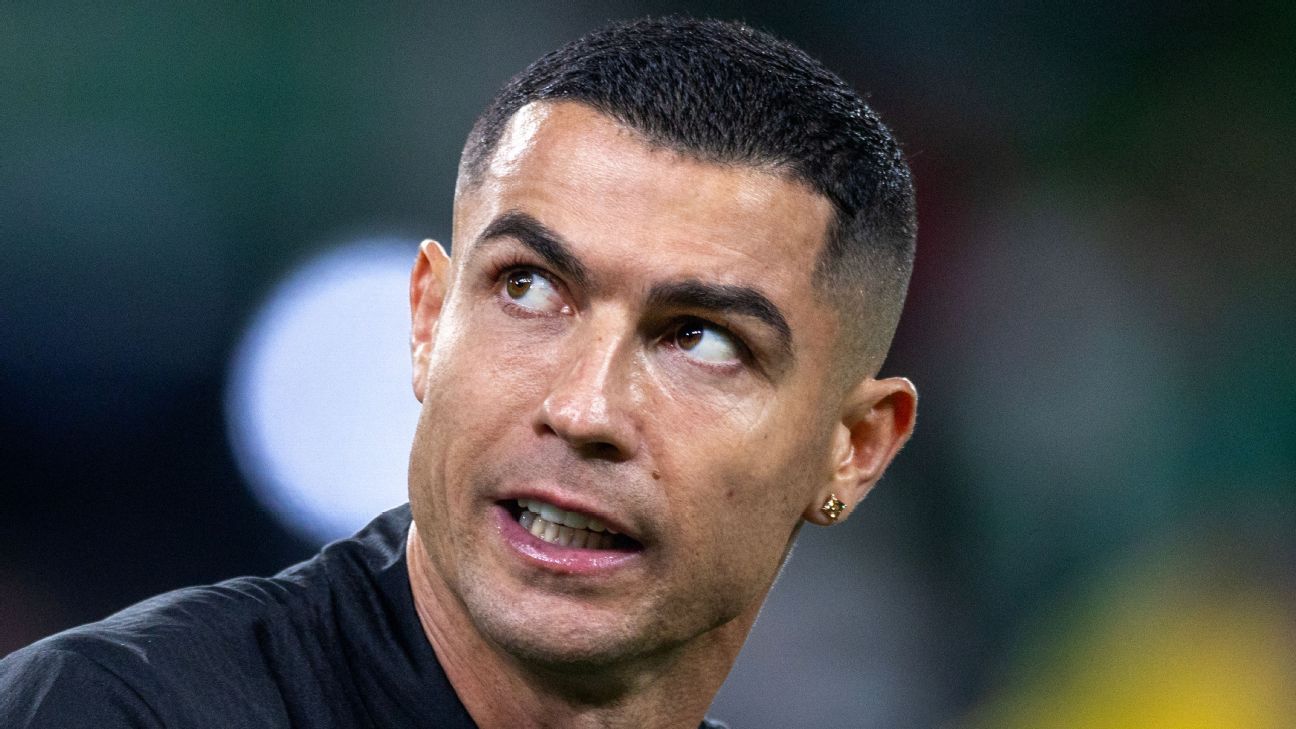
Cristiano Ronaldo has acquired a 25% ownership stake in Spanish second division club UD Almeria.
The financial terms of the transaction, done through the Portugal captain’s CR7 Sports Investments company, have not been disclosed but the deal is considered a long-term strategic investment from Ronaldo.
“I have long had the ambition to contribute to football beyond the pitch,” Ronaldo said in a statement.
“UD Almería is a Spanish club with a strong foundation and clear growth potential. I wish to work with the team leading the club to support it in its new phase of growth.”
UD Almeria were taken over by a Saudi Investment group in May 2025.
Ronaldo, who turned 41 on Feb. 5, has in the past expressed his desire to own a football club once he retired.
– Cristiano Ronaldo goal tracker: Road to 1,000 career goals
– Cristiano Ronaldo reaffirms commitment: ‘I belong to Saudi Arabia’
The former Real Madrid star last summer extended his contract with Saudi Pro League club Al Nassr through June 2027 and is expected to captain Portugal this summer in what will be a record sixth World Cup.
UD Almeria president Mohamed al Khereiji is thrilled to have the five-time Ballon d’Or winner on board.
“He is considered the best on the pitch,” Al Khereiji said. “He knows the Spanish leagues very well and understands the potential of what we are building here both in terms of the team and the youth academy.”
Relegated to the second division in April 2024, Almeria are on course to gain promotion to Spain’s top fight this season. They are third in Spain’s second tier, two points adrift of leaders Racing Santander after 27 games.


“Heated Rivalry” Season 2 is coming “as soon as humanly possible,” says creator Jacob Tierney

Third victim dies from injuries in Rhode Island rink shooting

The NBA doesn’t just want to build a European basketball league — it wants to revolutionize the international pro game

-

 Tech7 days ago
A $10K Bounty Awaits Anyone Who Can Hack Ring Cameras to Stop Sharing Data With Amazon
-

 Fashion6 days ago
ICE cotton ticks higher on crude oil rally
-
 Business6 days ago
US Top Court Blocks Trump’s Tariff Orders: Does It Mean Zero Duties For Indian Goods?
-
 Business5 days ago
Eye-popping rise in one year: Betting on just gold and silver for long-term wealth creation? Think again! – The Times of India
-

 Entertainment5 days ago
Viral monkey Punch makes IKEA toy global sensation: Here’s what it costs
-

 Sports6 days ago
Brett Favre blasts NFL for no longer appealing to ‘true’ fans: ‘There’s been a slight shift’
-

 Entertainment6 days ago
The White Lotus” creator Mike White reflects on his time on “Survivor
-

 Sports5 days ago
How James Milner broke Premier League’s appearances record