

Politics
Takaichi elected Japan’s premier, shattering glass ceiling with hard-right turn


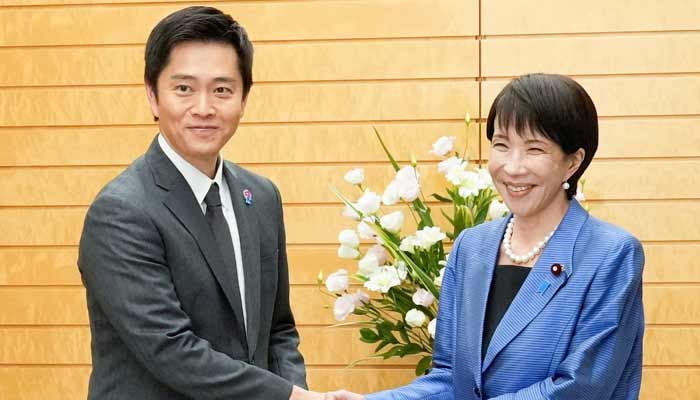
- Takaichi becomes Japan’s first female prime minister.
- Takaichi’s election marks a shift to the right in Japan.
- Equity markets optimistic about Takaichi’s economic policies.
Hardline conservative Sanae Takaichi was elected Japan’s first female prime minister on Tuesday, shattering the political glass ceiling and setting the country up for a decisive turn to the right.
An acolyte of former Prime Minister Shinzo Abe and an admirer of Britain’s Margaret Thatcher, Takaichi is expected to return to Abe-style government stimulus as she attempts to jumpstart an economy saddled with slow growth and rising prices.
While her victory marks a pivotal moment for a country where men still hold overwhelming sway, she named just two women to her cabinet, far fewer than what she had promised.
Takaichi is also likely to usher in a sharp move to the right on issues such as immigration and defence, making her the latest leader in tune with the broader rightward shift in global politics.
She received 237 votes in the election in parliament’s 465-seat lower house on Tuesday and then won a similar vote in the less powerful upper house.
Her victory was secured after her Liberal Democratic Party, which has governed Japan for most of its postwar history, agreed on Monday to form a coalition with the right-wing Japan Innovation Party, known as Ishin.
Together, the parties are two seats short of a majority in the lower house. That means Takaichi’s success will depend on her winning the cooperation of more opposition lawmakers, said Tadashi Mori, a professor of politics at Aichi Gakuin University.
“The two parties do not command a majority in either chamber, and to ensure a stable government and gain control of key parliamentary committees, they will need to secure more than half the seats,” he said.
Previous coalition broke up after quarter-century
Takaichi takes over when Japanese politics appears more fractured than at almost any other time in recent memory, thanks in part to the rise of the smaller, hard-right Sanseito Party, which has siphoned voters away from the LDP.
“Since former Prime Minister Abe passed away, we’ve felt that both national politics and the LDP itself have drifted leftward,” Sanseito head Sohei Komiya told broadcaster NHK, adding he hoped Takaichi would steer national politics back to the middle.
“While we won’t hesitate to oppose her when necessary, we intend to maintain a friendly working relationship,” he said.
The LDP’s former coalition partner, the more moderate Komeito, broke up their 26-year-old alliance this month after the LDP chose the right-wing Takaichi as its new leader.
No ‘Nordic’ cabinet after all
Takaichi named just two women to her cabinet: fellow Abe disciple, Satsuki Katayama, became the country’s first female finance minister, while Kimi Onoda became economic security minister.
In her leadership campaign, she promised to boost the number of women in the cabinet to match socially progressive Nordic countries. The percentage of female ministers in Nordic governments ranges from Denmark’s 36% to Finland’s 61%. Under Takaichi, women will make up 16% of Japan’s cabinet, including her.
“Only two female ministers, no surprise,” said Yoko Otsuka a professor of welfare policy and gender studies at Ritsumeikan University. “A female prime minister might slightly improve Japan’s Global Gender Gap Index ranking, but the reality barely changes.”
Takaichi trade moves stocks higher
Takaichi’s endorsement of Abe-style fiscal stimulus has prompted a so-called “Takaichi trade” in the stock market, sending the Nikkei share average to record highs, the most recent on Tuesday. But it has also caused investor unease about the government’s ability to pay for more spending in a country where the debt load far outweighs annual output. Both the yen and bond prices have weakened as a result.
Any attempt to revive Abenomics could also run into trouble because the policy was devised to fight deflation, not higher prices, said Aichi Gakuin’s Mori.
Some analysts say Ishin, which has advocated for budget cuts, could restrain some of Takaichi’s spending ambitions.
Takaichi has said defence and national security would be core pillars of any administration she led. She pledged to raise defence spending, deepen cooperation with the United States and other security partners. US President Donald Trump may visit as early as her first week in office.
A frequent visitor to the Yasukuni war shrine in Tokyo that some Asian neighbours view as a symbol of wartime aggression, Takaichi has also called for a revision of Japan’s postwar pacifist constitution to recognise the existence of the nation’s military forces.
Rising political star Shinjiro Koizumi will serve as defence minister while veteran lawmaker Toshimitsu Motegi will be foreign minister.
Takaichi will be sworn in as Japan’s 104th prime minister on Tuesday evening to succeed the incumbent Shigeru Ishiba, who last month announced his resignation to take responsibility for election losses.
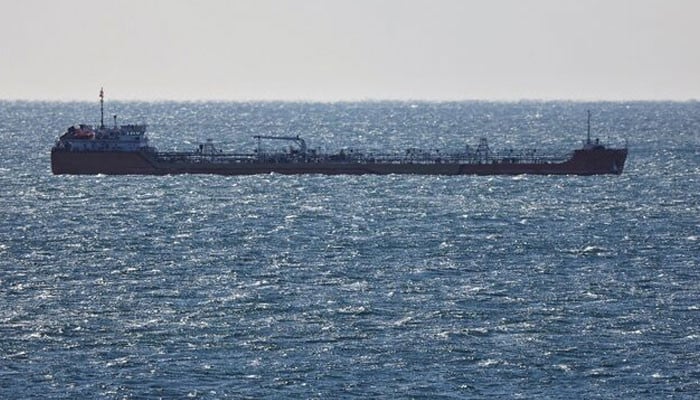
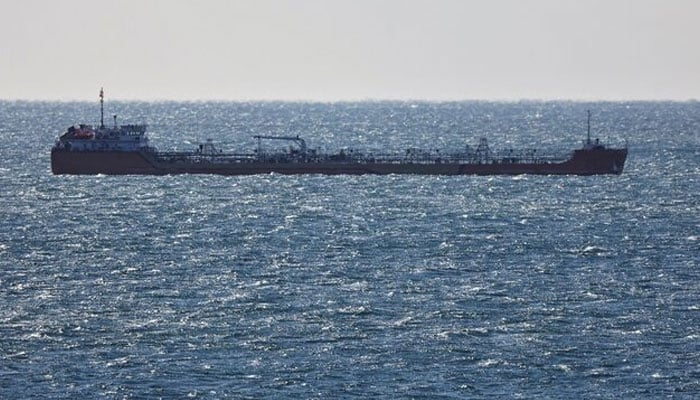
DUBAI: Unidentified attackers hijacked an oil tanker on Saturday off the coast of Yemen in the Gulf of Aden and directed it towards Somalia, the Yemeni coast guard said.
According to the agency, the tanker EUREKA was seized off Yemen’s Shabwa province by a group who “boarded, took control of it, then steered it… in the direction of the Somali coast”.
The coast guard, which is affiliated with Yemen’s internationally recognised government, vowed to investigate the attack.
“The location of the tanker has been determined, and work is under way to monitor it and take the necessary measures in an attempt to recover it and ensure the safety of its crew,” it said, without identifying the crew’s numbers or nationality.
According to the website Marine Traffic, the EUREKA is a Togolese-flagged oil products tanker that was reported to have been in the UAE port of Fujairah in late March.
Piracy was rampant off the coast of Somalia in the 2000s, peaking in 2011 with hundreds of attacks, but was significantly reduced by international naval deployments and new tactics by commercial shipping.
But in recent weeks attacks have increased again, according to a report by the European Union naval mission deployed off the shores of the troubled east African country.
Operation Atalanta, the EU’s naval force for Somalia, monitored three attacks in late April, according to its information service, the Maritime Security Centre Indian Ocean (MSCIO).
Since February 28, shipping in the region has also been disrupted by the US-Israeli war against Iran, but there was no immediate indication that Saturday’s hijacking was linked to the conflict.
Last month, a tanker was captured in the Gulf of Aden by a new group of pirates operating from the port town of Garacad in the Puntland state of northeastern Somalia, a local security official told AFP.
- Contract supports APG-66 and APG-68 radar systems.
- Work to be completed by March 2036.
- Includes multiple allies under foreign military sales plan.
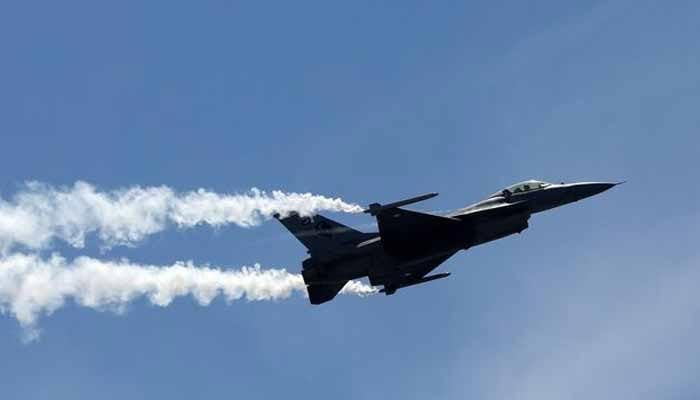
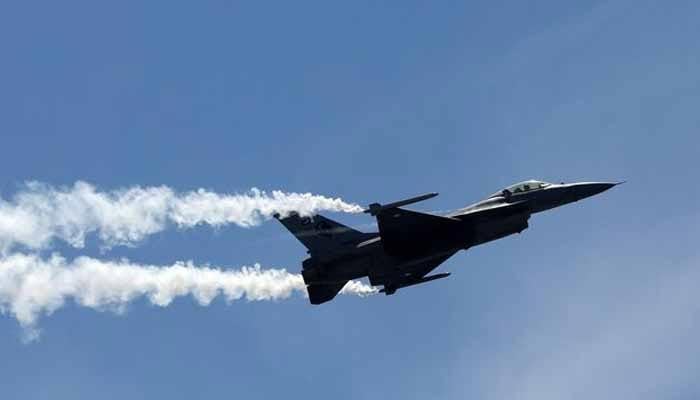
The United States Air Force has contracted Northrop Grumman Systems Corp. in a $488 million deal to provide engineering and technical support for F-16 radar systems under its Foreign Military Sales programme, with Pakistan among the beneficiary countries.
According to an official award notice issued by the US Department of War, the firm-fixed-price, indefinite-delivery/indefinite-quantity contract covers support for F-16 System Programme Office Foreign Military Sales (FMS) as well as Air Force and Navy requirements.
The contract includes engineering and technical support for APG-66 and APG-68 radar systems. The work will be carried out at Linthicum Heights, Maryland, and is expected to be completed by March 31, 2036.
The contract involves foreign military sales to multiple countries, including Bahrain, Belgium, Chile, Denmark, Egypt, Greece, Indonesia, Iraq, Israel, Jordan, Korea, Morocco, the Netherlands, Norway, Oman, Pakistan, Poland, Portugal, Romania, Thailand and Türkiye.
The US Air Force said the contract was awarded on a sole-source basis. Fiscal 2026 non-appropriated, Air Force and Navy funds amounting to $2,644,922 have been obligated at the time of the award.
The Air Force Lifecycle Management Centre at Hill Air Force Base, Utah, is the contracting authority for the agreement, which was awarded on April 27, 2026.
The development comes months after the United States, in December 2025, approved the sale of advanced technology and support services worth $686 million for Pakistan’s F-16 fighter aircraft fleet.
According to a letter from the US Defence Security Cooperation Agency (DSCA) to Congress dated December 8, the package covers Link-16 data link systems, cryptographic gear, avionics upgrades, training, and wide-ranging logistical support.
The DSCA says the decision aligns with Washington’s broader strategic aims, stating the sale “will support the foreign policy and national security objectives of the United States by allowing Pakistan to retain interoperability with US and partner forces in ongoing counterterrorism efforts and in preparation for future contingency operations.”
The letter notes that the upgrades are intended to modernise Pakistan’s Block-52 and Mid-Life Upgrade F-16s and address operational safety requirements. According to the letter, the sale will “maintain Pakistan’s capability to meet current and future threats by updating and refurbishing its Block-52 and Mid Life Upgrade F-16 fleet.”
- US approves of sales to Qatar, UAE, Kuwait and Israel.
- US govt says emergency exists to waive congressional review.
- Washington faces scrutiny for military ties with Kuwait, UAE, Qatar.
US President Donald Trump’s administration has bypassed congressional review to approve military sales totaling over $8.6 billion to Middle Eastern allies Israel, Qatar, Kuwait and the United Arab Emirates.
The State Department announcements on Friday came as the US and Israel’s war against Iran marked nine weeks since its start and more than three weeks since a fragile ceasefire came into effect.
The State Department said US Secretary of State Marco Rubio determined that an emergency existed that required immediate sales to those countries and waived the congressional review requirements for the sales.
The announcements included approving military sales to Qatar of Patriot air and missile defence replenishment services costing $4.01 billion and of Advanced Precision Kill Weapon Systems (APKWS) costing $992.4 million.
The principal contractor in the APKWS sales to Qatar, Israel and the UAE was BAE Systems, the State Department said.
RTX and Lockheed Martin were the principal contractors in the integrated battle command system sale to Kuwait and in the Patriot air and missile defense replenishment sale to Qatar, the State Department added.
Northrop Grumman was also a principal contractor in the Kuwaiti sale.
Over the years, Washington has faced scrutiny for military ties with Kuwait, the UAE and Qatar over those countries’ human rights track records that rights advocates say involve restrictions on and reported abuses of minorities, journalists, voices of dissent, the LGBT community and labourers.
Those nations have denied supporting or engaging in domestic rights abuses.
US support for Israel has also come under scrutiny from rights experts, particularly over Israel’s assault on Gaza that has killed tens of thousands, caused a hunger crisis and led to assessments of genocide from scholars and a UN inquiry.
Israel calls its actions self-defence after Hamas-led fighters killed 1,200 people in an October 2023 attack.
Washington has maintained support for its allies.


Oil tanker hijacked off Yemen, diverted towards Somalia: Yemen coast guard

AI detects pancreatic cancer 3 years before diagnosis: Study reveals breakthrough results

Andy Serkis on making the animated version of "Animal Farm"

-

 Tech1 week ago
They Wanted to Join Raya. They’ve Been on the Waiting List for Years
-

 Tech5 days ago
A Brain Implant for Depression Is About to Be Tested in Humans
-

 Tech5 days ago
Almost 90% of women leave tech industry within 10 years | Computer Weekly
-

 Tech1 week ago
Why Do I Like Dyson’s PencilVac So Much?
-

 Fashion1 week ago
North India cotton yarn steady despite continued push by spinners
-

 Entertainment1 week ago
Anne Hathaway makes shocking confession about Taylor Swift’s music
-

 Sports5 days ago
Toulouse fall to first home defeat for a year | The Express Tribune
-

 Sports1 week ago
US says Iran can play in Fifa World Cup but IRGC-linked individuals won’t be allowed