

Business
Take a look inside Target’s new fashion-focused store in New York’s SoHo neighborhood


Target has turned its store in New York City’s SoHo neighborhood into a unique concept store. Inside of an area that resembles the company’s Bullseye logo, the company has “The Drop,” a rotating display of seasonal styles and curated items.
Courtesy of Target
In one of New York City’s most fashion-forward neighborhoods, Target is unveiling its latest effort to keep up with trends and lead the way on style.
The Minneapolis-based retailer, which is in the middle of a turnaround effort and on the cusp of a CEO change, gave a makeover to its big-box store in SoHo at 600 Broadway.
The one-of-a-kind concept store, which opens Tuesday, will have rotating merchandise, curated displays chosen by celebrities and influencers, and other kinds of special programming, Chief Guest Experience Officer Cara Sylvester said.
The SoHo store is part of a broader push by incoming CEO Michael Fiddelke to win back Target’s reputation for style and sharp merchandise. When he was named Target’s next leader in August, he said that would be one of his top three priorities, along with improving the customer experience and rolling out technology to make Target faster and more efficient. He will start the role in February, succeeding longtime CEO Brian Cornell.
Target is trying to get back to growth after roughly four years of stagnant annual sales due to self-inflicted challenges and a more difficult economic backdrop. Store foot traffic and sales have fallen as shoppers have responded to sloppier stores, out-of-stock and locked-up items, and the company’s decision to roll back key diversity, equity and inclusion programs. Consumers across the country have also become more selective about buying discretionary merchandise, which has long been Target’s sweet spot, as they pay more for necessities like groceries, electricity and housing.
At an event previewing the store on Monday night, Fiddelke described the SoHo location as “a punctuation point” for Target’s sense of style and its plans for the future.
In an interview with CNBC, Sylvester said the store’s merchandise has completely changed. The location, which opened about seven years ago, drew many shoppers and had strong sales, but sold mostly items found in drug and convenience stores, she said. It didn’t carry any of Target’s clothing or home decor, which felt both out of step with the neighborhood and like a missed opportunity for Target, she said.
“We said, ‘This is the style and fashion capital. We have to be able to showcase the best,'” she said, recalling the inspiration for the project.
From start to finish, the store’s redesign took four months as the company raced to get the project done ahead of the holidays, Sylvester said. It has redone the store’s first floor and plans to redesign the basement floor in the coming year, she added.
The SoHo store is reopening at a time when holiday shoppers and tourists flock to the major shopping district for holiday gifts and party outfits — and as Target chases sales across the country during the critical shopping season. It is one of 42 stores that the retailer has in New York City and nearly 2,000 that is has in the U.S.
“The world looks at New York to see what’s new and what’s next,” Sylvester said in remarks at the launch event. “And we want them to look at Target when they see what’s new and what’s next.”
A look inside Target’s SoHo store
Inside of a merchandise area that resembles Target’s Bullseye logo, the store will have rotating merchandise that’s organized around a theme.
Melissa Repko, CNBC
When customers step inside of Target’s SoHo store, they will enter a long, red hallway that resembles the inside of Target’s Bullseye logo. The area of the store is called “The Drop,” and Target will display merchandise there chosen around themes that feel relevant for the time of year, Sylvester said.
Like most of the store, the rotating area will swap out about every four to six weeks, she added.
As the store opens, The Drop is themed around the holidays — including outfits and items that a shopper may need for going out, lounging at home or giving a gift to a party host. The store displays range across categories, mixing in clothing, home decor, beauty items and more. For example, The Drop currently includes a table of products that a shopper might want if they’re hosting a night at home with friends, such as card games, an espresso martini mix and eye-catching glassware for the cocktails.
Sylvester said the company’s merchants are already working on the next two themes for The Drop, which will be focused on wellness in January, the season of New Year’s resolutions, and Valentine’s Day in February.
Target’s SoHo store has an eye-catching “Beauty Bar” that shows off fragrances, makeup items and more.
Courtesy of Target
Customers can step inside of Target’s “Broadway Beauty Bar,” which is designed for selfies and social media posts. It will have a rotating assortment of Target’s beauty merchandise, including fragrance brands like Fine’ry that are exclusive to Target, and trendy mini versions of face washes, lip glosses and more from national brands.
At launch, Target is featuring items chosen by celebrity makeup artist Katie Jane Hughes.
Along with the “Beauty Bar,” the store sells items typically found at the big-box retailer, including large shampoos, body washes and cotton balls.
Near the beauty area, shoppers can also press a button and snap a black-and-white selfie.
Though the store’s layout is new, it shares a similarity with some of Target’s other New York City locations — some items are locked behind glasses cases that an employee needs to open.
Target will tap celebrities and influencers to pick their favorite Target items for its “Curated By” display.
Courtesy of Target
In the back of the store’s first floor, Target will have a rotating “Curated By” display of items from across the retailer’s beauty, fashion and home categories, picked by celebrities and other creators known for their sense of style. Shoppers can browse and buy that person’s favorites or scan a QR code to see a list of them.
Target’s first Curated By features favorites from Megan Stalter, an actress and comedian who is in HBO’s “Hacks.” Some of her picks include a throw pillow, a pair of hot pink slippers, metallic water bottles and Universal’s “Wicked: For Good” movie-themed clothing items.
Inside of the “Gifting Gondola,” Target will show off exclusive merchandise like plushes from its toy brand, Gigglescape, and items themed around its dog mascot, Bullseye, such as special edition Haribo candies.
Courtesy of Target
Also at the store, shoppers can find Target’s “Gifting Gondola,” which features merchandise exclusive to Target.
Currently, the display includes holiday-themed plush penguins, bears and other products from Target’s toy brand, Gigglescape. It also includes some giftable items themed around the retailer’s bull terrier, Bullseye, including special edition Haribo gummy candies and a Bullseye Pez dispenser.
Over time, Sylvester said Target may introduce some items that are unique to the SoHo store and can only be bought there.
Disclosure: Comcast is the parent company of NBCUniversal, which owns CNBC. Versant would become the new parent company of CNBC upon Comcast’s planned spinoff of Versant.




Motorists are facing higher fuel prices ahead of Easter break due to the conflict in the Middle East, the RAC says.
Source link
Business
E-cheques coming soon? RBI unveils Payments Vision 2028, plans wider oversight of digital players – The Times of India
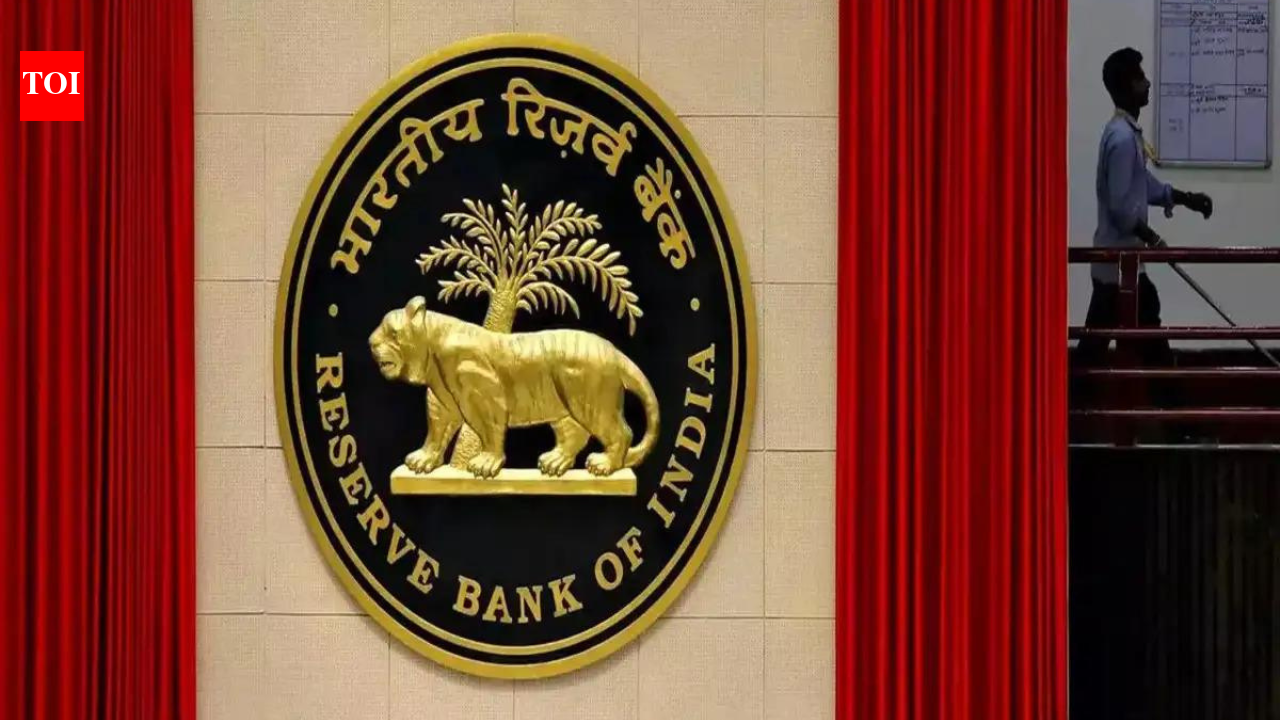
The Reserve Bank of India (RBI) on Friday unveiled its ‘Payments Vision 2028’ document, outlining a roadmap that includes exploring electronic cheques, expanding regulatory oversight to digital platforms, and strengthening safeguards in the fast-growing payments ecosystem, PTI reported.The central bank said it will examine the introduction of e-cheques to combine the advantages of paper instruments with the speed and reliability of digital payments. “To leverage the unique benefits of paper-based instruments and the speed and reliability of electronic payments, and cater to new business use cases, the introduction of electronic cheques in India shall be explored,” the RBI said.Alongside, the RBI is considering widening the regulatory ambit to include entities such as e-commerce marketplaces and centralised platforms that play a growing role in facilitating digital transactions.“In addition, e-commerce marketplaces and centralized platforms have been assuming significant responsibilities that could have implications on the orderly functioning of the payments ecosystem. These aspects shall be examined in detail and, if required, the scope of direct regulations shall be extended to cover such entities,” the document said.The vision document also proposes allowing users to enable or disable transactions across digital payment modes, similar to controls available for card transactions.To address fraud risks, the RBI is exploring a “shared responsibility framework” under which both the issuing bank and the beneficiary bank would share liability in cases of unauthorised digital transactions.The central bank also plans to review cheque design and security features, introduce a Domestic Legal Entity Identifier (DLEI) framework for better transaction traceability, and bring in a Cyber Key Risk Indicators (KRI) framework for non-bank payment system operators.Other initiatives include exploring white-label solutions in the Aadhaar Enabled Payment System (AePS), developing interoperability in the Trade Receivables e-Discounting System (TReDS), and introducing a ‘Payments Switching Service’ to ease customer migration across platforms.The RBI said it will also review the cross-border payments ecosystem to improve efficiency and streamline authorisation processes, alongside publishing periodic reports on global and domestic payment trends.Additionally, the central bank aims to enhance access to payment data and reimagine the card payments ecosystem by promoting secure tokenisation, improved transparency in pricing, and greater choice for users and merchants.

Hyderabad: Pharma player Hetero on Friday said it has rolled out exports of its generic semaglutide injection portfolio as part of a multi-year plan to widen access to treatments for type 2 diabetes and obesity in more than 75 countries.The Hyderabad-based pharmaceutical company said initial rollouts are under way in Africa, Asia and the Middle East, with additional launches planned in other markets subject to regulatory approvals.The injectable therapies will be sold under the brand names Truglyx, Rolmodl and Moto G. Semaglutide belongs to the GLP-1 class of medicines, which are used in diabetes care and weight management.Hetero said the export launch is part of its broader strategy to improve access to advanced cardio-metabolic therapies, particularly in emerging markets.The company said the products will be offered in multi-dose disposable pen devices designed in line with innovator formats and will be available in several strengths, including 0.25 mg, 0.5 mg, 1 mg, 2 mg, 1.7 mg and 2.4 mg, allowing dosing flexibility for both diabetes and obesity treatment.Hetero said it is also awaiting approval from India’s Central Drugs Standard Control Organisation (CDSCO) after completing clinical trials in type 2 diabetes and obesity and plans an India launch after regulatory clearance.Hetero managing director Dr Vamsi Krishna Bandi said the company aims to provide high-quality, affordable generic semaglutide through a single global product platform backed by its manufacturing and development capabilities.He said Hetero would use its commercial networks across Asia, the Middle East, Africa and Latin America to support supply and access. The Hyderabad-headquartered Hetero operates in more than 145 countries and employs over 30,000 people.


Iranian Hackers Breached Kash Patel’s Email—but Not the FBI’s

Tiger Woods involved in rollover crash in Florida less than 2 weeks before Masters: reports

Backstreet Boys AJ McLean shows support to Britney Spears after DUI arrest

-
 Business7 days ago
Flipkart group CFO to leave co amid IPO plans – The Times of India
-

 Fashion7 days ago
China’s textile & apparel exports surge 17% to $50 bn in Jan-Feb 2026
-
 Business1 week ago
Video: The Effects of High Oil Prices
-

 Sports1 week ago
Rating Adidas’ 2026 World Cup away shirts: Argentina, Spain, Mexico and more
-

 Sports7 days ago
American Conference Commissioner Tim Pernetti thanks Trump for Army-Navy game executive order
-
 Fashion1 week ago
The hidden $1.62 war tax now embedded in every garment you source
-

 Tech1 week ago
‘Uncanny Valley’: Nvidia’s ‘Super Bowl of AI,’ Tesla Disappoints, and Meta’s VR Metaverse ‘Shutdown’
-
Tech1 week ago
The Corsair 4000D RS PC Case Keeps Your System Cool