

Fashion
Tamil Nadu wind policy tweaks to boost textile sector competitiveness

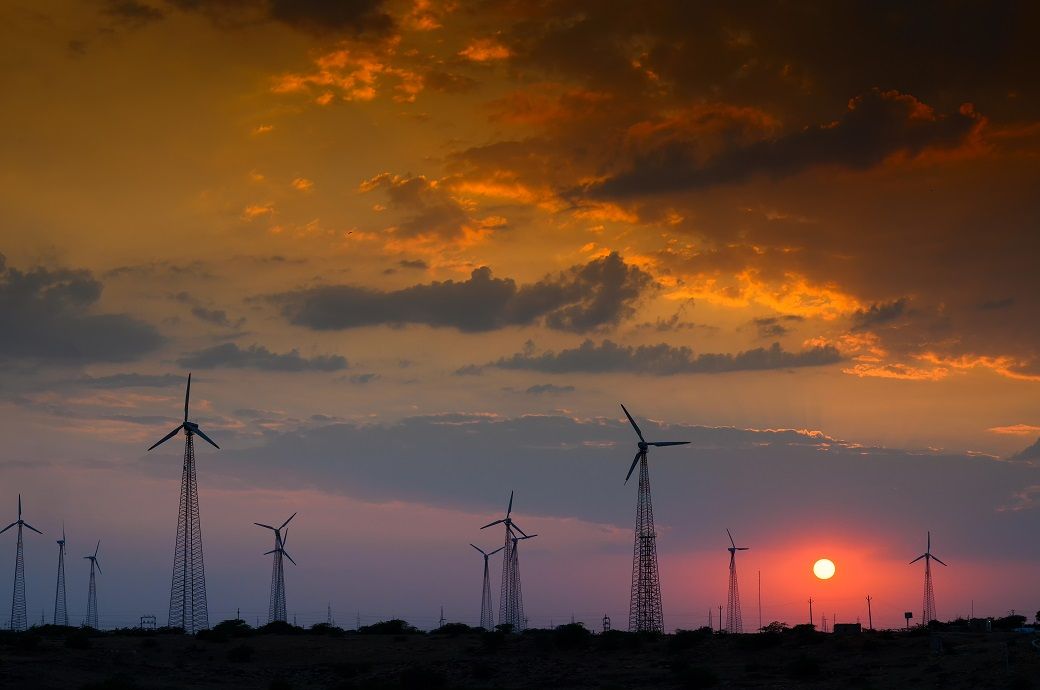
In a press statement, SIMA said the incentives and policy corrections would support greater adoption of green energy by textile manufacturers while helping the industry navigate stress arising from recent global developments. SIMA chairman Durai Palanisamy noted that access to renewable energy has become critical for the power-intensive textile sector amid volatile export markets and rising compliance costs.
Tamil Nadu’s revised wind power policy is set to ease cost pressures on the state’s textile and garment industry by supporting greater adoption of renewable energy.
Industry body SIMA has welcomed measures such as retention of annual banking and lower infrastructure charges.
The amendments are expected to enhance competitiveness and support power-intensive units.
Tamil Nadu, India’s second-largest state economy, accounts for nearly one-third of the country’s textile business size. The state contributes around 28 per cent of total textile employment, 45 per cent of national spinning capacity, 22 per cent of power loom capacity, and holds a leading position in cotton yarn production and exports. It also houses over 70 per cent of India’s cotton knitted garment manufacturing capacity. The textile sector is a key pillar in Tamil Nadu’s ambition to achieve a $1 trillion economy by 2030.
However, the industry is currently facing strong headwinds from multiple international factors, including tariff actions by the United States, the European Union’s gradual shift away from fast fashion, and geopolitical uncertainties impacting textile trade flows, including developments in Bangladesh.
Tamil Nadu has been a pioneer in wind energy investment since the 1990s, driven by supportive government policies. A significant number of captive windmills used by textile units are now over 20 years old. Industry concerns had intensified after the 2025 wind repowering policy denied banking facilities and evacuation support, posing challenges for power-intensive sectors such as textiles that rely heavily on captive wind power. SIMA had repeatedly urged the state government to extend banking facilities for older windmills and allow operational life extensions of up to 40 years.
Welcoming the amendments notified through the latest government order, Palanisamy highlighted that the retention of the annual banking system, the sharp reduction in Infrastructure Development Charges from the earlier proposal of ₹30 lakh per MW for five years to ₹50,000 per MW per annum for life extension or refurbishment, and the simplification of procedures for obtaining life-extension certificates from chartered engineers are key industry-friendly measures.
According to SIMA, these amendments will enhance Tamil Nadu’s competitiveness vis-à-vis other textile-producing states while reinforcing its leadership in renewable energy adoption. Palanisamy also welcomed the continuation of Power Purchase Agreements and the option to opt for energy wheeling agreements.
He expressed hope that the state government would further consider extending banking facilities to captive windmills installed after 2018, a move that could help power-intensive textile units remain competitive and attract fresh investment into the state.
Fibre2Fashion News Desk (KUL)











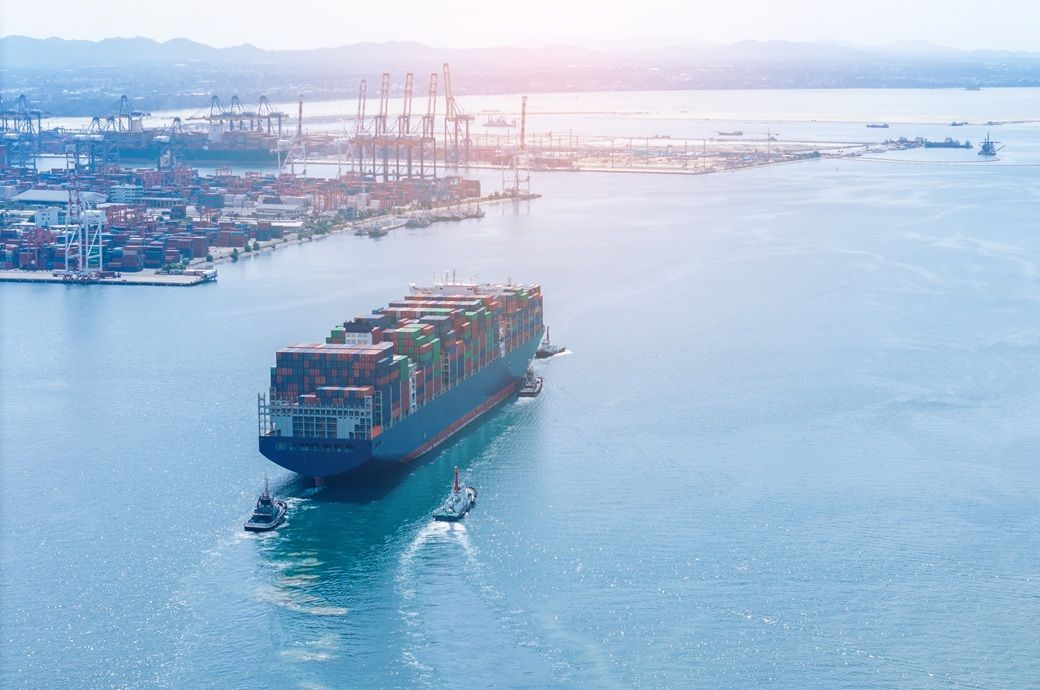
Shipping schedules have been frequently adjusted recently at Saigon Port’s Hiep Phuoc terminal, reducing operational stability.
Ho Chi Minh City businesses are adjusting production plans, diversifying markets and seeking new supply chains due to disruptions in shipping routes and soaring logistics costs arising out of the Iran war.
Shipping schedules have been frequently adjusted at Saigon Port’s Hiep Phuoc terminal, reducing operational stability.
Cargo turnover has slowed as incoming and outgoing shipments have become uneven.
Cargo turnover has slowed as incoming and outgoing shipments have become uneven, affecting businesses’ cash flow, according to a report by a domestic media outlet.
Vessel calls drop has also reduced workload of port operators, shipping lines, freight forwarders and logistics companies. Port workers engaged in container handling and operations have been directly hit.
Due to a diversified customer base and a significant share of intra-Asia cargo, the port’s throughput remains within controllable levels, said Nguyen Anh Hao, acting director of Hiep Phuoc terminal.
Pham Van Xo, chairman of the city’s Import-Export Association, said longer shipping routes had reduced vessel availability while demand for cargo transport remained high. This resulted in shortages of container space and rising fuel costs, insurance premia and security surcharges.
The situation has hit cash flow of businesses and created pressure to maintain payroll and labour stability.
If the disruptions persist, apart from the logistics sector, major export industries like garments, footwear, wood products, agriculture and seafood may face ripple effects, experts cautioned.
Falling orders or rising costs could force companies to scale down production, directly affecting workers’ income and employment.
Despite the challenges, businesses in Ho Chi Minh City are seeking solutions like diversifying shipping routes, expanding markets and strengthening negotiations with partners.
Fibre2Fashion News Desk (DS)

Fast fashion, particularly products priced below ₹1,000 (~$10.82), dominates their consumption patterns, reflecting a clear preference for affordable purchases, Reedseer said in an article titled ‘Gen Z: Defining Trends, Influencing Spends’ by Mrigank Gutgutia.
India’s Gen Z will drive nearly half of the fashion market by 2030, with $1.3 trillion in spending, according to Reedseer.
Value-conscious and digitally native, they favour affordable fast fashion and are influenced by peers and online content.
Their choices prioritise identity, comfort, and authenticity, while also shaping household purchases.
Having grown up in a digital-first environment, Gen Z consumers exhibit a strong comfort with online platforms, a behaviour further reinforced during the pandemic years. As many enter the workforce, their spending is increasingly directed towards identity-building, with purchasing decisions shaped heavily by peer influence and social validation.
Despite becoming the largest user base on leading fashion e-commerce platforms, Gen Z consumers tend to spend less per transaction than millennials, underscoring their value-conscious approach. At the same time, categories such as men’s accessories and sneakers are witnessing strong growth, indicating evolving consumption patterns across genders.
Comfort and versatility define Gen Z’s fashion choices, with two-thirds preferring semi-formal or casual wear even in professional settings. Beyond personal consumption, this cohort plays a decisive role in shaping household purchasing decisions, particularly for emerging brands, effectively acting as internal influencers within families.
Gen Z prioritises authenticity, inclusivity, and self-expression, with around 52 per cent choosing products that align with their identity, while nearly half discover brands through digital content. This has made influencer-led marketing and creator collaborations central to brand-building efforts.
The article emphasised that successful brands must transition from aspirational messaging to identity-driven positioning, supported by personalisation, community engagement, and cultural relevance. As Gen Z consumers establish long-term preferences in their twenties, brands that succeed in building early affinity are likely to secure sustained competitive advantage in the years ahead.
Fibre2Fashion News Desk (SG)

The company posted a net loss of $7 million, compared to a net income of $16.3 million in FY24. Adjusted EBITDA fell to $63.6 million, or 6.4 per cent of sales, from $109.1 million, or 9.9 per cent a year earlier.
Torrid Holdings has reported a weak FY25, with sales falling 9.4 per cent to $1 billion and a net loss of $7 million amid margin pressure.
The company closed 151 stores and saw EBITDA decline.
Q4 performance also weakened.
Despite this, Torrid expects modest recovery in FY26, supported by optimisation efforts, improved marketing and a stronger operational foundation.
The company closed a total of 151 stores during the year as part of its retail optimisation strategy, reducing its footprint from 634 to 483 stores, Torrid Holdings said in a press release.
Torrid ended the year with $20 million in cash and cash equivalents, while total liquidity stood at $84.9 million. Net cash used in operations was $13 million, compared to positive operating cash flow of $77.4 million in the previous year.
For the fourth quarter (Q4), net sales dropped 14.3 per cent year-on-year (YoY) to $236.2 million, while comparable sales fell 10 per cent. Gross margin contracted to 30.0 per cent from 33.6 per cent a year earlier. The company reported a net loss of $8.1 million, widening from a $3.0 million loss in the same period last year. Adjusted EBITDA declined sharply to $5.1 million, or 2.2 per cent of sales, compared to $16.7 million, or 6.1 per cent, previously.
During the quarter, Torrid closed 77 stores under its Store Footprint Optimisation Project, taking the total store count to 483 locations.
Commenting on performance, Lisa Harper, chief executive officer at Torrid Holdings, said, “2025 was a transformational year. We delivered $1 billion in net sales, in line with our guidance, and $63.6 million in Adjusted EBITDA, exceeding the high end of our outlook, while making deliberate strategic decisions required to put this business on a stronger footing. We closed 151 structurally unproductive locations, launched five sub-brands that generated approximately $70 million in sales, and fundamentally restructured our product assortment around core franchises and fabrications our customers value most. Trends in Q4 and early Q1 give us confidence that the foundation we’ve built is beginning to take hold.”
Looking ahead, the company expects first-quarter fiscal 2026 net sales in the range of $236 million to $244 million, with Adjusted EBITDA between $14 million and $18 million. For the full year, Torrid forecasts net sales between $940 million and $960 million and Adjusted EBITDA of $65 million to $75 million, alongside capital expenditure of $8 million to $10 million.
“We enter 2026 with a strong operational foundation—optimised channels, product and pricing. This positions us to accelerate customer file growth through renewed marketing efforts, helping us re-engage past shoppers, attract new customers and deepen loyalty across our existing base. I am confident we are on the right path and encouraged by early signs of progress we are seeing in the business,” added Harper.
Fibre2Fashion News Desk (SG)


USMNT players speak up about what Pochettino the coach is like

Ho Chi Minh City bizs adjust production plans, seek new supply chains

Samsung’s 2 New Midrange Phones Get Price Hikes and Small Updates

-

 Fashion1 week ago
Sales at US apparel, clothing accessories stores up 4% YoY in Jan 2026
-
 Business1 week ago
Peloton is launching bikes and treadmills for gyms, accelerating commercial strategy
-

 Tech1 week ago
Justice Department Says Anthropic Can’t Be Trusted With Warfighting Systems
-

 Fashion1 week ago
Trump signs order to combat fraudulent ‘Made in America’ labels
-
 Business1 week ago
Stocks and pound rise as US rate call approaches
-

 Entertainment7 days ago
Val Kilmer revived 1 year after death through AI
-

 Sports1 week ago
PCB files complaint over allowing Bangladesh to take review on penultimate ball – SUCH TV
-

 Sports7 days ago
March Madness 2026 – How to watch in SA, start time, schedule, TV channel for NCAA championship basketball tournament