

Fashion
Tanzania eyes textile transformation to unlock untapped potentials

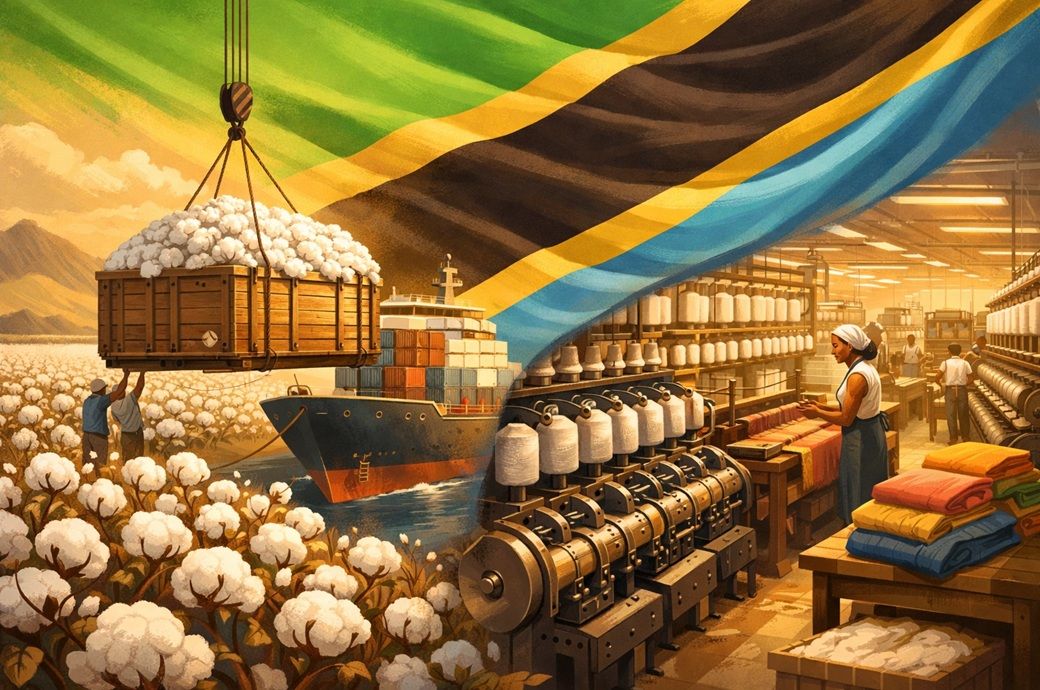
However, despite producing high-quality cotton, Tanzania is able to capture only a fraction of the sector’s economic value as most of the value-added processing, from spinning to weaving to garment manufacturing, happens abroad, limiting job creation, industrial growth, and export earnings.
According to reports, for years, the country’s textile industry has struggled under structural inefficiencies, outdated infrastructure, and weak integration with agriculture. High production costs, ageing machinery, competition from cheap imports etc have eroded competitiveness. This has prevented the sector from realising its full potential as a driver of industrialisation, employment, and diversified export earnings.









Representatives from Shanghai Textile Association, Link Well Exhibition Co. Ltd. and ECO Expo signed the agreement, according to a press release from the trade body.
The Bangladesh Textile Mills Association (BTMA) has signed an MoU with global partners in Dhaka to jointly organise the Dhaka International Textile and Garment Machinery Exhibition (DTG), scheduled to be held annually in the capital city.
Representatives from Shanghai Textile Association, Link Well Exhibition Co. Ltd. and ECO Expo signed the agreement.
DTG 2026 will take place from December 16 to 19.
Under the MoU, the parties will collaborate to plan, organise, promote and manage the DTG exhibition, scheduled to be held annually in Dhaka.
The event aims at turning a premier global platform showcasing the latest developments in textile and garment machinery, technologies and solutions, and expected to connect local manufacturers with global technology providers, contributing to the modernisation and competitiveness of the sector, according to domestic media outlets.
DTG 2026 will take place from December 16 to 19.
Fibre2Fashion News Desk (DS)
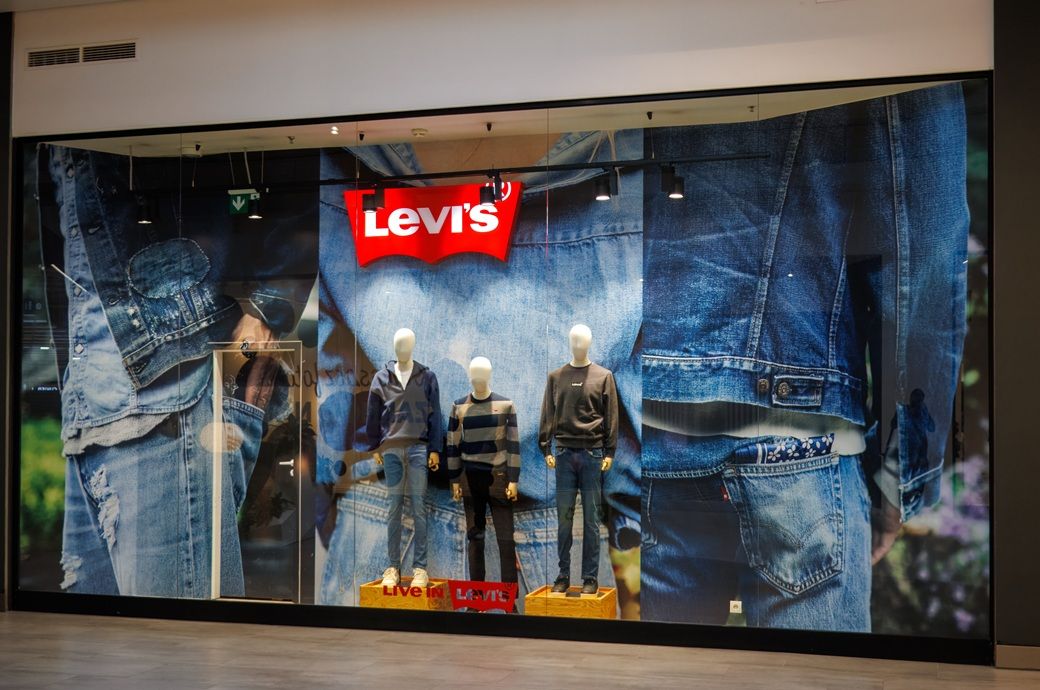
The net revenues for the quarter ended March 1, 2026, rose 14 per cent year on year (YoY) to $1.74 billion, while organic growth stood at 9 per cent. The company’s direct-to-consumer (DTC) segment remained a key driver, accounting for 52 per cent of total revenues and growing 16 per cent, with e-commerce sales up 21 per cent.
Levi Strauss & Co has reported strong Q1 2026 results, with net revenues rising 14 per cent YoY to $1.74 billion and organic growth at 9 per cent.
DTC remained a key driver, contributing 52 per cent of sales.
Profitability improved, with net income reaching $177 million.
Backed by broad-based regional growth, the company raised its full-year outlook.
“We delivered very strong financial performance in the first quarter driven by broad-based growth across channels, regions and categories,” said Michelle Gass, president and CEO of Levi Strauss.
She further said that the evolution into a DTC-first denim lifestyle brand is allowing the company to capture a much larger addressable market and deliver faster and more consistent growth. “Today we are operating from a stronger foundation, executing with focus and intention, with more ways to win than ever before,” added Gass.
“We are pleased to report first quarter revenue, margins and EPS above our guidance,” said Harmit Singh, chief financial and growth officer of the company.
Regionally, Europe led growth with a 24 per cent increase in reported revenues, followed by Asia at 13 per cent and the Americas at 9 per cent, Levi Strauss & Co said in a press release.
The Beyond Yoga brand also delivered strong momentum, with revenues rising 23 per cent.
The company’s profitability improved, with net income from continuing operations increasing to $177 million from $140 million a year earlier. Diluted earnings per share (EPS) rose to $0.45, while adjusted EPS stood at $0.42.
Gross margin remained relatively stable at 61.9 per cent, while selling, general and administrative (SG&A) expenses increased, largely driven by marketing investments and higher sales volumes.
“Our strategic transformation is translating into higher returns and more profitable growth, enabling us to convert more of our strong revenue growth into bottom-line profit. Our great start to the year in Q1 and positive quarter-to-date trends, give us the confidence to raise our full-year sales, margins and EPS guidance even as we remain prudent about the external environment,” added Singh.
On the strategic front, the company highlighted continued progress in its transition towards a DTC-first denim lifestyle model, which is enabling stronger consumer engagement and improved profitability.
Meanwhile, Levi Strauss has raised its full-year 2026 outlook, projecting reported revenue growth of 5.5 per cent to 6.5 per cent and adjusted diluted EPS in the range of $1.42 to $1.48. The guidance reflects confidence in sustained demand, despite ongoing macroeconomic uncertainties and tariff pressures.
The company also announced that Harmit Singh will retire following a planned transition, with a successor search currently underway.
Fibre2Fashion News Desk (SG)

Despite Bangladesh meeting all three criteria for LDC graduation, significant risks, including the loss of trade preferences, fiscal and financial vulnerabilities, and fragile institutional coordination, persist, said the report.
Domestic and global crises have undermined Bangladesh’s LDC graduation preparation, a UN assessment found.
It perceived the Iran conflict to be an additional threat.
Despite Bangladesh meeting all criteria for graduation, significant risks persist, it said.
A tough political transition and prolonged macroeconomic crisis have dented socio-economic gains, intensifying transition risks.
The Graduation Readiness Assessment report, prepared by an expert panel of the UN Office of the High Representative for Least Developed Countries, Landlocked Developing Countries and Small Island Developing States (UN-OHRLLS), calls for urgent reforms, stronger implementation capacity, adequate policy space and a whole-of-society approach to ensure a smooth and sustainable transition.
Shocks the country faced between 2017 and 2026 include continued exposure to climate vulnerability; the Rohingya crisis; a prolonged macroeconomic downturn predating the regime change; the COVID-19 pandemic’s impact; political turmoil and transition; the Russia-Ukraine war; inflation; and balance of payments pressures.
“Transition away from reliance on international support measures (ISMs) deserves to be viewed as a complex and carefully managed adjustment, requiring sustained policy attention and international support, institutional capacity, and risk mitigation to ensure that development gains are preserved and further consolidated in the post-graduation period. Smooth transition is key,” the report said.
A tough political transition and prolonged macroeconomic crisis have dented socio-economic gains, intensifying Bangladesh’s LDC transition risks, it noted.
Surging import costs for fossil fuels creates severe operational constraints with gas supply shortages worsened by the Middle East conflict, it said.
Bangladesh’s preparedness for the loss of trade-related international support measures remains weak, with nearly three-fourths of exports dependent on LDC-specific duty-free access, the report noted.
Preparedness for the European Union (EU) market, the largest destination, remains the weakest. Inadequate preparation for the post-LDC phase, with no preferential EU market access for apparel, comes just as the recently concluded EU-India and EU-Vietnam FTAs are set to intensify competitive pressure.
The country is also unprepared for the loss of World Trade Organization policy flexibilities, particularly around export subsidies and Trade-Related Aspects of Intellectual Property Rights obligations, which will require stronger intellectual property protection and enforcement capacity.
Domestic readiness to offset preference erosion through lower logistics costs, improved compliance, energy reliability, and export diversification remains inadequate, according to the UN report.
Amid ongoing macroeconomic turmoil, Bangladesh’s vulnerabilities, including reliance on external support, a lack of diversification and exposure to shocks, could become more pronounced, it added.
Fibre2Fashion News Desk (DS)


Cop guarding polio vaccination team martyred in Hangu attack

Bangladesh’s BTMA inks MoU with global partners to host DTG exhibition

Palace left in shock as Prince William cancels grand ceremony

-

 Fashion6 days ago
India’s exports face reset as EU links trade to carbon metrics: EY
-

 Politics1 week ago
Trump confirms rescue of airman whose F-15 was downed in Iran
-

 Entertainment5 days ago
Queen Elizabeth II emotional message for Archie, Lilibet sparks speculation
-

 Tech4 days ago
This AI Button Wearable From Ex-Apple Engineers Looks Like an iPod Shuffle
-

 Tech5 days ago
As the Strait of Hormuz Reopens, Global Shipping Will Take Months to Recover
-

 Tech5 days ago
Azure customers up in arms over ‘full’ UK South region | Computer Weekly
-

 Tech6 days ago
A Single Strike Won’t Shut Off the Gulf’s Desalination System
-

 Entertainment6 days ago
Lamar Odom shocking response to Khloé Kardashian account of his overdose