

Business
Target is making big changes to win back customers. Here’s what shoppers can expect to see


A Target store in Chicago, Feb. 10, 2026.
Scott Olson | Getty Images
MINNEAPOLIS — Target customers will soon see changes on the retailer’s shelves, as the company tries to woo back shoppers during a turnaround effort that has started to catch Wall Street’s eye.
Among those shifts, Target will add more fresh and trendy groceries, a dedicated display for higher-end makeup and a larger array of merchandise for sports fans.
At the big-box retailer’s Minneapolis headquarters on Tuesday, Target’s merchandising leaders previewed the company’s ambitious plans to overhaul key categories, including home and apparel, which have posted year-over-year sales declines. The company held an investor meeting to share its holiday-quarter results and its turnaround strategy for this year, which hinges in part on regaining its reputation for stylish and unique items.
CEO Michael Fiddelke, a Target veteran who stepped into the top role on Feb. 1, told investors on Tuesday that the company is making changes that “don’t happen overnight.” But, he added, they include many tweaks that customers “will see and feel right away.”
“If I were to step back and draw a heat map of the entire store highlighting where we’re making changes this year, you’d see more change to what we sell and how we sell it than you’ve seen in a decade,” he said.
The success of Target’s merchandise makeover will help determine whether the company meets its sales and earnings outlook for the current year and whether it can reverse four consecutive quarters of declining customer traffic. The company’s revenue fell slightly in fiscal 2025 and has been stagnant for four years.
Target said Tuesday that it expects net sales for the current fiscal year to rise about 2% compared with the previous year and anticipates that sales will grow in every quarter of the year.
Wall Street had a positive early read on Target’s turnaround progress: The company’s stock climbed more than 6% on Tuesday, and was trading higher on Wednesday.
Here’s a closer look at Target’s merchandising changes:
Putting a fresher spin on grocery
Target is expanding the fresh department and adding more prominent signage for its Good & Gather private brand as it tries to draw more customers to stores for grocery shopping. This rendering shows what the expanded fruit, vegetable and meat displays will look like.
Courtesy of Target
One of the top reasons for customers’ Target trips is a simple one — running in for a quick grocery item like a gallon of milk or box of pasta. The challenge is getting shoppers to buy more of their food there.
Food is the No. 1 traffic driver for Target, and over half of customers have food in their shopping basket, said John Conlin, senior vice president of merchandising, food and beverage. Target’s grocery category, which it labels food and beverage, drew higher sales than any of Target’s merchandising segments in the past fiscal year. It grew by about 1% year over year and totaled $24.14 billion — or roughly 23% of Target’s net sales for the fiscal year.
Yet for many customers, Target is a destination for buying just a few grocery items rather than a fuller basket of food for the week. Plus, competition has grown fiercer — not only from the nation’s largest grocer by revenue, Walmart, but also from Amazon and fast-expanding discounter Aldi.
“We don’t want food to just be a business that guests are shopping while they’re at Target,” he said. “But increasingly, we want to be a business that is why guests are at Target.”
He said Target is “trying to carve our own lane with our assortment strategy” rather than copy the grocers down the street.
Going forward, Target will expand the square footage it devotes to grocery as it remodels stores and builds new ones, Conlin said. In over half of the stores that the company remodels, Target will double the square footage for fresh foods like fruits, vegetables and meats, he added.
The company also plans to add more brands that shoppers haven’t yet discovered and lean on seasonal items and private brands. To stand out from competitors, Target is going to ramp up the amount of new items by up to 50% in key categories like snacks and dry groceries, Conlin said.
But he acknowledged a challenge that has tripped up Target in recent years, which it’s tried to fix by owning its supply chain and opening a new facility in Colorado in the next year.
“None of this comes to light if we’re not in stock for our guests,” he said.
He declined to share a key detail about some items and brands that Target is adding: price points.
Giving beauty a glow up
In many of Target’s stores, customers buy lip gloss and other items from Ulta Beauty. That will change in August, after the two brands announced the end of a deal that brought the mini beauty shops to nearly a third of Target’s big-box stores.
On Tuesday, Target said it plans to give its own beauty assortment a glow up. This fall, it will open what it is dubbing its Beauty Studio in more than 600 stores and online, said Amanda Nusz, senior vice president of merchandising for essentials and beauty at Target.
Beauty Studio will replace Ulta Beauty at Target. It will be a dedicated shop within the store with prestige beauty brands, elevated lighting, enhanced service and a loyalty program tied to beauty, Nusz said. In renderings, the beauty shop looks similar to Ulta Beauty at Target, but without the beauty retailer’s branding.
Starting this fall, Target will open Beauty Studio dedicated shops in more than 600 stores and online. The prestige beauty shop will replace Ulta Beauty at Target.
Courtesy of Target
Nusz declined to share the national brands that the Beauty Studio will carry and whether it will offer some of the same brands sold by Ulta Beauty and other competitors like Sephora.
Beauty “has been one of the strongest growth engines for Target,” Nusz said. She said it was also the top growth category for Target’s curbside pickup service, Drive Up, and in-store pickup of online orders in the fourth quarter. A bonus for Target: Beauty tends to draw in younger shoppers.
The segment’s sales were roughly flat year over year in the most recent fiscal year, but accounted for about 13% of Target’s overall net sales for the period.
Along with rolling out Beauty Studio, Nusz said, Target will add more well-recognized national brands like sunscreen brand Supergoop, lean into trends like Korean beauty and invest more in men’s beauty, such as grooming and fragrance items.
Adding fun and pop culture relevance
Target has overhauled its hardlines category, which includes items like consumer electronics, books and toys. The category, which it now calls Fun101, now carries more items related to sports and pop culture. For example, it has a line of merchandise for the 30th anniversary of the movie “Space Jam.”
Melissa Repko | CNBC
In the back of Target’s stores, the retailer is giving an overhaul to a department that’s typically known for selling consumer electronics, toys and books.
Instead of calling it the traditional name, hardlines, Target coined the category Fun101.
Cassandra Jones, senior vice president of merchandising for Fun101, said the goal went beyond the new name, however. Target wanted to turn around a category that was falling flat.
Starting in late 2024, Target has had a tighter focus on four key areas: play, which includes toys like plush stuffed animals and popular brands like Lego; pop, which includes culturally inspired items like a limited-edition collection tied to Netflix’s “Stranger Things” and another linked to the 30th anniversary of the movie “Space Jam”; sport, which includes items like water bottles and licensed sports apparel for professional teams; and gadget, which includes trendy takes on products like phone cases and headphones.
On the other hand, Jones said Target has cut back on items like TVs and laptops, where it’s harder to stand out from retail competitors or inject a sense of style.
Sales of Fun101 merchandise were roughly flat year over year in the most recent fiscal year, but drove $15.8 billion, or 15%, of Target’s net sales for the period.
Jones said shoppers will see the category go bigger in the second half of the year. Target plans to open a fan shop in stores and online with licensed sports gear, expand its position as a “trading card destination” and open a “collectibles zone” for other types of merchandise.
Target’s home category has been one of its weakest performers. The retailer is overhauling the category and redoing the display area in stores, too. It showed off some of its newer items at an investor event in Minneapolis.
Melissa Repko | CNBC
Rebuilding home goods
Target used to be known for its fashion-forward yet affordable throw pillows, lamps, bedding and other home decor. The category, however, is now one of the retailer’s weaknesses — particularly as it competes with digital players like Wayfair, big-box competitors like Walmart and Costco, off-price chains like TJX‘s HomeGoods and specialty players like Crate & Barrel or Pottery Barn.
Sales in the home furnishings and decor category totaled $15.61 billion in the most recent fiscal year, sinking by nearly 7% year over year. That’s a deeper sales drop than in any of Target’s other key merchandise categories.
The big-box retailer is working to become a destination for the category again, said Mara Sirhal, senior vice president of merchandising for home, who stepped into the role about three months ago.
“Our home business has not delivered to its potential, point-blank,” she said. “The industry grew. Target home underperformed. We lost meaningful share over the last two years, and our authority and style inspiration has weakened. That is on us.”
Among the problems, she said, Target “lost clarity in our point of view,” with a blander assortment rather than a stylish, eye-catching one.
Sales of home goods at Target have also been hurt by economic factors, including higher interest rates and pricier homes in the U.S., which have led to a much older first-time homebuyer, she said.
Starting in June, Target will rebuild the category as part of a multiyear turnaround effort, she said. One of its first moves this summer will be redoing about 75% of its assortment in decorative home, which includes items like candlesticks, throw pillows and greenery. By the fall, she said, three-quarters of its bedding assortment will be reinvented. And next year, she said, Target will overhaul its kitchen and dining merchandise.
It won’t just be the products changing, she said. Shoppers should expect to see new fixtures in stores, too, such as elevated wood displays. It will also use its third-party marketplace, Target Plus, to sell large items that are easier to carry online, such as rugs, mattresses and furniture, she said.
To try to turn around its apparel sales, Target is using an artificial intelligence tool, Trend Brain, to help the company spot the styles that customers want earlier and speed those looks to shelves. The tool helped the company develop a collection of Western-inspired clothing and accessories.
Melissa Repko | CNBC
Speeding up fashion and raising the bar on basics
Another well-known category in Target stores has become a weaker link, too. Apparel and accessories sales at the company fell to $15.74 billion in the most recent fiscal year, down about 5% from the prior year.
To drive sales growth again, the big-box retailer aims to spot trends earlier, speed up the time it takes for new looks to hit shelves and sharpen the selection of clothing that it carries — even for basics like tank tops, said Gena Fox, senior vice president of apparel and accessories at Target.
She said the company’s performance “has not been where we want it to be over the past year.”
Denim, T-shirts and tanks make up about 25% of Target’s total assortment, Fox said. Last year, it overhauled its denim to raise the quality and style, which led to a 10% year-over-year lift in sales for that category.
This year, she said, Target plans to take that same approach to fix T-shirts and tanks, which have had weaker sales. Some of those refreshed closet staples are starting to hit store shelves and Target’s website.
Target is also working to get ahead of trends, which it features in collections in stores and online, she said. To spot trends, it’s using a new artificial intelligence-powered tool called Target Trend Brain, which helps the company’s designers and merchants identify the styles, colors and materials that customers may want.
For example, insights from Trend Brain helped inspire a Western edit of clothing and accessories like purses with fringe and belts with embroidery, with all items under $40. That area will soon rotate to a collaboration with Roller Rabbit, a colorful and brightly patterned pajama brand, that will include swimwear, sundresses and pool accessories.
Target is known for its limited-time brand collaborations. For the spring, it has a new line of swimsuits, pool accessories and more developed with pajama brand Roller Rabbit.
Melissa Repko | CNBC
Fox said the apparel and accessories timeline is now about 40% faster as the company reacts more in the moment rather than planning six to 12 months in advance.
Along with those trend-driven items, Target will expand national brands and add new partnerships. Last week, the company announced it would bring Levi’s to more stores, which will mean the denim brand is in more than 1,000 — or roughly half — of its stores, Fox said. It also developed an exclusive clothing line with country music singer Megan Moroney, which will coincide with her upcoming tour.





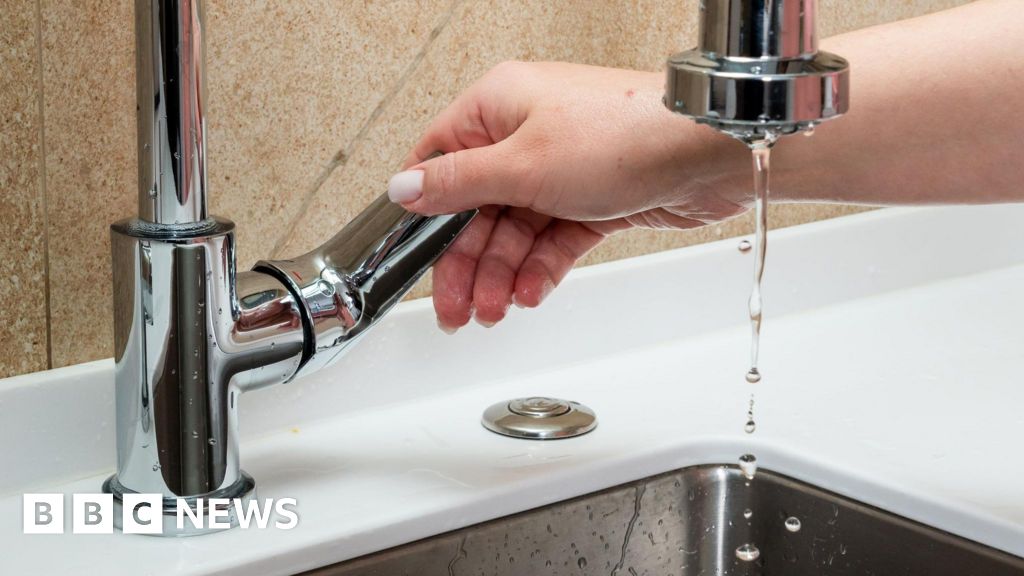
The firm was unable to cope during high demand, Ofwat says, leading to “immense stress” for customers.
Source link
Business
Middle East heat may ripple across India’s energy supply chain, flags Goldman Sachs – The Times of India

As tensions continue to heat up in the Middle East, concerns are raising about disruptions to one of the world’s most critical energy shipping routes, the Strait of Hormuz. Any disruption could significantly affect major oil-importing countries such as India, as the narrow Strait of Hormuz is central to global energy trade. The strait sees almost 20 million barrels of oil passing through each day, or about a fifth of the world’s consumption, pass through the route. The waterway also carries roughly 19% of global liquefied natural gas (LNG) shipments, making it a crucial corridor for energy-importing economies.A recent report by Goldman Sachs has flagged early signs of stress in the region. The report warned that tanker traffic through the Strait of Hormuz has already begun showing signs of disruption, with shipping firms, oil producers and insurers adopting a cautious approach following reports of damaged vessels in nearby waters.According to the firm, financial markets have already begun factoring in the geopolitical risk. Oil prices currently carry an estimated risk premium of $18-per-barrel, reflecting the potential market impact if energy flows through the Strait of Hormuz were disrupted for about a month.
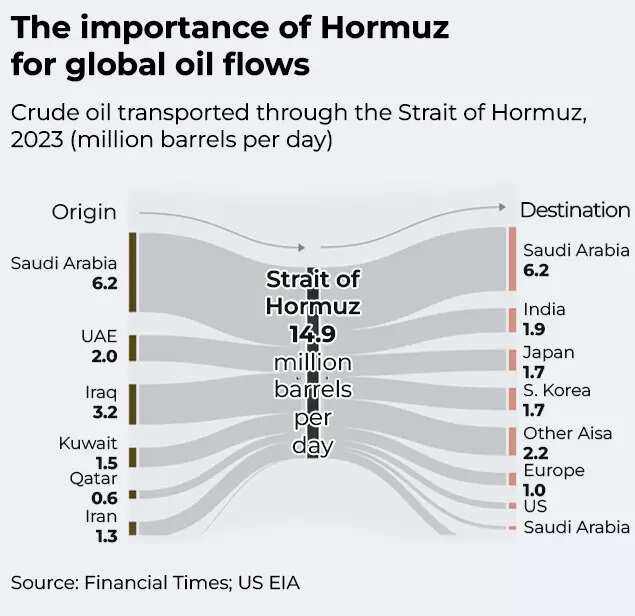
Even is the oil facilities are not directly damaged, a shutdown of the shipping route could expose a significant portion of global supply. The report estimates that in an event of full closure, about 16 million barrels per day of oil flows could be affected, despite the availability of some pipeline routes designed to bypass the strait.And the risks are not limited to crude oil shipments with almost 80 million tonnes of LNG exports annually, much of it from Qatar, moving through the passage. Any prolonged disruption could tighten gas supply globally and potentially drive European benchmark gas prices back to levels seen during the 2022 energy crisis.
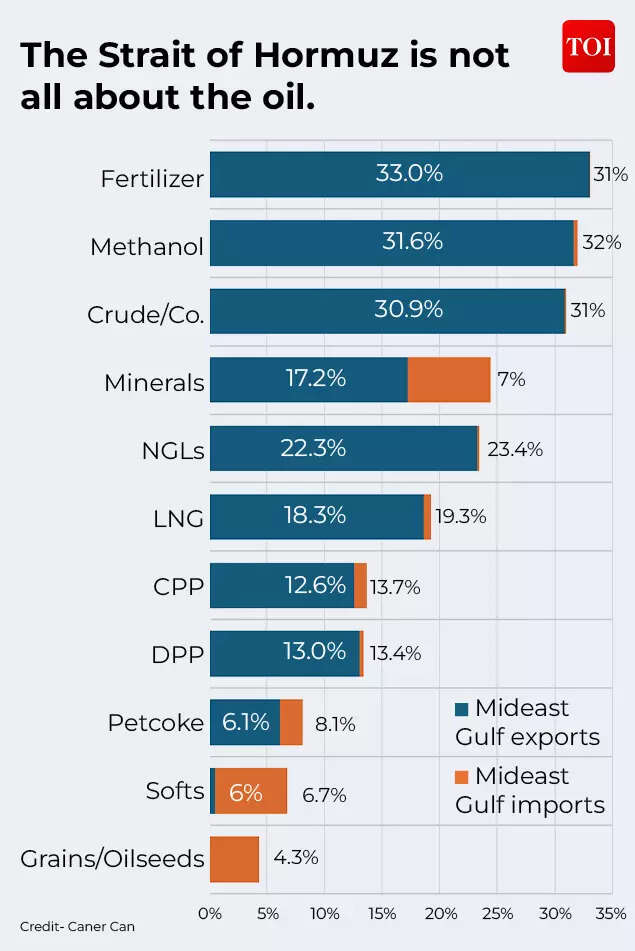
Asian economies stand among the most exposed to such disruptions. Major importers such as China, India, Japan and South Korea depend heavily on oil and LNG shipments that transit through the strategic corridor.While global oil inventories and spare production capacity could help cushion short-term shocks, the report warned that sustained disruption to Gulf shipping routes could trigger sharp volatility in global energy markets and push prices higher across oil, gas and refined fuel products.Market participants and governments are closely watching tanker traffic in the Strait of Hormuz, along with diplomatic and military developments involving the United States, Iran and Gulf nations, to assess whether the current disruptions remain temporary or escalate into a broader energy supply shock.

KARACHI: The Pakistan Stock Exchange rallied on Thursday after Saudi Arabia assured Pakistan of facilitating crude oil shipments through the Red Sea port of Yanbu Port, easing concerns over potential fuel supply disruptions.
The benchmark KSE-100 Index climbed sharply during the trading session, rising 4,439.93 points (2.85%) to reach an intraday high of 160,217.14 points.
Market Recovery
Analysts attributed the market rebound to renewed institutional buying and improving investor sentiment after Saudi assurances on oil supplies.
Market expert Ahsan Mehanti, CEO of Arif Habib Commodities, said easing fuel supply concerns played a key role in the recovery.
He added that rising global crude prices, expectations of a new International Monetary Fund loan tranche for Pakistan, and positive economic indicators also boosted investor confidence.
Alternative Oil Route
Pakistan sought an alternative supply route after Iran announced the closure of the Strait of Hormuz, a crucial global oil transit corridor.
Federal Petroleum Minister Ali Pervaiz Malik held talks with Nawaf bin Said Al-Malki, requesting Saudi support for uninterrupted energy supplies.
Saudi authorities reportedly assured Pakistan that oil shipments could be routed through Yanbu, and one crude vessel has already been prepared for dispatch.
Global Oil Market Impact
Oil prices continued to rise amid tensions in the Middle East conflict involving Iran, Israel and the United States.
Brent crude: up 3.26% to $83.99 per barrel
West Texas Intermediate (WTI): up 3.70% to $77.42 per barrel
Energy markets remain volatile as shipping disruptions threaten supply through the Strait of Hormuz, a route that handles nearly 20% of global oil trade.
Analysts say the Saudi assurance helped calm fears about Pakistan’s energy supply chain, contributing to the strong recovery at the PSX.


Zayn Malik shares ‘best’ concert experience with daughter Khai

Iran conflict and apparel sourcing: Nearshoring on the rise
South East Water faces £22m fine for supply failures

India Us Trade Deal: Fresh look at India-US trade deal? May be ‘rebalanced’ if circumstances change, says Piyush Goyal – The Times of India

What are Iran’s ballistic missile capabilities?

Attock Cement’s acquisition approved | The Express Tribune

-
Business6 days ago
India Us Trade Deal: Fresh look at India-US trade deal? May be ‘rebalanced’ if circumstances change, says Piyush Goyal – The Times of India
-
 Politics1 week ago
What are Iran’s ballistic missile capabilities?
-
Business7 days ago
Attock Cement’s acquisition approved | The Express Tribune
-
 Business1 week ago
Households set for lower energy bills amid price cap shake-up
-

 Politics1 week ago
US arrests ex-Air Force pilot for ‘training’ Chinese military
-

 Fashion7 days ago
Policy easing drives Argentina’s garment import surge in 2025
-

 Sports6 days ago
LPGA legend shares her feelings about US women’s Olympic wins: ‘Gets me really emotional’
-

 Fashion6 days ago
Texwin Spinning showcasing premium cotton yarn range at VIATT 2026