

Business
Tata Motors Demerger To Take Effect On October 1

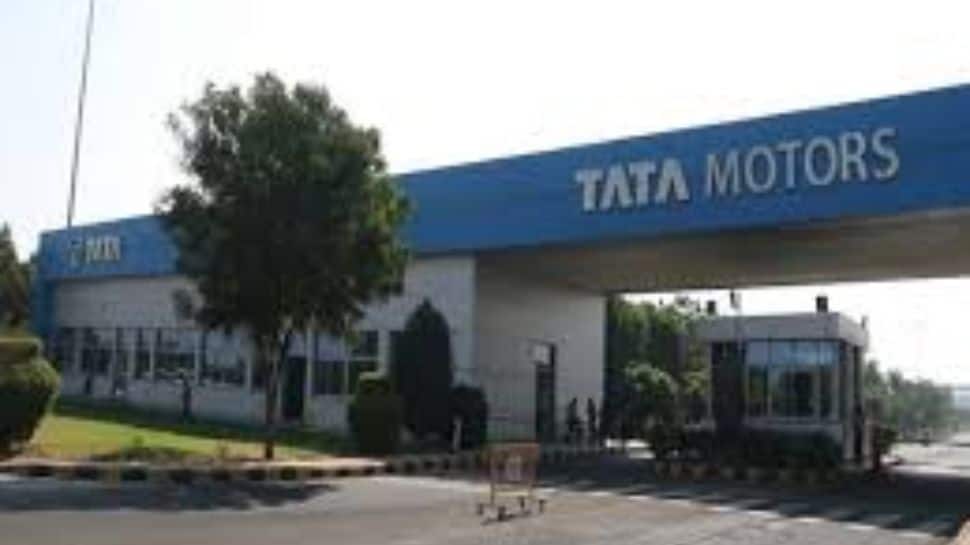
New Delhi: Tata Motors Limited has announced that its demerger into separate commercial vehicle and passenger vehicle businesses will take effect on October 1. The move comes after receiving approvals from its board, regulators, and the National Company Law Tribunal. As part of the demerger, shareholders will receive one share in the new commercial vehicle company for each fully paid Tata Motors share held on the record date, the company said in a filing to the exchanges.
The record date is pending announcement and will be revealed after the completion of statutory filings. Upon confirmation of the record date, investors will receive one share in the CV and PV companies for each Tata Motors share they own. Shares will be automatically credited to investors’ demat accounts, with voting rights remaining proportionate across both entities. Both companies will set their own dividend policies moving forward.
As part of the demerger, Tata Motors will split into two separate listed entities. The commercial vehicle business arm housed in TML Commercial Vehicles Ltd. (TMLCV) is expected to be renamed to Tata Motors Limited once the demerger is complete.
Tata Motors will rename its existing listed company to Tata Motors Passenger Vehicles Ltd., retaining its passenger vehicle and electric vehicle businesses, as well as investments like Jaguar Land Rover.
Girish Wagh, who currently heads Tata Motors’ CV operations, will lead the new commercial vehicle company, while Shailesh Chandra, the current head of the passenger vehicle and electric vehicle divisions, will spearhead the PV-focused company.
Tata Motors announced that the demerger aims to unlock value and enhance corporate efficiency, highlighting the distinct market dynamics, opportunities, and capital requirements of its CV and PV businesses.
Tata Motors first announced plans for a demerger in 2024. The appointed date for accounting and valuation purposes is July 1, 2025, while October 1 marks the legal effective date.






Sign at the main entrance to a Best Buy store in Venice, Florida.
Erik McGregor | Lightrocket | Getty Images
Best Buy posted mixed results on Tuesday as the retailer’s holiday-quarter sales declined and missed Wall Street’s expectations, but its earnings topped estimates as it showed improved profitability.
For the current fiscal year, the consumer electronics retailer expects revenue to range between $41.2 billion and $42.1 billion, compared with $41.69 billion in the most recent fiscal year. It expects adjusted earnings per share to range from $6.30 to $6.60, after it reported adjusted earnings per share of $6.43 for the previous fiscal year.
Best Buy anticipates that comparable sales, a metric that tracks sales online and in stores open at least 14 months, will range from a decline of 1% to an increase of 1%.
In a news release, CEO Corie Barry said demand for consumer electronics remained lackluster during the gift-giving season, but the company’s internal data indicates that Best Buy’s market share in the industry “was at least flat.”
Chief Financial Officer Matt Bilunas said in his own statement that the company is “excited about the momentum in our business.” But he added that company leaders “expect to continue to navigate a mixed macro environment.”
Shares jumped more than 10% in premarket trading.
Here’s how the retailer did for the fiscal fourth quarter compared with what Wall Street was expecting, according to a survey of analysts by LSEG:
- Earnings per share: $2.61 adjusted vs. $2.47 expected
- Revenue: $13.81 billion vs. $13.88 billion expected
In the three-month period that ended Jan. 31, Best Buy’s net income jumped to $541 million, or $2.56 per share, from $117 million, or 54 cents per share, in the year-ago quarter. Excluding one-time expenses, including charges for its health business, Best Buy reported adjusted earnings per share of $2.61.
Revenue decreased from $13.95 billion in the year-ago quarter. Yet on an annual basis, revenue rose to $41.69 billion from $41.53 billion in the prior fiscal year. Best Buy’s annual revenue declined in the three previous fiscal years.
For about four years, Best Buy has pinned its slower sales on more price-sensitive U.S. consumers, a slower housing market and less tech innovation. All of those factors have caused some shoppers to delay tech purchases, particularly big-ticket items like new refrigerators. Higher tariffs have also added costs for Best Buy, since many consumer electronics are imported.
Comparable sales dropped 0.8% in the fourth quarter as the company saw softer sales of appliances and home theaters. Those declines were partially offset by sales growth in computing and mobile phones, the company said.
Best Buy has leaned into more profitable businesses, including selling ads and offering more merchandise through its third-party marketplace, which launched in August. Barry said in the company’s news release that Best Buy’s advertising partners nearly doubled compared to the prior year and she said the retailer has significantly increased the number of available products on the marketplace.
The company has a scheduled earnings call at 9 a.m. ET.
Last Updated:
The Indian government has over 50 days of crude oil stocks and is in a ‘comfortable position’. They remain cautiously optimistic about diversification.




Crude Oil
US-Iran War: The Indian government has confirmed that the country has over 50 days of crude oil stocks and is in a ‘comfortable position’, according to a Moneycontrol report.
The MC report added that the government continues to be cautiously optimistic that it is capable of taking domestic steps and diversifying as the need arises.
The government’s comment plays down any concern arising over India’s energy security in crude oil amid the rising tension in the Middle East and complete closure of the Strait of Hormuz.
Global crude shipments moving through the Strait of Hormuz have nearly ground to a halt, disrupting close to 86% of the usual east–west oil traffic and rattling energy markets worldwide.
According to maritime intelligence firms Windward and Kpler, the strategic chokepoint remains technically open, but vessel movement has slowed to a fraction of normal levels. On March 1, just three oil tankers transporting a combined 2.8 million barrels transited the strait — a steep 86% drop compared to the 2026 daily average of 19.8 million barrels.
By early March 2, activity had thinned further, with only one small tanker and a single cargo vessel recorded moving through the primary shipping lanes, underscoring the scale of the disruption.
Brent curde oil futures were also trading over USD 80 per barrel for the past two days, with anticipation to rise in three digit soon.
India is highly dependent on other countries for its crude oil requirements, with imports accounting for around 88–90 per cent of total demand. In 2024, India surpassed China as the world’s largest oil demand driver, driven by rising fuel consumption, particularly in transportation.
So, what happens if there is a large-scale disruption in crude oil supply? Is India prepared to handle such a situation, and for how long?
India has a dedicated special purpose vehicle called Indian Strategic Petroleum Reserves Limited (ISPRL), which is responsible for maintaining petroleum reserves for such emergencies.
The Government of India decided to establish 5 million metric tonnes (MMT) of strategic crude oil storage across three locations.
ISPRL functions under the Ministry of Petroleum and Natural Gas, and the project was executed by Engineers India Limited (EIL). The strategic reserves are situated in Visakhapatnam, Mangalore, and Padur (near Udupi).
These crude oil storages are built in underground rock caverns along both the eastern and western coasts of India. Crude oil from these caverns can be supplied to Indian refineries through pipelines or a combination of pipelines and coastal transport.
Underground rock caverns are considered one of the safest methods for storing hydrocarbons.
 Click here to add News18 as your preferred news source on Google.
Follow News18 on Google. Join the fun, play games on News18. Stay updated with all the latest business news, including market trends, stock updates, tax, IPO, banking finance, real estate, savings and investments. To Get in-depth analysis, expert opinions, and real-time updates. Also Download the News18 App to stay updated.
March 03, 2026, 16:14 IST
Read More
Iranian official threatens to “set fire” to any ships passing through the Strait of Hormuz.
Source link

Best Buy’s holiday sales disappoint, but retailer shows progress in growing profits

Princess Anne to mark 25 year celebration after ‘outstanding’ honour

The Premier League is boring now: A tactical way to save it

-

 Politics5 days ago
What are Iran’s ballistic missile capabilities?
-
 Business7 days ago
Households set for lower energy bills amid price cap shake-up
-

 Sports1 week ago
Top 50 USMNT players of 2026, ranked by club form: USMNT Player Performance Index returns
-

 Politics5 days ago
US arrests ex-Air Force pilot for ‘training’ Chinese military
-

 Sports5 days ago
Sri Lanka’s Shanaka says constant criticism has affected players’ mental health
-
 Business7 days ago
Lucid widely misses earnings expectations, forecasts continued EV growth in 2026
-

 Fashion5 days ago
Policy easing drives Argentina’s garment import surge in 2025
-

 Sports1 week ago
South Africa thrash India by 76 runs in T20 World Cup Super 8 – SUCH TV