

Politics
Ten events that defined 2025



PARIS: From US President Donald Trump’s return to power to a ceasefire in Gaza and massive investments in artificial intelligence: Here are 10 events that defined 2025.
Trump presidency 2.0
A protectionist offensive. Mass deportations of undocumented immigrants. Dismantling entire sections of the federal government.
Since his return to the White House for a second term in January, Republican President Trump has targeted adversaries, deployed the National Guard in Democrat-voting cities, worked to intimidate the media and fought against diversity and inclusion programmes.
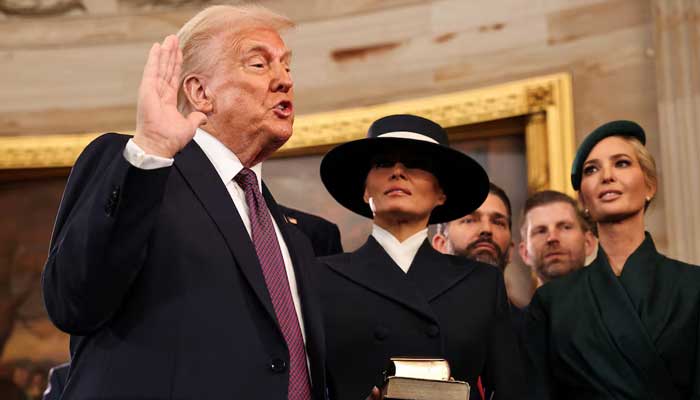
He has also launched extensive diplomatic efforts, with mixed results.
And polls suggest Americans are increasingly disgruntled on economic issues — particularly the cost of living.
Stinging defeats in local elections have put his party in a delicate position for midterm elections due next autumn.
Gaza truce
US pressure led to a ceasefire between Israel and Hamas, two years after a devastating war began in the Gaza Strip.
The truce allowed for the return to Israel of the last surviving hostages and most of the bodies of the deceased, in exchange for the release of Palestinian prisoners.
It also enabled an increased flow of humanitarian aid into Gaza, although still nowhere near enough to meet the territory’s needs, according to the UN and humanitarian NGOs.
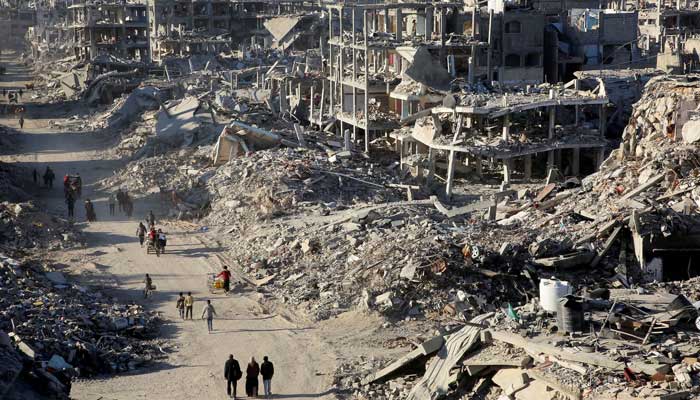
But negotiating the next steps in Trump’s peace plan — particularly the disarmament of Hamas — is proving delicate.
Israel has carried out several deadly airstrikes in Gaza in recent weeks, which it claims were in retaliation for Hamas attacks.
Regional tensions also persist, with continuing Israeli strikes on Hezbollah in Lebanon.
Israel, with the help of the US, also launched raids against Iran’s nuclear facilities during a 12-day war in June.
In September, Israel targeted Hamas officials in an unprecedented attack in Qatar.
Unfruitful Ukraine talks
Trump’s arrival in the White House energised efforts to end the war in Ukraine, sparked by Russia´s full invasion in 2022.
Trump’s sympathies have flipped repeatedly between Ukrainian President Volodymyr Zelenskiy and Russian counterpart Vladimir Putin, with Kyiv fearing it could be forced into a deal on Moscow’s terms.
In February, Trump berated Zelenskiy in the Oval Office, accusing him of risking World War III and disrespecting the American people. As direct Russia-Ukraine talks led nowhere, Trump in August hosted Putin for a high-stakes summit in Alaska that ended early, leaving Washington accusing Moscow of not being serious about ending the war.
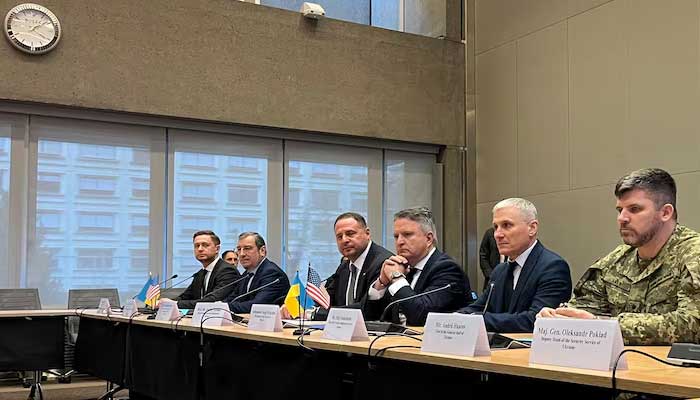
Trump later hit Russia with his first major package of sanctions.
However, international negotiations did take place in late November based on a draft US plan, the initial version of which was considered by Kyiv and its European allies to be largely favourable to Moscow.
Russian forces, meanwhile, slowly drove forward at massive human and financial cost to both sides, and they battered Ukrainian cities with record numbers of missiles and drones.
Trade war
Trump imposed waves of tariffs on imports and on entire industries deemed strategic — such as steel, aluminium and copper — sparking a trade dispute that shook the global economy.
As targeted countries considered or implemented retaliatory measures, tough negotiations led to many deals, including with the European Union and China.
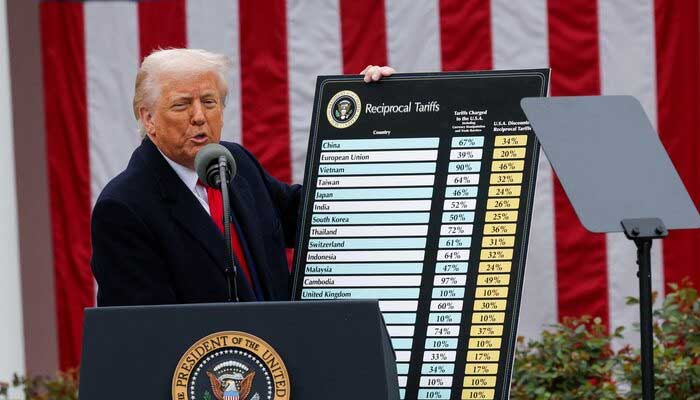
In their own backyard, US officials are still negotiating with Mexico but talks with Canada were suspended after a Canadian province funded an ad criticising the tariffs.
Under pressure to lower the cost of living for Americans, Trump decided in mid-November to cancel tariffs on some food products, such as imported coffee and beef.
New pope
Robert Francis Prevost, aged 69, became the first American pope on May 8 following the death of his predecessor Francis, whom he had long advised.
White smoke rose above the Sistine Chapel to announce the election of the 267th head of the Catholic Church after a less-than-24-hour conclave.
The Chicago-born clergyman, who spent nearly 20 years as a missionary in Peru and eventually obtained citizenship, took the name Leo XIV.
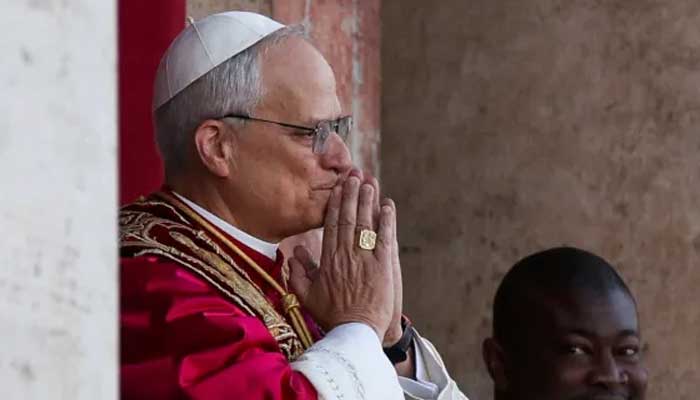
He has followed in the footsteps of his Argentine predecessor by focusing on the poor, migrants and the environment.
He has also offered reassurances to conservative circles by ruling out — at least in the short term — the ordination of women as deacons and the recognition of same-sex marriage.
Gen Z uprisings
Mass movements spearheaded by the under-30s arose across Asia, Africa and Latin America to fight against poor living standards, social media censorship and elite corruption.
They enjoyed mixed success — in Morocco, for example, the government promised social reforms but more than 2,000 protesters now face prosecution.
In other countries, the protests transformed into a broader challenge to power after they were violently repressed. But Nepal’s Maoist PM KP Sharma Oli and Madagascar’s president Andry Rajoelina were forced from office.
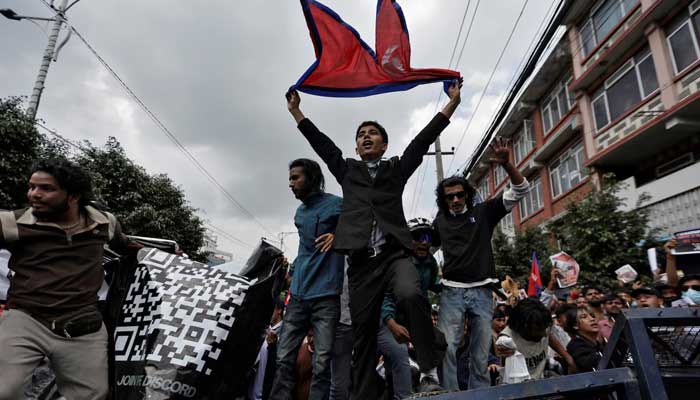
Young people featured prominently in post-election protests in Tanzania, which were brutally suppressed.
The pirate flag from the manga “One Piece” (a skull and crossbones wearing a straw hat) is often displayed by protesters and has spread on social media to become a symbol of the fight against oppression across continents.
AI boom
Technology giants and investors have spent ever-increasing sums to finance the rapid growth of AI.
AI-related spending is expected to reach roughly $1.5 trillion in 2025 and $2 trillion next year, according to US advisory firm Gartner.
The market’s enthusiasm briefly drove chip giant Nvidia’s valuation beyond $5 trillion. But the markets fear a speculative bubble around the technology. And there are broader concerns.

The technology stands accused of fuelling misinformation, copyright lawsuits are mushrooming, and many companies have cited AI adoption as an explanation for mass layoffs.
OpenAI faces a lawsuit from the parents of a California teenager who killed himself, alleging its chatbot ChatGPT offered advice on how to carry out his plan.
The company said it had strengthened its parental controls, while California has enacted legislation regulating chatbots.
Louvre heist
On October 19, thieves dressed in workers’ vests used a furniture ladder to get into the Louvre Museum in Paris. They fled on scooters with Crown Jewels valued at €88 million ($102 million) though they dropped a diamond-encrusted crown on the way.
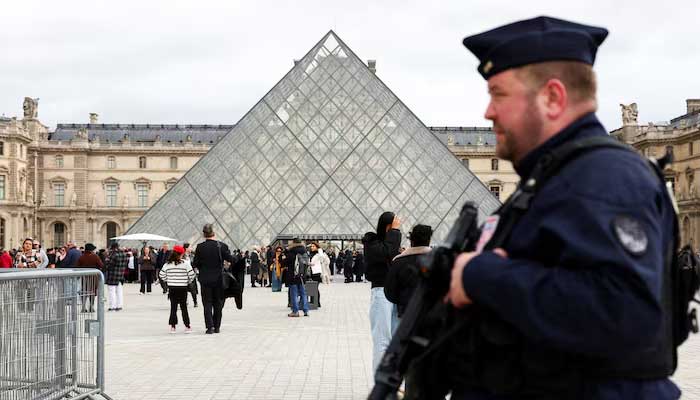
The audacious heist made headlines worldwide and sparked a debate over security at the world’s most-visited museum. Three men suspected of being part of the raid were charged and jailed, but the stolen treasures have not been recovered.
US strikes Venezuela
Washington has deployed a significant military presence off the coast of Latin America since August, officially to combat drug trafficking bound for the US.
More than 20 strikes have been carried out in recent weeks in the Caribbean and the Pacific against vessels the US says are suspected of transporting drugs, leaving several dozen people dead.
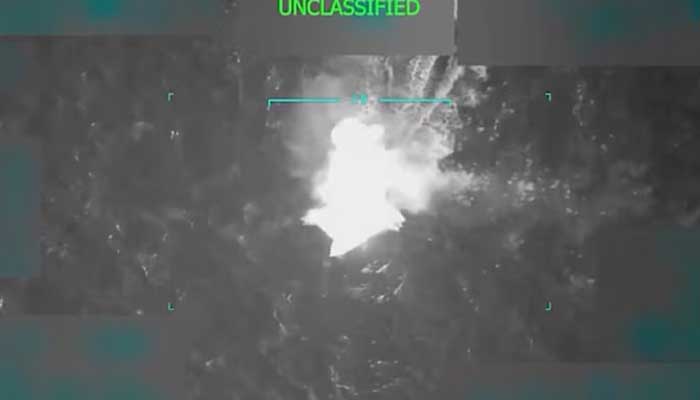
The US Justice Department insists the strikes were “lawful” and rejected accusations by a senior UN official that they were “extrajudicial”.
The campaign has sharply escalated regional tensions, especially with Venezuela, which views the attacks as a pretext to topple President Nicolas Maduro and seize the country’s oil reserves.
Washington accuses Maduro of heading a cartel, and US authorities are offering a $50 million reward for his capture.
Record-breaking weather
While Vietnam had deadly floods, powerful storms lashed the Caribbean and the Philippines.
Extreme weather events are becoming more frequent, more deadly and more destructive due to climate change fuelled by human activity, according to scientists.
Hurricane Melissa, one of the most powerful ever to hit the Caribbean, devastated entire regions of Jamaica and flooded Haiti and Cuba.
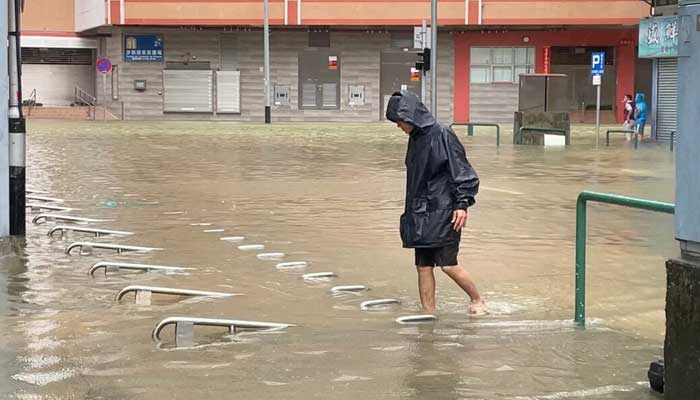
In Southeast Asia, the Philippines was struck by Typhoons Ragasa, Kalmaegi and Fung-wong within the space of two months, while Vietnam was devastated by storms, floods and landslides.
Temperatures soared and wildfires intensified in Europe, with a record number of hectares burnt during the summer. The French Mediterranean coast experienced its worst fire in 50 years.
In the United States, fires sparked by lightning led to the closure of the North Rim of the famous Grand Canyon in mid-July for the remainder of the tourist season.
- Freeze applies to 19 countries already under US travel restrictions.
- Lakanwal, ex-CIA-backed fighter, charged with first-degree murder.
- Officials blame weak Joe Biden-era airlift vetting for shooter’s entry.
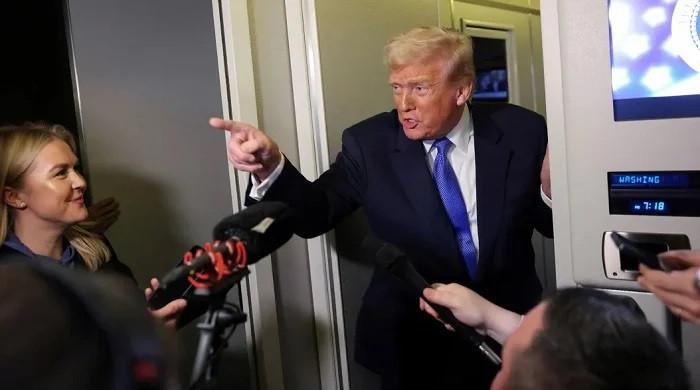
US President Donald Trump said Sunday his administration intends to maintain a pause on asylum decisions for “a long time” after an Afghan national allegedly shot two National Guard members near the White House, killing one of them.
When asked to specify how long it would last, Trump said he had “no time limit” in mind for the measure, which the Department of Homeland Security says is linked to a list of 19 countries already facing US travel restrictions.
“We don’t want those people,” Trump continued. “You know why we don’t want them? Because many have been no good, and they shouldn’t be in our country.”
The Trump administration issued the pause in the aftermath of the shooting in Washington on November 26, which left 20-year-old Sarah Beckstrom dead and another guard critically wounded.
A 29-year-old Afghan national, Rahmanullah Lakanwal, has been arrested and charged with first-degree murder in connection with the incident.
Lakanwal had been part of a CIA-backed “partner force” fighting the Taliban in Afghanistan, and entered the United States as part of a resettlement program following the American military withdrawal from Afghanistan in 2021.
Lakanwal had been granted asylum in April 2025, under the Trump administration, but officials have blamed what they called lax vetting by the government of Trump’s predecessor, Joe Biden, for his admission to US soil during the Afghan airlift.
Trump wrote after the shooting that he planned to “permanently pause migration from all Third World Countries to allow the US system to fully recover.”
Asked which nationalities would be affected, the Department of Homeland Security pointed AFP to a list of 19 countries — including Afghanistan, Cuba, Haiti, Iran and Myanmar — which since June have all faced travel restrictions to the United States.
Radicalised in US
Authorities believe the Lakanwal was not radicalised until after he came to the United States, Homeland Security Secretary Kristi Noem said on Sunday.
Speaking on NBC’s “Meet the Press” and ABC’s “This Week,” Noem said authorities think the alleged shooter was already living in Washington state when he became radicalised. Investigators are seeking more information from family members and others, Noem said.
Noem’s comments suggest Lakanwal, who was part of a CIA-backed unit in Afghanistan, may have embraced extremism after arriving in the United States.
“We believe he was radicalised since he’s been here in this country,” Noem told NBC News. “We do believe it was through connections in his home community and state, and we’re going to continue to talk to those who interacted with him, who were his family members.”
Noem said officials have received “some participation” so far from people who knew Lakanwal and warned the US would pursue anyone connected to the shooting.
“Anyone who has the information on this needs to know that we will be coming after you, and we will bring you to justice,” Noem said.
After Wednesday’s attack, the Trump administration took steps to clamp down on some legal immigration, including a freeze on the processing of all asylum applications.
Noem said on Sunday, immigration officials would consider deporting people with active asylum cases if it was warranted.
“We are going to go through every single person that has a pending asylum claim,” she said.

- Rubio says progress has been made on peace deal with Russia.
- Umerov leads Ukraine’s delegation after Yermak’s resignation.
- Kushner, Witkoff also present for Florida round of negotiations.
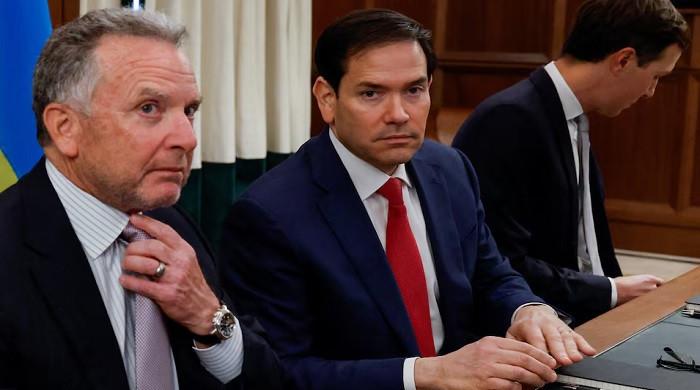
US and Ukrainian officials held what both sides called productive talks on Sunday about a peace deal with Russia, with Secretary of State Marco Rubio expressing optimism about progress despite challenges in ending the more than 3-year-long war.
“We continue to be realistic about how difficult this is, but optimistic, particularly given the fact that as we’ve made progress, I think there is a shared vision here that this is not just about ending the war … it is about securing Ukraine’s future, a future that we hope will be more prosperous than it’s ever been,” Rubio said in Florida, where the talks were being held.
Rubio said the aim is to create a pathway that leaves Ukraine sovereign and independent. The discussions follow roughly two weeks of negotiations that began with a US blueprint for peace. Critics said the plan initially favoured Russia, which started the Ukraine conflict with a 2022 invasion.
Special envoy Steve Witkoff and US President Donald Trump’s son-in-law, Jared Kushner, were also present representing the US side. Witkoff is expected to meet Russian counterparts later this week.
“There are a lot of moving parts, and obviously there’s another party involved here that will have to be a part of the equation, and that will continue later this week, when Mr Witkoff travels to Moscow,” Rubio said.
Trump has expressed frustration at not being able to end the war. He pledged as a presidential candidate to do so in one day and has said he was surprised it has been so hard, given what he calls a strong relationship with Russian President Vladimir Putin, who has largely resisted concessions to stop the fighting.
Trump’s team has pressured Ukraine to make significant concessions itself, including giving up territory to Russia.
The talks shifted on Sunday with a change in leadership from the Ukrainian side. A new chief negotiator, national security council secretary Rustem Umerov, led the talks for Kyiv after the resignation on Friday of previous team leader Andriy Yermak, chief of staff to Ukrainian President Volodymyr Zelenskiy, amid a corruption scandal at home.
As the meeting began, Umerov thanked the United States and its officials for their support. “US is hearing us, US is supporting us, US is walking beside us,” Umerov said in English.
After the meeting, he declared the talks productive. “We discussed all the important matters that are important for Ukraine, for the Ukrainian people, and the US was super supportive,” Umerov said.
The Sunday talks took place near Miami at a private club, Shell Bay, developed by Witkoff’s real estate business.
Zelenskiy had said he expected the results from previous meetings in Geneva would be “hammered out” on Sunday. In Geneva, Ukraine presented a counteroffer to proposals laid out by US Secretary of the Army Dan Driscoll to leaders in Kyiv some two weeks ago.
Ukraine’s leadership, facing a domestic political crisis fueled by a probe into major graft in the energy sector, is seeking to push back on Moscow-friendly terms as Russian forces grind forward along the front lines of the war.
Last week, Zelenskiy warned Ukrainians, who are weathering widespread blackouts from Russian air strikes on the energy system, that his country was at its most difficult moment yet, but pledged not to make a bad deal.
“As a weatherman would say, there’s the inherent difficulty in forecasting because the atmosphere is a chaotic system where small changes can lead to large outcomes,” Kyiv’s first deputy foreign minister, Sergiy Kyslytsya, also part of the delegation, wrote on X from Miami on Sunday.
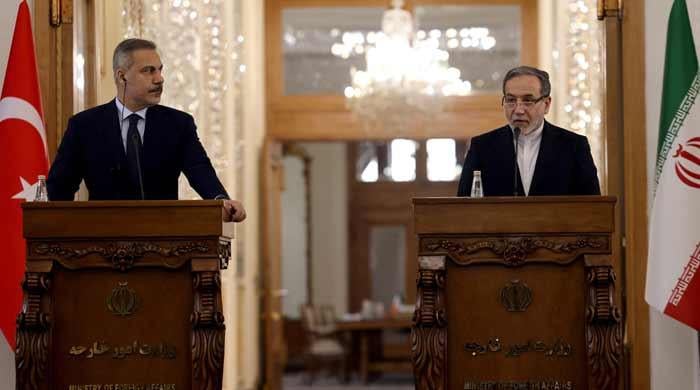
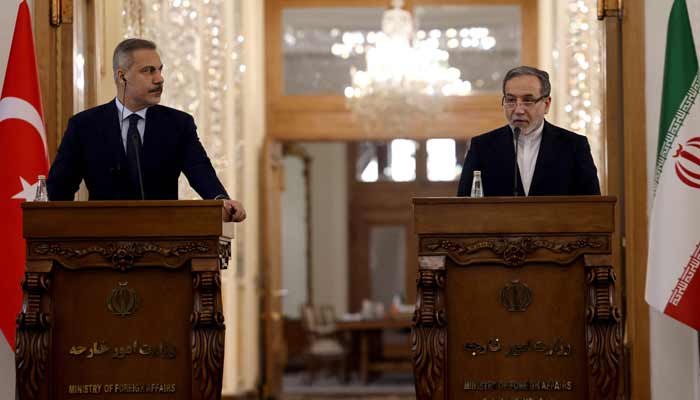
Iran and Turkiye have agreed to begin constructing a new joint rail link to serve as a strategic gateway between Asia and Europe, Iranian Foreign Minister Abbas Araghchi said on Sunday.
The planned route, known in Iran as the Marand-Cheshmeh Soraya railway transit line and running towards Turkiye’s Aralik border region, will cover around 200 kilometres (120 miles).
It will cost roughly $1.6 billion and is expected to take three to four years to complete, Iranian authorities have said.
Earlier this month, Iran’s transport minister Farzaneh Sadegh said the rail line would transform the southern section of what was once the Silk Road into an “all-rail corridor ensuring the continuity of the network between China and Europe”.
It would also ensure “fast and cheap transport of all types of cargo with minimal stops”, she added.
At a joint press conference on Saturday with his Turkish counterpart Hakan Fidan, Araghchi said “emphasis was placed on the need to remove barriers to trade and investment between the two countries”.
“The two countries also stressed the importance of the rail link […] in the region and expressed hope that the construction of this line can start as soon as possible,” he added.
The ancient Silk Road was a vast system of trade routes that for centuries linked East Asia to the Middle East and Europe, facilitating the flow of goods, culture and knowledge across continents.
In 2013, China announced the construction of the “Belt and Road Initiative”, officially known as the “New Silk Road”— a project that aims to build maritime, road, and rail infrastructure to boost global trade.
Iran has been seeking to expand infrastructure and trade with neighbouring countries as part of efforts to revitalise an economy strained by decades of international sanctions.


Prince George, Charlotte, and Louis’ wish comes true with special west end treat
Commanders vs. Broncos live updates: Washington tightens up in red zone, yields field goal

Trump says US freeze on asylum decisions will last ‘a long time’

-

 Sports7 days ago
WATCH: Ronaldo scores spectacular bicycle kick
-

 Entertainment7 days ago
Welcome to Derry’ episode 5 delivers shocking twist
-

 Politics7 days ago
Washington and Kyiv Stress Any Peace Deal Must Fully Respect Ukraine’s Sovereignty
-
 Business1 week ago
Key economic data and trends that will shape Rachel Reeves’ Budget
-

 Tech5 days ago
Wake Up—the Best Black Friday Mattress Sales Are Here
-

 Fashion7 days ago
Canada’s Lululemon unveils team Canada kit for Milano Cortina 2026
-

 Politics1 week ago
53,000 Sikhs vote in Ottawa Khalistan Referendum amid Carney-Modi trade talks scrutiny
-

 Tech5 days ago
The Alienware Aurora Gaming Desktop Punches Above Its Weight