

Business
Tesla plans to pay Musk $1tn – do they really need him that much?

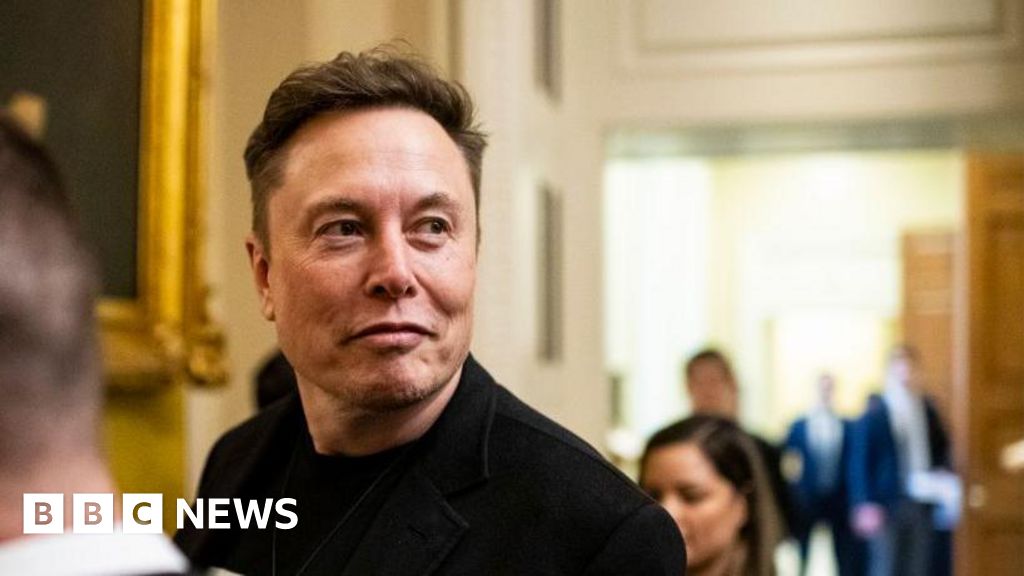
Lucy HookerBusiness reporter
 Getty Images
A great leader is a huge asset for company, of course, but can anyone be worth $1 trillion?
That is the pay packet Tesla shareholders have approved for Elon Musk, as long as he meets the targets they have set over the next 10 years.
In the meantime he won’t collect a salary, but will presumably throw himself into his work with renewed vigour.
He was certainly buzzing with energy as he jigged around the stage at the carmaker’s Texas headquarters to rapturous applause, telling the audience that while other shareholder meetings were “snoozefests”, Tesla’s are “bangers”.
Musk has attracted an army of critics, upset that he sided with US President Donald Trump, wielding his chainsaw at government programmes, and wading into politics overseas with explicit support for the far right.
But he has an equally large following of admirers, people who believe in his vision and don’t doubt that he can achieve it.
It seems most of his shareholders are in this camp, after they backed his new remuneration package this week.
Of course shareholders signed up, says New York-based financial analyst Dan Ives. If Musk succeeds – and Ives thinks he will – he will have created trillions of dollars worth of shareholder value, ample payback for investors.
Ives sees Musk as a “modern day Albert Einstein, a Thomas Edison”.
Without the stupendous pay package, he says, there was a risk that within a few years Musk would have walked away, taking his Artificial Intellgience (AI) initiatives with him.
“Tesla without Musk is like pizza without cheese,” he says.
Ives does not own shares in Tesla, but analyses the company for his firm Wedbush Securities and thinks Musk’s “ability to go where others are not” means he may well achieve the targets that have been set.
“There’s edgy behaviour, there’s haters, but a lot of people love that. And that’s why he’s the richest person in the world.
“Does it help sell cars in Europe? No. But does it help Tesla win the AI race? Yes.”

 Bloomberg via Getty Images
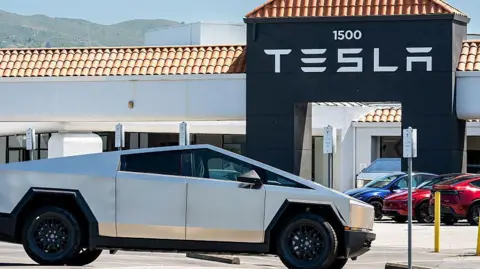
Musk’s political activities have prompted a backlash from some customers, including demonstrations outside showrooms earlier this year.
But Matt Britzman at Hargreaves Lansdown in London, who has invested in Tesla, says the impact is a drop in the ocean when it comes to Tesla’s earnings.
Far from weighing on the firm’s valuation, he reckons around a third of the value of Tesla can be attributed to what he calls the “Musk premium”, value that wouldn’t be there without him.
“It’s a $1.4 trillion company, not based on the current car business. It’s a $1.4 trillion business based on expectations of what it can deliver over the next three years.”
And a lot of those expectations are fixed on Musk and his record of thinking big and thinking long term, he says.
The potential reward for Musk is as astronomical as his vision for space travel.
With $1 trillion you could buy 20 million Model Y Teslas, at around $50,000 each. Or you could buy yourself a $10m house every day for 250 years, and still have change for furnishing and decorating.
The conditions appear to be very testing, including delivering 20 million Tesla vehicles and one million robots. A million self-driving Robotaxi vehicles will also need to be on the roads.
Tesla’s overall market value will need to rise from its current $1.4tn to $8.5tn.
These are “incredibly high milestones”, says Ann Lipton, a law professor at the University of Colorado.
However, the board does have “discretion” to decide when some of them have been met, she adds.
“If intervening events prevent him from reaching the goals, the board can deem them met anyway.”
So the targets may not turn out to be quite as demanding as they appear.
There is also nothing in the terms, no constraint, that prevents Musk continuing to speak out about politics or anything else.
“Even after the pay package was proposed, he didn’t pull back from his political commentary,” adds Prof Lipton.
“So it seems to me that this pay package, whatever the goals are, however lofty they may be, they’re not going to inhibit him from involving himself in whatever matters he wants to be involved in.”
That freedom could pose the biggest risk, according to Stephanie Valdez Streaty, director of industry insights at car sector marketing and software firm Cox Automotive.
Musk is a visionary she says, but he’s also unpredictable, and it is possible that his other interests may distract him as they have before, leading him to neglect Tesla, which itself is already a smorgasbord of different businesses and challenges.
“I’m hoping that based on his experience with getting politically involved and how that really hurt some of his brand and sales that he has learned to really focus on this business.
“But that’s going to be the board’s responsibility,” she adds, “to make sure that he stays within the guardrails, and that he does what’s right for Tesla.”
And if he does, well the sky is the limit, or possibly Mars, for Musk’s ambition.
“People laughed when his 2018 pay package was approved,” says Prof Lipton. “And he hit those milestones well ahead of schedule.”
Business
Iran oil returns: India set to receive first cargo in 5 years, tanker heads to Gujarat – The Times of India
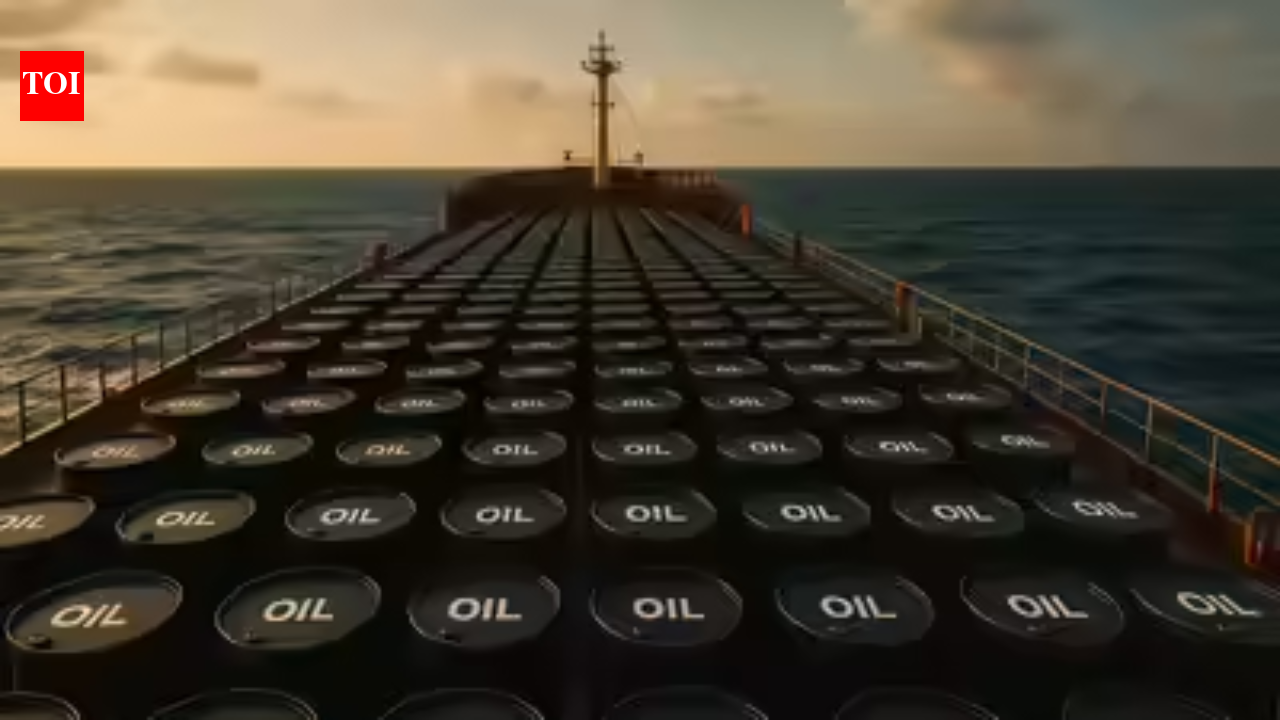
India is set to receive its first shipment of Iranian crude oil since 2019, with a tanker carrying 600,000 barrels of oil en route to Gujarat following a temporary sanctions waiver by the US, according to PTI.Ship-tracking data indicates that the vessel Ping Shun is headed towards Vadinar port, marking a potential revival of Indo-Iran oil trade after nearly five years.“The Indo-Iranian oil trade has flickered back to life. Following the US administration’s decision to grant a 30-day window for Iranian oil “on the water” due to regional conflict, the vessel Ping Shun is now en route to Vadinar (in Gujarat) with 600,000 barrels of crude. This is the first such delivery since May 2019 and comes at a critical time for Indian refiners facing tightening inventories,” said Sumit Ritolia, Lead Research Analyst, Refining and Modelling at Kpler.The development follows Washington’s decision earlier this month to allow a 30-day window for the purchase of Iranian oil already at sea, aimed at easing global oil prices amid the ongoing US-Israel conflict with Iran. The window is set to expire on April 19.While the buyer of the cargo remains unidentified, Vadinar houses a 20 million tonnes per annum refinery operated by Rosneft-backed Nayara Energy and also serves as a landing point for crude supplies to inland refineries such as BPCL’s Bina unit.India’s oil ministry has so far maintained that any decision to resume imports from Iran will depend on techno-commercial viability.Before sanctions were tightened in 2018, India was among the largest buyers of Iranian crude, importing both Iran Light and Iran Heavy grades due to refinery compatibility and favourable pricing terms.Imports ceased in May 2019 after US sanctions were reimposed, with India shifting to alternative suppliers including the Middle East and the US. At its peak, Iranian crude accounted for 11.5 per cent of India’s total imports.India had imported about 518,000 barrels per day (bpd) of Iranian oil in 2018, which declined to 268,000 bpd between January and May 2019 during a sanctions waiver period before dropping to zero thereafter.“The Aframax Ping Shun (IMO 9231901) loaded with Iranian crude oil from Kharg Island in early March has emerged as the first vessel observed signalling a destination of Vadinar, India since May 2019, following sanction reimposition on Iranian oil by the first Trump administration,” Ritolia said.The tanker is estimated to have loaded around 600,000 barrels from Kharg Island around March 4 and is expected to reach Vadinar on April 4.An estimated 95 million barrels of Iranian oil are currently stored on vessels at sea, of which around 51 million barrels could be supplied to India, while the rest may be directed to China and Southeast Asian markets.However, payment mechanisms remain uncertain as Iran continues to be excluded from the SWIFT global banking system, complicating international transactions.Earlier, payments were routed in euros through Turkish banks, but that channel is no longer available following renewed sanctions restrictions.Iran was first disconnected from SWIFT in 2012 due to EU sanctions over its nuclear programme, with further disruptions in 2018 after the US reimposed sanctions, limiting its ability to receive payments and access foreign currency reserves.
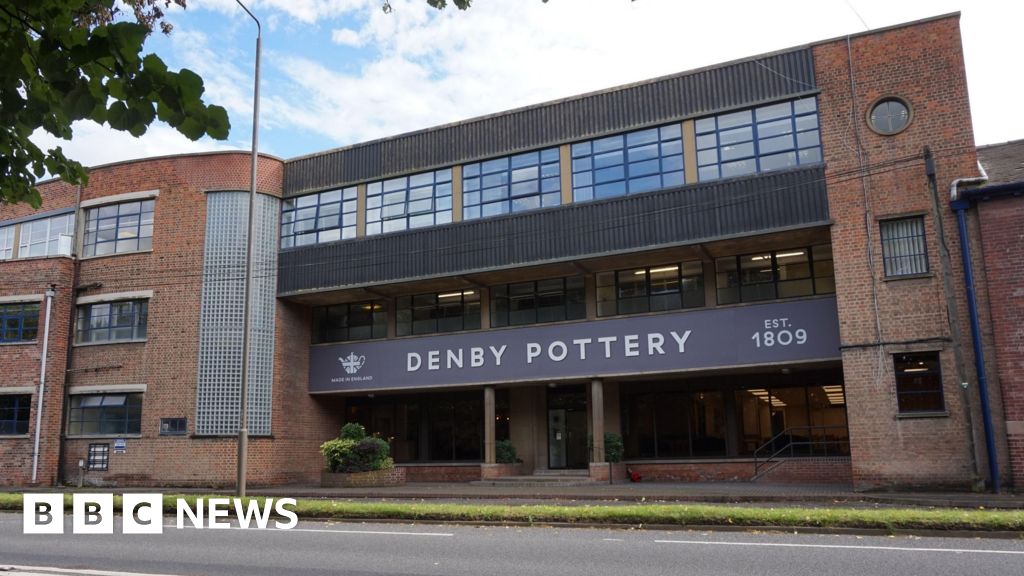
The 217-year-old firm says it appointed FRP Advisory as administrators on Tuesday.
Source link
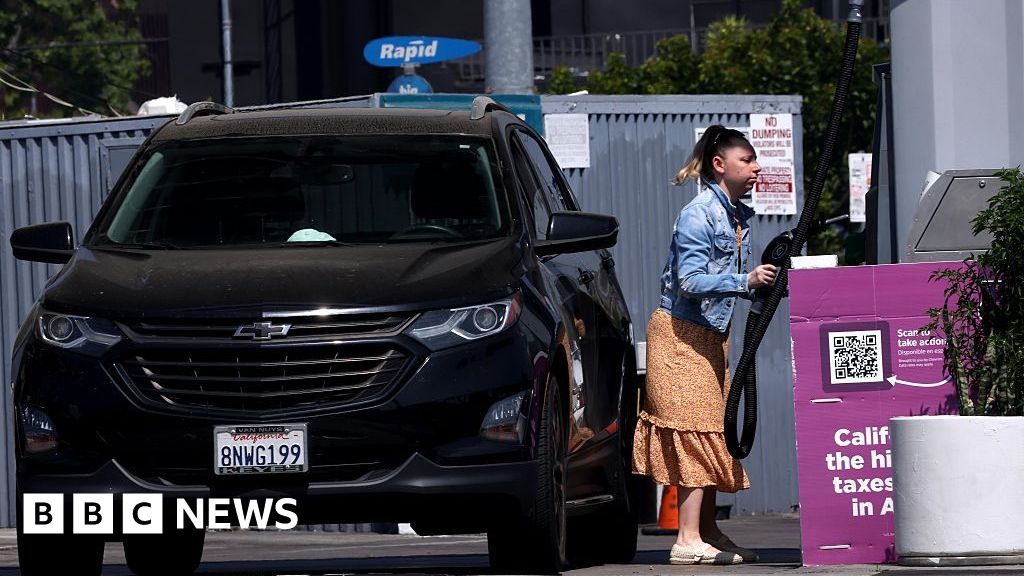
The Iran war continues to push up prices at the pump for US motorists.
Source link


Iran air defenses shoot down MQ-9 drone in Isfahan, LUCAS drone over Qeshm Island
Iran oil returns: India set to receive first cargo in 5 years, tanker heads to Gujarat – The Times of India

Taylor Swift sued by Vegas performer for trademark infringement over “The Life of a Showgirl”

-

 Politics1 week ago
Afghanistan announces release of detained US citizen
-

 Sports1 week ago
Broadcast industry CEO says consolidation is ‘essential’ to compete for NFL soaring media rights prices
-

 Entertainment1 week ago
UN warns migratory freshwater fish numbers are spiralling
-

 Tech1 week ago
Can a Home Appliance Fix the Problem of Soft-Plastic Waste?
-
 Business1 week ago
Property Play: Home flippers see smallest profits since the Great Recession, real estate data firm says
-
 Business1 week ago
Gold prices soar in Pakistan – SUCH TV
-

 Fashion1 week ago
ICE cotton slips on weaker crude, profit booking
-
 Business1 week ago
More women are entering wealth management, but few are in advisory roles, study finds