

Politics
Texas orders immediate halt to new H-1B petitions at state agencies, public universities

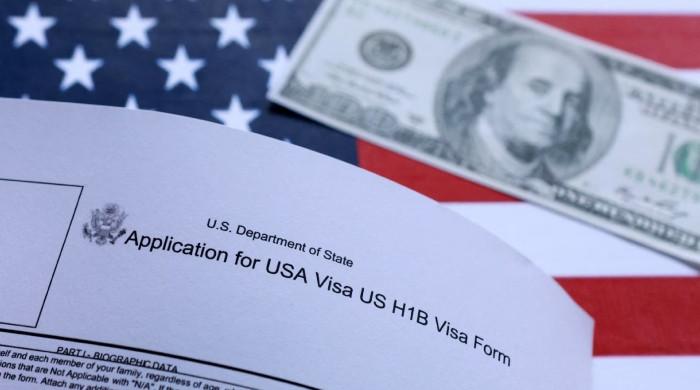
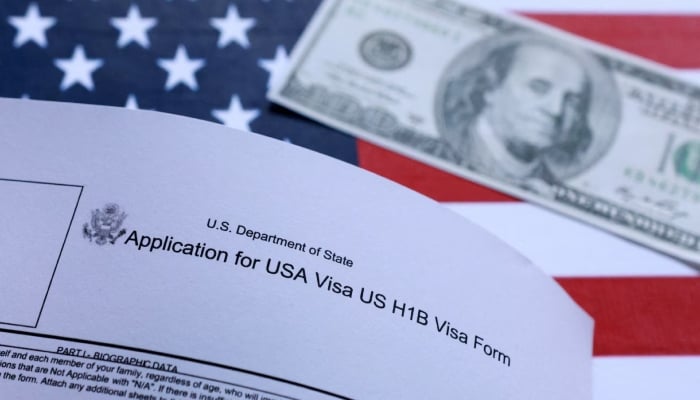
Texas Governor Greg Abbott on Tuesday issued an extraordinary executive directive with far-reaching implications, ordering an immediate halt to the filing of new H-1B visa petitions by all Texas state agencies and public universities.
The order, formally released on the governor’s official website, gov.texas.gov, makes clear that no state agency or public institution of higher education may initiate or submit a new H-1B petition for a foreign worker without prior written authorisation from the Texas Workforce Commission.
The freeze will remain in effect through May 31, 2027, coinciding with the conclusion of the Texas Legislature’s 90th Regular Session.
In his letter to agency heads, Governor Abbott argued that Texas has invested billions of dollars in recent years in education, workforce training, and high-demand skills development to prepare Texans for both local and global job markets.
He said the federal H-1B visa program was originally intended to supplement the US workforce where domestic labor was unavailable, but cited reports and evidence suggesting the program has often been misused.
According to the governor, some employers bypassed qualified American workers in favor of foreign labor at lower wages, and in extreme cases, replaced US employees with H-1B visa holders. Jobs funded by Texas taxpayers, Abbott wrote, should first and foremost go to Texans, and the state government must lead by example.
Under the directive, all affected state agencies and public universities are required to submit a comprehensive report to the Texas Workforce Commission by March 27, 2026.
The report must detail the number of new and renewal H-1B petitions filed in 2025, the total number of H-1B visa holders currently employed by the entity, the countries of origin of those workers, their job classifications and descriptions, the anticipated expiration dates of their visas, and documentation demonstrating that qualified Texas candidates were given a reasonable opportunity to apply for each position before an H-1B petition was submitted.
The Texas Workforce Commission has also been instructed to issue any guidance necessary to implement and enforce the governor’s order.
The move comes amid renewed national debate over the future of the H-1B visa program and growing signals from the Trump administration favoring stricter immigration controls. Political analysts note that while the order is administrative in form, its implications are deeply political and economic, reinforcing a broader state-level narrative centered on protecting local jobs and prioritising domestic labor.
The sectors most immediately affected are expected to be public universities, government-run research institutions, and fields that have traditionally relied on global talent, including science, engineering, medicine, and advanced research.
University administrators and policy experts warn that the freeze could delay new faculty hires, disrupt research projects, and place additional strain on academic programs already facing staffing challenges.
Foreign professionals currently working in or seeking employment with Texas public institutions are also likely to feel the impact, including large numbers of Pakistani, Indian, Chinese, and other Asian specialists who have long been part of the state’s public higher-education and research workforce.
At the same time, the order does not apply to private companies, private universities, startups, conferences, events, or private partnerships, which remain governed by federal H-1B rules. Those sectors will not be directly affected by the governor’s action.
Taken together, Governor Abbott’s directive represents a significant effort to recalibrate immigration and employment practices at the state level. While the freeze is technically temporary, the message it sends is unmistakable: access to state-funded jobs in Texas will now be subject to heightened scrutiny, tighter controls, and a clear preference for local workers, a shift whose consequences are likely to shape the state’s education, research, and employment landscape for years to come.


- France blocks airspace for military flights carrying supplies to Israel.
- Italy denies US aircraft landing permission at Sicily air base.
- Spain closes airspace to US planes involved in Iran strikes.
France and Italy have pushed back against some US-Israeli military operations, sources said on Tuesday, as US President Donald Trump criticised Nato allies in Europe as unhelpful in the month-long war in Iran, highlighting divisions.
The decisions came against a backdrop of tensions between Washington and key partners over the war. Earlier this month, Trump called longtime Nato allies “cowards” over their lack of support. On Tuesday, he slammed countries that did not help in the US-Israeli strikes.
France says no
Trump accused France of blocking aircraft carrying military supplies to Israel from flying over its territory, writing on Truth Social that France had been “VERY UNHELPFUL”.
The French presidency said it was surprised by the post and said its decision was consistent with France’s policy since the conflict began.
A Western diplomat and two sources familiar with the matter told Reuters earlier that the refusal, which happened at the weekend, was the first time France had done this since the start of the conflict on February 28.
The sources said Israel had wanted to use France’s airspace to transport US weapons to be used in the war against Iran.
Israel’s defence ministry accused France of actively obstructing the transfer of munitions to Israel, according to a statement.
It said the French ban was imposed despite prior coordination and assurances that the munitions were intended solely for use against Iran, adding that the effort was critical to European security.
The ministry said Israel would cut all defence procurement from France and would have no new engagement with the French military. French arms sales to Israel are relatively small, and it was unclear whether the move would affect French troops serving with UN peacekeepers in Lebanon.
Italy denies permission
Italy last week denied permission for US military aircraft to land at the Sigonella air base in Sicily before heading to the Middle East, sources said.
According to the Corriere della Sera daily, which first reported the news, “some US bombers” had been due to land at the base in eastern Sicily before flying on to the Middle East.
Italy’s Defence Minister Guido Crosetto later denied any rift with Washington or any change in policy. He posted a message on X to say that US airbases remained active, but that Washington needed special permission for uses outside existing agreements.
Spain is most vocal against war
Meanwhile, Spain defended its decision to fully close its airspace to US planes involved in attacks on Iran.
Prime Minister Pedro Sanchez has been among the most vocal critics of the US and Israeli strikes and Defence Minister Margarita Robles said Spain will only allow for the use of its bases for the collective defence of Nato allies.
Trump also singled out Britain as being unhelpful, just as Buckingham Palace confirmed King Charles and Queen Camilla will pay a state visit to the US in late April.
He wrote on Truth Social: “All of those countries that can’t get jet fuel because of the Strait of Hormuz, like the United Kingdom, which refused to get involved in the decapitation of Iran, I have a suggestion for you: Number 1, buy from the US, we have plenty, and Number 2, build up some delayed courage, go to the Strait, and just TAKE IT.”
The United States, France, Italy, Spain and Britain are all Nato members, as is Germany, which hosts Ramstein, the largest US base in Europe.
Germany said early in the war there were no restrictions on the US using the base, though the issue has been debated after President Frank-Walter Steinmeier said he believed the war was illegal.
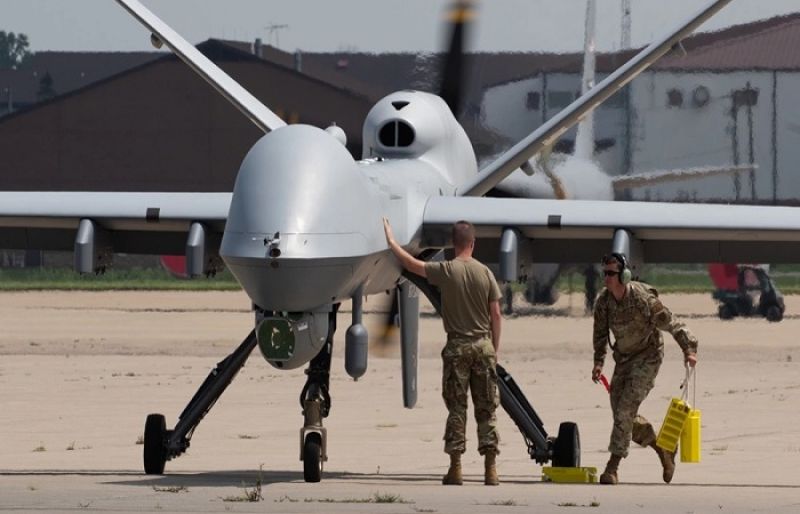
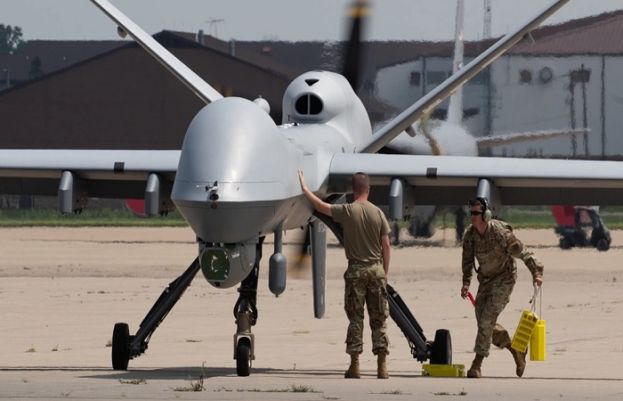
Iran’s Army says its air defense forces have shot down an American MQ-9 unmanned strategic aircraft over the country’s central city of Isfahan and a LUCAS drone over Qeshm Island in the Persian Gulf.
In a statement on Tuesday, Iran’s Army said that Isfahan air defenses managed to successfully shoot and destroy a US-made MQ-9 Reaper, which belonged to the American-Israeli aggressors, over the city in the early hours of the day.
MQ-9 is an unmanned aerial vehicle designed for long-endurance surveillance.
In a separate statement, Iran’s Army said that its air defenses also managed to shoot and destroy a Low-cost Uncrewed Combat Attack System (LUCAS) over Qeshm Island in the Persian Gulf at 10:30 a.m. local time.
The LUCAS drones are made in the United States but they are in fact a reverse-engineered copy of the kamikaze Iranian drone called Shahed.
With the latest interceptions, the number of hostile drones destroyed by the Iranian Armed Forces’ integrated air defense network since the beginning of the ongoing US-Israeli war of aggression has reached 147.
The United States and Israel started a fresh round of aerial aggression on Iran on February 28, some eight months after they carried out unprovoked attacks on the country.
The attacks led to the martyrdom of Leader of the Islamic Revolution Ayatollah Seyyed Ali Khamenei, as well as military commanders.
Hundreds of civilians, including women and children, have also been killed in the war so far.
Iran began to swiftly retaliate against the strikes by launching barrages of ballistic missile and drone attacks on the Israeli-occupied territories as well as on US bases in regional countries.
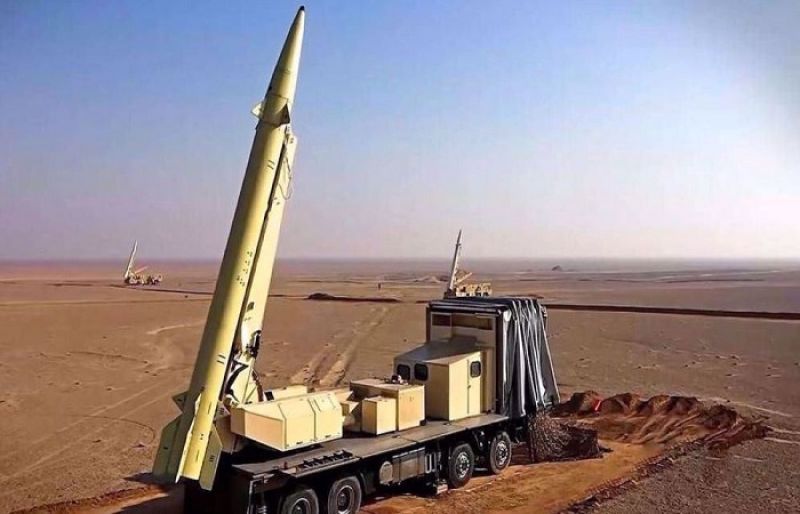
The Islamic Revolution Guards Corps (IRGC) has warned 18 major US companies, including tech giants, that their offices and properties in the region will come under attack as they have assisted US-Israeli terror operations inside Iran by providing espionage services.
The IRGC said in a Tuesday statement that these companies should expect Iran’s reprisal attacks starting at 20:00 Iran time on April 1, adding that their offices in the region will be “annihilated.”
The list released by the IRGC included big tech names such as Apple, Google, Meta, and Microsoft, as well as major hardware suppliers like HP, Intel, IBM, and Cisco.
Other major brands included Tesla, Nvidia, Oracle, JP Morgan, and Boeing.
The IRGC described those companies as espionage entities associated with the warmongering government of the United States, saying their artificial intelligence (AI) and internet communication technology (ICT) services have been the main elements in designing terror operations and tracing assassination targets by the US and Israel inside Iran.
It stated that the US government and its Israeli allies had ignored Iran’s repeated calls to stop terror operations in the country and had carried out a new targeted terror attack earlier on Tuesday, killing a number of Iranian citizens.
“In response to this terrorist operation, henceforth, the main institutions involved in terrorist activities will be considered legitimate targets,” the IRGC said.
“We advise employees of these institutions to immediately leave their workplaces to protect their lives. Residents within a one-kilometer radius of these terrorist companies across all countries in the region are also urged to evacuate and move to safe locations.”
Dozens of senior Iranian political and military officials and their family members have been assassinated in the ongoing US-Israeli aggression against Iran that began in late February.
Iran has vowed to avenge the assassinations by targeting elements that have been influential in the attacks.


Nike shares fall 9% on weak outlook, expected 20% sales decline in China

Prince Harry surprises crowd by calling attendees his source of hope

Wrigley Field to host Big Ten/SEC volleyball doubleheader

-

 Politics1 week ago
Afghanistan announces release of detained US citizen
-

 Sports1 week ago
Broadcast industry CEO says consolidation is ‘essential’ to compete for NFL soaring media rights prices
-

 Entertainment1 week ago
UN warns migratory freshwater fish numbers are spiralling
-

 Tech1 week ago
Can a Home Appliance Fix the Problem of Soft-Plastic Waste?
-
 Business1 week ago
Property Play: Home flippers see smallest profits since the Great Recession, real estate data firm says
-
 Business1 week ago
Gold prices soar in Pakistan – SUCH TV
-

 Fashion1 week ago
ICE cotton slips on weaker crude, profit booking
-
 Business1 week ago
More women are entering wealth management, but few are in advisory roles, study finds