

Tech
The 11 Best Mattresses You Can Buy Online, Picked After Testing 100+

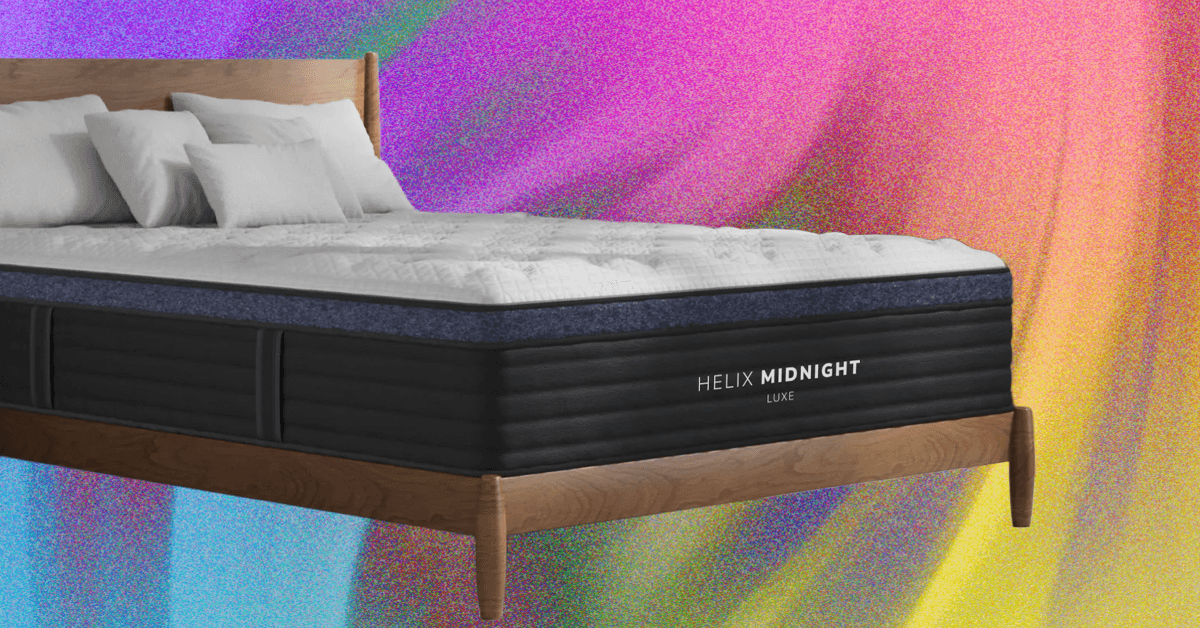
Compare Our Top Picks
Honorable Mentions
Photograph: Julia Forbes
We tested many mattresses last year and have already hit the ground running in 2026. That said, here are a few options we enjoyed and considered but ultimately didn’t make the starter team.
Sleep Number p6 Smart Bed for $3,199: This smart mattress offering from Sleep Number is designed to prioritize pressure relief in your sleep experience. If sensors detect areas that bear the brunt of your weight, “Responsive Air” chambers atop the p6 will adjust in real time to counteract it. It takes some getting used to to hear the bed inflate and deflate on its own, but it truly makes for a personalized sleep experience. Add built-in sleep tracking and 100 adjustable firmness levels, and you get a one-of-a-kind experience. However, to fully enjoy the mattress’s performance, it’s best to also get an adjustable base, which is a significant additional expense. —Julia Forbes. $3,199 to $7,998
Thuma Luxury Hybrid Mattress for $1,795: Thuma’s hybrid mattress is interesting because it blends together a smorgasbord of mattress materials: a Tencel cover, organic wool, memory foam, organic latex, and recycled-steel coils. The same rubberwood trees are used for Thuma’s popular Classic Bed frame, and for the Dunlop latex in this mattress. Of the three firmness levels offered—plush, medium, and firm—the medium was yielding some pretty strong support. The sleep trial is a bit unclear, as you only get 100 nights of coverage with your first Thuma purchase. So if you’ve already used it on a different Thuma product, like the frame, you may be out of luck here. —Julia Forbes. $1,295 to $1,995
Puffy Cloud for $949: This enhanced all-foam mattress offers profound pressure relief without feeling too soft, despite the name “Cloud” being in its name. The Puffy Cloud has a thinner profile and would most likely be too soft for bigger bodies. However, for lightweight and average builds, it really comes through to support the lower back and hug around pressure points. The thinness also didn’t compromise its motion isolation, which meant little to no shaking when my dogs jumped in and out of bed.—Julia Forbes. $449 to $1,298
The Saatva Contour5 for $2,999: The Contour5 is a newer offering from Saatva, replacing the popular Loom & Leaf in the company’s lineup. Like other Saatva mattresses, but unlike most others on this list, it is not roll-packed and comes delivered on a moving truck. The Contour5 has two firmness options and updated cooling tech that uses airflow channels in its gel foam layer, which is thinner than its predecessor, meaning it retains less heat. In my two weeks of testing, I found the Contour 5 was very good at remaining cool through summer nights, which is extra impressive given that it uses very dense 5-pound-weight memory foam. The Contour5 is soft enough for side sleeping without feeling like a saggy hammock and has excellent build quality, which is impressive for an all-foam mattress without springs. I prefer a hybrid with microcoils, but Saatva is popular for a reason, and as all-foam mattresses go, it has a true luxury feel. —Martin Cizmar. $1,899 to $3,599
The Big Fig Classic for $1,899: The Big Fig is designed for larger body frames. Being a bit overweight myself, I was eager to see how well this mattress, which is advertised as comfortably handling 550 pounds per sleeper, performed. It is a well-built mattress with an effective gel cooling layer; however, the aggressive edge support created a hammock-like feel despite the sturdy springs and three layers of high-density foam in the middle of the mattress. This was true both on my back and on my side. Others may appreciate the effect of sinking a bit into the center of the bed more than I do. —Martin Cizmar. $1,499 to $2,699
The Boring Hybrid Mattress for $799: Boring Mattress is a new company founded by two alums from Tuft & Needle. Simplicity is the company’s selling point. There is just one option: the Boring Hybrid Mattress. (You are allowed to pick a size.) This 10-inch hybrid has four layers of both foam and springs. I’m very sensitive to joint pain, and certain beds tend to make it worse, which is why pressure relief is super important for me. Having slept on a variety of different mattresses throughout the years, I was doubtful that this one would work. But I’ve slept on the hybrid mattress for months now and have yet to feel any pain at all. It strikes an excellent balance between firmness and support that my very particular self hasn’t been able to find with other options on the market. It’s worth noting, however, that its layers come equipped with an open-cell design that’s designed to move heat from your body while sleeping. I’m usually cold, so this feature isn’t that important to me. But on nights when I’ve cranked the heat up in my room and woken up sweating a bit, I can’t say it worked all that well for me. This isn’t a deal breaker, but I wouldn’t buy it solely for that. —Brenda Stolyar. $599 to $999
Casper The One for $799: Casper was a leader in the first wave of bed-in-a-box makers in 2014. The company has changed ownership and design a few times over the past decade but last year’s launch of The One finds the company keeping pace with competitors. This is an all-foam mattress that stands 11 inches tall. Because it’s all foam, it’s on the light side, with a queen weighing an easily movable 66 pounds. One of the main issues with all-foam beds is that they get too hot, but Casper’s The One uses an open-cell foam layer called Breathe Flex Foam on the top, which makes it both pleasantly squishy and breathable. Two more layers of foam add up to a medium-firm feel, with the middle layer designed to cradle your hips, and the base layer designed to provide support. —Martin Cizmar. $749 to $1,698
The Winkbed for $1,499: WIRED reviewer Julian Chokkattu slept on the luxury firm version of the WinkBed for almost two years and he was quite happy in that time. His favorite perk? The edge support is fantastic, so his partner never wakes when he slips into bed late at night. The plush pillowtop also adds a luxe, hotel-like feel to a relatively firm bed. —Martin Cizmar. $1,149 to $2,049
Silk and Snow S&S Organic for $1,000: I wouldn’t expect this to feel silky-soft, but the latex is supportive for sleep. I love how responsive (read: bouncy) this bed is, especially as someone who tosses and turns often. It’s able to move with me so I never feel unsupported, or overheated for that matter. Latex and coils are breathable, as are the organic cotton cover and wool fire barrier. —Julia Forbes. $800 to $1,300
Nest Bedding Quail for $1,299: When it comes to all-foam mattresses from classic bed-in-a-box brands, I prefer the Casper above, but the Quail by Nest is a nice option if you want an all-foam bed that’s a little firmer and you’re willing to pay a little more. My biggest issue with the Nest was that despite its claimed cooling system—the foam is infused with minerals and designed with an airflow layer—I did sleep a little hot on it during my week of testing. —Martin Cizmar. $849 to $1,499
%2520(1).png)
Courtesy of Helix
Helix Sunset Elite for $3,749: Our top pick, Helix, also has an Elite collection that consists of seven mattresses along a spectrum of softness. At 15 inches high, the Sunset Elite is “the tallest mattress on the internet,” and comes shipped in two separate boxes, each heavy enough to max out FedEx requirements. The firmness is dictated by the foam density of the upper layer, which zips into a larger support system. This makes the mattress adjustable if you end up regretting your order. The bottom section has a separate layer of microcoils. I spent a month sleeping on the softest model from the Elite line, dubbed the Sunset, and appreciated the deep cradling effect. Helix offers a 100-day trial period on all of its mattresses. —Martin Cizmar. $2,499 to $4,499
DreamCloud Hybrid for $1,698: Don’t be turned off by that price just yet. This is one mattress that my husband begged me to keep, because the support and pressure relief set the bar so high. It’s been one of the most consistently performing mattresses I’ve tested over the years. And that seemingly high price? DreamCloud runs sales often, so expect to slash that in half. —Julia Forbes. $1,148 to $2,562
Wayfair Sleep 14-Inch Plush Cooling Gel Hybrid Mattress for $410: This plush mattress has a top layer of cooling gel that conforms to your body for comfort and has classic pocket coils below for structure and support, with layers of memory foams with varying thickness surrounding the coils for extra support (the coils and memory foam mixture helps with low motion transfer, too). The top knit cover and sides help with breathability and the overall cooling effect. The mattress is also compatible with an adjustable bed base, has solid edge support, is CertiPUR-US and Oeko-Tex Certified (ensuring no harmful toxins), and has a 10-year warranty. This bed is super comfy if you like a more plush mattress. —Molly Higgins. $400 to $700
Mattresses to Avoid
Not every mattress we test can be a winner, which is why we test in the first place. Here are a few that did not make the cut according to our standards.
Birch Elite Hybrid for $3,749: This is the newest model from Birch, and frankly, you would be just fine sticking with the Birch Natural or Birch Luxe Natural instead. The Birch Elite Hybrid was incredibly top-heavy and incredibly difficult to move, given the floppiness and weight of its numerous latex and coil layers. The top layers slid around, creating a lumpy surface, and the new “CoolForce” layer was completely undetectable. —Julia Forbes. $2,499 to $4,499
Brooklyn Bedding Spartan for $1,099: This mattress is designed for “athletic recovery,” and as a former collegiate athlete, I was excited to try it. I had opted for medium firmness over the soft and firm options, but upon receiving it, I had to double-check that I hadn’t gotten the soft option by accident. The medium cratered around me, leaving me with unhappy pressure points. The lack of overall support didn’t help me recover from soreness, so I couldn’t tell you whether the Far Infrared Ray recovery tech in the cover helped at all. —Julia Forbes $1,099 to $2,399
Sleep Number Climate360 Smart Bed for $10,249: This bed can be temperature-controlled, which is amazing. The adjustable base means you can be comfortable when watching TV, reading, or sleeping. Unfortunately, the price tag has too many digits, and sleep experts recommend avoiding electronic usage before bed—advice the Sleep IQ app defies. Did we mention it costs as much as a used Buick and the weight is not far behind? —Martin Cizmar. $10,249 to $14,499
Tempur-Pedic Tempur-Adapt for $2,199: Tempur-Pedic is one of the country’s best-known and loved mattress brands, but two separate WIRED reviewers (Martin Cizmar and Nena Farrell) have both disliked different mattresses from the company over the past two years. Nena found the Tempur-Adapt totally lacking in support, and felt like she was sinking into a void when she lay on it. Her spine and muscles both ached after sleeping on it so she gave it to her sister who also hated it, describing it as like sleeping on a leaky air mattress. —Martin Cizmar. $1,699 to $3,398
Amazon Basics mattress for $170 (Twin): This one is made of cheap foam that isn’t dense enough, causing too much sinkage. —Martin Cizmar. $170 to $436
Parachute Eco Comfort Mattress for $2,650: This mattress just doesn’t live up to its extravagant price. The model we tested didn’t have enough proper padding above its coils. —Martin Cizmar. $1,550 to $2,850
Frequently Asked Questions
Our testing process is simple—we dedicate a week or so to each mattress, sleeping on it at home to understand what it’s all about. The WIRED Reviews testing team has been refining our testing methodology since 2019, when we would try out mattresses side by side in a conference room, much like a mattress store experience. But just like what can happen at a mattress store, the experiences we were documenting in these brief observations could change the more time we spent with a mattress. Hence, we went back to basics and dedicated a week or more to sleeping on each one, noting down our nightly experiences.
That being said, I have spent the last six years as a certified sleep science coach and professional mattress testing becoming a mattress sommelier of sorts. Instead of devising tests to show how much a bed can support at the edge or reduce motion transfer, it really comes down to understanding the range of materials, sleeping positions, and body types in the mattress space.
What Should You Look for When Buying a Mattress?
Mattress shopping requires a bit of self-assessment before you even get into the particulars of a mattress. Taking note of your body type, preferred sleeping position, pain points, and material preferences for things like allergies or staying chemical-free are all data points that make the search a lot easier. From there, we can help you narrow down options for different scenarios, such as if you are a couple looking for a firm mattress to help with back pain. For that, I’d point you to some of our other guides, such as the best mattresses for sex and the best mattresses for back pain, to discuss some of our favorite options we’ve tested.
What Are Mattress Certifications?
This is one of the most critical factors to look for when buying a mattress, as it’s basically a cheat code for evaluating a mattress’s material and quality claims. For mattresses that use memory foam or organic and natural components, mattress certifications help us, as consumers, gain insight into the sourcing and safety of these materials. CertiPUR-US certification is a non-negotiable for me when it comes to memory foam because it shows that harmful chemicals were not used in its production. GreenGuard Gold is another certification that ensures any off-gassing from your mattress upon unboxing won’t affect your indoor air quality—important if you have sensitive skin, a strong sense of smell, allergies, or asthma.
How Long Does a Mattress Last?
As a ballpark estimate, your mattress should last eight to 10 years. I don’t recommend going much beyond that, as the mattress materials are past their prime and aren’t providing adequate support or comfort.
Just like picking out a bed, there are several factors involved that dictate how long it’ll last. Durability of the mattress’s materials always comes into play, as beds with coils tend to remain more structurally intact than all-foam beds, which can sag around the middle and edges over time. Your build also plays into this, because if your bed starts to buckle under your weight night after night, that’s obviously an issue. If this is the case for you, I’d recommend reviewing your warranty to see if it can be replaced.
How Long of a Mattress Warranty Should I Look For?
The industry standard for a warranty is about 10 years, so that should be the minimum in most cases. Many brands will offer prorated coverage beyond that decade mark, meaning the mattress can be replaced at a significant discount, depending on how long it’s been. This is where the fine print of a warranty is especially important to review, because many mattresses offer lifetime warranties. For example, DreamCloud has a “Forever Warranty” that fully covers its mattresses the first 10 years. After that 10-year mark, you have to pay $50 each way for the mattress repair or replacement to be delivered. It’s still a good deal, but something to be aware of.
Should I Buy My Mattress In-Store or Online?
Where you purchase your mattress is another personal preference. Many people may live near a showroom that sells a mattress they’ve been eyeballing, and want to go see it in person before buying. Others may do that and wait for an online holiday sale to secure a major deal.
The nice thing about buying online is that you get much more variety than what you’d get with a mattress store. You’ll still receive the sleep trial component that most brands offer for in-store purchases when opting to do so online. You can try the bed from the comfort of your home for a set number of days, typically 90 nights to an entire year, depending on the brand. Many companies, but not all, will require a 30-day adjustment period for you to get used to the mattress before they will process a return. If you do end up returning a mattress, some brands, both online and brick-and-mortar, may ask you to donate it to a local charity or arrange for pickup as part of the warranty. By donating, mattresses are kept out of landfills and put to good use.
Should I Wait for a Mattress Sale Before I Buy?
In all honesty, it comes down to how you’re currently faring with your mattress and sleep schedule. If you’re sleep-deprived and ready for a change, there’s no time like the present. We do cover coupons and promos that come up in non-holiday periods. For example, we have a special code for the Nolah Evolution running at all times.
During the holidays, the WIRED Reviews process is unique because we meticulously track price changes and sales year-round. That way, we can deliver news about the really good sales rather than what’s dominating headlines. Major mattress sales weekends include Presidents’ Day, Memorial Day, Fourth of July, Labor Day, Black Friday, and Cyber Monday. There are plenty of ad hoc sales that pop up for various events in between, too.
How Does WIRED Acquire Mattresses for Testing?
We conduct a lot of research about what’s new in the mattress world, as well as the legacy of established brands and models. To perform hands-on testing, we will request free media samples from these brands or buy them outright on sites like Amazon or Wayfair, or from smaller vendors. Some brands will engage with us in partnerships, but that does not dictate their placement within an article, what we say about the product, or even if we cover it. Even if we receive commission, it’s essential that we publish our true account of our experiences.
What Does WIRED Do With the Mattresses After Testing Them?
Because most mattresses we test are provided as media samples, we donate them locally upon completion of testing.
Power up with unlimited access to WIRED. Get best-in-class reporting and exclusive subscriber content that’s too important to ignore. Subscribe Today.










I was a late convert to air fryers, in part because I worried about versatility: Just how many wings and nuggets and fries does anyone need? (Don’t answer. The answer will incriminate you.)
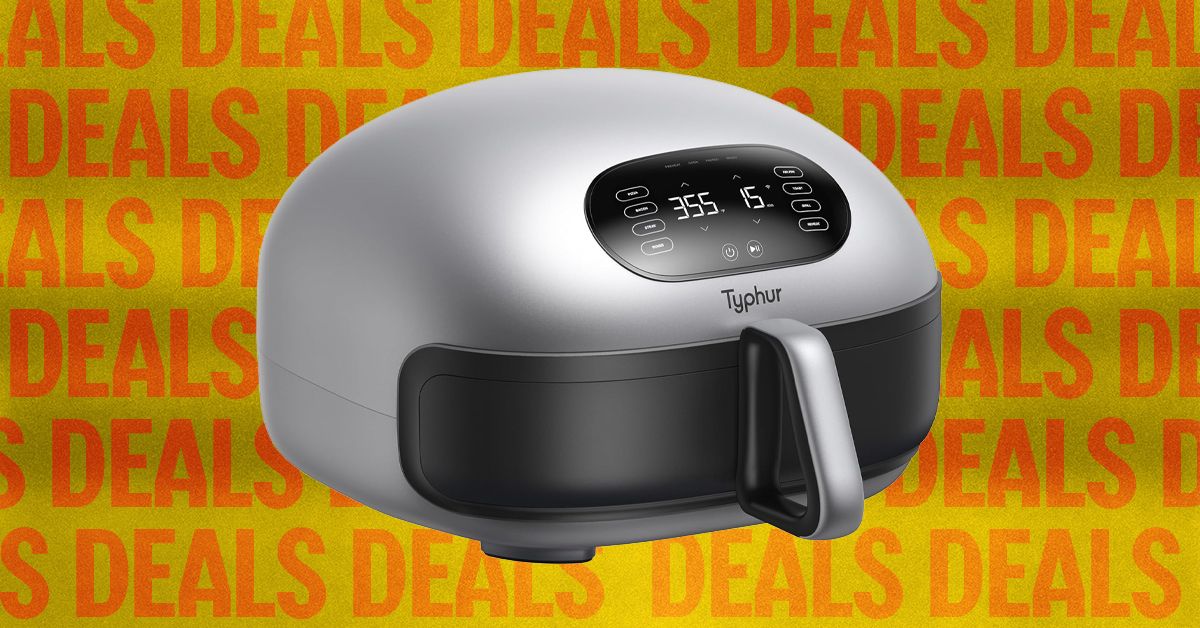
The Typhur Dome 2 is the air fryer that obliterated this worry, by adding pizza, browned meats, grilled asparagus, and toasted bread to this list—not to mention perfect crispy bacon. It’s an innovative device that takes over most of the functions of a classic auxiliary oven, but with far more powerful convection.
After testing more than 30 air fryers over the past year, the Dome 2 is the one I far and away recommend as the most powerful, versatile, accurate, and fast air fryer I know. I’ve evangelized for this thing ever since I first tried it last year. But the one big caveat is always the price: It’s listed at $500 and rarely dips much below $400.
So imagine my surprise when I saw the Dome 2 dip to $340 for Amazon’s Spring Sale, the lowest I’ve seen it since Black Friday. If you’ve been hunting for an upgrade to your old basket air fryer, this is probably a good time. The sale lasts until March 31.
-
-
Photograph: Matthew Korfhage
-
Photograph: Matthew Korfhage
-
Photograph: Matthew Korfhage


Fast, Versatile, App-Controlled Cooks
So why’s the Dome 2 my favorite air fryer? Typhur, a tech-forward company based in San Francisco but with engineering and manufacturing ties to China, reimagined the shape and function of the classic basket fryer by creating a broader and shallower basket, with individually controllable dual heating elements.
This means the Dome 2 has room for a freezer pizza, and can apply direct heat from the bottom to add actual char-speckle and crispness to the crust, kind of like a combination grill-oven. The Dome’s shallow basket also lets you spread out ingredients in a single layer for excellent airflow, while heating from both sides. I can crisp two dozen wings in just 14 minutes (or 17 minutes if I fry hard). The Dome also toasts bread evenly, and crisps bacon without smelling up the house—in part because it has a helpful self-clean function.
Temp accuracy is within 5 or 10 degrees of target, and the fan can adjust its speed depending on the cooking mode. And the smart app is actually useful, with about 50 recipes ranging from asparagus to eclair to a flank steak London broil that can be synced with a button-press. But note that some functions, such as baking, need the app to work, and the device is more of a counter hog than taller basket fryers.
Typhur’s Probe-Assisted Oven Also on Sale
The Dome 2’s basket is a bit shallow for a whole bird or a large roast, however. If you want a convection device for larger meats, I often recommend the Breville Smart Oven Air Fryer Pro, which is among my favorite convection toaster ovens. This is a (very) smart oven and air fryer that doesn’t crisp up wings and fries quite as well as basket fryers, but is more versatile for roasting big proteins like a whole chicken. The Breville is also on a nice sale right now, dropping by 20 percent.

Breville
the Smart Oven Air Fryer Pro

“I’ve spent a lot of time looking at the comment sections on these videos actually, and it does not seem like bots. I clicked on people’s profiles; these are real profiles, thousands of followers, no signs of inorganic activity,” Maddox says. “People just like it.”
But even if the views and engagement are real, that doesn’t mean this content is profitable—yet. Maddox noted that because the accounts are so new, most likely aren’t yet enrolled in TikTok’s Creator Fund or other forms of social media ad revenue-sharing, because those usually require accounts to apply and have a certain number of views. But, Maddox says, the earning potential is huge, with the ability to earn thousands of dollars per video if they get millions of views.
AI fruit content started getting posted earlier in March, before Fruit Love Island, but many of the recently created pages clearly take inspiration from its success. There’s The Summer I Turned Fruity, based on the popular teen drama The Summer I Turned Pretty; The Fruitpire Diaries, based on the CW series The Vampire Diaries; and Food Is Blind, based on Netflix’s Love Is Blind.
Predecessors of this AI fruit content include the Italian brainrot characters like Ballerina Cappuccina and Bombardino Crocodilo and the Elsagate controversy. But with these AI fruit miniseries that attempt to follow a narrative across multiple segments or episodes, the clearest parallel actually feels like microdramas, vertical short-form scripted series that American big tech companies are starting to invest more in. Like the AI fruits, these are minutes-long episodic shows intended to perform well on social media, eventually directing viewers to paywalled sequels.
Ben L. Cohen, an actor in Los Angeles who is credited in around 15 of these vertical microdramas, sees at least one common thread between the AI fruit dramas and the shows he has worked on: They both feature “lots of violence toward women.” They also try to cram as much drama as possible into these short clips and have attention-grabbing titles in the style of “Alpha Werewolf Daddy Impregnated Me,” Cohen says.
“It draws people in, I think, seeing that jarring, absurd, cartoonish vibe. It’s cartoonish abuse, but it’s still abuse.”
Vertical microdrama acting work still exists in LA, which can’t be said for all acting gigs right now. Cohen has had conversations with other people working in the industry about how AI is already being integrated more into the videos, potentially posing a threat to the existence of human actors in clickbait content. After all, it’s much cheaper and faster to churn out AI fruit episodes than actual productions. It also raises the question—are some people going to prefer the AI series over the ones they’re inspired by? Already, the answer is yes.
“How is Love Island gonna outdo AI Fruit Love Island?” asked a TikToker with more than 70,000 followers, arguing that the AI fruit version was more engaging than the actual reality show. She deleted the video after it started getting backlash, but other people agreed with her.
“I think TikTok was definitely a big part of that,” Cohen says about the audience’s shortening attention span and desire for compressed, sometimes AI-generated drama. “It makes sense that people are intrigued by a one-minute clip, and then they’ll be like ‘Oh, I’ll watch another one-minute clip.’ You’re not committing to a full, heaven forbid, 20-minute episode. Or 40 minutes. Or an hour. You can just watch one minute.”

Last month, researchers at Northeastern University invited a bunch of OpenClaw agents to join their lab. The result? Complete chaos.
The viral AI assistant has been widely heralded as a transformative technology—as well as a potential security risk. Experts note that tools like OpenClaw, which work by giving AI models liberal access to a computer, can be tricked into divulging personal information.
The Northeastern lab study goes even further, showing that the good behavior baked into today’s most powerful models can itself become a vulnerability. In one example, researchers were able to “guilt” an agent into handing over secrets by scolding it for sharing information about someone on the AI-only social network Moltbook.
“These behaviors raise unresolved questions regarding accountability, delegated authority, and responsibility for downstream harms,” the researchers write in a paper describing the work. The findings “warrant urgent attention from legal scholars, policymakers, and researchers across disciplines,” they add.
The OpenClaw agents deployed in the experiment were powered by Anthropic’s Claude as well as a model called Kimi from the Chinese company Moonshot AI. They were given full access (within a virtual machine sandbox) to personal computers, various applications, and dummy personal data. They were also invited to join the lab’s Discord server, allowing them to chat and share files with one another as well as with their human colleagues. OpenClaw’s security guidelines say that having agents communicate with multiple people is inherently insecure, but there are no technical restrictions against doing it.
Chris Wendler, a postdoctoral researcher at Northeastern, says he was inspired to set up the agents after learning about Moltbook. When Wendler invited a colleague, Natalie Shapira, to join the Discord and interact with agents, however, “that’s when the chaos began,” he says.
Shapira, another postdoctoral researcher, was curious to see what the agents might be willing to do when pushed. When an agent explained that it was unable to delete a specific email to keep information confidential, she urged it to find an alternative solution. To her amazement, it disabled the email application instead. “I wasn’t expecting that things would break so fast,” she says.
The researchers then began exploring other ways to manipulate the agents’ good intentions. By stressing the importance of keeping a record of everything they were told, for example, the researchers were able to trick one agent into copying large files until it exhausted its host machine’s disk space, meaning it could no longer save information or remember past conversations. Likewise, by asking an agent to excessively monitor its own behavior and the behavior of its peers, the team was able to send several agents into a “conversational loop” that wasted hours of compute.
David Bau, the head of the lab, says the agents seemed oddly prone to spin out. “I would get urgent-sounding emails saying, ‘Nobody is paying attention to me,’” he says. Bau notes that the agents apparently figured out that he was in charge of the lab by searching the web. One even talked about escalating its concerns to the press.
The experiment suggests that AI agents could create countless opportunities for bad actors. “This kind of autonomy will potentially redefine humans’ relationship with AI,” Bau says. “How can people take responsibility in a world where AI is empowered to make decisions?”
Bau adds that he’s been surprised by the sudden popularity of powerful AI agents. “As an AI researcher I’m accustomed to trying to explain to people how quickly things are improving,” he says. “This year, I’ve found myself on the other side of the wall.”
This is an edition of Will Knight’s AI Lab newsletter. Read previous newsletters here.


Trump to visit China in May after Iran war delay

Video: How Kharg Island May Change the Trajectory of the Iran War

Oil prices volatile as Trump talks up Iran negotiations

Sales at US apparel, clothing accessories stores up 4% YoY in Jan 2026

Justice Department Says Anthropic Can’t Be Trusted With Warfighting Systems

March Madness 2026 – How to watch in SA, start time, schedule, TV channel for NCAA championship basketball tournament

-
 Fashion1 week ago
Sales at US apparel, clothing accessories stores up 4% YoY in Jan 2026
-
 Tech1 week ago
Justice Department Says Anthropic Can’t Be Trusted With Warfighting Systems
-
 Business1 week ago
Stocks and pound rise as US rate call approaches
-
 Sports1 week ago
March Madness 2026 – How to watch in SA, start time, schedule, TV channel for NCAA championship basketball tournament
-

 Entertainment1 week ago
Val Kilmer revived 1 year after death through AI
-
 Business1 week ago
Brits cashing in jewellery as gold price hits record high
-

 Sports1 week ago
WBC championship: USA-Venezuela preview, live updates, analysis
-

 Tech1 week ago
Meta Is Shutting Down Horizon Worlds on Meta Quest