

Entertainment
The AI revolution has a power problem


SAN FRANCISCO: In the race for AI dominance, American tech giants have the money and the chips, but their ambitions have hit a new obstacle: electric power.
“The biggest issue we are now having is not a compute glut, but it’s the power and…the ability to get the builds done fast enough close to power,” Microsoft CEO Satya Nadella acknowledged on a recent podcast with OpenAI chief Sam Altman.
“So if you can’t do that, you may actually have a bunch of chips sitting in inventory that I can’t plug in,” Nadella added.
Echoing the 1990s dotcom frenzy to build internet infrastructure, today’s tech giants are spending unprecedented sums to construct the silicon backbone of the revolution in artificial intelligence.
Google, Microsoft, AWS (Amazon), and Meta (Facebook) are drawing on their massive cash reserves to spend roughly $400 billion in 2025 and even more in 2026 — backed for now by enthusiastic investors.
All this cash has helped alleviate one initial bottleneck: acquiring the millions of chips needed for the computing power race, and the tech giants are accelerating their in-house processor production as they seek to chase global leader Nvidia.
These will go into the racks that fill the massive data centres — which also consume enormous amounts of water for cooling.
Building the massive information warehouses takes an average of two years in the United States; bringing new high-voltage power lines into service takes five to 10 years.
Energy wall
The “hyperscalers,” as major tech companies are called in Silicon Valley, saw the energy wall coming.

A year ago, Virginia’s main utility provider, Dominion Energy, already had a data-centre order book of 40 gigawatts — equivalent to the output of 40 nuclear reactors.
The capacity it must deploy in Virginia, the world’s largest cloud computing hub, has since risen to 47 gigawatts, the company announced recently.
Already blamed for inflating household electricity bills, data centres in the United States could account for 7% to 12% of national consumption by 2030, up from 4% today, according to various studies.
But some experts say the projections could be overblown.
“Both the utilities and the tech companies have an incentive to embrace the rapid growth forecast for electricity use,” Jonathan Koomey, a renowned expert from UC Berkeley, warned in September.
As with the late 1990s internet bubble, “many data centres that are talked about and proposed and in some cases even announced will never get built.”
Emergency coal
If the projected growth does materialise, it could create a 45-gigawatt shortage by 2028 — equivalent to the consumption of 33 million American households, according to Morgan Stanley.
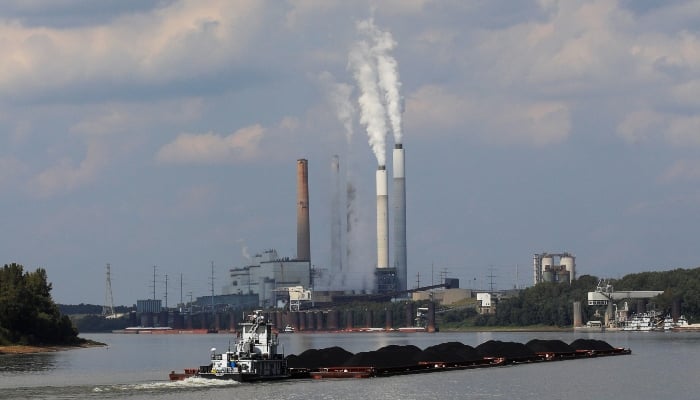
Several US utilities have already delayed the closure of coal plants, despite coal being the most climate-polluting energy source.
And natural gas, which powers 40% of data centres worldwide, according to the International Energy Agency, is experiencing renewed favour because it can be deployed quickly.
In the US state of Georgia, where data centres are multiplying, one utility has requested authorisation to install 10 gigawatts of gas-powered generators.
Some providers, as well as Elon Musk’s startup xAI, have rushed to purchase used turbines from abroad to build capability quickly. Even recycling aircraft turbines, an old niche solution, is gaining traction.
“The real existential threat right now is not a degree of climate change. It’s the fact that we could lose the AI arms race if we don’t have enough power,” Interior Secretary Doug Burgum argued in October.
Nuclear, solar, and space?
Tech giants are quietly downplaying their climate commitments. Google, for example, promised net-zero carbon emissions by 2030 but removed that pledge from its website in June.

Instead, companies are promoting long-term projects.
Amazon is championing a nuclear revival through Small Modular Reactors (SMRs), an as-yet experimental technology that would be easier to build than conventional reactors.
Google plans to restart a reactor in Iowa in 2029. And the Trump administration announced in late October an $80 billion investment to begin construction on ten conventional reactors by 2030.
Hyperscalers are also investing heavily in solar power and battery storage, particularly in California and Texas.
The Texas grid operator plans to add approximately 100 gigawatts of capacity by 2030 from these technologies alone.
Finally, both Elon Musk, through his Starlink program, and Google have proposed putting chips in orbit in space, powered by solar energy. Google plans to conduct tests in 2027.

- Possible strikes may focus on key Iranian infrastructure sites.
- Another plan involves securing Strait of Hormuz shipping route.
- Operation could include ground forces to reopen key oil passage.
President Donald Trump will receive a briefing on Thursday from the leader of the US Central Command, Brad Cooper, on new plans for potential military action against Iran, Axios reported on Wednesday.
The report cited unidentified sources. The White House and the US Central Command did not immediately respond to a request for comment.
Centcom has prepared a plan for a “short and powerful” wave of strikes on Iran, likely including infrastructure targets, Axios reported, citing sources.
A fragile ceasefire in the Iran war began three weeks ago.
The war began when the US and Israel attacked Iran on February 28. Iran responded with its own strikes on Israel and the Gulf states with US bases. US-Israeli strikes on Iran and Israeli attacks in Lebanon have killed thousands and displaced millions.
Trump has previously threatened to destroy Iran’s civilian infrastructure. International law experts say such strikes may amount to war crimes. The 1949 Geneva Conventions on humanitarian conduct in war prohibit attacks on sites considered essential for civilians.
Another plan expected to be shared with Trump is focused on taking over part of the Strait of Hormuz to reopen it to commercial shipping, the report added, saying such an operation may involve ground forces.
The Iran war, which remains unpopular in the US, has shaken markets and raised oil prices. The war has brought traffic through the strait, a chokepoint for about 20% of global oil and liquefied natural gas shipments, close to a standstill.
Washington hopes to make Iran more flexible at the negotiating table on nuclear issues, Axios reported.
Another option that might come up in the briefing is a special forces operation to secure Iran’s stockpile of highly enriched uranium, Axios said.
Trump has cited Iran’s nuclear programme as an imminent threat. Tehran denies seeking nuclear weapons but says it has the right to develop nuclear technology for peaceful purposes, including enrichment, as a party to the Nuclear Non-Proliferation Treaty.
The Chairman of the Joint Chiefs of Staff General Dan Caine is also expected to attend Thursday’s briefing, Axios reported.

Goldie Hawn has no plans to rush back in front of the camera, and she has been remarkably clear-eyed about why.
The 80-year-old spoke to PEOPLE in an interview published on 29 April, explaining that after a career full of beloved performances, she simply hasn’t found anything worthy of bringing her back.
“It’s about the content,” she said.
“Acting for acting’s sake, taking things… I’ve read a lot of shows, a lot of scripts that I didn’t like or I didn’t think I’d fit. The one thing about acting is that I’ve done it, and I had a great career, and I honor that.”
Hawn last appeared on screen in The Christmas Chronicles 2 in 2020, alongside her longtime partner Kurt Russell.
The decision to step back began long before that, however, she traced it to her mid-fifties.
“I think ultimately every life has to have its sections. Doing the same thing over and over again for your whole life is not as interesting to me. And I decided at probably 55 or something, ‘What are you going to do for this next part of your life?’ And I knew that there was more out there to learn and to do.”
The right script could change everything.
“I would love to get a material that could actually be like, ‘Oh my God, I want this so bad. This is so funny. She’s so crazy. She’s so interesting.’ But I haven’t come across it.”
She also floated the idea of a project with her famously talented family, children Kate Hudson, Oliver Hudson and Wyatt Russell, with characteristic openness.
“It’s such a great idea because we have so much talent. Never say never, because that could happen at any time.”
Hawn and Russell have also stepped back from Hollywood geographically, spending much of their time at their home in Colorado.
Russell has described waking up each morning looking at the mountain, riding horses and sitting by the living-room fireplace as the rhythm of their life there, a far cry from the pace of the film industry they both helped define.
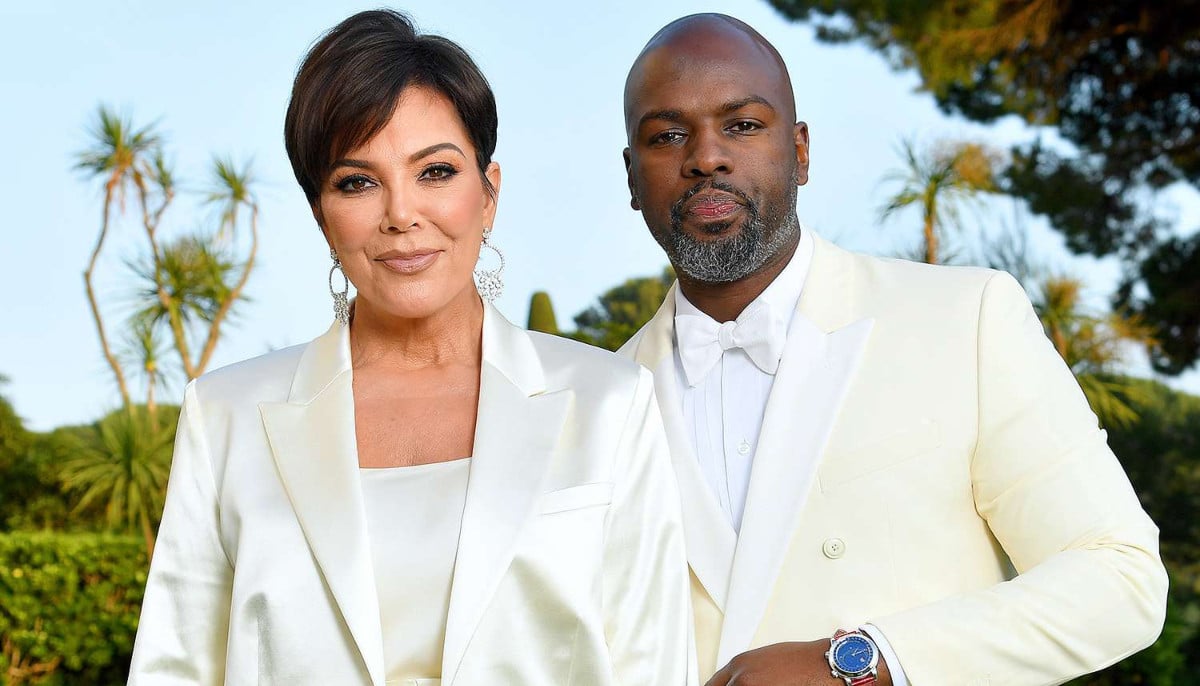
Kris Jenner has left the door open on marriage to her longtime boyfriend Corey Gamble, and even floated the idea of Khloé Kardashian serving as flower girl.
The Kardashian-Jenner matriarch, 70, appeared on the Wednesday, 29 April, episode of Khloé’s podcast Khloé in Wonder Land, where her daughter asked whether there were any “wedding bells” on the horizon.
Jenner’s initial response was swift.
“No,” she said, before quickly softening it. “You never know.”
When Khloé told her mother she didn’t need to get married again, Kris wasn’t entirely ready to close the subject.
“I’m full of surprises,” she quipped, adding that if she and Gamble did decide to marry, Khloé could “be a flower girl.”
Jenner and Gamble, 45, have been together for over a decade, meeting in Ibiza in August 2014 and going public the following spring.
The relationship has weathered a steady stream of split rumours, most recently in September 2025 when reports claimed things had been “hanging by a thread.”
Us Weekly confirmed at the time that the couple were still very much together.
On the podcast, Kris said the rumours no longer get to her the way they once might have.
“Not anymore. I mean, did it bother me at the time? I think it bothered, maybe him more than it bothered me. I don’t know. You’d have to ask Corey.”
It is not the first time marriage has come up in conversation.
In a 2024 episode of The Kardashians, Kris told her friend Kathy Hilton: “You guys can totally be bridesmaids when I get married. So, maybe when I’m 70!” She has now reached that milestone birthday, which may or may not be relevant.
Jenner was previously married to the late Robert Kardashian, with whom she shares Kourtney, Kim, Khloé and Rob, and to Caitlyn Jenner, with whom she shares Kendall and Kylie.


Trützschler to showcase advanced textile tech at ITM 2026 in Istanbul

Gold, silver price prediction: Will gold head down to Rs 1.40 lakh/10 grams & silver hit Rs 2.20 lakh/kg? – The Times of India

US top commander to brief Trump on new military options against Iran, says report

-
 Business1 week ago
Us-India Trade Talks: US–India trade deal: Where do talks stand & what to expect – explained – The Times of India
-
 Fashion1 week ago
Global energy growth slows to 1.3% in 2025: Report
-
 Business1 week ago
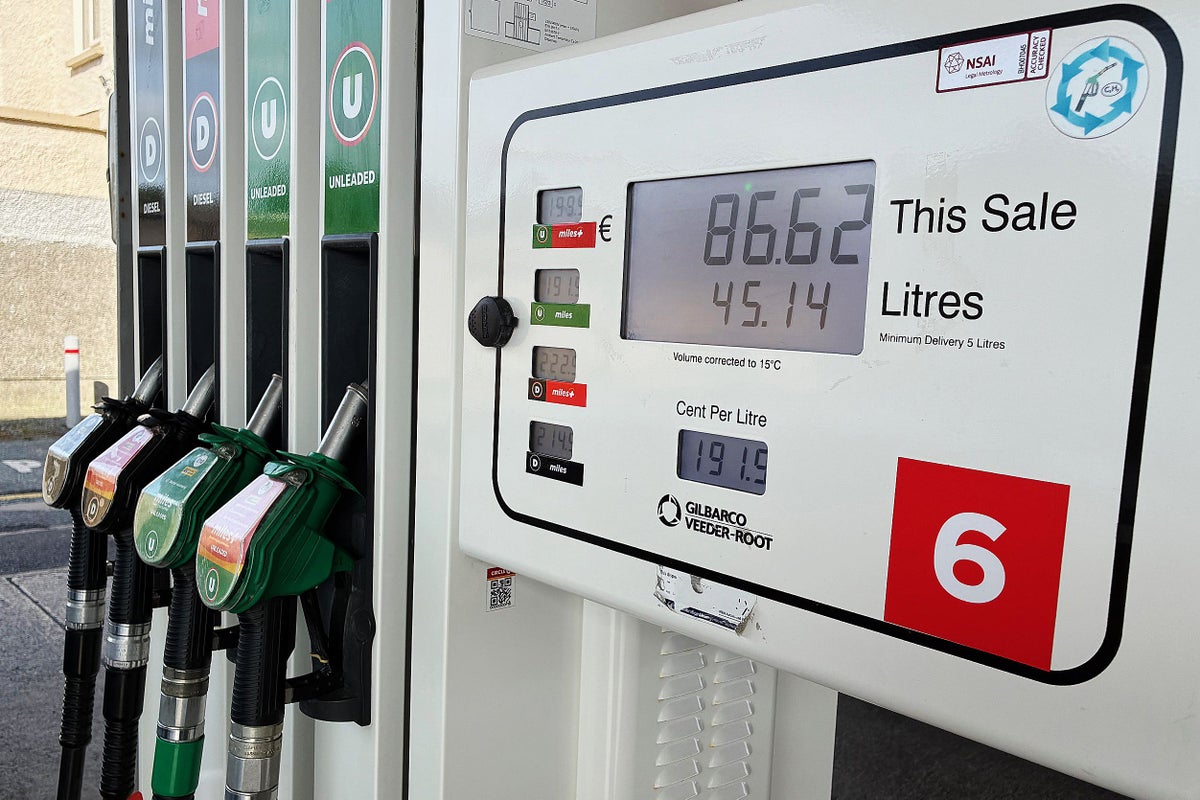
UK inflation accelerates after Iran war drives sharp rise in fuel prices
-

 Tech1 week ago
Nation states responsible for ‘nationally significant’ cyber attacks against UK, says NCSC chief | Computer Weekly
-

 Tech1 week ago
Microsoft faces court battle in £2bn Windows Server class action | Computer Weekly
-

 Sports1 week ago
PSL 11: Hyderabad Kingsmen opt to field after winning toss against Multan Sultans
-
 Business1 week ago
Trump administration in advanced talks for a rescue package for Spirit Airlines, source says
-

 Tech1 week ago
Blackbox replaces two racks of HPE storage with 8U of Everpure | Computer Weekly