

Business
The exclusive WhatsApp chats where family offices vet deals, plan meetups and sell dinosaur bones


The mobile-messaging application WhatsApp is displayed on an Apple iPhone
Brent Lewin | Bloomberg | Getty Images
For investment firms of the ultra rich, WhatsApp is a one-stop shop for everything from vetting deals to finding the best surgeons.
Sam Nallen Copley, an investment advisor at a London-based family office, runs a 970-person WhatsApp group for single-family offices and has seen it all, from verifying credentials to finding co-investors to selling multimillion-dollar collections of dinosaur bones and Pokémon cards.
“If I need something at any time of day, I can message nearly 1,000 people about a new bitcoin fund or ask who’s the best tax lawyer in Germany,” he said.
Nallen Copley uses WhatsApp to organize meetups for the single-family office network he runs, Family Office Social.
The most valuable benefit is ferreting out scammers pitching deals, which is a common issue for family offices, Nallen Copley said.
“The family office space is the easiest area of finance to be a fake in. If someone turns up and says, ‘Hey, I’m worth a billion dollars in bitcoin,’ it’s very hard to prove one way or another,” he said. “Now the group is sufficiently large and powerful in the sense that we can sense check most things. Has anyone heard of this person? Has anyone ever done a deal with this person? If the answer is no, it will be quite suspicious.”
Family office professionals told Inside Wealth that WhatsApp is convenient for messaging on the go and with people in different time zones. They also appreciate its privacy and exclusivity, as WhatsApp messages are encrypted and you can only message other users with their phone number.
Many of these groups, including Nallen Copley’s, have strict ground rules against pitching products and deals and gatekeep against vendors or brokers. While financial firms like investment banks face steep fines for using WhatsApp, family offices generally aren’t subject to the same regulatory restrictions.
Robin Lauber, a principal of a Swiss family office, is a member of Family Office Socials and its WhatsApp group. Lauber said he prefers WhatsApp over email and LinkedIn, where he is bombarded with unsolicited investment pitches and scams.
“WhatsApp is easy to handle and convenient to manage,” said Infinitas Capital’s Lauber. “To be honest, I don’t read my messages on LinkedIn.”
Erin Harkless Moore, who oversees investments at Melinda Gates’ family office, Pivotal Ventures, said she is part of several groups where investment chiefs share deal flow, get advice on how to use artificial intelligence and ask for hiring help. Recently, members debated how to adjust their portfolio allocations given the exit slowdown and lack of liquidity on their venture capital investments.
“It’s nice to have forums of folks that are in the same industry as you are and doing similar work, just to see what they’re reading, or what they think is interesting,” she said. “I think it makes me a smarter and better investor.”
Using WhatsApp is also somewhat of a necessity for communicating with next-generation family members, according to Joshua Gentine, a family office consultant and third-generation heir to Sargento Foods. At 45, he describes himself as an “email guy,” but said he has a WhatsApp group for a group of six heirs who range from 21 to 35.
“We got to meet them there,” he said. “Emailing, especially with those … 35 and under, is really challenging.”
There are platforms designed for family offices and ultra high net worth individuals, such as Trusted Family and Forge, that enable messaging. But WhatsApp is used far more widely, with more than 3 billion monthly active users worldwide.
Michael Cole, managing partner of R360, an investment community for centimillionaires, said R360 has its own app primarily for events but that members still default to WhatsApp. It has WhatsApp groups for different affinity groups, like private aviation and outdoor adventures. The health, longevity and wellness group recently used WhatsApp to motivate one another during a fasting challenge.
Even though WhatsApp is owned by Meta, many members perceive WhatsApp to be more private than the platforms targeting them, Cole said.
“People like WhatsApp because there’s nobody — what I would call ‘big brother’ or the perception of a big brother — overseeing their communication,” Cole said. “They can establish a group any way they want.”
Cybersecurity experts warn that relying on WhatsApp comes with serious risks. Tony Gebely, of Annapurna Cybersecurity, said it’s more secure than texting (better known as SMS), especially between different devices like Androids and iPhones. However, he said, WhatsApp, which is meant for consumers, doesn’t have features like saving messages in the case of an investigation or lawsuit the way Microsoft Teams does.
And while the messages are encrypted, Meta can track the metadata, such as who you message and how frequently, he said.
WhatsApp messages are also stored on your device, which poses a security risk if it is stolen or lost. This also means that family offices can’t stop fired employees from accessing old messages, said Jordan Arnold of Jetty Partners. Arnold said he has seen spurned employees threaten their former employers with leaking sensitive messages.
Rather than trying to convince family offices to quit WhatsApp altogether, Gebely encourages clients to only use WhatsApp for nonsensitive conversations such as letting someone know they are running late for a meeting but not for asking for a wire transfer approval.
“They’re not a regulated entity, so they can do whatever they want,” he said. “People are going to use it for networking and seemingly innocuous activities, and I don’t think that we’re ever going to change that. But when it comes to business and running a family office, you can’t be using it on your day to day.”




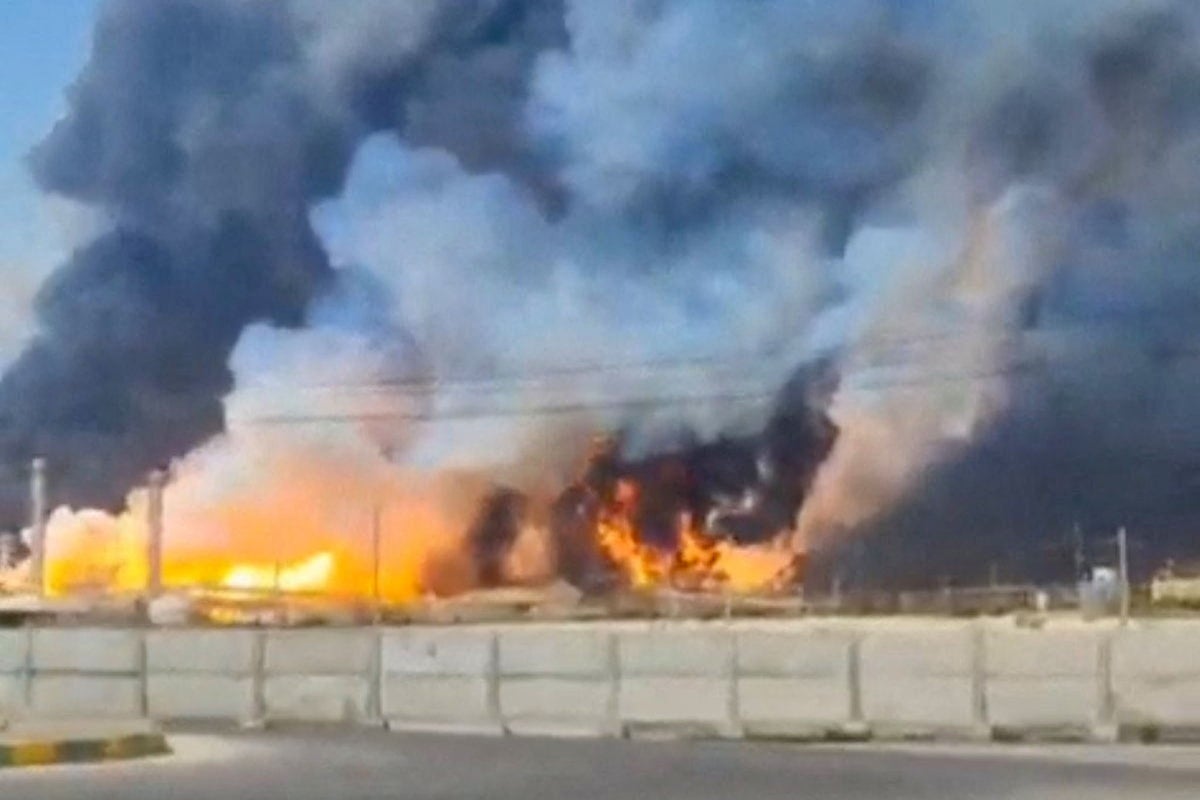
Britain is to “step up” defensive support for Gulf states after Iran attacked energy sites across the region in a “serious escalation” of the war that could push up inflation and interest rates.
The price of Brent crude climbed as high as $119 a barrel and European gas prices briefly surged by 35 per cent after Iran pounded Qatar’s Ras Laffan energy hub and other Middle Eastern oil and gas infrastructure with missiles.
Interest rates were held at 3.75 per cent instead of the previously expected cut, as the Bank of England warned that the war could push inflation as high as 3.5 per cent by July on the back of rising energy bills, and that rates could rise – creating misery for homeowners.
It came as:
- US defence secretary Pete Hegseth said “ungrateful” European allies should be thanking Donald Trump for the war
- Trump claimed he was unaware of Israel’s strike on Iran’s South Pars gas field
- Oman called the US/Israel attacks a “grave miscalculation”
- Europe’s biggest airlines warned of higher fares
Iran’s attacks were in retaliation to an Israeli strike on the vital South Pars gas field, which drew condemnation from the Gulf states as well as Tehran. It was the first attack of the war so far on an energy production facility. Tehran fired missiles at multiple energy sites across the Gulf, including a Saudi oil refinery, Qatari gas facilities and two more oil refineries in Kuwait.
While Sir Keir Starmer and Emmanuel Macron called for de-escalation, President Trump threatened to “massively blow up” the South Pars facility if Iran did not halt its retaliatory attacks, repeating his claim that US forces had “obliterated” Iran’s navy and military, adding that the war was “substantially ahead of schedule”. He denied that plans were being made to send more American troops to the region.
John Healey, the UK defence secretary, said Tehran’s tit-for-tat responses threatened to further destabilise the region and Europe’s economies. He called them a “serious escalation”, adding: “They further destabilise the region and we will step up the defensive support that we can offer to those Gulf states.”
British forces are already deployed to the Middle East, with RAF jets flying defensive sorties against Iranian drones across the Gulf and British air defence systems protecting critical infrastructure in Saudi Arabia. UK military planners have also joined US Central Command to help formulate proposals for opening the Strait of Hormuz, a critical trade route for the world’s oil and gas.But there were signs of growing frustration towards Washington’s war aims in the Gulf states, with Oman’s foreign minister claiming that the conflict was President Trump’s “greatest miscalculation”.
In the most scathing attack on Washington’s foreign policy yet by a Gulf state, Badr Albusaidi said “this is not America’s war” and criticised Mr Trump for supporting Israel. Writing in The Economist, he called on American allies to help extricate it from the conflict, which has continued for a third week despite failing to achieve the US and Israel’s stated aim of instigating regime change in Tehran or stopping its nuclear programme.
Meanwhile, the Bank of England has warned that it may have to put up interest rates if the war continues to drive up inflation and unemployment. Its governor, Andrew Bailey, said the impact was already being felt by consumers as petrol prices surge and that he is “ready to act as necessary to ensure inflation remains on track to meet the 2 per cent target”. That would pave the way for a rate hike as early as the end of April.
Bets on the financial markets suggest a 50/50 chance that Britain will face higher interest rates from next month – and the possibility of two more rises by the end of the year.
Danni Hewson, head of financial analysis at AJ Bell, said: “Markets are now pricing in an almost 50 per cent chance that April’s meeting will see rates rise to 4 per cent with the potential for two additional rate hikes by the end of the year. But no one has a crystal ball. No one knows how long the conflict will last or the amount of damage that could be inflicted on crucial energy infrastructure by the time it ends.”

From fuel to mortgages, the BBC looks at how oil and gas prices could push up the cost of living.
Source link
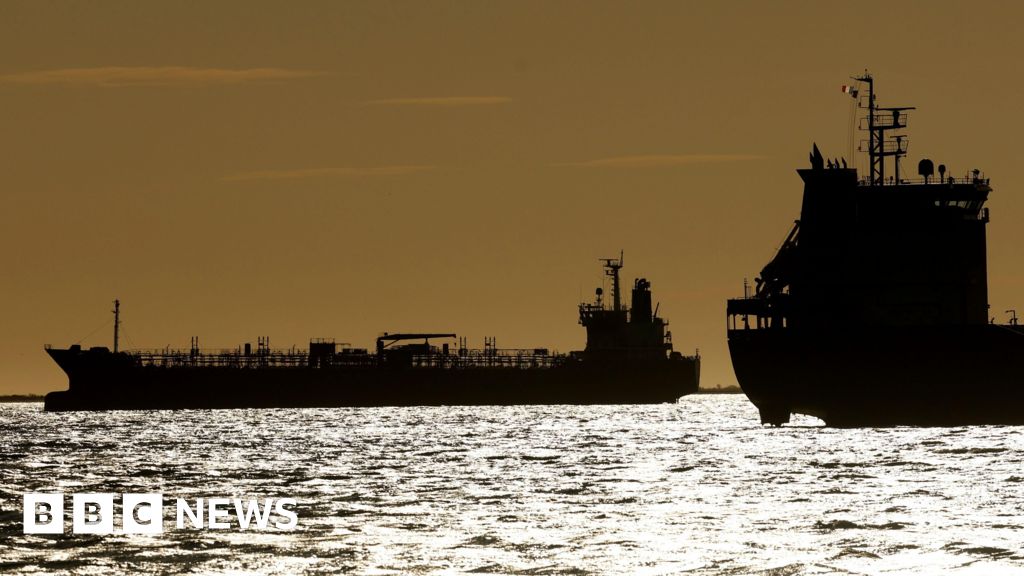
“To put it mildly, this is bananas,” said David Tannenbaum, director of Blackstone Compliance Services, a consultancy specialising in maritime sanctions. “Essentially we’re allowing Iran to sell oil, which could then be used to fund the war effort.”


FIFA clears Israeli settlement clubs but fines IFA over breaches

US Takes Down Botnets Used in Record-Breaking Cyberattacks

TCU backs up its tough talk, bounces Buckeyes in 1st round

Stock market crash today (March 12, 2026): Nifty50 opens below 23,600; BSE Sensex down over 900 points on continuing US-Iran war – The Times of India

UK’s Topshop unveils Tolu Coker capsule collection
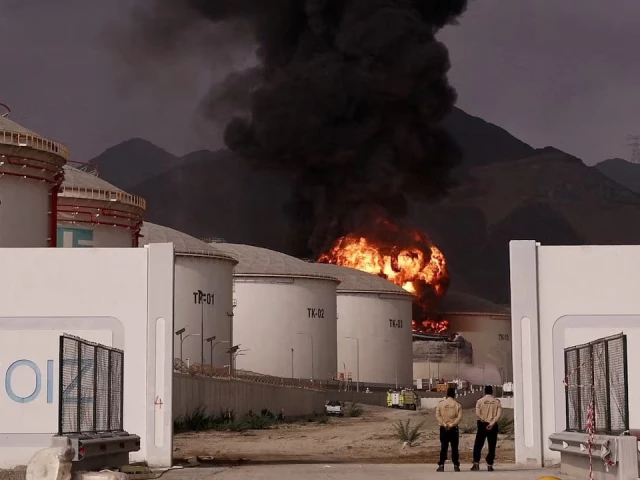
US ignites Iran war, but Gulf Arab states pay the price | The Express Tribune

-
Business1 week ago
Stock market crash today (March 12, 2026): Nifty50 opens below 23,600; BSE Sensex down over 900 points on continuing US-Iran war – The Times of India
-
 Fashion1 week ago
UK’s Topshop unveils Tolu Coker capsule collection
-
Business1 week ago
US ignites Iran war, but Gulf Arab states pay the price | The Express Tribune
-

 Fashion1 week ago
India’s textile recycling market may reach $3.5 bn by 2030: Report
-

 Tech1 week ago
Meta Developed 4 New Chips to Power Its AI and Recommendation Systems
-
 Business1 week ago
8th Pay Commission: How Much Will Central Govt Employees’ Salaries Rise? What We Know So Far
-

 Sports1 week ago
Bangladesh crush Pakistan in ODI series opener | The Express Tribune
-

 Tech1 week ago
Labour scarcity is forcing IT leaders to rethink automation economics | Computer Weekly